
Realizing your washing machine door won't open after a cycle ends is deeply frustrating, especially when heavy winter bedding or a full load of wet clothes is trapped inside. Most front-load washers lock tightly by design to prevent flooding and heat hazards, so a minor sensor delay, active control lock, or clogged drain filter is usually to blame. Before you pry at the handle or panic, walk through these six safe, step-by-step fixes to release the latch and protect your floors.
1. Wait 5 Minutes for the Thermal Lock
Many front-load washers use a bimetallic or wax-motor thermal lock that stays engaged for two to five minutes after a cycle finishes. On hot wash, allergen, or sanitize cycles, the latch will not release until internal drum temperatures drop to a safe level.
- Check the control panel for a glowing "Door Locked" or padlock icon before pulling on the handle.
- Listen closely near the latch area for a faint click, which signals the thermal switch has cooled and released.
- Avoid yanking or prying the handle, since forcing a warm latch easily snaps plastic strikes or bends door hinges.
- Give the machine a full five minutes with the power button left off so the internal mechanism can reset naturally.
2. Check and Disable Control Lock Mode
An accidental brush against the control panel while walking past the laundry area can activate child lock or control lock mode, keeping both the buttons and the door latch unresponsive. Because icon labels vary by brand, the indicator light is easy to overlook.
- Scan the display screen for a small padlock symbol, key icon, or "CL" code.
- Locate the button labeled "Control Lock," "Child Lock," or a pair of buttons connected by a small bracket line on the panel.
- Press and hold that button—or both linked buttons together—for three to five seconds until a chime sounds and the icon disappears.
- Test the door handle gently once the padlock light turns off and the main cycle light steadies.
3. Run a Drain-and-Spin Reset Cycle
Your washer will refuse to unlock if the water-level pressure switch still detects standing water in the tub. A paused cycle, brief power flicker, or unbalanced bulky load can halt the cycle early and leave the drum locked for flood protection.
- Press the Power button to clear the stalled cycle, then turn the dial to "Drain & Spin" or "Spin Only."
- Let the pump run for two to three minutes to evacuate leftover water from the drum and hoses.
- Wait two full minutes after the spin finishes for the unlock click, then try opening the door smoothly.
- If the control board stays frozen, unplug the washer from the wall outlet for two minutes, plug it back in, and run a short Drain & Spin cycle.
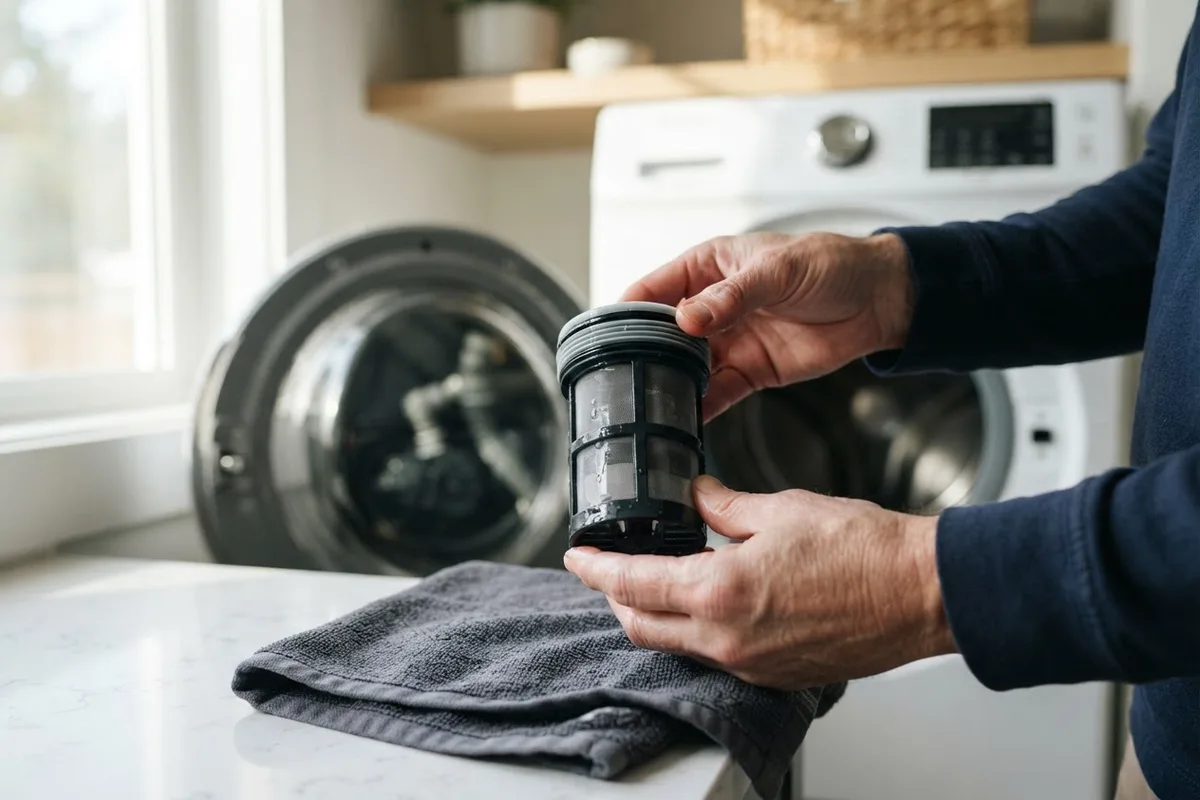
4. Drain Trapped Water and Clean the Filter
Coins, hairpins, lint clumps, and stray baby socks routinely jam the drain pump filter, stopping water from leaving the drum and keeping the safety lock engaged. Always disconnect power and shut off the water supply before opening lower access panels.
- Unplug the washing machine from the outlet—or switch off its dedicated circuit breaker—and turn both water supply valves clockwise to close them.
- Lay thick bath towels and a shallow baking sheet beneath the small access panel at the bottom front corner of the washer.
- Pop open the panel, unclip the narrow black emergency drain hose, pull the stopper, and empty the water slowly into your pan.
- Unscrew the round drain pump filter counterclockwise, clear out debris, rinse the screen clean, and screw it back in snugly. Managing standing water safely also pairs well with these steps on how to prevent appliance leaks.
5. Unplug and Use the Emergency Release Tab
Once you have drained the tub and verified no water sits against the glass, many front-load models let you bypass a stuck electronic latch manually. Check your owner's manual first, because not every model includes an accessible pull tab.
- Confirm the washer is completely unplugged and both water valves are shut off before reaching inside any cabinet opening.
- Look inside the lower drain-filter compartment—or just beneath the top lid lip on certain machines—for a small plastic pull tab, ring, or nylon cord.
- Gently pull the tab straight downward until you hear or feel a soft mechanical click at the door latch.
- Open the door carefully with your other hand while keeping towels ready for any residual drips. If trapped damp laundry sat for hours and picked up a stale odor, follow these tips on how to deodorize home appliances.
6. Inspect the Door Latch and Seal Alignment
A pinched garment, sagging hinge, or swollen rubber boot can put outward pressure on the door strike, preventing the latch pin from sliding back cleanly. Check for physical binding before assuming the electronic switch has died.
- Check along the perimeter of the rubber door gasket for a trapped sleeve, drawstring, or sock wedged tightly near the latch.
- Push inward gently on the door near the handle while pressing the unlock or power button; slight inward pressure often relieves tension on a misaligned strike.
- Inspect the metal or plastic strike hook on the door for bends, cracks, or loose mounting screws once open.
- Wipe soapy buildup off the latch receiver and rubber seal with a damp microfiber cloth so sticky residue does not bind the mechanism next cycle.
Quick Reference: Why a Washer Door Stays Locked
| Symptom | Most Likely Cause | Safe First Step |
|---|---|---|
| Padlock icon lit, buttons dead | Control lock is active | Hold lock button 3–5 seconds |
| Water visible behind glass | Clogged drain pump filter | Unplug, drain hose, clean filter |
| Door stays locked after hot wash | Thermal latch still cooling | Wait 5 minutes with power off |
| Door clicks but won't swing open | Pinched fabric or misaligned strike | Push door inward gently at handle |
| No click, burning smell, or tripped breaker | Failed door lock switch or wiring | Unplug and call a repair pro |
When to Call a Pro
If you have drained the tub, cleaned the filter, and reset the power—yet your washing machine door still won't open—the internal door lock switch, wiring harness, or main control board may have failed. Stop DIY troubleshooting right away if the washer repeatedly trips your circuit breaker, smells like hot electrical wiring, or requires removing the top panel and reaching near live internal components; never attempt electrical panel work or internal wiring repairs yourself.
In the US, having a technician replace a failed washer door lock assembly or drain pump typically runs around $150 to $350 total, though exact pricing varies by area and model. Before booking service, weigh the repair cost against your machine's age and overall condition. When you are ready for hands-on help, True Appliance Repair can match you with a local washer and dryer repair pro to diagnose the latch safely and get your laundry routine moving again.
FAQ
How do I force a washing machine door open safely?
Never pry the door with a screwdriver or yank the handle, which can shatter the glass or snap the hinge. Instead, unplug the machine, drain standing water through the bottom emergency hose, and pull the manual release tab inside the filter panel if your model has one.
Why won't my washer door unlock after draining the water?
Even after the tub looks empty, a clogged pressure-switch air trap or a failed door lock solenoid can trick the control board into thinking water remains inside. Unplugging the washer for five minutes resets the board, and if the latch still refuses to click, the lock assembly likely needs replacement.
Can I wash clothes if the washer door latch is loose?
No—running a cycle with a damaged strike or loose latch risks sudden water leaks onto your floor or mid-spin door failures. Tighten loose strike screws right away, or wait for a repair technician to replace worn latch parts before starting another load.
How long does a front-load washer stay locked after a cycle?
Most machines unlock within one to three minutes after the final spin stops, though high-heat sanitize cycles can take up to five minutes to cool down. If the padlock icon remains lit past ten minutes, check for standing water or an active control lock.