
Hidden appliance filters trap grease, food scraps, lint, and mineral grit every day—and when they clog, machines smell bad, run longer, and wear out sooner. Knowing how to clean appliance filters across your kitchen and laundry room takes less than an hour and helps prevent avoidable breakdowns. Before starting any hands-on step below, unplug the appliance or switch off its breaker, shut off water or gas valves when moving units, and let heated surfaces cool completely.
1. Scrub the Dishwasher Sump Filter
Food residue and soap grease quickly coat the manual filter sitting at the bottom of most modern dishwashers, leaving cloudy film on glasses and straining the drain pump.
- Confirm the dishwasher is turned off and the bottom heating element is completely cool; flip the dedicated breaker off for added safety.
- Slide out the lower dish rack to expose the sump area beneath the bottom spray arm.
- Twist the upper cylindrical filter counterclockwise to lift it out, then lift the flat fine-mesh plate underneath.
- Rinse both pieces under warm running water to flush loose debris.
- Soak the filters in warm water mixed with mild dish soap for 10 minutes, then gently scrub the mesh with a soft nylon brush and a pinch of baking soda.
- Rinse thoroughly, seat the flat screen flush, and lock the cylinder back in place until it clicks.
2. Clean the Washer Drain Pump Filter
Front-load washing machines hide a coin trap behind a small lower front panel, while some top-load washers have a removable lint filter inside the agitator or along the tub rim. Hair, coins, and soggy lint here can trigger slow draining and foul odors.
- Unplug the washing machine and turn off the hot and cold water supply valves.
- Lay a thick towel and a shallow baking pan under the lower access panel.
- Open the panel, pull out the small emergency drain tube if equipped, remove its plug, and let standing water drain into the pan.
- Slowly unscrew the pump filter counterclockwise so any leftover water trickles safely into the pan.
- Pull out trapped hair, buttons, and lint, then rinse the filter under warm tap water.
- Wipe inside the filter cavity with a damp cloth—if you find dark buildup or musty residue, follow our guide on how to clean mold from appliances—then screw the cap back in snugly.
3. Wash Dryer Lint and Secondary Filters
Pulling lint off the screen after every load is essential, but dryer sheets and liquid fabric softeners also leave an invisible waxy film that chokes airflow and makes loads take longer to dry.
- Unplug the dryer (and shut off the gas supply valve if you plan to move a gas unit away from the wall).
- Pull out the main lint screen and wipe away loose lint by hand.
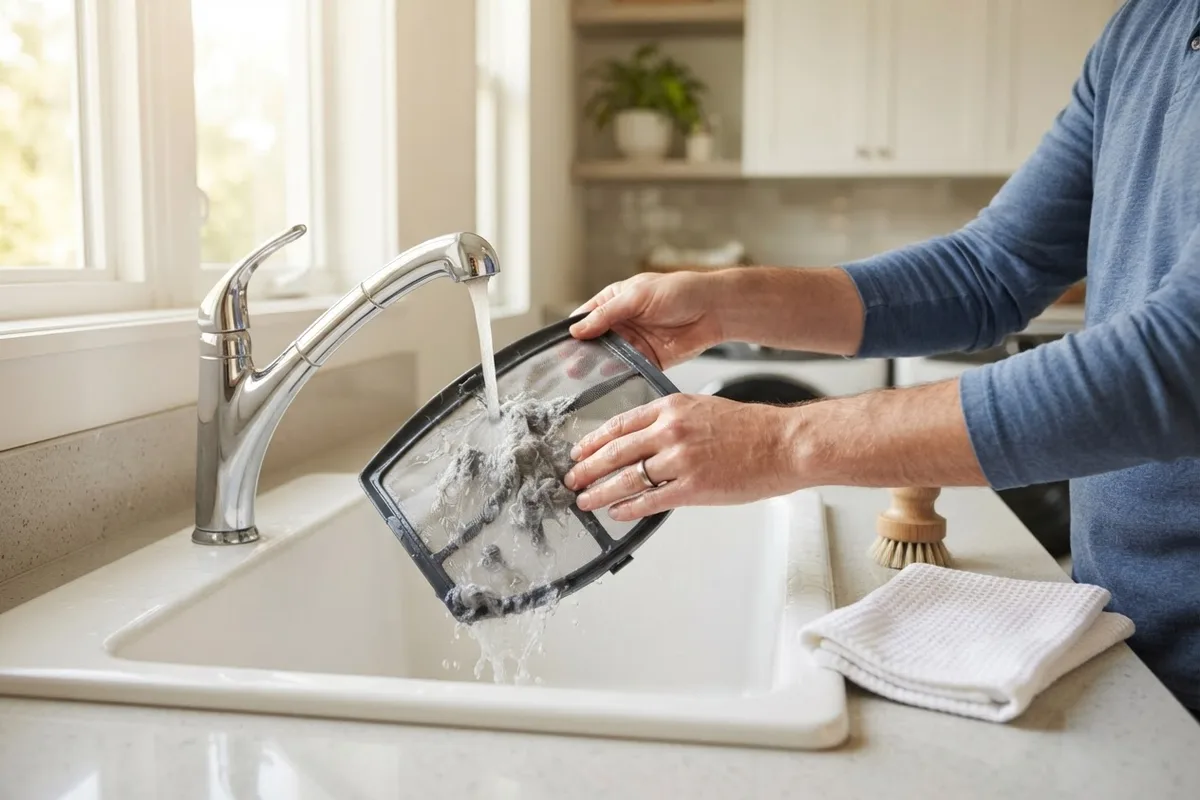
- Hold the mesh screen under warm tap water—if water pools instead of flowing right through, residue is blocking the weave.
- Scrub both sides gently with mild dish soap and a soft toothbrush, rinse completely, and let the screen air dry fully before reinstalling.
- Use a narrow vacuum crevice attachment to pull stray lint from the recessed lint slot.
- If you own a ventless or heat-pump dryer, open the lower access flap to rinse or vacuum the secondary condenser filter per your owner's manual.
4. Degrease Range Hood and Microwave Filters
Sticky cooking grease clogs aluminum mesh filters inside range hoods and over-the-range microwaves, trapping cooking odors and increasing fire risk above the stove.
- Turn off the cooktop, wait until all burners are cool, and switch off the hood breaker or unplug the unit.
- Release the spring latches under the hood or microwave to slide out the metal grease filters.
- Fill your sink with very hot water, a generous squirt of degreasing dish soap, and 1/4 cup of baking soda.
- Submerge the metal filters for 15 minutes so the warm solution dissolves baked-on oil.
- Scrub gently with a non-abrasive brush, rinse with hot water, and dry completely with a clean towel before snapping them back in.
- Check whether your ductless vent uses a dark charcoal recirculation filter; charcoal filters cannot be washed and should simply be replaced when saturated.
5. Replace Refrigerator Water and Air Filters
Unlike washable mesh screens, refrigerator water and air filters rely on activated carbon media that loses effectiveness over time. An expired water filter slows dispenser flow and can leave ice cubes tasting stale.
- Turn off the ice maker switch before opening the filter housing.
- Locate the water filter—usually in the upper right corner of the fresh-food compartment or along the lower front base grille.
- Twist counterclockwise or press the release button to remove the spent cartridge, keeping a towel nearby for a few drips.
- Align the new model-matched filter and twist or push firmly until it locks.
- Run 2 to 3 gallons of water through the dispenser to purge trapped air and harmless carbon dust, and discard the first batch of ice.
- Swap the snap-in refrigerator air filter if equipped, reset the control panel indicator, and pair this task with our refrigerator maintenance checklist.
6. Rinse Washer Inlet Screens and Sink Strainers
Small sediment screens sit where water supply hoses thread into the back of your washing machine. Rust flakes and mineral grit can gradually choke water flow, causing slow fills or error codes.
- Unplug the washer and turn both hot and cold wall valves firmly clockwise to shut off the water.
- Place a towel and small bucket beneath the back connections, then unscrew the fill hoses from the machine.
- Inspect the tiny mesh screens recessed inside the hot and cold inlet ports.
- If your manual states the screens are removable, pull them gently with needle-nose pliers and rinse under warm water; if they are fixed, carefully brush away grit in place using a clean toothbrush without poking holes in the mesh.
- Reattach the hoses hand-tight plus a quarter turn, open the valves, and check for drips.
- Finish in the kitchen by scrubbing sink basket strainers and the underside of the garbage disposal splash guard with hot soapy water.
Quick-Reference Appliance Filter Schedule
Keep this schedule handy so no hidden screen goes forgotten through the year.
| Appliance Filter | Clean or Replace | Typical Frequency | Typical DIY Part Cost* |
|---|---|---|---|
| Dishwasher sump filter | Clean | Monthly | $0 (washable); $20–$50 if torn |
| Washer drain pump filter | Clean | Every 1–3 months | $0 (washable) |
| Dryer lint & secondary filter | Clean | Empty every load; wash monthly | $0 (washable); $15–$40 if damaged |
| Range hood / microwave filter | Clean metal / replace charcoal | Clean every 1–3 months; swap charcoal every 6 months | $15–$45 for replacements |
| Refrigerator water & air filters | Replace | Every 6 months | $20–$65 per cartridge |
| Washer water inlet screens | Clean | Every 6–12 months | $0 (cleanable); $10–$25 for new hoses |
*Part prices reflect broad typical US ranges and vary by area, brand, and model.
When to Call a Pro
Routine filter cleaning is a safe DIY task, but stop immediately and call a technician if you smell natural gas or propane, spot burned wiring, notice breakers tripping repeatedly, or suspect a sealed-system refrigeration leak. You should also bring in help if water leaks from an internal valve after reassembly, a stuck pump filter refuses to turn without cracking the housing, or a deep vent duct behind a dryer or range hood needs disassembly. In the US, a standard professional diagnostic and minor filter-housing or drain-pump service typically runs around $100 to $250, though exact costs vary by area, appliance type, and model. When a routine cleaning reveals a bigger mechanical or drainage issue, True Appliance Repair can connect you with a local technician through our appliance repair services page.
FAQ
Can I put metal range hood and dishwasher filters in the dishwasher?
Skip the dishwasher for both. Harsh automatic dishwasher detergents can oxidize and darken aluminum range hood filters, and high water pressure can warp or tear fine plastic-framed dishwasher sump screens. A short soak in warm soapy water with baking soda cleans them safely without damage.
How do I know if an appliance filter needs cleaning or replacing?
Washable metal and nylon mesh filters only need replacing if the frame cracks, the gasket fails, or the mesh rips and lets debris pass through. Carbon-based refrigerator water filters, fridge air filters, and ductless range hood charcoal filters cannot be washed and should be swapped on schedule or sooner if odors or slow flow appear.
What happens if I forget to clean my appliance filters?
Blocked filters restrict water and airflow, forcing motors, heating elements, and drain pumps to work much harder than designed. Over time, that extra strain leads to lingering odors, poorly cleaned dishes or laundry, higher energy use, and premature component failure.
Is it safe to clean washing machine and dryer filters myself?
Yes, basic filter maintenance is designed for homeowners as long as you follow safety basics. Always unplug the machine first, turn off water supply valves before opening drain traps or fill hoses, shut off gas valves before moving a gas dryer, and never remove sealed internal panels or electrical covers.