
Dark spots along a rubber door seal or a lingering musty smell near the kitchen sink usually mean mold has taken hold inside your home's hardest-working machines. Because washers, dishwashers, refrigerators, and disposals trap warmth and moisture every day, mildew spreads quickly—especially in cooler months when windows stay shut. Follow these six safe DIY steps to remove buildup, neutralize odors, and keep mold from returning across your major appliances.
1. Cut Power, Shut Off Water, and Prep Safely
Before scrubbing any gasket, filter, or drain, protect yourself and your equipment from electrical shocks, water leaks, and harsh chemical fumes. Gather distilled white vinegar, baking soda, mild dish soap, microfiber cloths, a soft nylon brush, and rubber gloves.
- Unplug freestanding units from the wall outlet, and switch off the dedicated circuit breaker for hardwired machines like dishwashers or garbage disposals.
- Close the nearby water shutoff valve before inspecting hoses or pulling a machine from the wall, and shut off the gas valve before moving any gas-connected unit.
- Open a window or run an exhaust fan to keep fresh air circulating while you work.
- Use one cleaner at a time—never mix chlorine bleach with vinegar, ammonia, or other products, as combining them creates dangerous fumes.
Keeping supplies simple protects rubber seals and metal finishes while clearing surface spores safely.
2. Scrub Washing Machine Gaskets and Drawers
Laundry machines hold damp air between cycles, making front-load door boots and soap trays prime spots for black mildew and slimy detergent residue. Once power is off, gently pull back the flexible rubber gasket and inspect every fold.
- Wipe out loose lint, hair, and standing water with a dry microfiber cloth.
- Spray undiluted distilled white vinegar onto a clean cloth—or directly onto stubborn dark spots—and let it sit for 10 minutes to loosen mildew.
- Scrub softly along inner creases with a toothbrush dipped in a paste of baking soda and warm water.
- Remove the soap tray and soak it in warm soapy water; our guide to deep-cleaning a washing machine detergent drawer covers clearing hidden siphon tubes and housing cavities.
- Restore power, pour two cups of white vinegar into the empty drum, and run a hot wash cycle to flush loosened residue away.
3. Flush Mold From Dishwasher Filters and Seals
Food particles paired with warm, humid wash cycles create an easy breeding ground for pink slime and dark mold along the tub floor and door edge. With the breaker switched off, slide out the lower rack so you can reach the bottom sump.
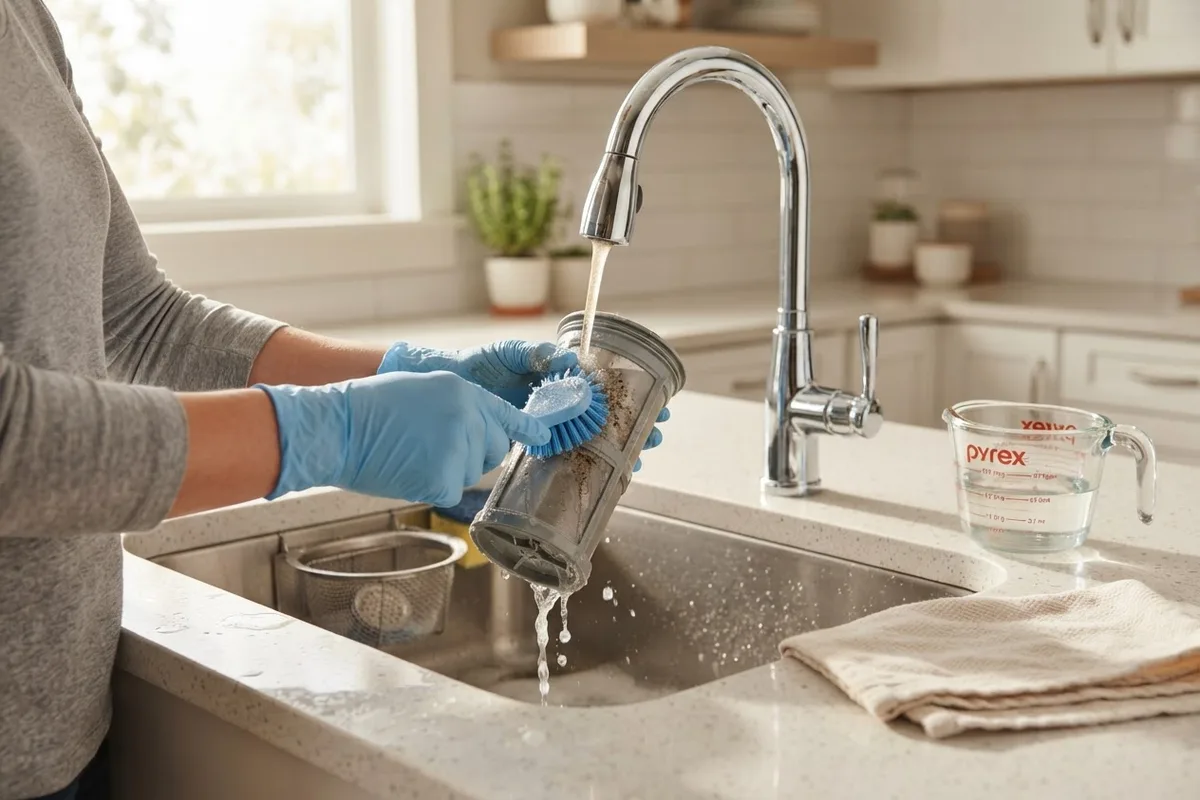
- Twist out the cylindrical mesh filter and flat screen, then rinse them under hot tap water while scrubbing gently with mild dish soap and a soft nylon brush.
- Clear trapped debris from spray arm holes with a wooden toothpick so water circulates freely.
- Wipe the door gasket, bottom hinge lip, and soap cup with a vinegar-dampened cloth, focusing on corners where film collects.
- Reinstall the filter, turn the breaker back on, place a dishwasher-safe cup with one cup of white vinegar on the top rack, and run a hot cycle without detergent.
- Dust baking soda across the tub floor and run a short hot rinse.
4. Wipe Refrigerator Gaskets, Bins, and Drip Pans
Chilled air slows fungal growth, yet condensation inside produce bins, dispenser trays, and door seals still lets dark spots form. Always unplug the refrigerator before reaching underneath or behind the cabinet.
- Remove crisper drawers and glass shelves, letting glass warm to room temperature before washing in warm soapy water so it will not crack.
- Wipe interior walls, shelf tracks, and the water dispenser tray using white vinegar or a mild baking soda solution (two tablespoons per quart of warm water).
- Fold back the accordion ridges of the rubber door gasket and scrub away sticky spills and mildew with a soft brush; avoid harsh bleach on gaskets, which can dry out and crack rubber.
- If your unit has an accessible bottom drain pan behind the toe kick, slide it out, wash it with warm soapy water, and dry it fully.
- Wipe all surfaces and seals completely dry before restoring power.
5. Clean Garbage Disposal Baffles and Sink Drains
A sour, earthy odor rising from the kitchen sink usually hides underneath the black rubber splash guard rather than deep in your plumbing. Put safety first around grinding blades.
- Turn off the wall switch and flip the disposal circuit breaker off before touching the sink opening; never put your hands inside the grinding chamber.
- Lift out the removable rubber baffle—or flip fixed flaps upward—and scrub the underside with hot soapy water and a long-handled brush to clear grease and black biofilm.
- Wipe the sink flange and underside of the splash guard with distilled white vinegar to neutralize lingering mildew spores.
- Reinstall the baffle, restore power, and drop a handful of ice cubes with half a cup of baking soda into the drain.
- Run cold water while switching the disposal on for 20 seconds, then slowly flush with one cup of white vinegar followed by cold water.
6. Dry Hidden Spaces and Block Future Moisture
Removing visible spots only solves half the issue; trapped humidity behind cabinets and inside closed tubs will bring mold straight back. Build a few quick drying habits into your routine.
- Prop the washer door, detergent drawer, and dishwasher door ajar for a few hours after every cycle so warm steam escapes instead of condensing on seals.
- Wipe front-load rubber boots and refrigerator dispenser trays dry with a clean towel each week.
- Inspect hoses and flooring behind units twice a year—our steps for cleaning behind your home appliances explain how to pull heavy units forward without kinking hoses or scratching floors.
- Run kitchen and laundry exhaust fans or a small dehumidifier during damp winter stretches when windows stay closed.
- Measure detergent carefully, since leftover soap film traps moisture and feeds new buildup.
Appliance Mold Cleaning Quick-Reference
| Appliance | Top Mold Hotspot | Safe DIY Cleaner | Recommended Schedule |
|---|---|---|---|
| Washing Machine | Door gasket & soap drawer | White vinegar & baking soda | Monthly |
| Dishwasher | Mesh filter & lower door lip | Mild dish soap & vinegar | Monthly |
| Refrigerator | Door seals, crispers & drip pan | Baking soda solution & vinegar | Every 2–3 months |
| Garbage Disposal | Underside of splash guard | Dish soap, ice & vinegar | Every 2–4 weeks |
| Behind Appliances | Floor dust & hose fittings | Warm soapy water & dry cloth | Every 6 months |
When to Call a Pro
Routine surface cleaning clears most household mildew, but certain warning signs mean you should stop DIY work and call an appliance technician. Schedule professional service if you spot mold inside electrical control panels, notice heavy musty odors coming from sealed refrigerator insulation, find water pooling under a built-in unit, or have a washer or dishwasher that refuses to drain completely.
Never open sealed refrigeration lines, adjust gas supply fittings, or take apart hardwired electrical panels yourself. In addition, if a rubber door gasket is deeply pitted, cracked, or stays slimy right after scrubbing, replacing the seal is far more effective than repeated soaking. In the US, having a technician replace a worn appliance gasket or fix a hidden drainage leak typically costs around $120 to $350 for parts and labor combined, though pricing varies by area and appliance model.
If hidden leaks or internal buildup go beyond simple surface cleaning, True Appliance Repair can match you with a local appliance repair service to inspect the machine safely and fix the underlying moisture source.
FAQ
Can I use bleach and vinegar together to clean appliance mold?
No—never mix chlorine bleach with vinegar, ammonia, or other household cleaners. Combining bleach and vinegar releases toxic chlorine gas that irritates eyes and lungs quickly in enclosed laundry rooms or kitchens. Stick to white vinegar and baking soda for routine mold removal, and rinse thoroughly with plain water between different products.
Why does mold keep coming back in my appliances during winter?
Cooler weather keeps homes closed up with less fresh airflow, trapping steam from hot showers, dishwashers, and laundry loads indoors. When warm, humid air sits inside a closed washer drum or against a cool wall behind a refrigerator, spores rebound fast. Running exhaust fans and leaving appliance doors cracked open after use helps stop regrowth.
When should I replace a moldy appliance gasket instead of cleaning it?
Faint dark shadows can sometimes stay on rubber seals even after the mold is cleaned away, which is usually cosmetic. However, if the rubber smells musty right after washing, feels slimy again within days, or shows tears, brittleness, or gaps that leak water or cold air, replacing the gasket is the safer fix.
Does running an empty hot cycle kill all mold inside a machine?
An empty hot cycle with distilled white vinegar helps flush soap scum, grime, and surface odors from hoses and drums, but hot water alone cannot scrub inside folded gaskets or clogged filters. Hand-clean rubber seals, soap drawers, and mesh screens first so the hot rinse carries loosened debris completely down the drain.