
Hearing a sudden pop, bang, or rhythmic snapping sound from the laundry room can make you think something inside your appliance just broke. While a dryer making a popping noise is sometimes caused by something as harmless as metal jeans buttons hitting the drum, it can also point to worn rollers, a frayed belt, or a sparking power connection. Use these six safe troubleshooting checks to track down the exact source of the noise and get your dryer running quietly again.
Before doing any hands-on inspection, unplug the dryer from the wall outlet. If you have a gas dryer, turn the gas shutoff valve behind the machine to the closed position and avoid disturbing the flexible gas line.
1. Check Pockets and Heavy Metal Fasteners
Before taking tools to your machine, rule out the laundry load itself. Heavy metal zippers, brass jeans buttons, belt buckles, and forgotten pocket items expand when heated and smack against the steel drum baffles as they tumble, creating a sharp popping or cracking sound.
- Pause the cycle and open the dryer door.
- Shake out every garment and check pockets for coins, keys, lighter cases, or small toys.
- Inspect the inner drum seams and the lint screen housing to see if a zipper pull or underwire has caught on a plastic edge.
- Zip up all jackets and pants, fasten metal snaps, and turn heavy denim inside out.
- Run the dryer completely empty on an air-fluff (no heat) cycle for two minutes. If the popping sound disappears when the drum is empty, the noise was coming from your clothes. If you still hear a rhythmic clatter, check our guide on why your dryer is making a rattling noise for other small-object hiding spots.
2. Inspect the Drive Belt for Missing Ribs
A rubber drive belt wraps around the outside of the dryer drum and connects to the motor pulley. Over years of heat exposure, the thin rubber dries out, cracks, or loses small chunks of its grooved underside. Every time that damaged section passes over the small motor pulley at high speed, it snaps against the metal and produces a rapid popping sound.
- Unplug the dryer and pull it a few feet away from the wall.
- Open the door and spin the drum slowly by hand, listening for a soft click or feeling for a slight hiccup in the rotation.
- Pop up or unscrew the top panel (depending on your model) to view the narrow black belt wrapped around the middle of the drum.
- Slowly rotate the drum one full turn while inspecting the belt for frayed edges, splits, or missing rubber ribs.
- If the belt looks chewed up or loose, replace it with a manufacturer-matched belt. A replacement belt typically costs $15 to $35 for the part, depending on the model.
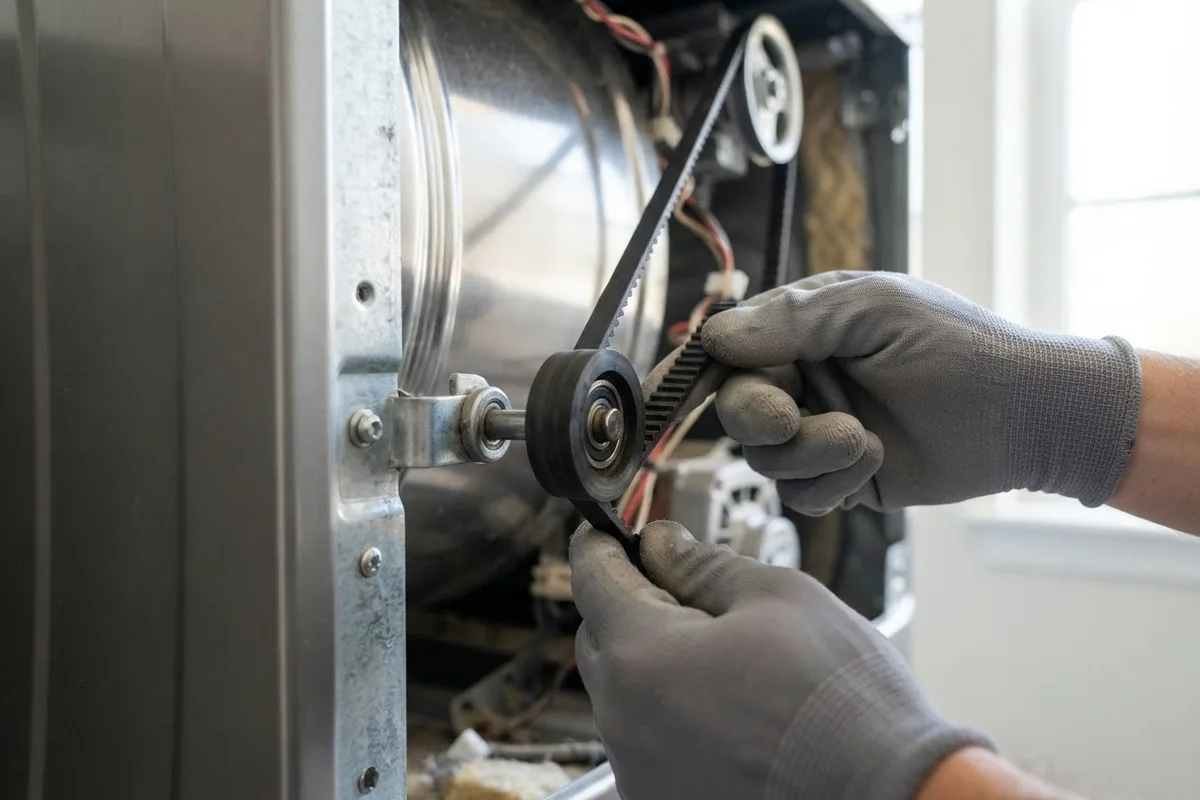
3. Examine Worn or Flat-Spotted Drum Rollers
Most dryers support the rear (and sometimes the front) of the heavy steel drum on two to four rubber-wheeled drum rollers. If wet clothes are left sitting in the dryer overnight, or if the machine sits unused for weeks, the weight of the drum can press a flat spot into the hard rubber wheel. As the drum turns, that flat spot hits the metal rim once per revolution, sounding like a dull pop or thump.
- With the dryer unplugged, reach inside the empty drum and lift up firmly on the back wall.
- If you feel vertical play or hear a clunk, the rear drum rollers or their metal shafts are worn.
- Remove the front panel and drum (follow your model's service manual) to expose the rollers mounted on the rear bulkhead.
- Spin each roller by hand. It should glide smoothly and silently without wobbling on its shaft.
- Run your fingers around the rubber tread to feel for flat spots, cracks, or chunks of missing rubber. Always replace drum rollers as a complete set so the drum sits level.
4. Check the Blower Wheel for Trapped Debris
Small items that slip past a torn lint screen—such as cherry pits, collar stays, bobby pins, or clumps of hardened lint—drop directly into the blower wheel housing. Because the plastic blower wheel spins at very high RPMs, a small piece of debris striking the plastic fins makes a loud, rapid popping or snapping noise.
- Unplug the dryer and pull the lint trap out of its slot.
- Shine a flashlight down the lint chute to look for torn mesh or visible debris.
- Use a long, flexible lint brush or a crevice vacuum attachment to clean out the lint trap housing.
- Disconnect the rigid exhaust duct from the back of the dryer and look inside the rear exhaust port.
- Reach in carefully (wearing work gloves) to see if a coin or plastic fragment is wedged against the blower wheel blades, and verify that the wheel does not wobble on the motor shaft.
5. Listen for Heating Element or Gas Igniter Pops
Sometimes a popping noise has nothing to do with moving parts and only happens when the heat kicks on. Both electric and gas dryers can make distinct popping sounds during the heating phase.
- Run the dryer on the Air Fluff / No Heat setting for five minutes. If the popping stops completely, the sound is tied to the heating system.
- On an electric dryer: A warped metal heating element housing can expand and pop as it heats up and cools down—similar to a metal baking sheet warping in an oven. However, a sharp "pop-buzz" followed by loss of heat or a tripped breaker can mean the heating coil has snapped and touched the metal cabinet.
- On a gas dryer: A loud "whoosh-pop" or mini-boom when the burner lights usually means the gas igniter is weak or the burner tube ports are partially clogged with lint, causing a tiny delay before the gas ignites.
- Never attempt DIY repairs on gas valves or burner assemblies. Shut off the gas supply and call a technician immediately.
6. Inspect the Terminal Block and Power Cord
If you hear a sharp electrical pop or snapping sound paired with an ozone or burnt-plastic smell, stop using the dryer right away. Loose power cord screws on the rear terminal block can arc when the dryer draws heavy current, producing a loud pop and creating a fire hazard.
- Unplug the dryer from the 240V outlet (or 120V outlet for gas models).
- Inspect the plug prongs and the wall receptacle for black scorch marks, melted plastic, or loose blades.
- Remove the small metal access cover on the upper back of the dryer where the heavy power cord enters the cabinet.
- Look closely at the three brass terminal screws and the wire insulation. They should be bright, clean, and tight—never charred, blackened, or brittle.
- If you see burned wiring or melted insulation, leave the dryer unplugged and schedule a professional repair before using the machine again.
Quick-Reference: Dryer Popping Noise Guide
| What the Pop Sounds Like | When It Happens | Most Likely Cause | Typical DIY Difficulty |
|---|---|---|---|
| Random sharp metallic pops | Only with clothes inside | Jeans buttons, zippers, or pocket coins | Easy (check load) |
| Fast, rhythmic snapping | Continuous while drum spins | Frayed drive belt with missing rubber ribs | Moderate |
| Dull, heavy pop once per turn | Worst when drum is heavily loaded | Flat-spotted or cracked drum support roller | Moderate |
| High-speed plastic clacking | Starts immediately with motor | Debris hitting the blower wheel fins | Easy to Moderate |
| Single loud pop or "mini-boom" | Every few minutes on heat cycles | Warping heater box or delayed gas ignition | Pro Recommended |
| Sharp electrical snap + odor | At startup or mid-cycle | Loose terminal block or shorted heating coil | Pro Recommended |
When to Call a Pro
Emptying pockets, cleaning out the lint chute, and even swapping a frayed drive belt or worn drum roller are manageable weekend projects if you are comfortable using basic hand tools with the appliance unplugged. However, you should stop and call a professional if the popping sound comes from the gas burner assembly, if you smell gas or burning wiring, or if the dryer trips your circuit breaker. Working on gas valves, high-voltage terminal blocks, and internal motor assemblies requires specialized testing gear. If your laundry room needs expert attention, True Appliance Repair can match you with a local pro for dependable washer and dryer repair—or you can contact our team to get connected with a technician in your area.
FAQ
Is it safe to run my dryer if it is making a popping noise?
If you have confirmed the popping noise is just heavy zippers or buttons hitting the drum, it is completely safe to run. However, if the noise persists when the drum is empty—especially if you hear a sharp electrical snap, smell something burning, or hear a mini-boom on a gas dryer—unplug the dryer immediately and have it inspected.
Why does my dryer pop even when it is turned off?
If your dryer makes a few loud metallic pops right after a cycle finishes, you are likely hearing normal thermal contraction. As the thin sheet metal around the heating element housing and exhaust duct cools down from high temperatures, the metal flexes back into shape, much like a metal cookie sheet cooling on a counter.
How much does it cost to fix a dryer making a popping noise?
DIY part costs are relatively low: a replacement drive belt or a set of drum support rollers typically runs between $15 and $55 depending on the brand. If you hire an appliance technician to replace worn rollers, a belt, or a damaged heating element, total repair costs in the US generally range from $150 to $350, though exact pricing varies by region and dryer model.
Can a clogged dryer vent cause popping noises?
Indirectly, yes. A clogged dryer vent traps excessive heat inside the cabinet, which causes the metal heater box to warp and pop loudly as it overheats. That trapped heat also bakes the rubber drum rollers and drive belt, making them brittle and prone to cracking much sooner than normal.