
Few kitchen quirks are more frustrating than shutting the refrigerator door, walking away, and coming back hours later to find the freezer door cracked open and a layer of frost coating your food. On top-freezer and bottom-freezer units alike, a freezer door popping open is usually caused by shared air pressure between compartments, a dirty magnetic gasket, or slightly tilted leveling legs. With a few basic household supplies and 20 minutes, you can fix the seal, stop cold air leaks, and protect your groceries from freezer burn.
Safety First: Before adjusting leveling legs, removing door hinges, or cleaning near internal fan vents, always unplug your refrigerator from the wall outlet and shut off the ice maker water supply valve if you need to pull the unit away from the wall.
1. Shared Air Pressure Pushes the Door Out
Inside most top-freezer refrigerators, the fresh food compartment and the freezer compartment are connected by internal air ducts that circulate cold air. When you swing the large lower refrigerator door shut quickly, it compresses a big pocket of air inside the cabinet. That rush of air travels straight up the connecting vents into the smaller freezer box, briefly pushing the lighter freezer door open before jumping back against the magnet.
- Open the freezer door and locate the rectangular air return vents along the floor or back wall of the freezer.
- Rearrange frozen pizza boxes, ice bags, and bulky containers so nothing restricts air movement between the two compartments.
- Check the lower refrigerator vents at the top of the fresh food cabinet to ensure tall milk jugs or condiment bottles are not blocking the air damper.
- Practice closing the main refrigerator door with a gentle push rather than a hard swing so excess air pressure can equalize naturally through the cabinet drain tube.
2. Sticky Spills or Grime Coat the Door Gasket
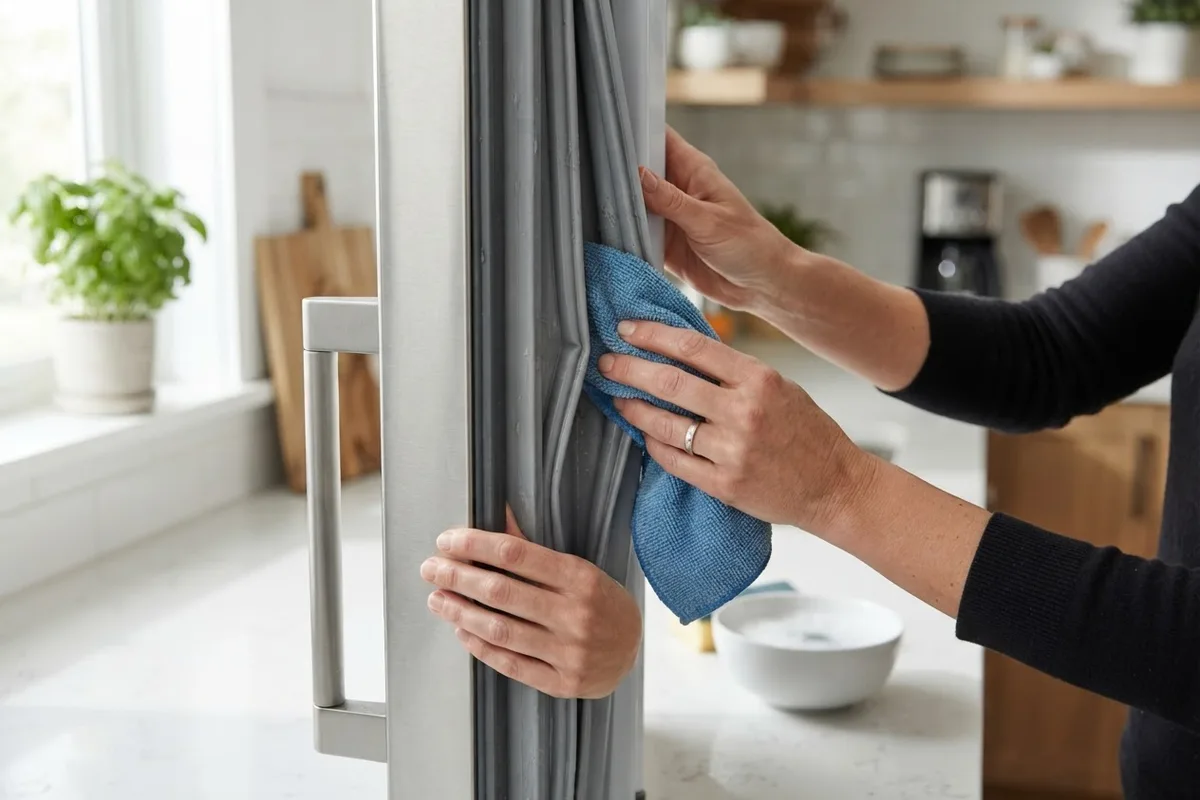
The soft rubber accordion strip running around the perimeter of your freezer door—called the gasket—contains a flexible magnetic strip inside its bottom fold. When syrup drips, food splatters, or greasy kitchen film build up along the rubber edge or the metal cabinet frame, the magnet cannot grip the steel tightly enough to resist the air pressure wave when the fridge door closes.
- Mix two cups of warm water with a few drops of mild dish soap and one tablespoon of baking soda in a small bowl.
- Dip a soft microfiber cloth into the solution and wipe the flat magnetic face of the freezer gasket all the way around the door.
- Gently pull back the accordion folds of the rubber seal and use a cotton swab dipped in the soapy water to clean out crumbs and sticky residue trapped inside the creases.
- Wipe the metal frame of the freezer cabinet completely dry with a clean towel, then smear a paper-thin layer of petroleum jelly along the hinge-side edge of the gasket so the rubber does not drag or bind as it closes.
3. The Refrigerator Leveling Legs Are Tilted Forward
Refrigerators are never meant to sit perfectly flat on the kitchen floor. Instead, manufacturers design them to tilt slightly backward—about a quarter of an inch from front to back—so gravity naturally pulls both doors shut if you let go of them partway. If your front leveling legs have settled into the flooring or were never raised during installation, gravity will pull the freezer door open the moment air pressure nudges it.
- Open both doors and place a carpenter's level front-to-back on the middle refrigerator shelf to check the pitch.
- Unplug the refrigerator and snap off the plastic bottom toe-kick grille at the front base of the cabinet.
- Locate the two adjustable front leveling legs or hex bolts at the bottom left and right corners.
- Use an adjustable wrench or flathead screwdriver to turn both front legs clockwise until the front of the refrigerator sits roughly one-quarter to one-half inch higher than the back, then test that the freezer door swings shut on its own when released halfway.
4. Overstuffed Shelves or Door Bins Block Full Closure
As you stock up on frozen meals, bulk meats, and baking ingredients for the season, a single protruding bag of frozen vegetables or a crooked ice bin is enough to keep the freezer door from compressing the gasket completely. Even a gap as thin as a credit card weakens the magnetic pull by more than half, making the door bounce open at the slightest vibration. If an unsealed door has already created a sheet of ice inside, review our guide on why your freezer is leaking water to clear any melted runoff safely.
- Open the freezer and inspect the door bins first; remove heavy jars or oversized freezer packs that hit the interior shelf frames when the door swings in.
- Push all items on the main wire or glass shelves at least one inch back from the front lip of the shelf.
- For bottom-freezer drawer models, pull the drawer all the way out and check behind the wire baskets—a stray frozen item that fell behind the basket will stop the glides a half-inch short every time.
- Close the freezer door on a crisp dollar bill at the top, bottom, and latch side, pulling the bill outward at each spot to confirm you feel firm, even tension all the way around.
5. Warped or Demagnetized Rubber Door Seals
Over years of opening and closing, the flexible vinyl or rubber freezer gasket can flatten out, harden from cold exposure, or pull loose from its retaining channel. When a section of the gasket warps inward, a gap forms between the magnet and the steel cabinet frame. If you also hear odd sounds when the unit struggles to keep up with warm air leaks, check out our troubleshooting tips for a freezer making a clicking noise.
- Run your fingers around the entire perimeter of the freezer gasket to find any corners that have popped out of the door liner groove, and press them firmly back into the channel.
- If a section of the rubber is flattened or kinked, set a household hair dryer to low heat and wave it back and forth 6 inches away from the rubber for 60 seconds until the vinyl softens.
- While the rubber is warm and pliable, gently massage and pull the accordion folds outward with your fingers so they touch the metal frame evenly.
- Close the freezer door and hold it firmly in place with a strip of painter's tape for two hours while the rubber cools and memorizes its restored shape.
6. Loose Door Hinges or a Worn Cam Riser
Every hinged freezer door rests on a lower hinge pin fitted with a small nylon ring called a cam riser. As the door swings into the last two inches of travel, the cam drops into a detent groove that helps hold the door shut. When hinge screws vibrate loose or the plastic cam riser cracks from age, the door sags slightly on the handle side and loses its self-closing snap.
- Unplug the refrigerator and remove all food items from the freezer door bins to take the weight off the hinges.
- Pry off the plastic top hinge cover at the upper corner of the freezer using a flathead screwdriver.
- Have a helper lift the handle side of the freezer door slightly so the top edge is parallel with the cabinet roof, then tighten the top hinge bolts snugly with a socket wrench or nut driver.
- Inspect the small plastic cam washer beneath the lower freezer hinge; if the plastic ring is split or ground down, replacing that inexpensive hardware piece will restore the door's self-closing action.
| Freezer Door Issue | How to Spot It Quickly | Typical Fix Cost (US Range) | Time Needed |
|---|---|---|---|
| Air Pressure Pop-Open | Door pops slightly only when slamming lower fridge door | $0 (Unblock vents & close gently) | 5 minutes |
| Dirty or Sticky Gasket | Visible food residue or sticky drag when opening | $0 (Warm soapy water & baking soda) | 15 minutes |
| Improper Cabinet Tilt | Door swings wide open instead of closing when let go | $0 (Raise front leveling legs 1/4 inch) | 15 minutes |
| Warped Gasket Corner | Dollar bill slides out easily at one corner | $0 – $180 (Heat reshape or new gasket; varies by model) | 30 minutes |
| Worn Hinge Cam Riser | Door sags crookedly or clicks loudly on the hinge pin | $15 – $120 (DIY part vs. pro install; varies by area) | 30 minutes |
| Bent Drawer Glide Rails | Bottom freezer drawer binds or sits uneven | $150 – $320 (varies by area/model) | 45 minutes |
When to Call a Pro
Cleaning door seals, adjusting front leveling legs, and reshaping a minor gasket kink with a hair dryer are quick projects almost any homeowner can tackle safely. However, if you have a heavy French-door or built-in refrigerator with bent drawer glide tracks, a cracked inner door liner, or severe frost buildup that has crept behind the back evaporator panel and stalled the cooling fans, it is best to call in a technician. Attempting to bend structural metal hinges or disassemble sealed cooling components without proper tools can permanently damage the cabinet.
When a stubborn door issue or cooling loss needs expert attention, True Appliance Repair can connect you with a trusted local pro for refrigerator repair who can replace worn gaskets, align heavy doors, and make sure your freezer holds a rock-steady temperature.
FAQ
Is it normal for the freezer door to pop open briefly when closing the fridge?
A tiny, split-second bounce that immediately seals itself back against the magnet is normal on many top-freezer refrigerators because both compartments share the same internal air ducts. However, if the freezer door stays cracked open instead of pulling itself shut, you need to raise the front leveling legs slightly and clean the magnetic gasket.
Why is my freezer door suddenly hard to pull openright after I close it?
When you close the freezer door, warm kitchen air trapped inside rapidly cools down and contracts, creating a temporary vacuum seal that holds the door tight for 15 to 30 seconds. This vacuum is actually a great sign that your door gasket is sealing properly, and the pressure will equalize through the drain tube after half a minute.
Can I use olive oil or cooking spray to lubricate a sticky freezer gasket?
No, you should never apply cooking oils, butter, or vegetable sprays to refrigerator gaskets because food-based oils turn rancid, become gummy, and slowly break down the rubber compound over time. Instead, use a tiny dab of pure petroleum jelly or food-grade silicone grease along the hinge-side fold.
How much does it cost to replace a freezer door gasket?
Buying a replacement OEM freezer door gasket yourself typically costs between $60 and $140 depending on the brand and door size, while hiring an appliance technician for parts and labor generally ranges from $150 to $280 (varies by area and model). Most press-in gaskets can be swapped in under 30 minutes after soaking the new seal in warm water to relax the shipping folds.