
A sink that fills with murky, foul-smelling water when you run the tap is an immediate disruption in any kitchen. When your garbage disposal backs up instead of pulling food waste down the drain, the problem usually stems from a localized clog, a jammed grinding chamber, or an obstructed drain line.
Before troubleshooting, safety comes first. Turn off the wall switch and unplug the unit beneath the sink, or shut off the dedicated breaker in your electrical panel. Never put your bare hands inside the disposal hopper, even with the power off. Use long tongs or a flashlight to inspect the interior.
Here are five common causes of garbage disposal backups and the practical steps to resolve each one quickly.
1. Clear a Jammed Shredder Plate in the Grind Chamber
When dense debris wedges beneath the rotating impellers or between the shredder plate and the housing ring, the motor cannot spin to pulverize food. Water collects above the stationary plate and quickly backs up into your sink basin.
- Confirm the electrical power is completely disconnected at the breaker or wall plug.
- Shine a flashlight straight down the sink drain opening to spot hard foreign objects like fruit pits, bones, bottle caps, or silverware.
- Extract visible blockages using a pair of long-nosed pliers or kitchen tongs.
- Locate the small hexagonal socket centered on the underside of the disposal unit under the sink.
- Insert a 1/4-inch hex Allen wrench into the socket and work it back and forth in both directions until the motor shaft turns freely 360 degrees.
- Restore power, run cold tap water, and push the red thermal reset button on the bottom of the unit before testing the switch.
2. Unclog Starch and Grease Buildup in the P-Trap
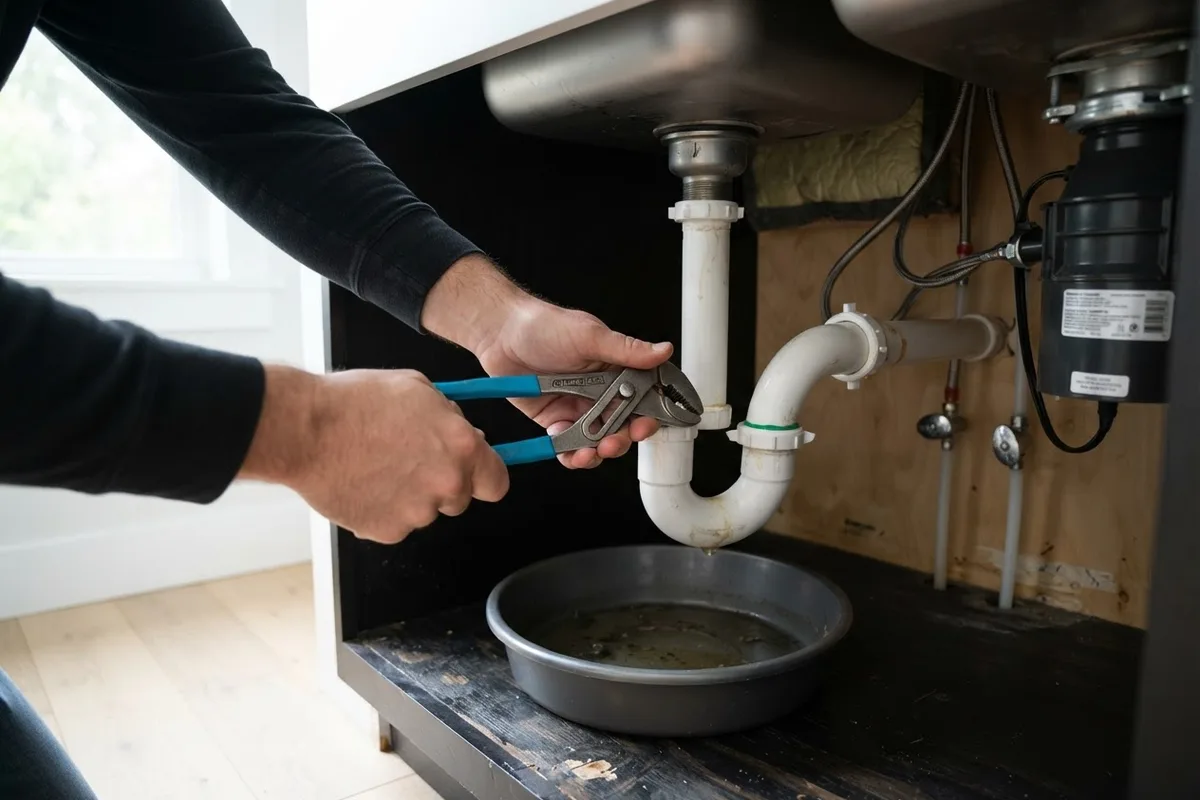
The curved pipe directly beneath the disposal outlet—the P-trap—is designed to hold standing water to block sewer gases. However, pouring grease, potato peels, pasta, or coffee grounds down the drain creates a thick paste that settles in this bend, preventing water from escaping into the main waste line.
- Place a shallow bucket or plastic bin beneath the PVC or metal drain pipes under the sink.
- Disconnect the power to the unit before working underneath the cabinet.
- Loosen the two slip-joint nuts securing the curved P-trap using channel-lock pliers or by hand.
- Pull the trap free and empty the trapped sludge and wastewater into your bucket.
- Scrub the inside curve of the pipe using a stiff bottle brush and warm soapy water to dislodge caked-on grease.
- Inspect the rubber washer rings for cracking before reinstalling the trap and hand-tightening the slip nuts.
3. Remove the Knockout Plug on New Dishwasher Connections
If your garbage disposal backs up with dirty, sudsy water specifically when your dishwasher runs, the drain hose connection on the disposal housing is likely blocked. Newly installed disposal units feature a solid plastic plug inside the dishwasher inlet nipple that must be punched out prior to hookup.
- Turn off power to both the disposal and the dishwasher.
- Loosen the hose clamp holding the corrugated dishwasher drain hose to the upper side barb on the disposal.
- Pull the hose off and inspect the interior inlet port with a flashlight.
- If a solid plastic barrier is present, insert a flathead screwdriver against the plug rim and tap it firmly with a hammer until it snaps inward.
- Reach inside the disposal grinding chamber with tongs to retrieve and discard the loose plastic disk so it does not jam the impellers.
- Reattach the drain hose and tighten the clamp securely to prevent leaks.
| Backup Symptom | Most Likely Cause | Primary DIY Solution |
|---|---|---|
| Motor hums, water stands in sink | Jammed impellers or shredder ring | Clear debris with tongs; turn hex wrench under unit |
| Water slowly rises during tap use | P-trap or waste arm grease buildup | Remove and scrub P-trap; clear horizontal waste arm |
| Sudsy backup during wash cycles | Dishwasher knockout plug or kinked hose | Punch out inlet plug; straighten drain line loop |
| Both double-sink basins back up | Clog past the sanitary tee in wall pipe | Snake the branch drain line past the wall adapter |
| Water drains then bubbles back up | Obstructed plumbing vent stack on roof | Clear vent stack or call a professional plumber |
4. Clear Blockages in the Horizontal Waste Arm
The horizontal pipe connecting the disposal discharge elbow to the wall outlet pipe is another primary collection point for slow-draining food solids. Fibrous vegetables like celery, corn husks, and artichoke leaves wrap around internal pipe joints and catch passing debris.
- Disconnect the disposal electrical supply and position a catch basin under the plumbing assembly.
- Unscrew the two bolts on the disposal discharge flange, or loosen the slip nut attaching the discharge elbow.
- Remove the straight horizontal waste arm connecting the trap to the threaded wall inlet.
- Push a small sink auger or flexible drain snake 3 to 6 feet through the horizontal wall pipe to snag deep-seated plugs.
- Flush the disassembled pipe sections in a separate utility sink before reassembling the drain line.
- Run cold water through the disposal for 60 seconds to confirm free flow and check joints for seepage.
If you find persistent leaks around the housing or mounting flange during this process, review our guide on why your garbage disposal is leaking for targeted component fixes.
5. Dissolve Organic Slime with a Natural Deep Clean
Over months of regular use, biological film, decaying food particles, and mineral scale narrow the internal diameter of both the grinding chamber and splash guard. This restricts drainage velocity and causes minor backups during heavy water flow.
- Pour 1/2 cup of baking soda directly into the disposal drain opening with the unit switched off.
- Slowly pour 1 cup of distilled white vinegar over the baking soda and allow the foaming mixture to sit for 15 minutes.
- While the mixture reacts, scrub the underside of the removable rubber splash guard baffles using an old toothbrush and liquid dish soap.
- Bring a kettle of water to a rolling boil and pour it down the drain to flush loosened residue.
- Fill the hopper halfway with ice cubes and 1 cup of coarse rock salt, restore power, turn on cold water, and run the disposal for 30 seconds to scour the grinding components clean.
For ongoing maintenance habits that prevent recurring buildup, explore how to clean a garbage disposal with step-by-step deodorizing routines.
When to Call a Pro
Most garbage disposal backups resolve with mechanical unjamming, P-trap cleaning, or clearing the dishwasher inlet. However, some situations require professional diagnostic tools:
- Main sewer line blockages: If running the disposal causes water to surge into bathtubs, floor drains, or adjacent laundry sinks, the clog sits deep inside the home's main waste stack.
- Electrical motor failure: If the disposal hums quietly, trips the panel breaker instantly upon starting, or refuses to run despite pressing the reset button, the internal motor windings may have burned out.
- Severe pipe corrosion: Older galvanized steel drain lines often corrode from the inside out, catching waste on rusted internal walls that standard sink snakes cannot scrape clean.
- Continuous leaking from the motor base: Water dripping from the bottom electrical housing indicates a failed internal seal, requiring full unit replacement.
When drain clearing does not resolve the issue or you suspect an electrical fault, scheduling an appointment for general appliance repair ensures the system is evaluated safely. True Appliance Repair can match you with a local appliance pro to inspect your sink plumbing and disposal assembly.
FAQ
Can I use chemical drain cleaners to fix a backed-up garbage disposal?
No. Chemical liquid drain cleaners contain caustic chemicals like sodium hydroxide or sulfuric acid that can degrade the internal rubber seals, plastic impellers, and splash guards of your disposal unit. Additionally, if the unit remains blocked, these corrosive chemicals sit trapped in the hopper, creating a severe splash hazard during hands-on maintenance.
Why does my disposal back up into the other sink bowl in a double sink?
Double sinks share a common drain connection through a directional plumbing fitting called a sanitary tee or baffle tee. If a clog forms downstream in the P-trap or the horizontal pipe entering the wall, waste water pushed by the disposal pump takes the path of least resistance and rises directly into the opposite sink basin.
How do I prevent fibrous foods from backing up the disposal?
Always run a steady stream of cold water before, during, and for roughly 15 seconds after grinding food waste. Avoid feeding large batches of stringy, fibrous items like celery stalks, corn husks, onion skins, banana peels, and artichokes into the hopper. Feed food gradually in small handfuls rather than packing the chamber full before turning the motor on.