
Pulling a tray of cookies or a casserole out of the oven only to find it charred on the outside while remaining undercooked inside is immensely frustrating. When an oven overheats or bakes unevenly, simple family meals can quickly turn into scorched disappointments.
Fortunately, an oven that runs too hot usually suffers from a few predictable component failures or minor ventilation issues that you can diagnose yourself. Before you assume you need a brand-new appliance, use this DIY troubleshooting guide to find out why your oven is burning food and how to get your baking temperature back under control.
1. Calibrate an Inaccurate Temperature Sensor
Inside electric and gas ovens, a small temperature sensor probe—usually mounted near the top rear corner of the oven cavity—monitors ambient heat. It signals the control board to cycle the heating elements on or off to maintain your set temperature. Over years of thermal stress, the sensor's internal resistance can drift, causing it to misread the internal temperature.
When a sensor fails, it often tells the control board that the oven is cooler than it actually is. As a result, the heating elements stay turned on far too long, causing the cavity to overheat and burn your food.
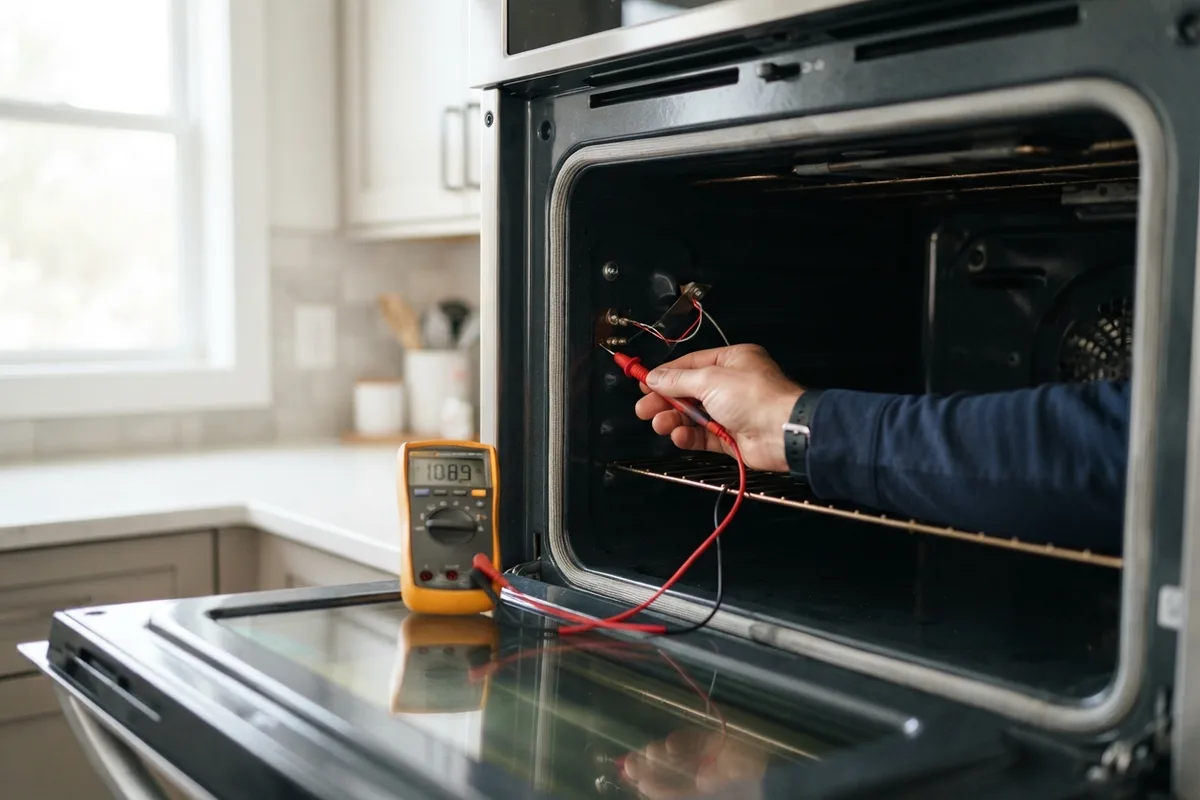
To troubleshoot the sensor, start by shutting off power to the appliance at the breaker box. Inspect the probe visually to ensure it is not bent or touching the metal interior wall, which alters heat readings. Unclip the sensor and test its electrical resistance with a digital multimeter at room temperature (around 77°F). A standard RTD sensor should register between 1,050 and 1,100 ohms. If your reading falls outside this range, replacing the temperature sensor probe will restore accurate heating.
2. Inspect and Replace a Damaged Heating Element
Electric ranges rely on two distinct elements: a lower bake element for ambient heating and an upper broil element for intense direct heat. If either heating element develops an internal electrical short, it can remain stuck in a continuous "on" state regardless of what temperature you select on the dial.
A shorted bake element generates blistering heat from the bottom of the oven floor, scorching pie crusts and sheet cakes before the center can bake through. Conversely, a shorted broil element will blast maximum heat from above, burning toppings instantly.
Safely unplug the oven or flip the circuit breaker before inspecting the elements. Visually examine both lower and upper heating loops for visible cracks, blistering, heavy pitting, or localized bright red glowing spots during operation. If you notice structural damage or if an element stays glowing bright red constantly during a low-temp bake cycle, remove the mounting screws, disconnect the terminal wires, and install a replacement heating element designed for your specific oven model.
3. Test and Replace a Faulty Oven Thermostat
Older ovens utilize a mechanical thermostat assembly equipped with a capillary tube filled with hydraulic fluid to regulate heat. Modern digital ovens use a main electronic control board with solid-state relays that route power to the bake and broil circuits.
If the mechanical thermostat's capillary tube develops a leak or loses calibration, it fails to cut power to the heat source when reaching the desired temperature. In digital models, a control board relay can physically weld shut due to electrical arching over time. When a relay sticks closed, current flows continuously to the heating elements, driving oven temperatures well past 500°F.
If your temperature sensor tests fine with a multimeter but your oven continues to runaway heat, the thermostat or main control board is likely at fault. Replacing these electronic components requires testing live terminal connections with diagnostic tools. If you suspect an internal board failure, reviewing our guide on why your oven is baking unevenly can help you narrow down control issues.
4. Check for Blocked Venting Openings and Air Flow
Proper airflow inside the oven cavity is essential for even heat distribution. Hot air must circulate freely around baking pans and escape through dedicated exhaust vents (typically located beneath the cooktop console or under a rear burner).
If exhaust vents become clogged with grease, dust, or spilled food, trapped heat builds up rapidly inside the upper portion of the oven cabinet. Similarly, placing large sheets of aluminum foil across the bottom rack or oven floor blocks lower intake vents, forcing heat to concentrate in tight pockets directly beneath your bakeware.
To restore proper circulation, clear away any foil liners or oversized tray covers from the bottom racks. Leave at least two inches of open space between baking pans and the interior side walls so convection air currents can move freely. Periodically clean exhaust vent openings with warm soapy water to eliminate grease buildup that restricts air exit pathways.
5. Replace Worn Door Seals Trapping Excessive Heat
An oven door gasket seals hot air inside the baking chamber while keeping external air out. When the rubber or braided fiberglass gasket becomes brittle, torn, or flattened, thermal energy leaks out from around the door frame.
While a leaking seal might sound like it would make an oven cooler, it actually causes the opposite problem for your food. As ambient heat escapes from the front, the internal temperature sensor detects a sudden drop in heat and signals the control board to run the bake element at full blast continuously. This creates intense radiant heat at the rear and bottom of the oven cavity, scorching the back half of your dishes while the front remains undercooked.
Inspect your door gasket for cracks, missing retention clips, or charred spots. Perform a simple paper test: shut the oven door on a strip of paper. If you can slide the paper out easily without resistance, the seal is loose and should be replaced. New push-in gaskets slide directly into the channel around the door frame without requiring specialized tools.
Quick Reference: Oven Overheating Causes & Solutions
| Issue Observed | Primary Cause | Recommended DIY Solution |
|---|---|---|
| Tops of dishes burn quickly | Faulty temperature sensor or blocked top exhaust vent | Resistance-test sensor with multimeter; clean top exhaust louvers |
| Bottoms of pans turn to charcoal | Shorted bake element stuck on full power | Inspect bake element for cracks; replace damaged element |
| Oven runs 50°+ hotter than set dial | Out-of-calibration sensor or faulty thermostat | Recalibrate control settings or replace temperature sensor |
| Back half of food burns, front undercooks | Damaged oven door gasket leaking heat | Perform paper seal test; install replacement door gasket |
When to Call a Pro
Safety comes first when working on major home appliances. Before performing any hands-on inspection or replacing components, always unplug the range from the wall receptacle or shut off the dedicated circuit breaker at your main panel. For gas ovens, turn off the manual gas shut-off valve before attempting repairs.
While replacing a door gasket, clearing air vents, or swapping out a plug-in temperature sensor are accessible weekend projects, complex diagnostics involving main control boards, gas igniter circuits, or high-voltage wiring should be handled carefully. If you encounter damaged wiring or feel uncomfortable working with electrical systems, stop and contact a qualified local technician. True Appliance Repair can match you with a local appliance pro to diagnose and repair your oven quickly and safely. Adopting proactive DIY appliance maintenance habits will keep all your kitchen equipment running reliably for years to come.
FAQ
How do I know if my oven temperature sensor is bad?
A failing temperature sensor typically causes your oven to overheat or underheat significantly. You can test the sensor using a digital multimeter set to ohms. At standard room temperature (77°F), a functional sensor probe should read roughly 1,050 to 1,100 ohms. If the reading is open or significantly off, replace the probe.
Why does my oven keep burning everything on the bottom?
Burning on the bottom usually points to a shorted bake element that remains energized continuously, or blocked airflow on the oven floor. Ensure you are not lining the bottom rack with aluminum foil, and check the lower heating element for physical cracks or localized hot spots.
How much does it cost to fix an overheating oven?
Fixing an oven that runs too hot depends on the failing part. Simple components like a new door seal or temperature probe cost around $20 to $80 for parts if you replace them yourself. If a technician needs to replace a main electronic control board or thermostat, total costs generally range from $150 to $350, depending on your area and appliance model.
Can grease buildup inside the oven cause food to burn?
Yes. Thick layers of baked-on grease and carbonized food spills absorb radiant heat and re-radiate it unevenly onto your bakeware. Heavy buildup near heating elements can also smoke or catch fire, scorching your food and causing severe odor issues.