
If your kitchen suddenly sounds like a small beehive or a vibrating power tool, a buzzing refrigerator is trying to tell you something. Noise often ramps up before busy holiday hosting when packed shelves force cooling parts to work longer cycles. Before worrying about a major repair bill, know that most buzzing sounds trace back to simple vibration, dusty coils, or a blocked fan you can fix safely at home.
| Buzzing Sound Pattern | Most Likely Cause | Safe First Check |
|---|---|---|
| Rattling buzz that stops when pressed | Unlevel feet or touching items | Level cabinet and space jars |
| Steady low hum from the back | Dust-clogged coils or fan | Vacuum rear coils and blades |
| High-pitched buzz inside freezer | Ice hitting evaporator fan | Defrost vents and fan shroud |
| Brief loud buzz every few hours | Water inlet valve or ice maker | Check water line and valve |
1. Level the Cabinet and Secure Loose Items
Often the loudest buzzing comes from simple vibration rather than a broken mechanical part. When a refrigerator sits slightly off-level, the compressor's normal hum transfers straight into the frame, floor, or nearby cabinets.
- Open the fridge and rearrange glass jars, bottles, and condiment containers so none touch each other or the door bins.
- Slide the unit gently away from the wall by an inch if its back panel or water line is pressing against drywall or baseboards.
- Place a carpenter's level across the top edge and check front-to-back and side-to-side balance.
- Turn the front leveling legs with an adjustable wrench until all four corners sit firmly on the floor without rocking.
Adding thin anti-vibration pads under the front and rear feet can also quiet wood or tile floors that amplify normal motor noise.
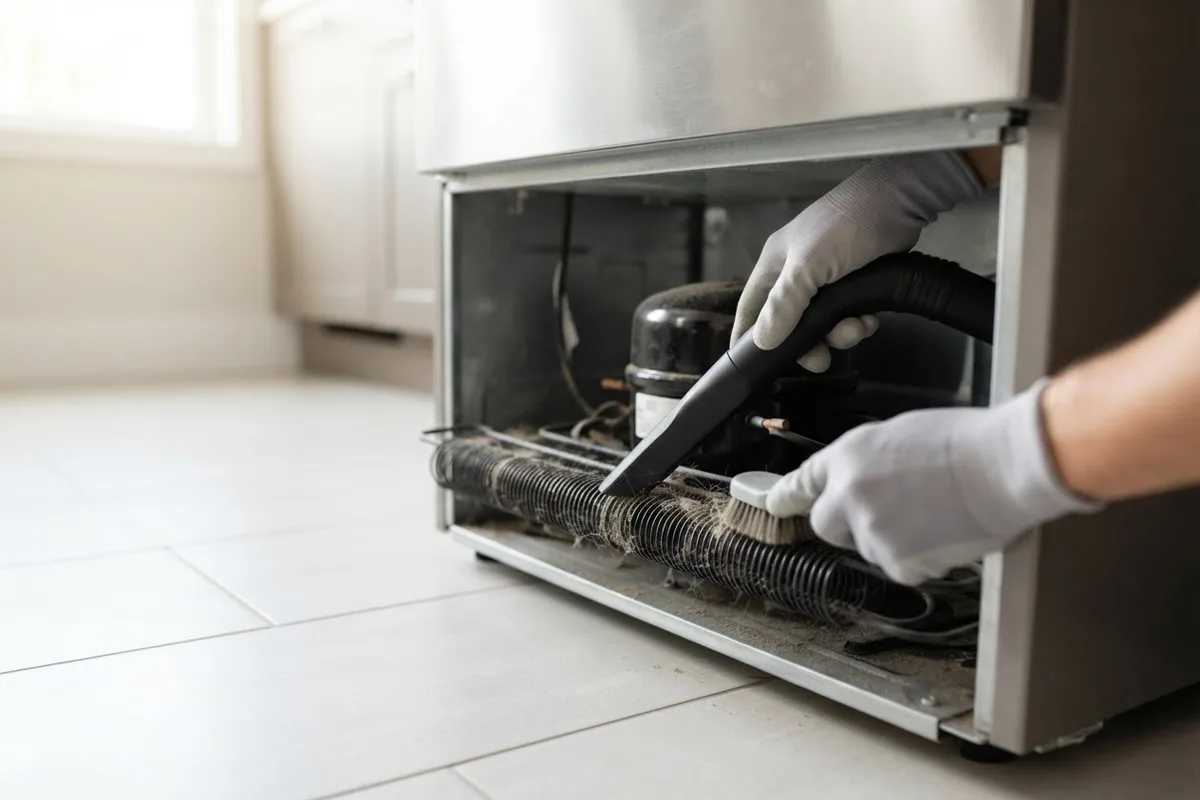
2. Vacuum Dusty Condenser Coils and Rear Panel
Thick layers of pet hair, kitchen grease, and dust trap heat on the condenser coils, forcing the compressor to run harder and buzz louder. Clearing that buildup twice a year keeps the cooling system running cooler, quieter, and more efficiently.
- Unplug the refrigerator from the wall outlet before removing any lower front grille or rear access cover.
- Locate the coils—either behind the snap-off kickplate at floor level or on the lower back panel.
- Use a soft coil brush to loosen packed dust between the metal fins and tubing.
- Vacuum away all debris with a narrow crevice attachment, taking care not to bend soft copper lines.
- Check the rear access panel for loose screws and tighten any that rattle when tapped.
Plug the fridge back in and listen for a softer, steadier hum once the dust blanket is gone.
3. Clear the Condenser Fan Near the Compressor
Right beside the compressor sits a small condenser fan that pulls cool air over the coils. If pet hair, foil scraps, or a stray twist-tie catches in those blades, the fan emits an irritating buzz or chattering hum whenever the fridge cools.
- Keep the refrigerator unplugged and slide it out carefully to protect your flooring.
- Remove the screws holding the lower rear service cover and set the panel aside.
- Shine a flashlight on the condenser fan blades and spin them gently by hand to check for resistance.
- Pull out any tangled pet hair, plastic wrapper bits, or dust clumps wrapped around the motor shaft.
- Wipe the blades with a slightly damp microfiber cloth and verify the fan bracket sits snugly on its rubber grommets.
Reinstall the rear cover securely before restoring power so airflow moves smoothly across the compressor.
4. Check the Freezer Evaporator Fan for Ice
If the buzzing grows louder when you open the freezer door—or sounds like a card clicking against bicycle spokes—frost may be hitting the evaporator fan behind the rear freezer wall. Warm air sneaking past a worn door seal often feeds this ice buildup, so following our guide on how to clean appliance seals and gaskets helps stop repeat frost.
- Unplug the refrigerator and transfer frozen food into an insulated cooler with ice packs.
- Look through the freezer's rear vents with a flashlight to spot white frost or thick ice around the fan housing.
- Leave the freezer doors propped open with towels underneath to let the ice melt naturally over a few hours.
- Never chip ice with knives or screwdrivers, which can puncture a sealed refrigerant line.
Once dry, confirm the door gasket seals cleanly all the way around before plugging the unit back in.
5. Inspect the Ice Maker Water Inlet Valve
A harsh, five-to-ten-second buzz that repeats every hour or two usually points to the water inlet valve or the ice maker trying to fill. Mineral sediment or a kinked supply line makes the valve's solenoid vibrate loudly against the cabinet.
- Unplug the refrigerator and turn the cold water shutoff valve behind the fridge or under the sink clockwise until it stops.
- Pull the unit forward gently and inspect the braided or plastic water line for tight bends or kinks against the wall.
- Place a towel underneath and unscrew the water line at the rear inlet valve to check the small mesh screen for grit.
- Rinse the screen gently or brush away surface sediment if the filter removes cleanly.
- Reconnect the tubing hand-tight plus a quarter-turn, open the water valve slowly, and check closely for drips before plugging in.
6. Tighten the Drain Pan and Compressor Mounts
Beneath the refrigerator sits a shallow plastic drain pan that catches defrost water, right next to the rubber-mounted compressor. When a pan slides out of its track or compressor grommets harden with age, normal motor vibration turns into a loud rattle or buzz.
- Unplug the refrigerator and remove the lower front kickplate or rear access panel depending on your model.
- Slide your hand carefully along the drain pan to make sure it rests flat inside its retaining clips and does not touch copper tubing.
- Empty and wipe the pan if standing water smells musty, then snap it firmly back into place.
- Visually inspect the black rubber mounts under the compressor for cracks or missing fasteners without pulling on refrigerant pipes.
Tightening a loose bracket screw or reseating the pan often eliminates persistent bottom-end vibration right away.
When to Call a Pro
Simple leveling, coil cleaning, and clearing debris solve most buzzing complaints safely. However, stop DIY troubleshooting and call a technician if you notice any of these warning signs:
- Buzzing followed by clicking and warm food: A failing compressor or start relay may be struggling to turn over, and sealed-system refrigerant repairs require specialized recovery equipment.
- Electrical burning odor or tripped breakers: Never open the main control board housing or touch high-voltage wiring beyond basic unplugging.
- Loud grinding inside the compressor shell: Internal compressor wear cannot be fixed with mounts or cleaning.
If your fridge is over ten years old, compare repair estimates—typically $150 to $450 for fan motors, inlet valves, or start relays, varying by your area and refrigerator model—against replacement costs using our refrigerator repair or replace guide. When you need hands-on diagnostics, True Appliance Repair can match you with a local pro through our refrigerator repair service so the issue gets fixed safely.
FAQ
Is a buzzing refrigerator dangerous?
Usually, a mild buzz just means loose jars, dusty coils, or a noisy fan rather than an immediate hazard. However, if the buzz comes with a hot outer cabinet, a burning electrical smell, or a tripped breaker, unplug the refrigerator and call a technician right away.
Why did my refrigerator suddenly start buzzing louder?
Sudden loud buzzing often starts after someone bumps the fridge out of level, packs glass bottles tightly together, or blocks airflow around the back panel. In the freezer, a door left slightly ajar can let humid air form frost that rubs against the evaporator fan blades.
Can a dirty condenser coil really make my fridge buzz?
Yes. Dust and pet hair trap heat on the coils, forcing the compressor and condenser fan to run at higher temperatures and longer cycles. Cleaning the coils twice a year reduces strain on the motor and usually quiets down the normal operating hum.
How much does it cost to fix a buzzing refrigerator?
If DIY cleaning or leveling does not solve the buzz, professional repairs for a noisy condenser fan, evaporator fan motor, or water inlet valve typically range from $150 to $400 depending on your area and model. Sealed-system compressor replacements cost significantly more and often make replacing an older fridge the smarter choice.