
If the sides or the center divider between your fridge doors feel warm or even hot to the touch, you are not alone. Modern refrigerators use exterior cabinet walls to radiate heat away from the interior, but extreme heat usually signals an overworked cooling system. Follow this straightforward troubleshooting guide to identify why the exterior is overheating and safely restore normal operating temperatures.
1. Clean Dust and Debris Off Condenser Coils
The most frequent cause of an overheating refrigerator exterior is a thick layer of dust, pet hair, and lint covering the condenser coils. The condenser releases heat pulled from inside the cabinet into the room; when blanketed in debris, heat backs up into the outer metal walls.
- Disconnect power: Unplug the refrigerator or switch off the dedicated circuit breaker in your electrical panel for safety.
- Locate the coils: Check underneath the front behind the toe kick grille or behind an access panel on the lower back of the unit.
- Vacuum loose lint: Use a narrow vacuum crevice attachment or a specialized coil brush to pull away collected dust.
- Brush between loops: Gently sweep between the metal loops without bending any thin fins or damaging coolant tubes.
- Restore power: Reconnect electricity and check panel temperatures over the next few hours.
Regular coil cleanings twice a year keep cabinet surface temperatures in a comfortable, safe range while extending the lifespan of your appliance.
2. Restore Clearance and Cabinet Airflow
Refrigerators require continuous ambient airflow around their sides, back, and top to vent heat away. When a fridge is wedged tightly against cabinetry or pushed flush against the back wall, trapped warm air builds up, making the side panels scorching hot.
- Check back clearance: Pull the appliance forward so there is at least one to two inches between the back panel and drywall.
- Examine side gaps: Verify there is at least a quarter-inch to half-inch gap along the cabinet sides.
- Clear the top: Remove storage bins, large cutting boards, or decorative baskets stacked on top of the fridge that trap rising heat.
- Inspect floor grilles: Ensure baseboards or thick kitchen rugs are not choking off the bottom air intake grille.
Allowing unobstructed airflow lets the unit expel heat efficiently, lowering cabinet surface temperatures within two to three hours.
3. Check and Clean the Condenser Fan Motor
If the condenser fan stops spinning or slows down due to hair wrapped around the shaft, the compressor cannot shed heat. This sends intense heat directly into the outer cabinet framework and mullion strip.
- Unplug the appliance: Always shut off power before working near rear mechanical compartments.
- Remove the rear access cover: Unscrew the lower cardboard or metal shield on the back of the fridge.
- Inspect the fan blades: Look for loose debris, lint clogs, or stray wires obstructing the plastic fan blades.
- Test blade rotation: Spin the fan blades by hand. If they feel stiff or completely seized, the fan motor has failed.
- Clean the motor housing: Vacuum around the motor hub and wipe off sticky residue before reinstalling the panel and restoring power.
If the fan motor refuses to turn once power is restored and the compressor starts humming, the fan assembly requires replacement.
4. Inspect Door Gaskets for Heat-Causing Air Leaks
Worn, torn, or warped rubber door gaskets let warm, humid kitchen air enter the fresh food and freezer compartments. In response, the compressor runs without stopping, generating excessive heat that transfers directly to the outer frame.
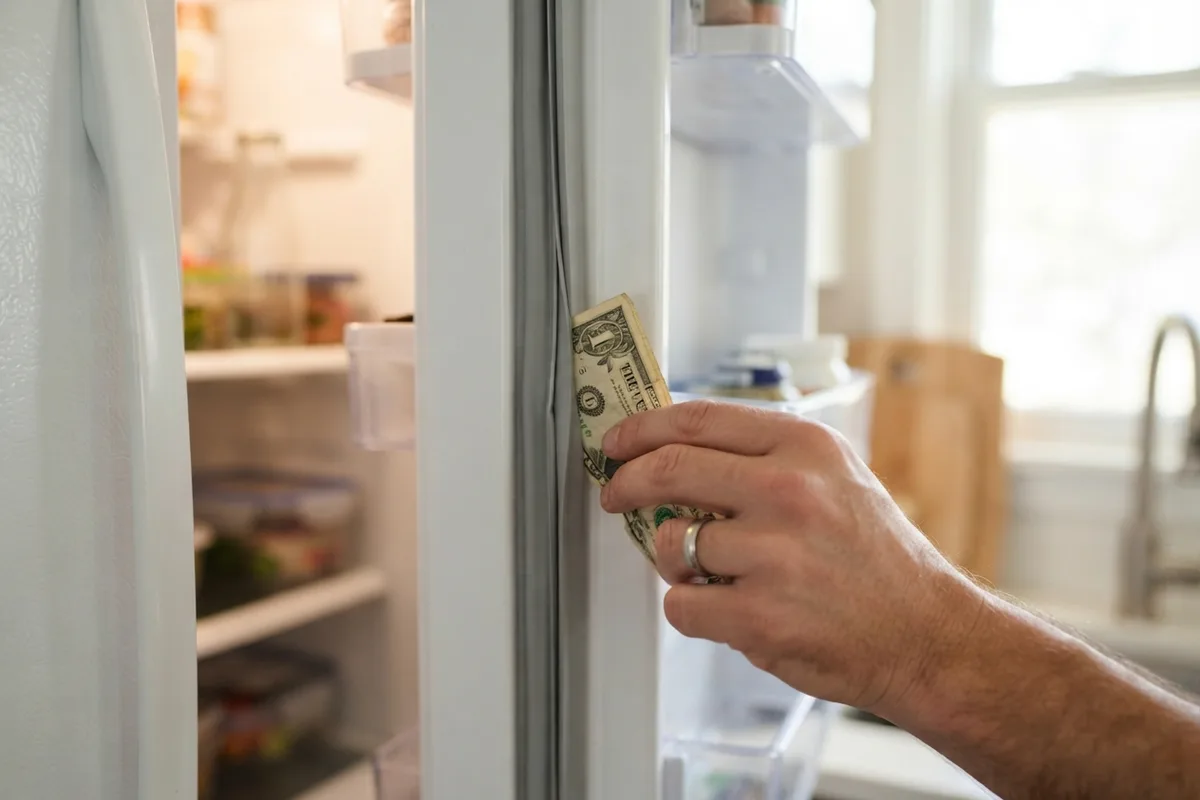
- Run the dollar bill test: Place a dollar bill halfway across the door seal, close the door, and pull. If it slides out with zero resistance, the seal is weak.
- Clean the rubber tracks: Wipe down the gasket folds with warm water and mild dish soap to remove sticky residue that prevents a tight magnetic grip.
- Reshape warped rubber: Use a handheld hairdryer on low heat to soften stiff spots, then mold the vinyl gasket flush against the metal frame with your fingers.
- Check door alignment: Make sure heavy gallon jugs in door bins have not sagged the door hinge out of level.
Replacing brittle or split gaskets stops continuous running cycles and cools down the exterior cabinet.
| Issue / Symptom | Primary Cause | Immediate DIY Action | Expected Surface Temp |
|---|---|---|---|
| Center divider (mullion) hot | Normal anti-sweat loop or stuck door heater | Clean coils; check gasket seal | Warm to touch (90°F–105°F) |
| Outer side panels burning hot | Clogged condenser coils or zero wall clearance | Vacuum coils; pull fridge 2" from wall | Warm/neutral (85°F–95°F) |
| Back lower corner extremely hot | Seized condenser fan or failing compressor | Inspect rear fan; check blade spin | Warm (100°F–110°F max) |
| Constant running + hot walls | Torn door gasket or overfilled food compartments | Dollar bill test; reorganize shelves | High heat until cycle rests |
5. Address Recent Initial Cooldown or Long Running Cycles
A refrigerator that was just installed, recently defrosted, or stocked with a large haul of room-temperature groceries will run continuously for 12 to 24 hours. The built-in perimeter heater tubes work overtime during this initial pulldown phase.
- Allow time to stabilize: Give a newly plugged-in or fully stocked fridge at least 24 full hours to reach set target temperatures (37°F fresh food, 0°F freezer).
- Avoid rapid door opening: Keep door openings brief during high-heat periods so the unit does not lose conditioned air.
- Do not overpack vents: Rearrange containers inside so interior air circulation channels remain wide open.
- Perform a control reset: If the compressor seems locked on high speed after a temperature spike, consult our guide on how to reset home appliances to reboot internal control boards.
Once the internal compartments reach balanced temperatures, the compressor cycles off and the outer cabinet cools significantly.
When to Call a Pro
While cleaning coils and clearing airflow gaps are quick household chores, some overheating issues point to deeper mechanical or sealed-system faults. You should stop and call a technician if:
- The outer cabinet remains uncomfortably hot to the touch after 24 hours of clean coils and open airflow.
- The compressor clicks repeatedly every few minutes without starting.
- The interior compartments are warming up while the exterior remains blistering hot.
- You suspect an internal refrigerant restriction, leak, or electrical short.
For complex sealed-system diagnostics or electrical issues, True Appliance Repair can match you with an experienced local pro to evaluate the unit safely. If the appliance is over a decade old and requires major mechanical intervention, reviewing our repair vs replace appliances guide can help you decide the most cost-effective path forward. Typical condenser fan or thermostat repairs generally range from $130 to $320 depending on your region and refrigerator brand.
FAQ
Is it normal for the sides of a refrigerator to feel hot?
Yes, mild warmth (around 90°F to 100°F) is completely normal on many modern refrigerators. Manufacturers route warm condenser tubing along outer side walls and the center mullion to stop condensation and exterior sweating in humid weather. However, the surface should never be hot enough to cause pain or singe your hand.
Why is the metal divider between the fridge and freezer doors hot?
The center metal divider houses an internal loop called a mullion or perimeter heater. It warms the metal strip to keep warm room humidity from condensing into water droplets on the door seals. If this strip feels excessively hot, it usually means the condenser coils below are dirty or the cooling system is running non-stop.
Can an overheating refrigerator cause a house fire?
Modern refrigerators have built-in thermal overload switches that shut off the compressor if operating temperatures reach dangerous levels. However, neglected coils covered in thick lint combined with an overheating fan motor create unnecessary fire and electrical hazards. Keeping the rear and underside clear of heavy dust eliminates these risks.
How much clearance should a refrigerator have from the wall?
Most manufacturers recommend at least 1 to 2 inches of open clearance at the rear, 1 inch above the top panel, and 1/4 to 1/2 inch on each side. Built-in or zero-clearance units vent through the front toe kick, but freestanding refrigerators rely entirely on surrounding cabinet gaps to disperse heat.