
Opening your freezer to find a solid glacier encasing the ice maker or jamming the dispenser chute is frustrating, especially right before holiday hosting or a busy week. Most freeze-ups come down to stray moisture meeting sub-zero air—either from a slow water leak or warm kitchen air sneaking past a worn seal. Use these six safe DIY checks to thaw the ice safely, track down the root cause, and keep fresh cubes flowing.
1. Thaw the Ice Maker Safely First
Before inspecting parts or testing components, clear the existing ice buildup without damaging plastic housings or hidden coolant lines. Never chip at frozen components with knives, screwdrivers, or ice picks.
- Turn the ice maker switch off, then unplug the refrigerator from the wall outlet.
- Shut off the cold water supply valve located behind the fridge or under the kitchen sink.
- Lift out the ice storage bin, dump any fused clumps in the sink, and wash the bin with warm soapy water.
- Lay thick towels along the bottom of the freezer and on the floor below the door to catch meltwater.
- Place a bowl of hot tap water on a folded towel inside the ice compartment, or press warm damp cloths against the frost until it loosens.
- Wipe every surface completely dry with a clean microfiber cloth before restoring power.
2. Check the Ice Chute Flap for Air Leaks
On refrigerators with through-the-door dispensers, a small hinged flap seals the ice chute between uses. If that flap sticks slightly open—even by a fraction of an inch—warm, humid kitchen air drafts straight into the sub-freezing ice compartment and condenses into thick frost around the auger and mold.
- Keep the refrigerator unplugged while you inspect the dispenser area.
- Shine a bright flashlight up through the exterior dispenser chute while peering into the interior chute opening from inside the freezer; any visible beam means air is leaking through.
- Check the flap edges for stray ice chips, mineral grit, or sticky drink residue keeping it propped open.
- Wipe the rubber seal and chute rim with a cloth dipped in warm water and a drop of mild dish soap.
- Press the flap gently to confirm its return spring snaps it shut firmly; if the spring is weak or the seal is warped, the flap assembly will need replacement.
3. Reset Freezer and Fridge Temperatures
Improper temperature settings are a surprisingly common trigger for ice maker freeze-ups. When the freezer runs too warm, cubes partially melt and refreeze into a solid block around the ejector arms. When it runs far colder than necessary, water can freeze right inside the fill spout before it even lands in the tray.
- Place an independent appliance thermometer in the center of the freezer and another on the middle fridge shelf, then wait several hours for an accurate reading.
- Adjust your control panel toward the ideal targets: 0°F for the freezer and 37°F for the fresh-food compartment.
- Leave two to three inches of breathing room around interior air vents, especially when packing the fridge full for Thanksgiving or winter holiday meals.
- Give the appliance 24 hours to stabilize after each adjustment; if the dial swings wildly on its own, review these fixes for fluctuating fridge temperatures.
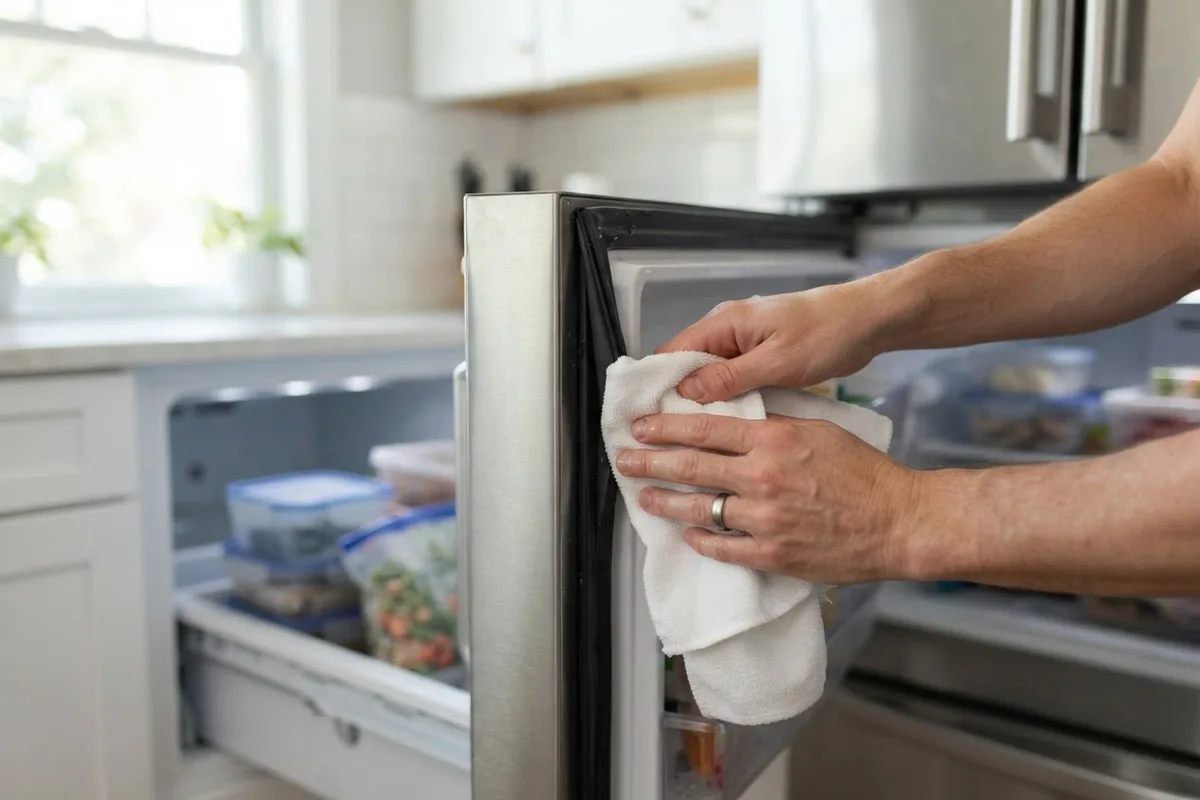
4. Inspect the Freezer Door Gasket Seal
A loose, dirty, or cracked rubber gasket around the freezer door lets moist room air creep inside all day long. That moisture settles directly on the coldest surfaces—often the ice maker housing, metal rails, and chute mechanism—building stubborn layers of ice.
- Slide a dollar bill between the freezer door gasket and the metal cabinet, then close the door and pull the bill gently.
- Repeat around all four sides; if the bill slips out with zero resistance in any spot, that section is leaking air.
- Clean food spills and grime from the accordion folds of the gasket using warm water, a soft sponge, and a spoonful of baking soda, then dry thoroughly.
- Check that heavy frozen packages or overflowing bins are not nudging the door slightly ajar.
- Look for rips or flattened rubber that need a new gasket, and check other common causes of freezer frost buildup if snow coats the back wall too.
5. Clear the Frozen Water Fill Tube
The black or white rubber fill tube positioned above the ice maker carries water into the tray at the start of every cycle. If low water pressure causes water to trickle slowly instead of gushing cleanly, stray droplets freeze inside the spout until an icicle plugs the tube or redirects water over the sides of the ice maker.
- Confirm the refrigerator is unplugged and the water supply valve is shut off.
- Locate the fill tube above the back of the ice mold and check for a protruding icicle or frosty blockage.
- Hold a warm, wrung-out cloth around the tube—or squeeze warm water gently into the tip with a clean turkey baster over a towel—until the ice plug slides out.
- Replace your refrigerator water filter if it is more than six months old, since a clogged filter drops line pressure and triggers slow trickles.
- Inspect the supply line behind the fridge for kinks before turning the water back on and flushing a few glasses through the dispenser.
6. Test for a Leaking Water Inlet Valve
If you thaw the fill tube and a brand-new icicle forms within a day or two, the water inlet valve at the back of the refrigerator is likely weeping. A healthy valve opens briefly during a fill cycle and snaps completely shut afterward. When sediment or worn internal seals prevent a full closure, tiny drops leak nonstop into the freezer and freeze the entire ice maker solid.
- Unplug the refrigerator and shut off the household water valve before moving the unit.
- Carefully roll the appliance away from the wall on floor protectors so you do not tear vinyl or scratch hardwood.
- Look near the lower rear access panel where the household water line connects to the inlet valve for moisture, rust streaks, or chalky mineral buildup.
- Verify your home water supply valve is opened all the way, because a partially closed valve can stop the inlet valve from seating properly.
- If the valve leaks past its seal even with clean pressure and a fresh filter, keep the water shut off and plan on replacing the valve.
Quick Reference: Match the Ice Buildup to the Likely Fix
| Where Ice Builds Up | Most Likely Cause | First DIY Check |
|---|---|---|
| Thick frost around dispenser chute and auger | Leaking ice chute flap or warm humid air | Flashlight test on chute flap seal |
| Icicle hanging from top fill spout | Clogged water filter or weeping inlet valve | Thaw fill tube and replace overdue filter |
| Solid block of fused cubes inside the bin | Temperature swings or freezer door left ajar | Check thermometer (0°F) and door gasket |
| Ice overflowing the mold onto freezer shelves | Sticking water inlet valve or unlevel fridge | Inspect rear inlet valve and level front feet |
| Heavy frost across back wall and ice maker | Door gasket leak or defrost system failure | Dollar-bill seal test on freezer gasket |
When to Call a Pro
Thawing an ice block, swapping a water filter, and cleaning gaskets are safe, straightforward weekend tasks. Stop and call a technician if the ice maker freezes over again within a week of completing these checks, or if the problem points to a faulty water inlet valve, failing ice maker thermostat, broken defrost heater, or main control board issue. Never open the electrical panel, probe live wiring, or attempt repairs near the sealed refrigerant lines at the back of the unit.
Typical US repair visits for ice maker freeze-up causes generally run about $150 to $350 for a water inlet valve or ice maker assembly replacement, and roughly $200 to $450 for defrost component or control board repairs, though final pricing varies by area and appliance model. If you want an accurate diagnosis without risking water damage to your kitchen floor, True Appliance Repair can match you with independent local refrigerator repair pros who work on your brand.
FAQ
Can I use a hair dryer to defrost a frozen ice maker?
It is safest to skip the hair dryer. High heat can warp thin plastic liners, melt nearby wiring insulation, or damage temperature sensors inside the ice compartment, and using a plugged-in heat tool around meltwater creates an electrical shock hazard. Warm damp towels or a bowl of hot tap water thaw ice just as effectively without risking costly damage.
Why does my ice maker freeze over more during the holidays or summer?
Frequent door openings let waves of warm, humid kitchen air rush into the freezer every time someone grabs ingredients or refills drinks. That extra moisture condenses right on the cold ice maker components and chute flap, turning into heavy frost much faster than during quieter months. Keeping the fridge properly spaced for airflow and reminding guests to close the door firmly helps cut down buildup.
How often should I replace my refrigerator water filter to prevent freeze-ups?
Most manufacturers recommend swapping the water filter every six months, or sooner if your household has hard water or uses the dispenser heavily. An overdue filter restricts water flow, which lowers line pressure and allows slow drips to freeze inside the fill tube. Replacing it on schedule protects both ice quality and steady water flow.
Will turning off the ice maker stop frost buildup inside the freezer?
Switching off the ice maker stops new fill cycles, which can prevent overflow if the mold or fill mechanism is malfunctioning. However, it will not stop frost caused by a weeping water inlet valve, a leaking chute flap, or a torn freezer door gasket. If ice still builds up while the ice maker is off, shut off the water supply valve and inspect the door seals right away.