
Opening your washing machine only to find heavy, sopping wet clothes after a complete cycle is frustrating. Instead of fresh, damp garments ready for the dryer, you are left squeezing out dripping towels over the laundry sink.
When a washer leaves clothes wet, the problem typically stems from restricted drainage, unbalanced loads, or failing mechanical components that prevent the machine from reaching its top spin speed. Before calling for service or hauling dripping laundry to the clothesline, try these 5 straightforward DIY fixes to resolve the issue.
Clear the Clogged Drain Pump Filter
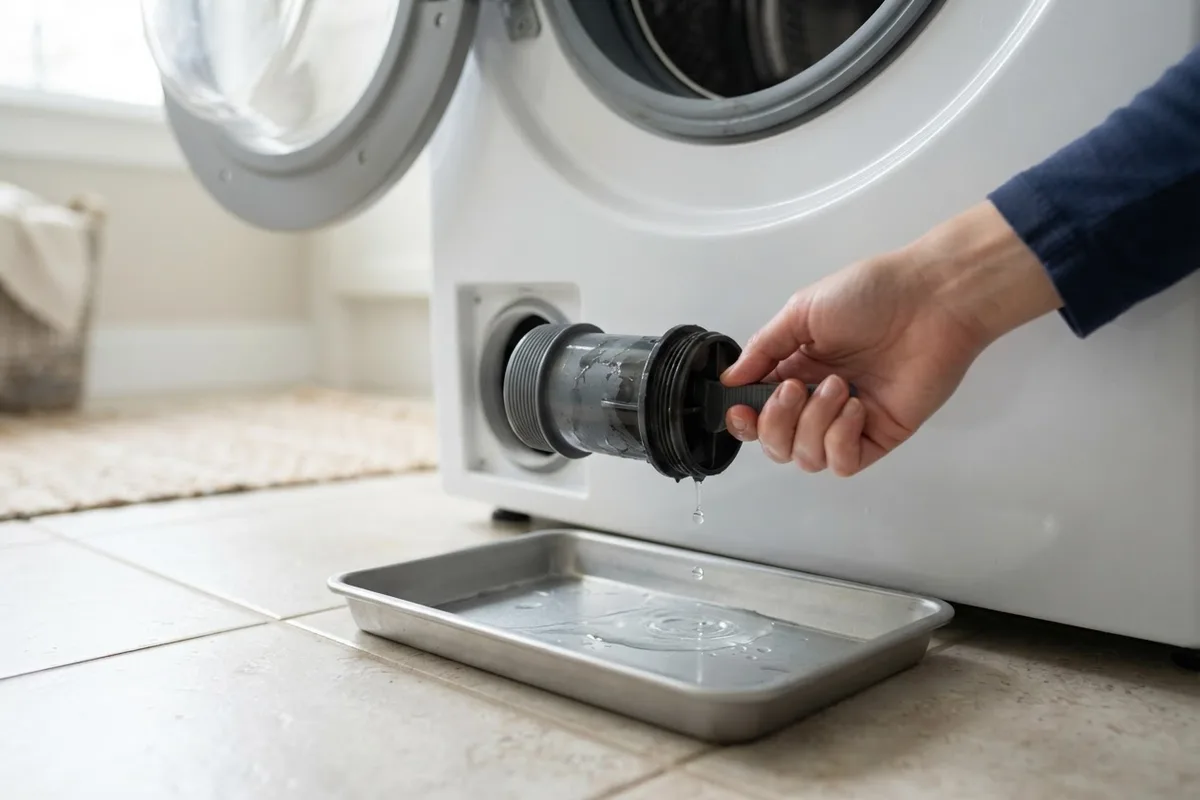
A clogged drain pump filter is the most common reason a washing machine fails to extract water completely before spinning. Modern front-load washing machines and many top-loaders feature a coin trap or pump filter designed to capture loose objects, coins, lint, and stray socks. When this filter fills up with debris, water cannot evacuate quickly enough during the spin phase, leaving your load saturated.
- Always unplug the washing machine from the wall outlet and turn off the water supply shut-off valves before beginning any maintenance.
- Locate the small access door at the bottom front panel of your machine (on top-loaders, this may require removing the lower front panel or accessing the rear pump housing).
- Set down a shallow baking dish and several old towels beneath the drain filter panel to catch trapped water.
- Carefully twist the filter knob counterclockwise to loosen it, letting residual water flow into your tray.
- Remove the filter completely, wipe away accumulated lint and debris, rinse it thoroughly under warm tap water, and reinstall it securely.
Check for a Kinked or Blocked Drain Hose
Even if your pump filter is clear, wastewater cannot exit the unit if the drain hose behind the washer is crushed, twisted, or obstructed. Over time, pushing a washing machine too close to the laundry room wall can pinch the flexible corrugated hose, severely restricting water flow during high-speed drain cycles.
- Disconnect the power cord from the outlet to ensure electrical safety while moving the machine.
- Gently slide the washer forward, taking care not to put strain on the hot and cold water fill hoses.
- Inspect the entire length of the flexible drain hose for sharp bends, flat spots, or kinks.
- Unhook the hose from your home's wall standpipe or utility sink and inspect the inside using a flashlight.
- Flush out any stubborn lint plugs or soap scum buildup using a flexible pipe brush or warm water from a sink faucet, then reinsert the hose with a clear, gradual curve.
Rebalance an Uneven Laundry Load
Washing machines rely on internal speed sensors and suspension springs to maintain stability during extraction. When you wash a single heavy bath sheet, a thick weighted blanket, or a bulky rug, the fabric absorbs massive amounts of water and gathers on one side of the drum. To protect itself from violent shaking, the machine automatically throttles down or cancels high-speed spinning.
- Pause the washer and open the door or lid to redistribute heavy garments evenly around the agitator or drum perimeter.
- Balance unbalanced loads by adding two or three smaller towels to equalize weight distribution when washing single heavy items like jeans or heavy coats.
- Verify that the appliance cabinet itself sits level on the floor by placing a carpenter's spirit level across the top.
- Adjust the threaded rubber feet at the bottom corners of the machine using an adjustable wrench until the unit sits firm and wobble-free.
If your machine experiences broader spin issues even with balanced loads, reviewing our detailed guide on why your washer is not spinning can help isolate underlying component failures.
Inspect and Test the Lid Switch or Door Lock
For safety reasons, washing machines will not engage in high-speed spinning if the system detects that the lid or door is unlatched. On top-load models, a plastic actuator tab trips an internal lid switch when closed. On front-loading models, an electronic door lock solenoid secures the glass door throughout the high-speed extraction cycle.
- Unplug the unit to cut all electrical power before touching latch components.
- Visually inspect the door striker pin or lid tab for cracks, chips, or bent plastic that prevents it from fully engaging the switch receptacle.
- On top-loaders, manually press the switch lever with a plastic tool to check for a distinct mechanical click. If the switch feels loose or offers no resistance, it may require replacement.
- For front-loading units, clear away detergent buildup around the door lock hook with a damp microfiber cloth to ensure the mechanism latches smoothly.
- Reconnect power and run a drain-and-spin cycle to see if the door locks securely and allows full rotation.
Examine the Drive Belt for Wear or Slippage
The drive belt connects the electric drive motor to the wash tub pulley. Over years of weekly laundry loads, rubber belts stretch out, dry rot, or lose tension. A worn or loose belt might still possess enough friction to agitate clothes during slow wash movements, but it will slip along the motor pulley when trying to reach high-RPM spin speeds, leaving clothes dripping wet.
- Ensure the machine is completely unplugged and water supply valves are turned off.
- Access the rear access panel or tilt the washer back carefully to view the drive assembly beneath the cabinet.
- Inspect the black rubber belt running between the motor and drum pulley for fraying, cracking, or slick glazed spots.
- Pinch the belt along its longest span; it should feel taut with no more than 1/2 inch of flex.
- If the belt shows visible wear, heavy black dust around the motor frame, or loose tension, install a replacement belt designed for your model number.
Washer Wet Load Troubleshooting Guide
| Issue Identified | Primary Cause | Difficulty Level | Recommended Action |
|---|---|---|---|
| Water remains in drum | Clogged pump filter or drain hose | Easy DIY | Clear filter mesh and unkink rear hose |
| Heavy vibration before stopping | Unbalanced heavy items or unlevel feet | Easy DIY | Redistribute clothes and adjust leveling legs |
| Drum agitates but will not spin fast | Stretched drive belt or lid switch fault | Intermediate DIY | Inspect belt tension; replace faulty lid switch |
| Continuous hum with no drum movement | Seized drain pump motor or main control fault | Advanced / Pro | Clear pump impeller or schedule professional repair |
When to Call a Pro
While simple obstructions, load imbalances, and belt replacements can be handled at home, complex electrical or mechanical failures require specialized diagnostic tools. If your machine continues leaving clothes wet after cleaning the filter, checking the hose, and leveling the cabinet, the issue may involve a burnt-out drain pump motor, worn tub bearings, a failed motor capacitor, or a faulty control board.
Never attempt hands-on diagnostics on internal control boards or live electrical wiring without proper training. If basic troubleshooting does not resolve your laundry issues, True Appliance Repair can match you with a local appliance pro to evaluate the machine. Typical professional repair costs for drain pumps or door lock assemblies range from $150 to $320, depending on your region and machine model. Keeping up with broader home maintenance checks and monitoring key household appliance warning signs will help you catch small system issues before they cause costly household disruptions.
Frequently Asked Questions
Why are my clothes still wet after the spin cycle finishes?
Clothes usually remain soaked when the machine cannot drain water quickly enough to start high-speed spinning, or when an unbalanced load forces the washer to cancel the spin phase. Common culprits include a clogged pump filter, a kinked drain hose, or a stretched drive belt.
Can using too much detergent leave clothes soaking wet?
Yes. Excessive liquid laundry detergent or non-HE detergent creates an abundance of soap suds. This heavy foam can confuse pressure sensors inside modern washing machines, triggering a "sud lock" condition that prevents the machine from entering high-speed spin modes.
How do I manually drain a washer full of water?
Unplug the washer, then disconnect the drain hose from the wall standpipe and lower it into a bucket placed on the floor to let gravity drain the tub. Alternatively, slowly unscrew the lower front drain pump filter, catching released water in a shallow tray until the drum is empty.
Is it cheaper to repair or replace a washer that leaves clothes wet?
If the fix involves clearing a clog, replacing a simple door latch, or fitting a new drive belt, repairing the unit is far more economical. However, if the machine is over 10 years old and requires a main motor, transmission, or tub bearing replacement, replacing the washer is often the smarter financial choice.