
Pulling a freshly washed navy hoodie or dark pair of pants out of the machine only to find it coated in gray fuzz is a frustrating laundry setback. When a washer leaves lint behind, the culprit is usually trapped debris, weak rinsing, or everyday washing habits that keep loose fibers stuck to wet fabric. Walk through these six simple DIY checks to clear out hidden lint and get clean, fuzz-free loads again.
1. Clean the Hidden Lint Filter or Drain Pump Trap
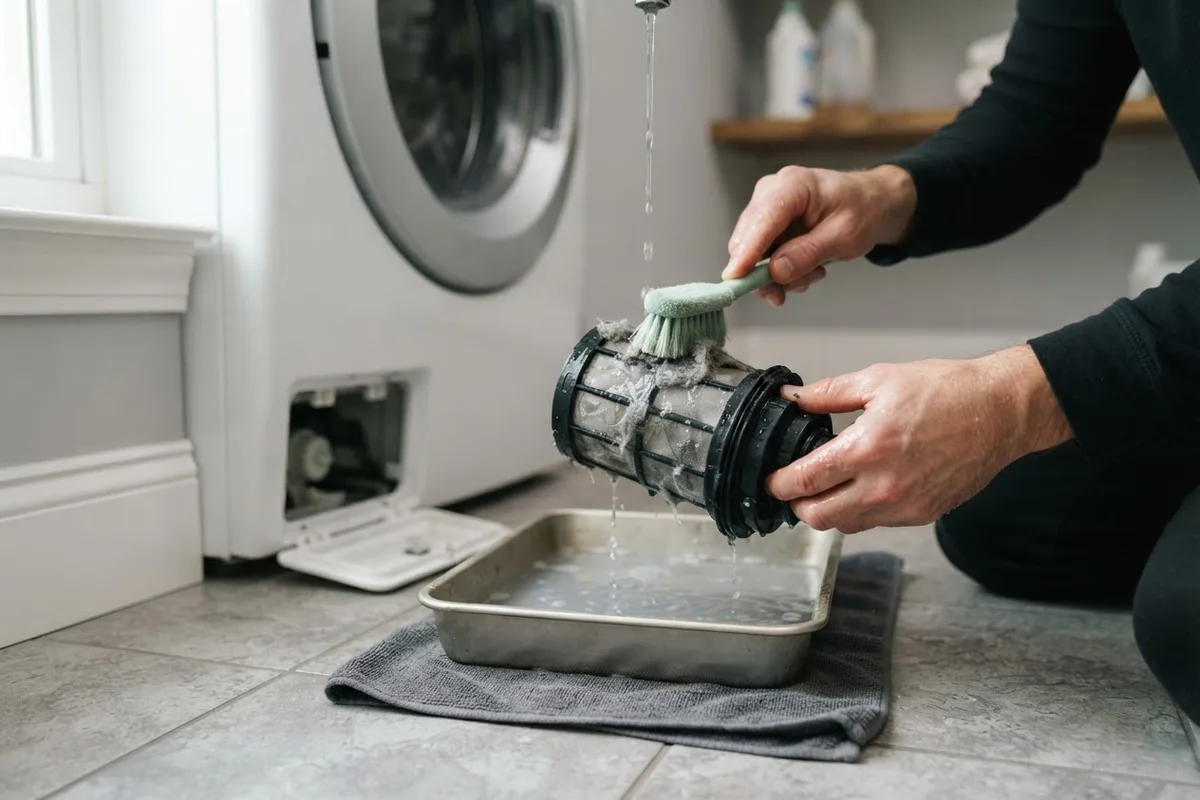
Before touching any filter, hose, or lower access panel, unplug the washing machine from the wall and turn off both water supply valves. Older top-load washers often hide a mesh lint screen inside the center agitator column or along the upper tub rim, while most modern front-load models use a drain pump filter behind a small hatch near the bottom front corner. When that screen packs solid with lint, coins, and hair, dirty rinse water backs up and redeposits fuzz onto your clothes.
- Set a shallow baking pan and an old towel beneath the front access door, or lift the lid to check the agitator column and upper rim.
- Drain standing water slowly through the small black drain tube (if equipped), then unscrew the filter cap counterclockwise.
- Pull out matted lint by hand and soak the mesh screen in warm soapy water for ten minutes.
- Scrub gently with an old toothbrush, wipe the filter cavity clean, and secure the cap before restoring power and water.
2. Flush Out Sticky Tub Buildup and Lint Sludge
Even when the filter looks clean, wet lint clings to hidden soap scum coating the outer wash tub, rubber door boot, and underside of the agitator. During the wash cycle, chunks of gray sludge break loose and stick straight to wet shirts and pants. This buildup ramps up in late fall and winter as thick fleece, flannel, and knit sweaters shed extra fibers into every load.
- Empty the drum completely and wipe inside the folds of the rubber door gasket (on front-load washers) with a damp microfiber cloth to pull out soggy lint and trapped hair.
- Pour two cups of plain distilled white vinegar into the detergent dispenser or straight into an empty top-load drum.
- Run the hottest, longest tub-clean or heavy-duty cycle available.
- Sprinkle half a cup of baking soda into the drum and run a short hot rinse cycle to flush remaining residue down the drain.
- Leave the lid or door slightly open afterward so moisture evaporates.
3. Cut Back on Overloading So Lint Can Rinse Away
Packing the washer drum to the brim traps loose fibers right against your laundry. Washing machines need open space for water to circulate freely, lift shed fibers off fabrics, and carry them through the drain holes. When clothes press tightly together, friction creates more fuzz while rinse water cannot flush debris away—one of the common home appliance mistakes that also wears out drum bearings and drive belts.
- Fill a front-load drum no more than three-quarters full so you can fit an open hand flat on top of the dry clothes.
- Drop laundry loosely around a top-load agitator or wash plate instead of pushing garments down to fit more items.
- Wash bulky items like comforters, thick hoodies, and bath mats in smaller dedicated loads.
- Select the extra-rinse setting for dark cottons and heavy winter layers so suspended fibers flush completely out of the tub.
4. Sort Heavy-Shedding Winter Fabrics Properly
Different fabrics behave very differently in wash water. Heavy terry towels, fleece blankets, chenille throws, and new flannel pajamas release clouds of loose fibers, while corduroy, leggings, microfiber activewear, and dark cotton tees act like magnets that grab every stray speck. Washing both fabric types together almost always leaves dark clothes speckled with pale fuzz.
- Separate high-lint shedders (bath towels, blankets, sweatshirts, and new fleece) from smooth, lint-attracting garments (dark jeans, slacks, dress shirts, and synthetic workout gear).
- Turn dark clothes inside out before washing so stray fibers settle on the interior side instead of the visible surface.
- Check every pocket carefully—one forgotten paper tissue or receipt shreds into thousands of stubborn white flakes that coat the entire load.
- Shake out pet blankets and dusty work clothes outdoors before placing them in the washer.
5. Reduce Detergent and Liquid Fabric Softener
Extra soap does not clean clothes better; it leaves a sticky film that glues floating lint straight back onto damp fabric. High-efficiency (HE) washers use far less water than older agitator machines, so excess suds never fully rinse away. Liquid fabric softener compounds the issue by coating both your garments and the hidden outer wash drum in a waxy layer that grabs stray fibers.
- Confirm your detergent bottle displays the HE symbol for an HE machine, and measure just one to two tablespoons for a standard eight-pound load.
- Skip the upper fill lines on large detergent caps, which often recommend more soap than modern washers need.
- Swap liquid fabric softener for half a cup of distilled white vinegar in the softener tray during the rinse cycle—vinegar breaks down soap film so lint rinses away cleanly.
- Avoid pouring concentrated detergent directly onto dry dark clothes, which creates stiff patches that trap fuzz.
6. Check Inlet Screens and Drain Hose Flow
Weak incoming water flow or a sluggish drain prevents your washer from suspending and flushing lint out of the tub. If water barely trickles in during the fill phase, clothes rub together in shallow, lint-heavy water—a symptom that often shows up alongside a washer not getting hot water. A kinked or clogged drain hose causes similar trouble by letting dirty water settle back into the drum before spinning finishes.
- Unplug the washing machine and close both hot and cold water shutoff valves behind the unit.
- Place a towel under the connections, unscrew the fill hoses from the back of the washer, and inspect the small mesh inlet screens for rust or sediment.
- Rinse blocked screens gently under warm tap water with a soft brush without puncturing the mesh.
- Check the corrugated drain hose for sharp bends or lint clogs, and verify the end sits only four to six inches into the standpipe so dirty water cannot siphon back.
Quick-Reference Guide: Lint Clues and Fixes
Not every speck left on freshly washed laundry is ordinary fabric fuzz. Match what you see on your clothes with the most likely washer cause and best first step.
| What You See on Clothes | Most Likely Cause | Best First DIY Fix |
|---|---|---|
| Gray, clumpy fuzz balls | Dirty drain filter or tub soap sludge | Clean filter and run a hot vinegar tub wash |
| Pale fibers on dark pants | Towels or fleece washed with darks | Separate shedders and turn darks inside out |
| Stiff white paper flakes | Tissue or receipt left in a pocket | Shake clothes dry, wipe drum, and vacuum lint trap |
| Powdery white streaks | Excess detergent or hard water buildup | Cut HE detergent dose and add an extra rinse |
| Damp, lint-coated loads | Weak draining or overloaded drum | Wash smaller loads and inspect drain hose flow |
When to Call a Pro
If you have cleaned the filter, flushed the tub, adjusted your detergent, and verified hose flow, yet clothes still come out coated in lint or overly wet, an internal mechanical part is likely failing. Common culprits include a worn drain pump that cannot expel lint-filled water fast enough, a faulty water inlet valve restricting fill levels, or stripped agitator dogs and drive components that stop proper wash movement.
Never open the electrical control panel, test live wiring, or troubleshoot powered components yourself—water and household voltage are a dangerous mix. For most models, having a technician diagnose and replace a drain pump, water inlet valve, or agitator assembly typically costs $150 to $350, though exact prices vary by area and model. When DIY steps do not solve the issue, True Appliance Repair can connect you with local washer and dryer repair pros to pinpoint the fault safely.
FAQ
Why does my front-load washer leave more lint than my old top-loader?
Front-load washers use far less water per cycle than traditional agitator machines, leaving less water to float loose fibers down the drain. Because of that, cleaning the drain pump trap, wiping the rubber door gasket, and avoiding overcrowded loads matter much more on front-load models.
Can a clogged dryer vent make it look like my washer is leaving lint?
Yes. While the washer rinses away some loose fibers, the clothes dryer captures most lint through steady exhaust airflow. If your dryer lint screen is coated in fabric softener residue or the exterior vent duct is partially blocked, lint stays clinging to clothes after every laundry cycle.
Does washing in cold water cause more lint on clothes?
Cold water saves energy and helps protect colors, but it dissolves detergents and body oils more slowly than warm water. Over time, undissolved soap film builds up inside the wash tub and traps lint on garments, so running an empty hot tub-clean cycle once a month keeps cold-water laundry fuzz-free.
How often should I clean my washing machine lint filter?
Inspect and rinse your washer's lint filter or drain pump trap every one to three months, depending on how often you run laundry. Households with shedding pets, kids, or heavy winter towel and blanket loads usually get the best results from a quick monthly check.