
A washing machine that fills with water and then sits completely silent is one of the most frustrating laundry room surprises. When the basin is full of soapy water but the clothes just soak without moving, your washer is failing to agitate. Before assuming you need an expensive replacement, you can troubleshoot and resolve several common causes yourself using basic household tools.
Always safety first: unplug the washing machine from the wall outlet and turn off the hot and cold water supply valves behind the unit before opening access panels or touching internal components. If your washer is directly hardwired or requires inspecting dangerous electrical panel connections, stop immediately and contact a qualified technician. Understanding how your agitator works will help you diagnose the issue safely and get your laundry schedule back on track.
Reset the Power and Clear Laundry Overloads
Sometimes an agitating failure is simply the machine's internal control system protecting itself from excess weight or an electrical glitch. Modern top-loading washers use load sensors to monitor drum balance and motor strain during the wash cycle.
- Unplug the machine: Pull the power cord out of the wall socket and leave it disconnected for 10 full minutes to clear the control board's memory.
- Reduce the load: Remove half of the wet clothing from the tub and place it in a laundry basket. Overcrowded sheets, heavy towels, or bulky blankets can jam the agitator standard range.
- Distribute remaining clothes: Spread out the remaining garments evenly around the agitator column rather than piling them on one side.
- Restore power: Plug the machine back in, select a normal cycle, and monitor whether the central column starts twisting back and forth.
If resetting the board gets the drum moving again, keep wash loads balanced in the future to prevent motor overheating. For broader guidance on preventing routine breakdown issues, check out these appliance maintenance steps to prevent water leaks.
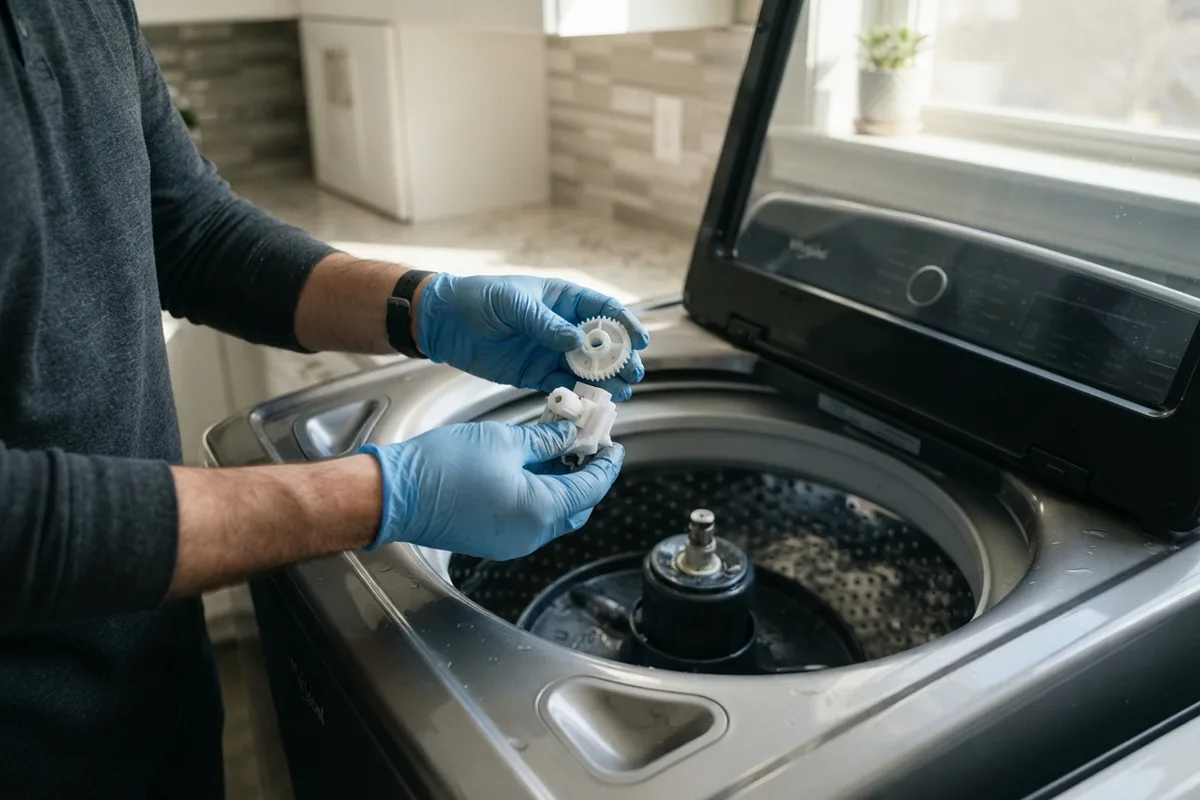
Replace Worn Agitator Directional Cogs (Agitator Dogs)
In standard top-load washers, the upper half of the agitator column relies on tiny plastic ratchets known as "agitator dogs." These plastic wedges grip teeth inside the upper column to force it to rotate in one direction while preventing backward movement. Over time, these plastic teeth wear down, causing the top section to spin freely or remain completely stationary while the motor hums.
- Disconnect power and remove the cap: Unplug the washer. Pry off the plastic cap sitting on top of the central agitator column using a small flat-head screwdriver.
- Remove the inner seal: Pull out the rubber dust cap or inner fluid cup located underneath the top cover.
- Unbolt the assembly: Use a socket wrench with an extension to unscrew the center retaining bolt at the bottom of the upper agitator section.
- Inspect the cogs: Lift off the upper agitator column. Inspect the four small plastic wedge pieces inside. If the tips are rounded or smoothed off, they cannot grip the housing.
- Install new cogs: Replace the worn plastic cogs with a new set (typically costing under $15). Line up the plastic retainers, lower the column back down, tighten the bolt, and snap the top caps back in place.
Test and Replace the Washer Lid Switch Assembly
The lid switch is a critical safety feature designed to stop the motor from agitating or spinning whenever the top door is open. If the switch breaks mechanically or fails electronically, the machine senses the lid as open and refuses to agitate, even if the tub has filled to the top with water.
- Inspect the lid strike pin: Check the plastic tab on the underside of the lid that depresses the switch when closed. If this pin is chipped or bent, it won't press the switch button down.
- Locate the switch mechanism: Unplug the washer and locate the switch beneath the main top opening near the rim frame.
- Check mechanical clicking: Manually press the switch lever with your finger. You should hear a distinct physical click. If the button feels spongy or remains recessed, the internal spring has failed.
- Test continuity with a multimeter: Remove the main cabinet top or access panel, disconnect the wire harness to the lid switch, and touch multimeter probes to the switch terminals while depressing the button. Zero resistance indicates a functioning switch; infinite reading (open circuit) means the switch requires replacement.
Replacing a faulty lid switch is a straightforward DIY task that takes around twenty minutes. If you suspect broader electrical errors or issues with spin cycles, review our guide on why your washer is not spinning.
Inspect the Washer Drive Belt for Wear or Slippage
Many conventional washers use a rubber drive belt connecting the electric drive motor to the transmission or drive pulley beneath the wash tub. If this belt snaps, stretches out, or becomes slick with grease, the motor will run smoothly, but the agitator column won't twist.
- Access the motor cabinet: Unplug the washer and disconnect the water supply hoses. Carefully tilt the machine back against a wall or lay it down on a protective blanket to access the bottom compartment.
- Examine the drive belt: Locate the black rubber belt wrapped around the motor shaft and main pulley. Check for visible fraying, cracks, thin spots, or complete breakage.
- Test tension: Press your thumb firmly against the side of the belt. It should yield no more than 1/2 inch of flex. A loose belt slips over the pulleys without transferring rotation to the transmission.
- Replace the belt: Loosen the motor mounting bolts slightly to relieve tension, slip the damaged belt off the pulleys, slide the fresh belt into position, re-tension the motor assembly, and tighten the mounting hardware securely.
Inspect the Drive Motor Coupler and Pulley
Direct-drive washing machines do not use a rubber belt; instead, they feature a rubber-and-plastic drive coupler connecting the motor output shaft directly to the transmission shaft. If the washer suffers a severe overload or lockup, this sacrificial coupler breaks apart on purpose to protect the expensive drive motor from burning out.
- Remove the water pump and motor: Unplug the appliance, drain excess water, tilt the washer back, and unbolt the water pump and motor mounting clamps from beneath the frame.
- Inspect the coupler: Look at the plastic drive isolator sitting between the motor shaft and transmission. If you see black rubber dust, cracked plastic prongs, or broken rubber rings, the coupler has sheared off.
- Replace the broken coupler: Slide the worn coupler halves off both metal shafts. Tap new heavy-duty drive coupler pieces firmly onto the shafts using a soft mallet, line up the isolated vibration dampener, and reattach the motor clamps tightly.
| Washer Component | Common Symptom | Average DIY Repair Difficulty | Typical Part Cost Range |
|---|---|---|---|
| Agitator Dogs | Lower agitator moves, top column spins freely | Easy (15-30 mins) | $5 – $15 |
| Lid Switch Assembly | Tub fills completely, zero motor hum or motion | Easy to Moderate | $15 – $40 |
| Drive Belt | Motor hums continuously during wash phase | Moderate | $10 – $25 |
| Motor Coupler | Machine fills and drains, but won't agitate/spin | Moderate to Advanced | $12 – $30 |
| Drive Transmission | Loud grinding noise during wash cycle | Advanced (Pro Recommended) | $120 – $250 |
When to Call a Pro
While replacing agitator dogs, drive belts, or lid switches is manageable for most homeowners, certain mechanical failures require specialized tools and expert training. If your inspection reveals a locked transmission gear set, a seized drive motor, or a burned-out main control board, self-repair becomes far more complex.
Furthermore, if you smell burning wires, suspect an internal electrical short, or notice continuous water leaks beneath the transmission, stop work immediately. Repairing internal transmission gearboxes or high-voltage control boards carries safety risks and often requires professional diagnosis.
When a repair exceeds your comfort level, True Appliance Repair can connect you with a local appliance pro to diagnose and resolve complex mechanical issues safely. Professional repair visits typically range from $120 to $280 depending on your geographic region and machine model.
Frequently Asked Questions
Why does my washer hum but not agitate?
A humming sound without agitation usually means the electric drive motor is receiving power, but mechanical force isn't reaching the wash tub. Common culprits include a broken drive coupler, a snapped drive belt, or an object jammed between the inner spinning basket and the outer tub wall. Unplug the machine and check the drive assembly under the cabinet.
Can an overloaded washing machine stop agitating?
Yes, overloading a washer causes the central motor to draw excess electrical current, which trips the internal thermal overload switch. When this occurs, the motor stops running to protect itself from burning out. Removing half the wet clothes and letting the motor cool down for 15 to 30 minutes will often restore normal operation.
How do I know if my agitator dogs are bad?
Grab the top section of the central agitator column with your hand while the machine is off. Try to rotate it manually in both directions. If the top agitator section spins smoothly in both clockwise and counterclockwise directions without resistance, the plastic agitator dogs inside are worn down and must be replaced.
How much does it cost to fix a washer that won't agitate?
If the failure is caused by simple wear items like agitator dogs or a lid switch, DIY parts generally cost between $10 and $40. If the repair requires replacing a drive motor, control board, or gear transmission assembly, total costs generally range from $150 to $350 depending on local labor rates and component availability.