
Standing water left inside your washing machine drum after a cycle is a frustrating sight. Whether your washer stopped mid-cycle or finished with clothes soaking wet, a drainage failure usually points to a handful of common, fixable culprits. Before you panic or shop for a replacement, systematic troubleshooting can help you identify the root cause quickly.
Safety always comes first when working with major home appliances. Before attempting any hands-on inspection or repair, always unplug your washing machine from the electrical power outlet and turn off the hot and cold water supply valves behind the unit. If you encounter electrical panel issues, gas line connections, or sealed-system repairs, stop immediately and contact a qualified professional.
Clear a Clogged Drain Pump Filter
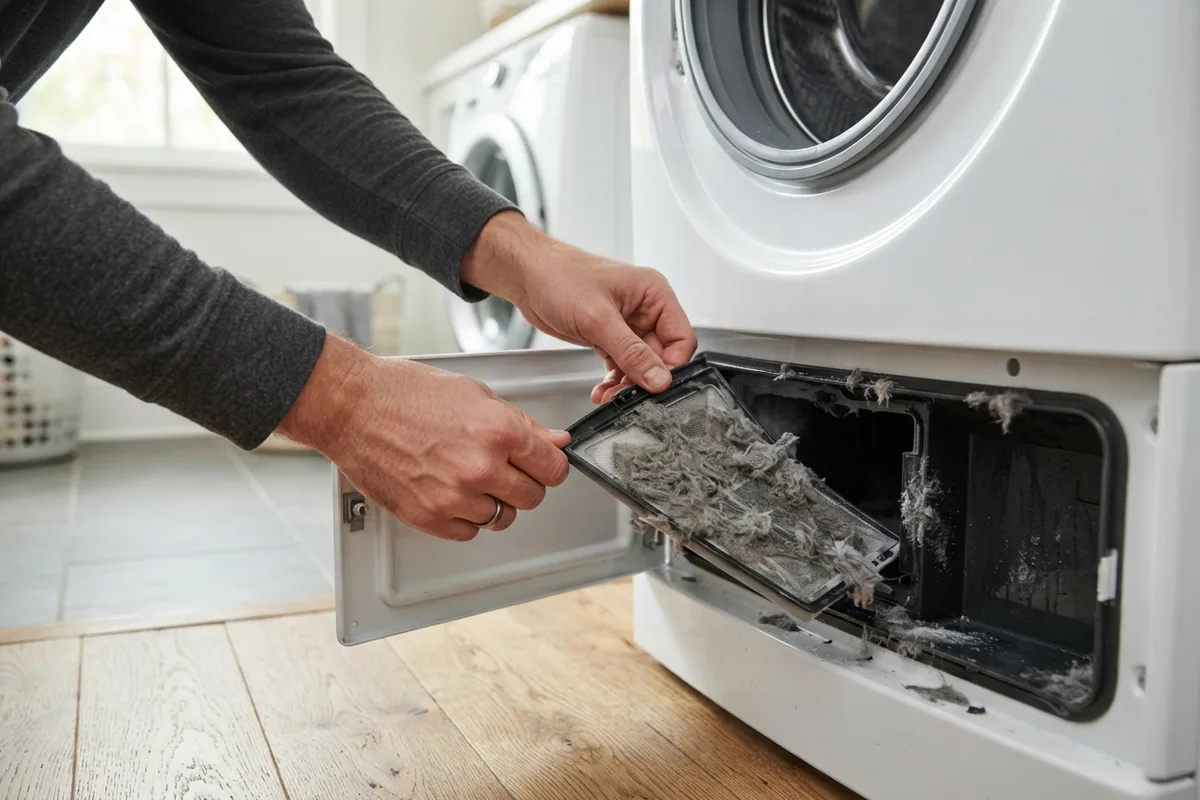
A clogged drain pump filter is the single most frequent reason a washing machine fails to evacuate water. Front-load washing machines and many modern top-load units feature an accessible pump filter designed to catch lint, hair, coins, and loose items before they reach the drain pump. Over time, debris builds up and creates a barrier that prevents the pump from pushing water out.
To clean your drain pump filter safely, follow these steps:
- Unplug the machine and shut off both water supply valves.
- Locate the small access door at the bottom front corner of front-load washers, or refer to your owner's manual for top-load filter locations.
- Place a low-profile tray and bath towels directly beneath the access panel to catch residual water.
- Open the panel, unscrew the small emergency drain tube cap (if equipped) to drain excess water into a small container, and then slowly twist the main filter cap counterclockwise.
- Pull the filter screen out, clear away hair, lint, and debris, and rinse it thoroughly under warm tap water.
- Inspect the filter housing with a flashlight for hidden coins or buttons before reinserting the filter securely.
Inspect and Unkink the Drain Hose
The flexible corrugated drain hose running from the back of your washer to the wall pipe or utility sink must maintain a clear, uninhibited path for water flow. If the washing machine has shifted during a heavy spin cycle, it may have crushed or severely kinked the hose against the back wall. Additionally, lint accumulation inside the hose can form a dense plug over time.
To inspect and clear the drain hose:
- Disconnect the power plug and turn off the water supply.
- Carefully pull the appliance away from the wall to gain full access to the rear connections.
- Inspect the entire length of the plastic hose for bends, sharp twists, or flattened sections. Straighten any kinks manually.
- Loosen the hose clamp connecting the hose to the back of the washer or standpipe, pulling the hose free over a bucket.
- Inspect inside the hose with a flashlight. Flush warm water or run a flexible plumber's snake through the hose to push out lint buildup.
- Reattach the hose firmly, ensuring the drain hose height matches manufacturer guidelines (typically 30 to 96 inches above the floor) to prevent siphoning.
Remove Blockages from the Standpipe
Sometimes the washing machine itself is completely fine, but the household plumbing is blocked. The wall standpipe or utility sink drain that receives wastewater from your washer can become clogged with accumulated lint, soap scum, and hard water minerals. If water backs up out of the standpipe or overflows onto the floor during the drain cycle, the restriction lies within your home's drainage pipe.
To check and clear a standpipe blockage:
- Unplug the washer and safely disconnect the drain hose end from the wall pipe.
- Pour a bucket of water directly into the standpipe. If the water drains slowly or backs up immediately, the pipe is clogged.
- Insert a handheld drain auger into the standpipe and rotate it to break up deep lint accumulation.
- Alternatively, use a non-corrosive drain cleaner designed for household plumbing pipes, following product instructions carefully.
- Flush the drain with hot water to ensure smooth flow before reconnecting the washer's drain hose.
- If you notice error messages on digital displays while troubleshooting modern models, review our guide on LG washer error codes explained to confirm whether an error code indicates a drain restriction.
Check and Clean the Coin Trap
Many top-load and select front-load washing machines utilize an internal coin trap or lint filter located near the bottom of the outer tub assembly. Small items left in pockets—such as coins, keys, hairpins, and small socks—can slide past the tub seal during washing and become lodged directly above or inside the drain pump housing. This mechanical obstruction prevents the pump impeller from spinning smoothly.
To access and clear the coin trap and impeller area:
- Unplug the unit and shut off the water valves.
- Bail out standing water inside the drum using a small cup and towels to lower the water level.
- Remove the lower front access panel or cabinet base using a screwdriver according to your model's design.
- Locate the plastic housing where the drain hose connects to the pump.
- Remove the housing cover or clamp, checking inside for caught coins, stray buttons, or small garments.
- Manually rotate the drain pump impeller blades with your finger to ensure they turn freely without grinding or resistance.
Reduce Excessive Soap Suds
Using too much laundry detergent—or using non-HE (High-Efficiency) detergent in a high-efficiency washing machine—creates an abundance of dense foam and suds. Excessive suds trap air pockets inside the drain pump chamber, causing airlocks. When an airlock occurs, the pump spins without generating enough pressure to push water up the drain hose, leaving standing water in the drum.
To resolve and prevent suds-related drainage issues:
- Allow the washer to sit undisturbed for 30 to 45 minutes to let the foam dissipate naturally.
- Add one cup of white distilled vinegar mixed with two cups of cold water into the drum to help break down detergent buildup.
- Unplug the machine, wait two minutes, plug it back in, and run a dedicated drain-and-spin or rinse cycle.
- Always measure detergent accurately using the cap provided by the manufacturer rather than pouring freely.
- Switch exclusively to HE detergent for high-efficiency washers, using no more than two tablespoons per full load.
- For severe laundry odor caused by residual soap film, read our guide on how to clean a front-load washer and stop the smell.
Test and Adjust the Lid Switch Assembly
Top-load washing machines feature a safety lid switch mechanism that prevents the machine from spinning or pumping water while the lid is open. Front-load washers use a motorized door lock latch for the same safety purpose. If the switch component fails, becomes misaligned, or suffers mechanical damage, the control board assumes the lid is open and halts the drain sequence completely.
To test and address a faulty switch:
- Unplug the appliance from the wall power outlet.
- Open the lid or door and inspect the strike pin on the lid and the receiver slot on the main housing for cracks or misalignment.
- Press the switch manually with your finger or a wooden stick on top-loaders; listen for a distinct clicking sound indicating mechanical contact.
- Use a multimeter set to ohms to test the switch terminals for electrical continuity when depressed.
- Realign loose mounting screws or replace a damaged switch assembly if no continuity is detected.
- If your machine shows broader structural warning signs alongside switch issues, consult our detailed breakdown of 7 signs your washing machine is dying.
| Issue Cause | Typical Symptoms | Difficulty Level | Estimated Repair Cost |
|---|---|---|---|
| Clogged Pump Filter | Water remains in drum; slow drain | Easy DIY | $0 - $15 |
| Kinked Drain Hose | Water won't drain; hose flattened behind unit | Easy DIY | $0 - $25 |
| Household Standpipe Blockage | Water overflows wall pipe onto laundry floor | Moderate DIY | $0 - $50 |
| Foreign Objects in Coin Trap | Rattling sound near pump; standing water | Moderate DIY | $0 - $30 |
| Excessive Detergent Suds | Drum full of foam; pump humming continuously | Easy DIY | $0 - $10 |
| Broken Lid Switch / Door Lock | Washer stops before spin/drain; lid light flashes | Moderate DIY | $20 - $70 (parts) |
| Failed Drain Pump Motor | Loud grinding noise or complete silence during drain phase | Advanced DIY / Pro | $150 - $350 (parts + service) |
When to Call a Pro
While clearing lint filters, straightening bent hoses, or reducing soap suds are straightforward homeowner tasks, certain washing machine drainage issues require specialized tools and expert diagnosis. If you have verified that the drain hose and house plumbing are completely clear, but the drain pump makes a harsh grinding noise, hums without turning, or remains completely silent during the drain cycle, the pump motor or control board may have suffered an electrical failure.
Attempting complex electrical testing or disassembling internal drive components without experience can lead to further damage or electrical hazards. Standard professional repair costs for drain pump motor replacement or main circuit board repair generally range from $150 to $350, depending on your machine's brand, model, and local labor rates. If your washer is approaching ten years of age and experiencing recurring mechanical failures, replacing the unit may prove more economical long-term.
When DIY steps do not resolve the standing water, True Appliance Repair can match you with a local appliance pro to inspect, diagnose, and restore your washer quickly.
FAQ
Can I manually drain a washing machine full of water?
Yes. You can manually drain standing water by disconnecting the drain hose from the wall pipe and lowering it into a bucket placed on the floor. For front-load machines, open the small access door at the bottom front, pull out the auxiliary drain tube, remove its cap, and let water flow into a shallow tray until empty.
Why is my washer making a humming sound but not draining?
A humming sound during the drain cycle usually means the drain pump motor is receiving electrical power but is mechanically jammed by a foreign object like a coin, sock, or bra wire. Alternatively, the internal pump impeller may be damaged or stripped, preventing it from pushing water out.
Will vinegar unclog a washing machine drain hose?
Vinegar effectively dissolves soap scum, mineral deposits, and mild detergent buildup inside the drain hose and pump housing. However, vinegar will not dislodge physical obstructions like coins, dense lint wads, or small garments; physical removal or snaking is required for solid clogs.
How do I know if my washer drain pump is burnt out?
If your washer reaches the drain cycle and produces complete silence with no hum, or if it emits a burning plastic smell accompanied by loud grinding noises, the pump motor winding may have burned out. A multimeter test showing no electrical continuity across the pump terminals confirms a dead motor that requires replacement.