
When you are ready to tackle a mountain of laundry, a washing machine door that refuses to lock can bring your day to a grinding halt. Modern front-load and top-load washing machines feature built-in safety mechanisms that prevent them from starting a cycle unless the door or lid is fully secured. If your washer's door latch won't engage, the machine simply will not run.
Fortunately, a washing machine door not locking is a common issue that you can often troubleshoot yourself. Before you call a technician or search for a washer and dryer repair service, try these straightforward troubleshooting steps. In this guide, we will walk you through 6 easy DIY fixes to get your washing machine door locking properly again.
Safety First: Before attempting any hands-on troubleshooting or repairs, always unplug your washing machine from the electrical outlet and turn off the water supply valves. If you need to perform work involving complex electrical diagnostics or electrical panel work, stop and call a professional. Never attempt internal repairs if you are uncomfortable doing so.
1. Clear away laundry and debris
The most common reason a washing machine door will not lock is a physical obstruction. Even a tiny piece of clothing, like a stray sock or a drawstring, can get caught between the door and the rubber gasket, preventing the door from sealing tightly enough for the lock to engage. This is especially common with front-load machines where laundry can easily shift during loading.
To fix this, open the door and inspect the entire circumference of the door seal and gasket. Look for trapped clothes, loose threads, or small items like coins or keys that may have fallen into the seal folds. Pull back the flexible rubber gasket to ensure nothing is wedged deep inside. While you are inspecting the area, check the top-load lid or front-load door edge for stuck-on dirt or debris that might prevent a flush closure. Once the area is completely clear, close the door firmly to see if the lock engages.
2. Clean the door latch and gasket
Over time, your washing machine's door gasket and latch mechanism can accumulate a buildup of detergent residue, fabric softener, lint, and hard water minerals. This creates a sticky or uneven surface that prevents the door from sealing correctly, which stops the door lock from triggering. If you have recently noticed that your washer smells or you've had to learn how to clean a washing machine drain pump filter, it is time to clean the door components too.
To clean the latch and gasket, mix a solution of equal parts warm water and white vinegar. Dip a clean microfiber cloth into the solution and thoroughly wipe down the entire rubber door gasket, paying close attention to the folds and the area around the door strike and latch. Use an old toothbrush dipped in the vinegar solution to gently scrub the door latch mechanism and the door strike (the piece that inserts into the latch). Remove all visible grime, soap scum, or debris. Once clean, wipe everything down with a damp cloth with plain water, and then dry it completely with a clean towel. Try closing and locking the door again.
3. Inspect and align the door hinges
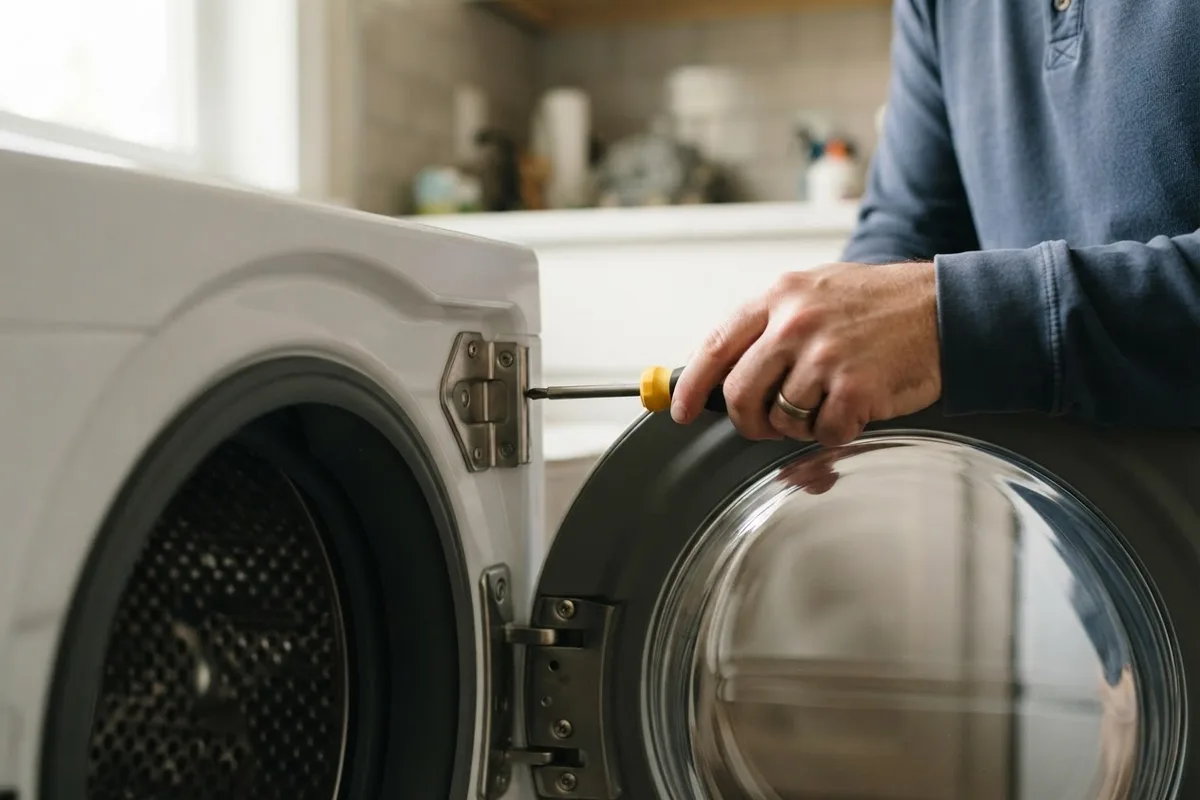
A front-load washing machine door is heavy, and over years of use, the hinges can sag or become misaligned. If the hinges are even slightly bent or loose, the door strike will not align with the door lock assembly. When this happens, the strike cannot enter the latch correctly, and the machine's sensors will prevent it from locking.
To check the alignment, slowly close the door while watching closely where the door strike meets the lock opening. Does it hit the top, bottom, or side of the slot instead of going straight in? If it is misaligned, you need to adjust the hinges. Use a screwdriver to check the screws on the door hinges. If they are loose, tighten them securely while gently lifting the door to help it return to its proper position. If the hinges are visibly bent or damaged, they may need to be replaced. For top-load washers, check the lid hinges at the back for cracks or loose pins that might cause the lid to sit unevenly.
4. Reset the washing machine's control board
Sometimes, the issue isn't mechanical at all, but rather a digital glitch in the washing machine's control board. If your washer recently experienced a power surge, was interrupted mid-load, or has been experiencing other odd behaviors—similar to when a washer is stopping mid-cycle—the control board might simply need a reset to clear a false error code and restore proper function to the door lock.
To reset the control board, ensure your hands are dry, and then unplug the washing machine from the wall outlet. Leave the appliance completely disconnected from power for at least 5 to 10 minutes. This allows any residual electrical charge in the control board's capacitors to dissipate. While the machine is unplugged, gently press and hold the "Start/Pause" button for about 10 seconds to help drain any remaining power. After the waiting period, plug the washer back into the outlet. Open and close the door firmly, select a new cycle, and see if the door lock engages normally.
5. Check for a damaged door strike
The door strike is the physical piece (usually made of hard plastic or metal) attached to the washing machine door or lid that extends outward. When you close the door, this strike pushes into the door lock assembly, triggering the internal switch that tells the machine the door is closed and safe to lock. If the door strike is cracked, bent, or broken, it will not be able to engage the lock switch properly.
Open your washing machine door and examine the strike closely. Look for any visible signs of wear, such as stress fractures, chips, or missing pieces. If the strike is made of plastic, it may have snapped or warped. If it appears damaged, it must be replaced. Fortunately, replacing a door strike is a very easy DIY repair. You can typically order a replacement part specific to your washer's model number. To replace it, simply use a screwdriver to remove the screws holding the old strike in place, attach the new strike, and tighten the screws. Test the new strike by closing the door to see if it now locks smoothly.
6. Examine and replace the door lock switch
If you have tried all the previous steps and your washing machine door still will not lock, the internal door lock switch (also known as the door latch assembly) is likely faulty. This component consists of an internal switch, a solenoid, and sometimes a wax motor that mechanically locks the door and signals the control board to start. Over time, the electrical contacts inside the switch can wear out or the solenoid can fail.
Replacing a door lock switch is slightly more advanced but still a manageable DIY task for many homeowners.
- Unplug the washer: Ensure the machine is completely disconnected from electricity.
- Remove the door boot seal clamp: On most front-load washers, a wire clamp with a spring holds the rubber door gasket to the front panel. Use needle-nose pliers or a spring expansion tool to gently pull the spring and remove the clamp.
- Peel back the gasket: Peel the rubber gasket away from the right side of the door opening, near where the door lock is located, to access the space behind the front panel.
- Unscrew the lock assembly: Locate the door lock switch behind the front panel. Use a screwdriver to remove the two screws holding it in place from the outside.
- Disconnect the wire harness: Carefully pull the lock assembly out from behind the panel and disconnect the wire harness.
- Install the new switch: Plug the wire harness into your new, identical door lock switch. Position the new switch behind the front panel, align it with the screw holes, and secure it with the screws.
- Reassemble: Push the rubber gasket back onto the metal lip of the frame, ensure it is seated correctly, and reinstall the wire boot clamp by stretching the spring and placing it over the gasket.
Once reassembled, plug the machine back in and test a cycle to see if the door locks successfully.
Washing machine door fixes at a glance
| Fix | Difficulty Level | Estimated Time | Tools Needed |
|---|---|---|---|
| Clear debris | Very Easy | 5 mins | None |
| Clean latch/gasket | Easy | 10 mins | Vinegar, cloth, toothbrush |
| Align hinges | Easy | 10-15 mins | Screwdriver |
| Reset control board | Easy | 10 mins | None |
| Replace door strike | Easy | 15 mins | Screwdriver, new part |
| Replace door lock switch | Moderate | 30-45 mins | Screwdriver, pliers, new part |
When to Call a Pro
While many washing machine door lock issues can be resolved with a bit of cleaning, minor adjustments, or basic part replacements, some situations require expert attention. If you have completed the 6 steps above and your washing machine door still refuses to lock, you may be dealing with a deeper electrical failure, a damaged main control board, or complex internal wiring issues.
If you are uncomfortable handling electrical components, or if your machine requires advanced diagnostics or electrical panel work, it is best to step back. True Appliance Repair can match you with a local appliance pro who has the expertise to diagnose and repair your washing machine safely and efficiently. An experienced technician can quickly determine whether the issue stems from the door lock assembly, the main control board, or another internal component, ensuring your appliance is back in working order without the risk of further damage.
FAQ
Why does my washing machine display a "dE" or "LO" error code?
The "dE" (Door Error) or "LO" (Lock Error) code on a washing machine's digital display explicitly indicates that the control board detects that the door or lid is not securely closed or locked. When this code appears, the machine will pause or refuse to start the cycle. You can usually clear this code by opening the door, ensuring there are no obstructions, cleaning the latch, and slamming or pushing it firmly shut. If the code persists after trying these basic steps, it usually means the door lock switch or door strike is damaged and needs replacement.
Is it safe to bypass a washing machine door lock?
No, you should never attempt to bypass, rig, or hotwire a washing machine's door lock switch. The door lock is a critical safety mechanism designed to prevent the machine from spinning at incredibly high speeds while the door is open. Bypassing this switch creates a severe safety hazard, as the door could be opened while the drum is spinning, leading to potential flooding, damage to your home, or serious personal injury. If the lock is not working, always repair or replace it properly rather than attempting a bypass.
How much does it cost to replace a washer door lock assembly?
The cost to replace a washing machine door lock assembly varies depending on whether you choose to do it yourself or hire a pro. For DIYers, a replacement door lock switch typically costs between $30 and $100, depending on your washer's brand and model. If you hire a local repair pro, the total cost for parts and labor generally ranges from $150 to $300. Keep in mind that prices can vary broadly by area and model, so it is best to get a quote from a local service provider.
How do I open a washing machine door that is stuck locked?
If your washing machine cycle has finished but the door remains stubbornly locked, first try to wait a few minutes, as many machines have a built-in delay before unlocking. If it still won't open, ensure your hands are dry and unplug the machine for 5 to 10 minutes to reset the control board. If the door is still stuck, check your washer's manual for a manual door release, which is often a small lever or pull-tab located near the bottom of the machine, behind the drain pump filter access panel. Gently pulling this release while simultaneously pulling the door handle should manually unlock it.