
A washing machine that shakes violently during its high-speed spin cycle can turn your laundry routine into a nerve-wracking experience. When a washer vibrates loudly or 'walks' across the floor, it signals an issue with weight distribution, machine stability, or internal suspension parts. Catching and correcting this problem early prevents costly damage to your flooring, surrounding cabinetry, and the appliance itself.
Before performing any hands-on inspection, safety must come first. Always unplug the washing machine from the electrical outlet and shut off the hot and cold water supply valves behind the unit. If your machine requires moving or opening cabinet panels, work carefully to protect your hands and back.
Here are five proven DIY fixes to stop your washing machine from shaking violently and restore peace to your home.
1. Rebalance and Adjust the Laundry Load
Uneven weight distribution inside the wash tub is the single most common cause of violent shaking during the spin cycle. When heavy items collect on one side of the drum, centrifugal force creates a powerful wobble that shakes the entire appliance. Single heavy items—such as a dense bath rug, weighted blanket, or heavy winter coat—absorb significant water weight and cling to one side of the tub.
To fix an unbalanced load, open the lid or door when the tub comes to a complete stop. Manually redistribute the clothing evenly around the central agitator or throughout the drum perimeter. Avoid mixing heavy cotton towels or denim jeans with lightweight garments in small loads, as this imbalance creates uneven spinning dynamics.
Always load your machine loosely without packing clothes down tightly. For top-loading washers, load clothes in balanced rings around the basket. For front-loading washers, combine small and medium items so the drum balances naturally as it rotates. A severe imbalance can also trigger safety switches that pause the cycle entirely; if your unit stops turning, review our guide on why your washer is not spinning for additional troubleshooting steps.
2. Level the Machine's Adjusting Feet
An unlevel washing machine cannot distribute kinetic energy evenly, causing the entire cabinet to bang against the floor. Even if your machine was level when installed, routine vibration can loosen the leveling legs over time, or subtle floor settling can leave one foot hanging in the air.
Place a bubble level flat across the top front edge of the machine, then along the side edges. If the bubble indicates an incline, place your hands on opposite diagonal corners of the washer and try to rock it back and forth. If the machine rocks, at least one leg is not making firm contact with the floor.
To adjust the legs:
- Prop up the front of the washer safely using a wooden block.
- Rotate the threaded leveling legs clockwise to shorten them or counterclockwise to lengthen them.
- Once the bubble level shows the cabinet is completely level front-to-back and side-to-side, tighten the locking nut (jam nut) against the base frame using a wrench to lock the leg in place.
- Repeat the process for the rear legs if your model uses manual rear adjustments (many modern units use self-leveling rear legs, which reset when you tip the machine forward slightly and drop it back down).
3. Remove Shipping Bolts or Transport Locks
If your washing machine is brand new or recently relocated, violent shaking during its very first spin cycle almost always indicates that the factory shipping bolts were never removed. Manufacturers install heavy steel rods or plastic spacers through the back of the cabinet to lock the tub in place during transit so internal components are not damaged.
If these bolts remain installed when you turn on a wash cycle, the tub cannot flex on its suspension system. Instead, every vibration from the motor transfers directly into the outer steel cabinet, causing extreme shaking, loud banging, and potential structural damage.
Check the rear panel of your washing machine. Front-load models typically have three to six large shipping bolts visible on the rear wall. Use a socket wrench or spanner to unbolt each shipping rod completely, remove the plastic spacers, and snap the included plastic hole covers into the open slots. Store these bolts inside your laundry room cabinet in case you move homes in the future.
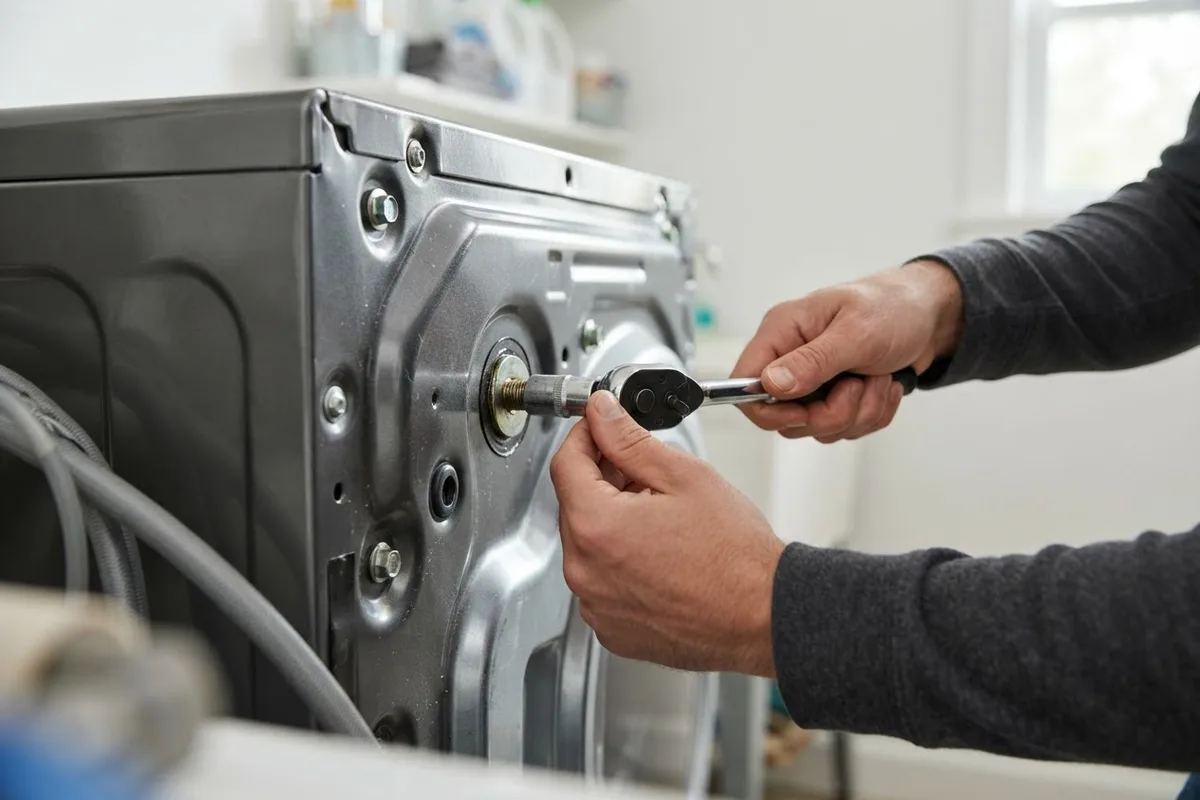
4. Inspect and Replace Worn Shock Absorbers
Front-loading washing machines rely on heavy-duty shock absorbers connected between the base frame and the outer wash tub. These shocks damp motor energy and absorb the momentum generated by heavy, spinning wet laundry. Over years of weekly laundry loads, the hydraulic fluid or internal damping pads inside these shocks degrade.
When shock absorbers fail, the wash tub bounces uncontrollably inside the cabinet during spin cycles, often producing loud thumping or slapping noises against the side panels.
To inspect your shock absorbers:
- Ensure the machine is completely unplugged and water supply hoses are disconnected.
- Access the lower interior cabinet by removing the front lower toe panel or rear access panel, depending on your model.
- Locate the shock absorbers attached to the bottom of the tub.
- Inspect each shock for signs of leaking fluid, cracked plastic housing, or loose mounting pins.
- Unclip one end and compress the shock manually; if it slides freely without firm resistance, the dampening pad is worn out and the component must be replaced.
Shock absorbers should always be replaced in pairs to maintain equal tension across both sides of the wash tub. Replacement parts generally cost between $30 and $80, while having a professional repair technician perform the service typically ranges from $150 to $280, depending on area labor rates and machine accessibility.
5. Check Suspension Springs and Tub Dampers
Top-loading washing machines utilize a series of suspension springs or dampening rods to suspend the heavy wash tub from the top frame of the cabinet. Front-load washers also use heavy counterweight springs attached to the top of the tub. If one spring stretches, snaps, or slips out of its mounting bracket, the tub hangs crookedly and slams violently into the cabinet walls when spinning.
With the washer unplugged, open the top lid or panel to visually inspect the suspension springs. On top-load units, push down firmly on the inner wash tub and release it quickly. The tub should bounce once and immediately return to its centered rest position. If the tub continues to bounce multiple times or feels completely slack, one or more suspension rods or springs have failed.
Replacing suspension rods involves removing the top main housing of the washer, lifting the tub slightly, and unhooking the old rods from their corner sockets. Taking time to inspect these mechanical parts regularly is just one of several smart appliance maintenance tasks that save money by extending the operating lifespan of your unit.
Troubleshooting Washer Shaking: Quick Comparison
Use this reference table to match your washer's symptoms with the most likely root cause and solution:
| Symptom / Pattern | Most Likely Cause | Primary DIY Solution |
|---|---|---|
| Shaking happens only on heavy item loads | Unbalanced clothing distribution | Pause cycle, manually spread items evenly in drum |
| Machine rocks diagonally when pushed | Unlevel leveling feet | Adjust threaded leg length; tighten locking nuts |
| Brand new washer shakes violently on 1st load | Factory shipping bolts still installed | Remove rear transport bolts and plastic spacers |
| Tub bounces continuously when pushed down | Broken suspension rods or shock absorbers | Replace worn shocks or dampening rods as a set |
| Loud metallic grinding along with shaking | Worn tub bearing or drive pulley | Inspect rear tub bearing; call a pro for rebuild |
When to Call a Pro
While leveling feet and redistributing wet towels are quick DIY fixes, certain internal structural repairs carry higher complexity. Replacing worn inner tub bearings, repairing cracked outer tub housings, or addressing complex drive motor mounts requires disassembling major portions of the appliance frame.
If you inspect your machine and suspect a broken tub bearing, cracked drive pulley, or damaged counterweight, stop work and consult a qualified technician. Always remember to call a pro for any repairs involving gas lines, sealed refrigerant systems, or main electrical breaker panel connections.
When dealing with advanced mechanical repairs or stubborn cabinet vibration, True Appliance Repair can match you with a local appliance pro to diagnose the issue quickly and restore quiet performance to your laundry room.
FAQ
Can an unlevel washing machine damage the appliance over time?
Yes. Operating a washing machine that is significantly unlevel creates abnormal stress on the motor, drive belt, tub bearings, and internal suspension system. Over time, excessive vibration causes structural fasteners to loosen, damages floor joists, and leads to premature mechanical failure.
Why does my washing machine shake violently only during the spin cycle?
During wash cycles, the tub rotates at low speeds (around 50 to 100 RPM) to gently agitate clothes. During the spin cycle, speeds increase dramatically up to 1,200 RPM to extract water. Any minor weight imbalance or unlevel foot is magnified exponentially at high rotational speeds, resulting in violent cabinet shaking.
Do rubber anti-vibration pads help stop washer shaking?
Heavy-duty rubber anti-vibration pads placed beneath each leveling foot can reduce sound transmission and prevent a washer from slipping on slick tile or polished concrete. However, anti-vibration pads only mask vibration—they will not resolve underlying mechanical issues like broken suspension rods, unlevel legs, or unbalanced laundry loads.
How much does it cost to replace washing machine suspension rods?
Replacement suspension rod kits for top-load washers typically cost $40 to $90 for parts. If you choose to hire a technician to perform the installation, total repair costs generally range between $150 and $300, depending on machine design, location, and labor rates.