
Is your dishwasher leaving you with lukewarm cycles, puddles under the cabinet, or mysterious grinding noises? Catching the early warning signs of an aging dishwasher can save your kitchen floor from costly water damage and keep your daily routine running smoothly. Just like watching for signs your washing machine is dying, recognizing when your dishwasher is on its last legs helps you plan ahead before a complete breakdown leaves you washing dishes by hand.
Before performing any hands-on troubleshooting or inspecting internal components, safety must come first. Always turn off power to the unit at the circuit breaker or unplug it from the wall, and turn off the dedicated water shut-off valve beneath your kitchen sink. If you ever encounter gas lines, sealed refrigerant systems, or main electrical panel wiring during appliance maintenance, stop immediately and call a professional technician.
Here are seven reliable indicators that your dishwasher is failing, along with practical guidance to help you decide whether to repair or replace your unit.
1. Water Leakage on the Kitchen Floor
Puddles accumulating in front of or underneath your appliance are among the clearest warning signs of structural or component failure. While a loose hose clamp or dirty door gasket can cause minor spills, persistent leaks often stem from a cracked tub, worn pump housing, or degraded internal motor shaft seals.
- Check the door gasket: Inspect the black rubber seal surrounding the door opening for cracks, gaps, or hard mineral buildup that prevents a tight seal.
- Examine the tub lining: Look closely at the lower floor and walls inside the stainless steel or plastic tub for hairline cracks or pinhole corrosion spots.
- Inspect the spray arm and pump area: Ensure water is not spraying forcefully against the door seam due to a cracked lower spray arm or misaligned spray nozzle.
When a dishwasher tub develops structural cracks or internal seal housings warp, repair costs often outweigh the value of the unit.
2. Dishes Come Out Cold After a Wash Cycle
A proper wash cycle relies on water heated between 120°F and 150°F to sanitize dishware and activate detergent enzymes effectively. If your dishes feel stone-cold immediately after a full cycle finishes, the heating element or internal thermostat has likely failed.
- Inspect the heating element: Look at the exposed metal loop at the bottom of the tub for blistering, dark scorch marks, or physical breaks.
- Test thermal switches: A tripped or faulty high-limit thermostat will cut power to the heating element to prevent thermal runaway.
- Observe cycle duration: When heating elements fail, modern units often run for three or four hours attempting to boost water temperatures without success.
Replacing a simple heating element is a manageable task, but if secondary electronic control modules are malfunctioning alongside it, your machine is approaching major overhaul territory.
3. Rust Stains on the Interior Tub or Racks
Noticing rust specks on stainless steel walls or flaking plastic coating on dish racks indicates material breakdown inside the machine that will only worsen over time.
- Examine the vinyl rack coating: When protective plastic peels away, underlying steel wires rust quickly, snagging delicate glassware and leaving orange stains on ceramic plates.
- Check internal stainless steel components: High-grade stainless steel tubs should not rust under normal water conditions; flaking or reddish patches suggest severe chemical degradation or structural weakness.
- Test your incoming water supply: Rule out rust originating from home plumbing by checking whether reddish deposits appear in sink faucets or bath fixtures.
While replacement racks are available, replacing both upper and lower assemblies can cost over $150 to $250, making a total appliance upgrade more practical.
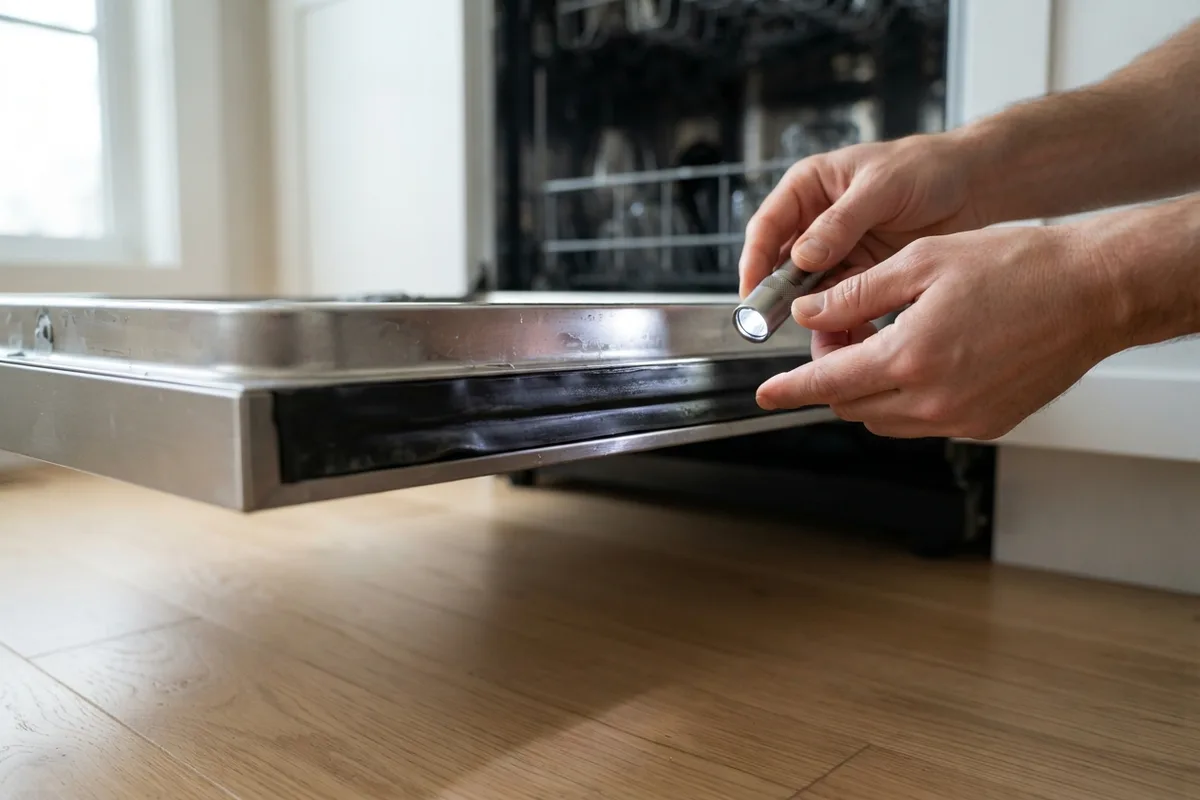
4. The Door Latch Keeps Popping Open or Failing to Seal
Dishwashers will not run unless the door switch confirms a tight, latch-locked closure. If you must wedge something against the door or repeatedly snap the latch back into place, the frame or latch mechanism is severely worn.
- Check frame alignment: Over years of thermal expansion from hot steam, light-gauge metal frames can twist slightly out of square alignment.
- Inspect the latch catch: Plastic latch catches wear down over thousands of cycles, preventing the safety switch from engaging reliably.
- Evaluate door hinge springs: Counterbalance door springs and cables can stretch or break unevenly, pulling the door away from the tub frame.
If adjusting the cabinet mounting brackets or replacing a simple latch catch does not resolve the issue, structural frame warping is usually the culprit.
5. Strange Grinding or Humming Sounds During Cycles
While every dishwasher creates mild rhythmic swooshing sounds, loud harsh grinding, clicking, or high-pitched squealing points to mechanical failure in the wash or drain motor.
- Identify grinding noises: Grinding is often caused by hard objects like bone fragments or broken glass trapped near the impeller, or worn motor bearings.
- Diagnose loud humming: A low hum without water movement indicates a seized pump motor that is drawing power but failing to spin.
- Check for rattling beneath the tub: Loose mounting bushings or failing pump housing assemblies vibrate heavily against the lower frame.
Before replacing the appliance, you can troubleshoot general dishwasher issues to clear foreign debris from the sump region. However, if the internal motor bearings themselves are shot, motor assembly replacement is required.
6. Persistent Error Codes or Mid-Cycle Shutoffs
Modern electronic dishwashers feature self-diagnostic systems that trigger specific error codes on the display panel when sensors detect operational anomalies. If your machine repeatedly stops mid-cycle with flashing lights or error codes, the central control board or sensor network is failing.
- Random cycle cancellations: The unit fills with water and suddenly stops, draining prematurely or freezing altogether mid-wash.
- Unresponsive control pads: Touch panels stop recognizing button inputs due to moisture intrusion behind the control fascia.
- Repeated sensor fault codes: Float switches, optical turbidity sensors, and temperature thermistors fail simultaneously due to board communication errors.
Replacing a main control board paired with a user interface panel can run $200 to $400, which is rarely sensible for a machine near the end of its functional life.
7. The Dishwasher Is Over 10 Years Old and Repairs Pile Up
The average lifespan of a modern residential dishwasher is 9 to 12 years. As machines cross the decade mark, cumulative wear on pumps, valves, and electronics accelerates.
- Calculate the 50% Rule: If a single repair quote exceeds 50% of the cost of a comparable new machine, replacement is almost always the smarter choice.
- Consider energy efficiency: Older units consume up to 10 to 15 gallons of water per load, whereas modern units utilize advanced sensors to consume under 3.5 gallons.
- Evaluate repair frequency: If you have paid for two or more service calls in the past 12 months, ongoing maintenance costs will quickly surpass a new purchase.
Dishwasher Repair vs. Replace Quick Reference
Use this quick decision table to evaluate whether your current dishwasher issue warrants a straightforward fix or a complete appliance replacement.
| Issue Observed | Likely Root Cause | Typical DIY / Repair Path | Recommendation |
|---|---|---|---|
| Water pooling under unit | Torn gasket or cracked tub | Replace rubber door seal; inspect tub for cracks | Repair seal; replace unit if tub is cracked |
| Dishes cold after wash | Burned heating element | Replace heating element or high-limit thermostat | Repair (low to moderate cost) |
| Grinding / squealing noise | Foreign object or worn motor | Clear debris from impeller; check motor bearings | Repair if debris; replace unit if motor seized |
| Unit stops mid-cycle | Control board or sensor failure | Reset circuit breaker; test sensors | Replace unit if board cost exceeds $300 |
| Severe tub rust / frame warp | Material breakdown | Non-repairable structural failure | Replace machine |
When to Call a Pro
Some dishwasher maintenance tasks—such as replacing a worn rubber door seal, cleaning a removable mesh filter, or clearing debris from a spray arm—are great DIY projects. However, complex electrical diagnostics, main circulation pump replacements, and internal wiring repairs require specialized tools and diagnostic expertise.
Typical dishwasher repairs usually cost between $150 and $400, though actual pricing varies by area, machine age, and specific model. If you are dealing with complex electrical faults, persistent water leaks behind cabinetry, or unidentifiable motor noises, bringing in a professional saves time and prevents unintended water damage to your kitchen subfloor.
When you need professional help, True Appliance Repair can match you with a local appliance pro in your area to assess your machine and provide honest recommendations.
FAQ
How long should a dishwasher typically last?
Most standard residential dishwashers last between 9 and 12 years with routine care. Regular cleaning of the filter area, avoiding harsh abrasive chemicals, and addressing minor leaks early helps maximize the machine's full lifespan.
Is it worth replacing a pump motor on an 8-year-old dishwasher?
It depends on the overall condition of the unit. If the tub, racks, door seals, and electronic control boards are in good condition, replacing a pump motor may extend the unit's life by several years. However, if other components are showing wear, replacing the machine is often more economical.
Why does my dishwasher smell like burning plastic?
A burning plastic odor usually indicates that a plastic item has fallen onto the exposed heating element at the bottom of the tub. Turn off the dishwasher at the circuit breaker immediately, let it cool completely, and inspect the heating coil. If no plastic item is found, the smell may stem from overheating internal wiring, which requires immediate attention from a technician.
Can a clogged drain hose cause my dishwasher to stop working?
Yes. If water cannot drain properly during a cycle, safety float switches will trip to prevent overflows, halting the wash program. Clearing a kinked or clogged drain hose under the sink often restores normal operation quickly. If you experience water leaks elsewhere, check our guide on why your refrigerator is leaking water for similar drainage tips.