
Is your laundry routine suddenly taking all day because your clothes come out damp or piping hot? A malfunctioning clothes dryer rarely stops working without giving clear warning signals first. Recognizing these red flags early can help you tackle simple maintenance steps before minor mechanical issues escalate into total machine failure.
Whether your dryer is squeaking loudly, failing to tumble, or shutting off mid-cycle, understanding what these symptoms mean helps you decide whether a quick repair or a full replacement makes the most financial sense. Here are the seven clearest signs your dryer is dying and what you should do about each one.
1. Clothes Take Multiple Cycles to Dry
If standard loads of bath towels or denim jeans now take two or three complete cycles to dry, your appliance is losing operational efficiency. While a clogged lint screen is the most common culprit, persistent long drying times usually point to a failing heating element, a worn-out thermal fuse, or an obstructed exhaust vent system.
When airflow is restricted or heat production drops, the machine works twice as hard to dry fabrics. This extra strain accelerates wear on the motor and drum bearings while driving up your utility bills.
- Clean the lint filter: Pull out the lint screen before every single load and scrub off invisible fabric softener buildup with warm soapy water once a month.
- Inspect the outdoor vent flap: Go outside while the dryer is running to confirm strong air discharge from the wall hood.
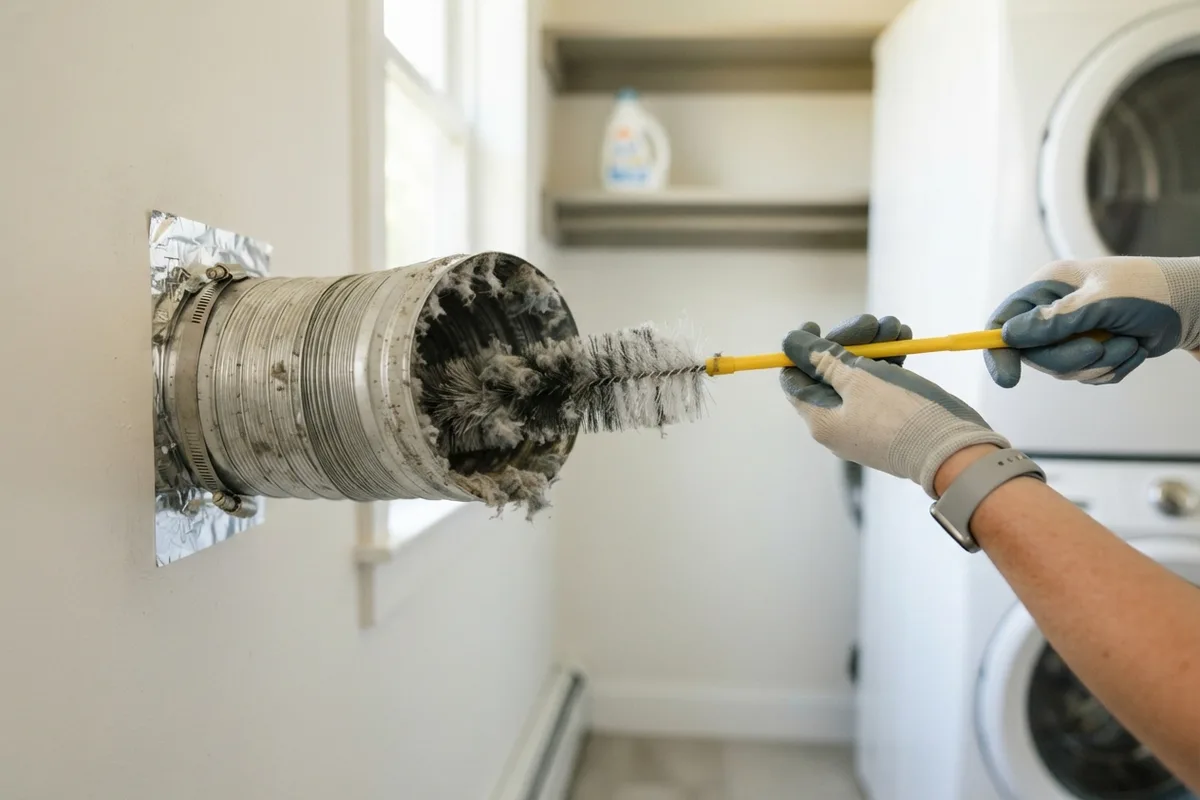
- Clear the ductwork: Disconnect the duct behind the unit and vacuum out accumulated lint packed inside the pipe.
If cleaning the entire vent pathway does not resolve the issue, the heating assembly or moisture sensors may be failing.
2. Burning Odors or Burning Smells During Operation
A distinct smell of burning dust or scorching fabric is an urgent warning sign that demands immediate action. Heavy lint accumulation near the burner chamber or heating element can catch fire easily, making this both an appliance failure risk and a severe home safety hazard.
Burning smells can also indicate a slipping drive belt that is friction-rubbing against a jammed drum pulley or an overheating electric motor nearing the end of its life.
- Stop the cycle immediately: Turn off the appliance and unplug the power cord from the wall outlet. If you own a gas unit, shut off the gas supply line valve behind the machine.
- Inspect for lint buildup: Remove the lower front access panel or rear cover to check for thick lint deposits sitting near electrical connections or gas burner tubes.
- Examine the drive belt: Look for fraying, scorching, or rubber residue on the drum belt and motor pulley.
Never operate a machine that produces a persistent burning odor until the underlying cause is pinpointed and resolved.
3. Excessive Screeching, Thumping, or Grinding Noises
Dryers normally make a gentle, steady humming sound accompanied by the soft tumbling of clothing. High-pitched squealing, metallic grinding, or heavy rhythmic thumping indicate that mechanical support components inside the cabinet are disintegrating.
Common culprits include worn drum support rollers, damaged glides, a failing idler pulley, or worn motor bearings. Ignoring these sounds allows failing parts to score or warp the metal dryer drum, turning an inexpensive component replacement into an unfixable structural breakdown.
- Check the drum interior: Ensure loose coins, belt buckles, or metal buttons are not trapped in the drum baffles or lint housing.
- Test drum resistance: With the power disconnected, manually turn the empty drum by hand. If it squeaks heavily or feels extremely difficult to turn, the rollers or pulley need attention.
- Inspect the idler pulley: A squealing sound that changes pitch when cycles start typically points to a failing tensioner pulley assembly.
If you want to review specific noise troubleshooting steps for shutting down mid-cycle, check out our guide on why your dryer keeps shutting off.
4. The Drum Fails to Spin While the Motor Hums
When you press the start button, you might hear the electric motor hum smoothly, yet the tumble drum remains completely stationary. This symptom usually means the heavy-duty drive belt has snapped, slipped off its track, or snapped away from the motor pulley.
However, if the motor hums loudly for a few seconds before tripping your home's circuit breaker, the motor windings themselves may be shorted or jammed internally by mechanical debris.
- Unplug the power source: Always disconnect electricity before opening any cabinet panels.
- Check belt tension: Open the top panel or slide a hand around the drum to feel if the belt is tight or dangling loose.
- Inspect drum rollers: Manually spin the drum; if it feels frozen solid, a seized roller axle is preventing the motor pulley from turning.
Replacing a snapped drive belt or front glider set is a straightforward project, but replacing a seized motor on an older unit is rarely cost-effective.
5. The Dryer Cabinet Gets Extremely Hot to the Touch
While clothes inside should feel warm when a cycle finishes, the exterior sheet metal housing of the appliance should never feel uncomfortably hot to touch. An excessively hot cabinet means heat is trapped inside the chassis rather than being safely vented outdoors.
This condition typically results from severe duct blockages or a defective cycling thermostat that fails to shut off the heat source when proper operating temperatures are reached. Prolonged exposure to extreme internal heat will melt internal wire insulation, ruin synthetic fabrics, and fry sensitive electronic control boards.
- Check venting immediately: Ensure the flexible transition hose behind the dryer is not crushed or kinked against the wall.
- Clean exhaust exit: Clear out bird nests, lint mats, or stuck vent flaps at the exterior exit hood.
- Test the high-limit thermostat: A multimeter can reveal whether internal thermal safety switches have lost continuity.
6. Repeated Component Failures and Frequent Repairs
Replacing an inexpensive belt or thermal fuse once every few years is normal appliance upkeep. However, if you find yourself replacing heating elements, thermostats, and control boards every few months, your machine is sending a clear message.
As major components age, elevated electrical resistance and mechanical drag cause cascading failures throughout the entire system. Spending money on frequent partial fixes on an aging appliance quickly exceeds the price of buying a modern, high-efficiency replacement model.
Keep track of your cumulative maintenance costs. If recent repair bills total more than 50% of the cost of a new appliance, continuing to sink money into a declining machine is poor investment logic.
7. Your Dryer Has Exceeded Its Expected Lifespan
Most modern residential dryers have an average useful lifespan of 10 to 13 years. How long your specific machine lasts depends on load frequency, preventive maintenance habits, and proper ventilation setup. You can read more about typical equipment longevity in our complete guide on how long home appliances last.
If your unit is past its decade mark and exhibits any combination of weak heating, noisy operation, or slow drying times, finding replacement components will become increasingly difficult. Modern replacement units use significantly less electricity or gas, making an upgrade economically sensible.
Repair vs. Replace: Quick Decision Matrix
To help you evaluate whether your appliance is worth fixing, review this quick reference comparison table:
| Issue / Indicator | Recommended Action | Typical US Cost Range | Decision Factors |
|---|---|---|---|
| Snapped Drive Belt | Repair DIY or Pro | $15 – $180 | Easy fix if unit is under 8 years old. |
| Clogged Exhaust Vent | DIY Maintenance | $0 – $150 | Immediate DIY fix; prevents fire hazards. |
| Bad Heating Element | Repair or Evaluate | $150 – $300 | Worth repairing if motor and drum are solid. |
| Seized Drive Motor | Replace Machine | $250 – $450+ | Rarely economical on units older than 8 years. |
| Burnt Control Board | Replace Machine | $300 – $500+ | High part costs favor buying a new appliance. |
Note: Repair costs vary by geographical area, brand, and model specific parts.
When to Call a Pro
While home handyman tasks like clearing lint vents or replacing a basic drum belt are straightforward DIY fixes, complex symptoms require professional diagnostic tools and training. Always stop and call a professional technician if you experience any of the following:
- Gas line connections: Gas dryers require expert handling whenever dealing with fuel shutoff valves, burner orifices, or igniter assemblies.
- Internal electrical rewiring: Deep electrical panel issues, 240-volt outlet failures, or main circuit board shorts should always be handled by an expert.
- Unresolved thermal shutoffs: If your machine continuously trips circuit breakers or blows thermal fuses despite clean vents, deep electrical testing is mandatory.
If you prefer professional assistance over DIY troubleshooting, True Appliance Repair can match you with a local appliance pro to diagnose and service your machine safely. When internal components fail, scheduling a local visit through True Appliance Repair gets your laundry room running smoothly again without hassle.
FAQ
Is it worth fixing a 10-year-old dryer?
In most cases, spending significant money to repair a 10-year-old dryer is not recommended. Because the average lifespan of a clothes dryer is 10 to 13 years, major component failures at this age suggest other parts like the motor or drum bearings will fail soon. Minor fixes like a cheap belt may be worthwhile, but costly motor or control board replacements justify buying a new machine.
What is the most common part to fail on a clothes dryer?
The most common components to fail are the thermal fuse, the drive belt, and the heating element (on electric models). Thermal fuses often blow as a safety precaution when exhaust vents become clogged with lint and overheat the internal cabinet.
How can I make my clothes dryer last longer?
To maximize appliance lifespan, clean the lint filter after every load and vacuum out the entire rigid exhaust ductwork at least once a year. Avoid overloading the drum with wet, heavy items, which strains the drive belt, motor, and drum support rollers.
Can a clogged vent cause a dryer to stop heating?
Yes. When lint blocks airflow through the ductwork, heat gets trapped inside the appliance cabinet. This elevated temperature trips the high-limit safety thermostat or thermal fuse, cutting power to the heating element or gas burner to prevent a fire.