
Every major household appliance has an operational lifespan, but unexpected breakdowns do not have to catch you off guard. Knowing how long your home appliances are built to last allows you to plan for replacements, budget effectively, and avoid plumbing or electrical emergencies. Whether you are settling into a new property or maintaining your current space, this guide breaks down average lifespans, key failure signs, and simple maintenance steps to keep your equipment running reliably.
| Appliance | Average Lifespan | Common Warning Signs | Simple Maintenance Step |
|---|---|---|---|
| Refrigerator | 10–13 Years | Constant running, warm food, leaks | Vacuum condenser coils annually |
| Washing Machine | 10–14 Years | Violent shaking, slow draining, drum odors | Clean filter and door seal monthly |
| Clothes Dryer | 10–13 Years | Extra-long cycles, squeaking, high heat | Vacuum lint exhaust duct quarterly |
| Dishwasher | 9–12 Years | Standing water, cloudy dishes, latch failures | Clean lower mesh filter monthly |
| Oven / Range | 13–15 Years | Uneven baking, burner delays, inaccurate temp | Clean igniters and calibrate temp |
| Garbage Disposal | 8–12 Years | Frequent jams, sink leaks, low humming | Grind ice cubes and citrus monthly |
| Water Heater | 8–12 Years | Rusty water, popping sounds, slow recovery | Drain tank sediment annually |
Refrigerator Lifespan: What to Expect After 10 to 13 Years
Standard refrigerators generally last between 10 and 13 years. Basic top-freezer units often lean toward the upper end of that range, while complex French-door models with built-in ice makers or digital touchscreens may experience minor component issues earlier.
Warning signs of age include a compressor that runs non-stop, frost building up along the interior back wall, or food spoiling before its printed expiration date. If you notice pooling liquid under the crisper drawers, review our guide on why is my refrigerator leaking water to determine if it is a simple drain tube clog or a larger system issue.
To keep your unit running efficiently, disconnect power by unplugging the cord, pull the refrigerator away from the wall, and vacuum dust off the rear or bottom condenser coils twice a year. Clogged coils force the compressor to work harder, generating excessive heat that significantly shortens equipment life.
Washing Machine Lifespan: How to Reach 10 to 14 Years
Top-load and front-load washing machines typically deliver 10 to 14 years of reliable service. Top-loaders with traditional agitators usually have fewer electronic controls to fail, whereas high-efficiency front-loaders operate at intense spin speeds that place extra stress on bearings and tub suspension springs over time.
Key failure signals include metallic grinding noises during the spin cycle, severe cabinet shaking, or standing water remaining in the tub. If your drum fails to empty, consult our troubleshooting guide on why is my washer not draining before assuming the entire motor has failed.
Always unplug the machine and turn off the hot and cold water shutoff valves before inspecting hose connections or filters. Keep the washer level by turning the threaded feet at the base, avoid overloading the drum with heavy bedding, and leave the door cracked open after cycles to dry out the rubber gasket.
Clothes Dryer Lifespan: Maximizing Your 10 to 13 Year Unit
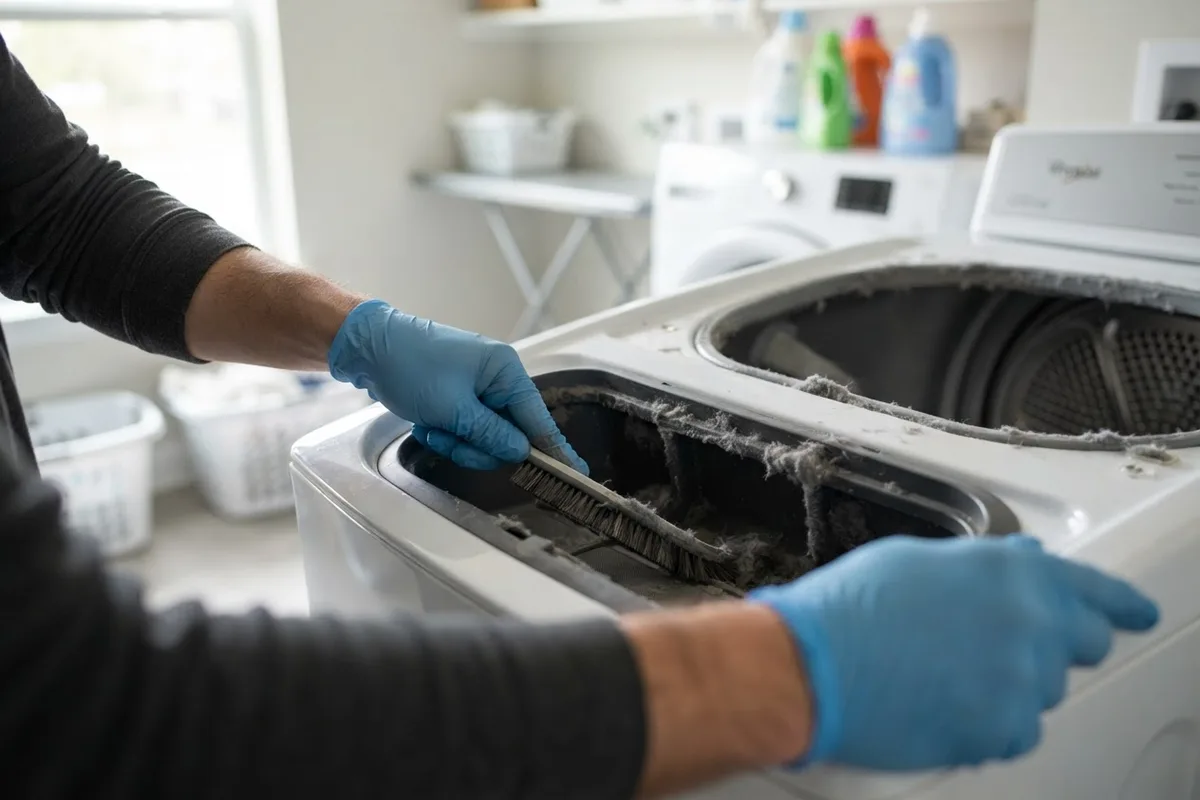 Both gas and electric clothes dryers boast an average lifespan of 10 to 13 years. Because dryers rely on straightforward mechanical parts—a heating element or gas burner assembly, drive belt, drum rollers, and a blower motor—they are among the most durable major appliances in the home.
Common signs of wear include clothes taking multiple cycles to dry, high heat radiating off the top cabinet, or squeaking noises caused by worn drum support rollers.
Safety is paramount when working with heating appliances. Always disconnect the power supply or turn off the inline gas shutoff valve before performing maintenance. Clean the lint trap after every load, and disconnect the rear exhaust duct once a year to vacuum out trapped lint. Restricted exhaust airflow forces internal components to operate at elevated temperatures, leading to premature element failure and potential fire hazards.
Dishwasher Lifespan: Why 9 to 12 Years Is Standard
Dishwashers typically last 9 to 12 years under normal household usage. Operating daily with hot water, harsh detergents, food soil, and mineral deposits creates a demanding environment that wears down pumps, door seals, and spray arms over time.
Watch for warning signs like water remaining at the bottom of the tub after a cycle, rusted dish racks, leaking door gaskets, or dishes coming out greasy and wet. If your dinnerware remains damp after drying cycles, read our guide on why is my dishwasher not drying to test the heating element and rinse aid settings.
Before servicing internal components, flip the circuit breaker off and close the under-sink water supply valve. Unscrew and clean the removable mesh filter at the bottom of the tub under warm water monthly to prevent food particles from clogging the drain pump motor.
Oven and Range Lifespan: Keeping Gas and Electric Going 13 to 15 Years
Ranges and freestanding ovens are the longest-lasting major appliances in most kitchens, frequently operating for 13 to 15 years. Gas ranges often outlast electric cooktops because their mechanical gas valves are less vulnerable to electronic board failure than smooth glass-top heating elements.
Failure signs include unevenly cooked dishes, electric burner coils that fail to glow hot, or gas igniters that click repeatedly without lighting the burner prompt. If your appliance is failing to bake correctly, check out our guide on why is my oven not heating up.
Always turn off the circuit breaker and close the gas supply valve before cleaning around igniters or elements. Wipe up food spills promptly to prevent grease corrosion on burner ports or element terminals, and periodically check the oven door gasket seal to prevent heat loss.
Garbage Disposal Lifespan: Extending Your 8 to 12 Year Unit
In-sink garbage disposals generally last 8 to 12 years. Because disposals grind solid organic waste daily, internal flywheel corrosion and lower motor seal degradation are the primary causes of failure.
Frequent motor jams, persistent water drips underneath the sink cabinet, or a low humming sound without blade motion indicate that the internal motor or bearings have worn out.
Never put your hands or metal tools inside a disposal without unplugging it beneath the sink or switching off its circuit breaker first. Extend its lifespan by grinding a tray of ice cubes and citrus peels monthly to clean the internal chamber walls, and always flush cold water down the drain during operation.
How to Decide: The 50 Percent Repair versus Replace Rule
When an aging unit begins to show symptoms of failure, choosing between calling a technician or purchasing a brand-new model comes down to a straightforward financial comparison known as the 50 Percent Rule.
- Calculate the age: Determine if your appliance has passed half of its projected service life.
- Estimate repair costs: Obtain an estimate for necessary parts and labor.
- Compare against replacement: If the unit is past half its expected lifespan and the repair cost exceeds 50% of the price of a modern replacement, replacing the appliance is usually the smarter long-term investment.
Upgrading older appliances also offers energy-efficiency gains. Refrigerators and laundry equipment manufactured today use substantially less electricity and water than models made a decade ago, helping lower your monthly utility costs.
When to Call a Pro
While basic preventive care—such as vacuuming dust coils, cleaning filter screens, and resetting breakers—is ideal for DIY homeowners, complex repairs require professional technical expertise. Any service task involving internal gas line connections, sealed refrigerant tubing, or main electrical wiring should be handled by trained specialists.
Working on high-voltage components or gas-fired appliances carries serious personal safety risks. If you are uncertain whether an older unit is worth saving or need a accurate diagnostic evaluation, True Appliance Repair can match you with a local appliance pro in your area.
FAQ
What is the longest-lasting major home appliance?
Gas ranges and cooktops generally have the longest lifespans, frequently operating for 15 years or more. Their simple mechanical gas valves make them less susceptible to sudden electronic failure compared to appliances relying heavily on circuit boards.
Should I replace all my kitchen appliances at the same time?
Not necessarily. Replacing all kitchen units simultaneously offers a matching appearance and potential package discounts, but individual units wear out at different speeds. Replace appliances based on their actual age, mechanical performance, and maintenance history.
How do I find out the exact age of my appliance?
Locate the manufacturer serial tag, typically found inside the door frame, behind the lower kickplate, or on the back cabinet wall. Record the model and serial numbers, then enter them into an online serial decoder tool to determine the exact month and year of manufacture.
Does regular maintenance really extend appliance lifespan?
Yes. Routine tasks like clearing dryer exhaust vents, vacuuming refrigerator condenser coils, and rinsing dishwasher mesh filters prevent motors and heating elements from overheating, routinely extending equipment service life by 2 to 4 years.