
An oven rarely stops working without warning. Before it fails entirely right in the middle of preparing a holiday meal or family dinner, your range sends subtle warning signals that internal components are wearing out. Recognizing these early indicators gives you time to troubleshoot simple issues, schedule a quick repair, or budget for a replacement on your own timeline.
Whether you bake every weekend or rely on your range for quick weeknight meals, staying proactive keeps your kitchen safe and running efficiently. Here are the seven clearest signs your oven is dying, along with practical steps to test your unit before calling in expert help.
Food Bakes Unevenly or Burns on One Side
When your favorite casserole comes out cooked on the right but completely raw on the left, your oven is struggling to distribute heat evenly. Uneven baking is one of the earliest signs that heating elements, igniters, or internal temperature sensors are beginning to degrade.
In electric ovens, the bake element at the bottom and the broil element at the top cycle on and off to maintain a balanced climate. Over time, these elements develop thin spots or micro-cracks that cause fluctuating heat output. In gas ranges, a failing igniter may delay lighting the burner, leading to erratic temperature drops inside the cavity.
To test for uneven heating at home:
- Preheat your oven to 350°F (177°C).
- Place six slices of white bread evenly across a baking sheet on the middle rack.
- Bake for 8 to 10 minutes, then remove the sheet.
- Examine the toast pattern. Dark patches alongside pale, soft spots highlight clear hot and cold zones inside the oven.
If you notice extreme variance, check out our guide on why your oven is not heating up properly to see if a simple element swap can resolve the issue.
Oven Takes Longer Than 15 Minutes to Preheat
Most modern residential ovens reach 350°F within 10 to 15 minutes. If your range regularly takes 25 to 30 minutes or more to reach temperature, your heating system is operating far below its normal capacity.
A slow preheat typically points to a failing bake element in an electric oven or a weakening glow-bar igniter in a gas oven. In gas models, the igniter must draw a specific electric current to open the safety valve and release gas into the burner tube. As the igniter ages, it takes longer to draw enough resistance, delaying ignition and stretching preheat times significantly.
Before opening any panels or inspecting internal parts, prioritize safety. Always unplug the oven from the wall electrical outlet or turn off the dedicated circuit breaker at your main service panel. If you have a gas range, shut off the gas supply line shutoff valve before examining the igniter or burner assembly. Stop and contact a professional if you suspect a gas leak or electrical panel fault.
To inspect electric heating elements:
- Disconnect all electrical power to the range.
- Open the oven cavity and locate the bottom heating element.
- Look for visible signs of damage, such as blisters, pitting, black burn marks, or complete fractures in the metal tubing.
If the element shows visible physical damage, replacing the part often restores fast preheat cycles.
Internal Temperature Readings Are Way Off
When setting your thermostat to 375°F yields a lukewarm 310°F or a scorching 425°F, your oven's control system is no longer accurate. In accurate baking, even a 25-degree temperature drift ruins delicate recipes, causes cookies to spread excessively, or leaves roasts undercooked in the center.
Temperature inaccuracies stem from three main sources: a failing temperature sensor probe, a miscalibrated control board, or worn door gaskets that let heat escape continuously.
 To verify your oven's accuracy without relying on the digital display:
- Hang an inexpensive, standalone oven thermometer in the center of the middle rack.
- Set the oven to 350°F and allow it to preheat fully.
- Leave the door closed for 20 minutes after the preheat chime sounds to let heat stabilize.
- Look through the oven glass to check the internal thermometer reading without opening the door.
- Compare the reading to your set temperature. A variance greater than 25 degrees indicates a faulty sensor or recalibration requirement.
Many modern control panels allow you to recalibrate the baseline temperature by up to 35 degrees through a special button combination outlined in your owner's manual. However, if the reading fluctuates wildly from one hour to the next, the sensor probe or electronic control board is likely near the end of its functional life.
Strange Buzzing or Whining Sounds During Operation
Ovens are normally quiet appliances. Aside from the soft click of a gas igniter or the gentle hum of a convection fan, operation should produce minimal sound. Loud buzzing, grinding, high-pitched whining, or persistent clicking noises signal internal mechanical or electrical stress.
Common causes of unusual oven noises include:
- Convection Fan Motor Wear: A dry or failing fan motor bearing produces a loud grinding or squeal whenever convection modes run.
- Failing Relay Switch: A chattering relay on the main control board makes a rapid clicking sound as it struggles to send voltage to the heating elements.
- Gas Safety Valve Humming: A loose or struggling gas solenoid valve produces a low hum or buzz while trying to maintain burner flame.
Ignoring mechanical grinding can lead to fan motor seizure or electrical shorts that damage the primary circuit board.
The Outer Door Glass Is Unusually Hot
Oven doors use multi-pane tempered glass separated by heat-reflective shields and insulated gaskets to contain thousands of thermal units. While the outer glass surface gets warm during heavy baking, it should never become scorching hot to the touch or radiate heat into your kitchen like a space heater.
Excessive external surface heat indicates that internal door seals have broken down, glass pack seals have slipped, or thermal insulation inside the oven walls has settled or absorbed moisture. Damaged door gaskets force your oven elements to run continuously to make up for heat loss, inflating monthly utility costs and putting heavy strain on internal electronics.
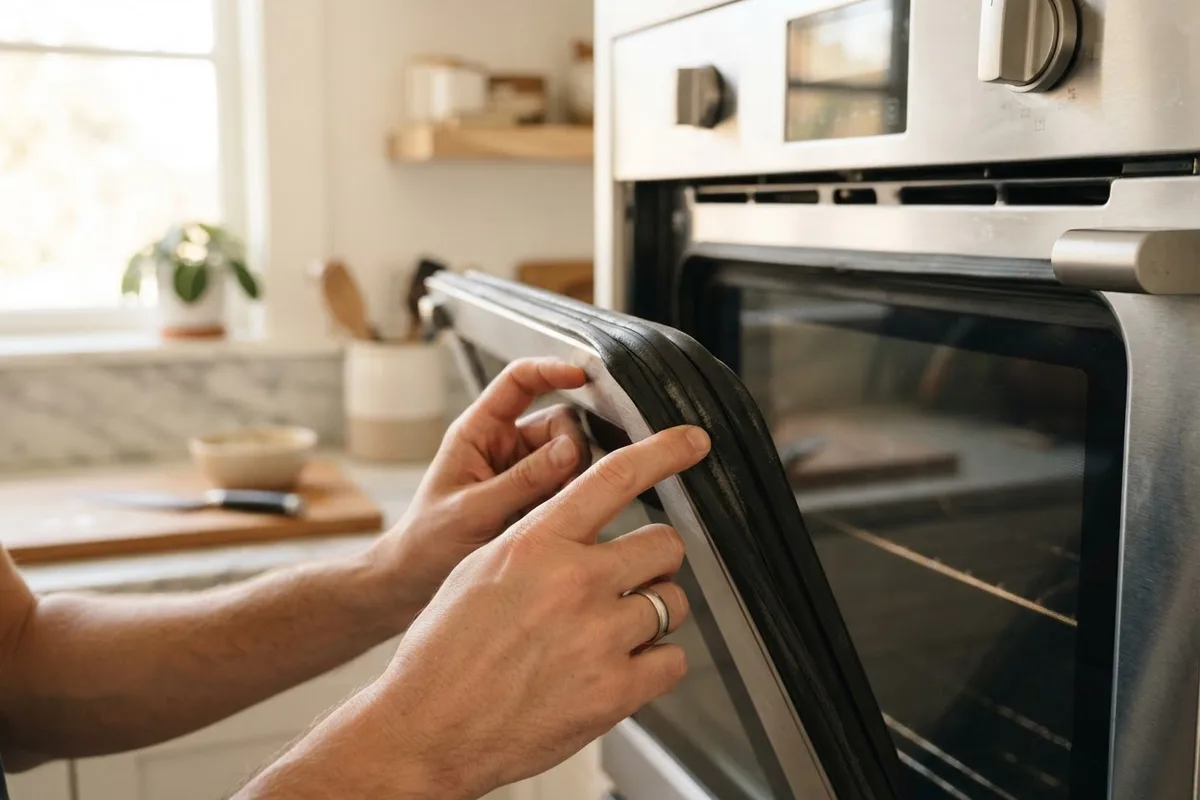
Regularly inspect the flexible rubber or woven fiberglass gasket surrounding the oven cavity door. If you find tears, brittle spots, or flattened sections, replacing the door seal is an affordable fix that prevents total appliance burnout. Including this in your annual seasonal appliance maintenance checklist prolongs the working life of your range.
Control Board Shows Repeated Error Codes
Digital ranges rely on an electronic control board (often called the main PCB) to direct safety switches, temperature sensors, clock timers, and heating elements. When this board begins to fail due to heat exposure or power surges, it frequently displays cryptic error codes like F1, F3, E0, or E1.
While clearing an error code by flipping the circuit breaker off for five minutes might reset the board temporarily, recurring errors signal hardware failure. Over time, microscopic solder joints on the circuit board crack, leading to intermittent power losses, unresponsive touchpads, or total display blackout.
Replacing a main control board can be costly. If your range is over eight years old and experiencing control board failure alongside heating issues, purchasing a new range is usually the most cost-effective choice.
Repair Estimates Exceed Half the Cost of Replacement
When evaluating whether an aging range is worth fixing, the 50 Percent Rule provides clear guidance: if a repair estimate exceeds 50% of the cost of buying a comparable new unit, and your oven is past half its expected lifespan, replacement is generally the smarter financial move.
The typical lifespan of a residential range is 10 to 15 years, with gas models often outlasting electric units due to simpler burner mechanics. Below is a quick breakdown to help you evaluate repair costs versus replacement decisions:
| Oven Symptom | Typical Root Cause | Relative Repair Cost | Recommendation (Age > 8 Yrs) |
|---|---|---|---|
| Burnt bake element | Broken electric heating coil | Low ($100 - $220) | Repair |
| Worn door gasket | Cracked or torn seal | Low ($75 - $150) | Repair |
| Failed igniter | Weak glow bar | Moderate ($150 - $300) | Repair |
| Faulty temperature sensor | Defective probe | Moderate ($120 - $250) | Repair |
| Failed control board | Burnt electronics | High ($300 - $600+) | Consider Replacing |
| Broken glass cooktop | Shattered ceramic top | High ($400 - $700+) | Consider Replacing |
| Sealed electrical failure | Shorted main wiring harness | Very High ($500+) | Replace |
Note: Repair ranges reflect broad typical US averages; exact prices vary significantly by region, brand, and model.
When to Call a Pro
While replacing an accessible lower bake element or swapping a door gasket are manageable DIY projects for hands-on homeowners, many range repairs involve serious safety risks. Gas line connections, high-voltage wiring circuits, and internal control board diagnostics require specialized equipment and professional expertise.
Stop and call a professional if you experience any of the following:
- Strong or persistent natural gas smells near the appliance.
- Visible sparks, melted wiring, or burning odors coming from behind the unit.
- Circuit breakers that trip immediately whenever the oven is turned on.
- Shattered interior or exterior door glass panels.
If you need reliable assistance diagnosing complex oven faults, True Appliance Repair can match you with a local appliance pro to evaluate your range safely and efficiently. Booking a standard diagnostic visit gives you an expert assessment so you can decide whether to fix or replace your appliance with complete confidence. Explore our comprehensive oven and stove repair service page to learn more about professional range care.
FAQ
How many years should a home oven last?
Most residential gas and electric ovens last between 10 and 15 years. Regular cleaning, avoiding extreme reliance on high-heat self-cleaning cycles, and replacing worn door seals promptly can help your range reach or exceed the 15-year mark.
Is it worth fixing an oven that is 10 years old?
It depends on the specific fault and the overall condition of the appliance. Minor fixes like replacing a bake element, temperature sensor, or igniter are usually worth doing. However, if a 10-year-old range requires a complete control board replacement or has multiple failing parts, investing in a new energy-efficient model is often smarter.
Why does my oven smell like gas when I turn it on?
It is normal to smell a very brief, faint burst of gas right when you turn on a gas oven as the igniter ignites the burner. However, if the gas smell persists for more than a few seconds, or if you smell gas when the oven is turned off, shut off the gas valve immediately, open your windows, and call your utility company or a repair professional.
Why does my electric oven smoke when preheating?
Smoking during preheat is usually caused by spilled food grease, oil splatters, or accumulated sugar residue on the bottom bake element or oven floor. Cleaning the interior cavity with a damp cloth and mild cleanser after the oven cools usually stops the smoking. If the smoke smells like burning plastic or rubber, disconnect power immediately and inspect for electrical wiring damage.