
When a kitchen or laundry unit begins buzzing, shrieking, or thumping, it is rarely just an annoying background racket—it is an early mechanical cry for help. Ignoring these odd sounds often turns an inexpensive maintenance step into a seized motor or ruined cabinet floor. This appliance noise guide walks you through the six most common household sounds, identifies the likely source across multiple machines, and shows you safe DIY checks to stop the racket before permanent failure sets in.
Sharp Metallic Grinding: Clear Impellers and Bearings
A harsh, metal-on-metal grinding noise almost always points to an obstruction inside a rotating assembly or completely dry, collapsed motor bearings. In dishwashers and garbage disposals, a wayward spoon, fruit pit, or broken glass sliver often jams between the chopper blade and shredder ring. In front-load washing machines or dryers, grinding usually indicates worn drum support bearings or a foreign coin trapped under the basket lip.
- Shut off electrical power immediately at the circuit breaker or unplug the appliance from the wall.
- For disposals and dishwashers, shine a flashlight directly down into the sump or grind chamber and use long needle-nose pliers to remove trapped foreign objects.
- For laundry drums, spin the empty basket slowly by hand; if you feel rough resistance, rumbling, or vertical play, the rear drum bearings have failed and need replacement.
Continuous Low Humming: Free Jammed Motors and Pumps
A steady electrical hum with no mechanical rotation means voltage is reaching an electric motor or solenoid, but something physical is preventing movement. If left powered on, an obstructed motor can overheat its copper windings within minutes, tripping circuit breakers or burning out the motor entirely. This hum frequently plagues garbage disposal impellers, dishwasher wash pumps, and refrigerator condenser fans.
- Disconnect power to the appliance before touching any internal components.
- For a humming garbage disposal, insert a standard quarter-inch hex wrench into the manual breaker socket on the bottom underside of the unit and rock it back and forth until the flywheel spins freely.
- For dishwashers, remove the bottom lower rack and coarse filter assembly to inspect the wash pump impeller for seeds, bone fragments, or hardened detergent clumps.
- For refrigerators, pull the unit forward, remove the rear cardboard or metal cover, and check whether dust bunnies or loose wiring are blocking the small condenser fan blades beside the compressor.
High-Pitched Squealing: Service Worn Belts and Pulleys
A sharp, piercing squeal that occurs during specific operating phases points to extreme rotational friction. In clothes dryers and older top-load washing machines, squealing happens when a rubber drive belt slips against a stuck idler pulley, motor shaft, or worn drum roller. If your laundry setup screeches loudly as the drum picks up speed, you can pinpoint the worn part with our guide on why your washer is squeaking to stop premature belt snapping.
- Unplug the unit and slide it away from the wall to access the cabinet panel.
- Inspect the rubber drive belt for glazing, edge fraying, cracking, or slack tension.
- Spin idler pulleys and drum support rollers by hand; they should glide silently without wobbling, screeching, or sticking.
- Clean lint buildup off the motor pulley shaft using rubbing alcohol, and swap out dry-spinning idler assemblies rather than spraying them with temporary oil lubricants that attract sticky lint.
Rapid Clicking Sounds: Inspect Relays and Igniter Switches
Not all clicking is abnormal, but rapid, persistent clicking signals an electrical or ignition component struggling to engage. A refrigerator clicking every two to five minutes—followed by a brief hum and click off—indicates an overloaded compressor start relay. A gas range clicking continuously after lighting points to moisture or grease shorting out a rotary burner igniter switch.
- For refrigerators, unplug the power cord, access the compressor housing, and gently unseat the small plastic starter relay; shake it near your ear, and if it rattles like loose sand, the internal ceramic disk has shattered and requires replacement.
- For gas cooktops, turn all burner knobs strictly to "Off." Lift the burner caps, clean grease residue around the ceramic spark electrodes with an old toothbrush, and dry the burner heads thoroughly before retesting.
- If a gas smell accompanies repeated clicking or if an oven glow bar fails to ignite, immediately stop troubleshooting, close the gas shutoff valve, and arrange professional service.
Heavy Thumping or Rattling: Balance Drums and Level Feet
Rhythmic, house-shaking thumping during spin or tumble cycles usually stems from mechanical imbalance rather than an internal electrical defect. When heavy wet towels bunch on one side of a washer, the centrifugal force slams the inner tub into the outer chassis. However, if thumping persists on completely empty test cycles, worn tub shock absorbers, snapped suspension springs, or unlevel cabinet legs are to blame.
- Place a bubble level across the top edges of the appliance from front-to-back and side-to-side.
- Loosen the locknuts on the threaded leveling feet at the front corners, adjust the height until all four corners sit flat against the floor without rocking, and tighten the locknuts securely.
- Press firmly on the top of the inner wash tub; it should rebound smoothly once. If the tub bounces repeatedly like an old car bumper, replace the lower hydraulic damper shocks.
Violent Pipe Banging: Cushion Water Hammer Shocks
If you hear a startling "thud" or metallic clatter inside your wall whenever your washing machine fills or your dishwasher switches cycles, the issue is hydraulic shock, also known as water hammer. High-speed electronic inlet valves snap shut in milliseconds, sending high-pressure shockwaves rebounding through household copper or PEX supply pipes. Left unchecked, water hammer strains pipe joints and risks burst supply lines. You can eliminate the vibration using proven methods for fixing dishwasher water hammer pipe banging.
- Shut off the dedicated hot and cold supply valves behind the appliance.
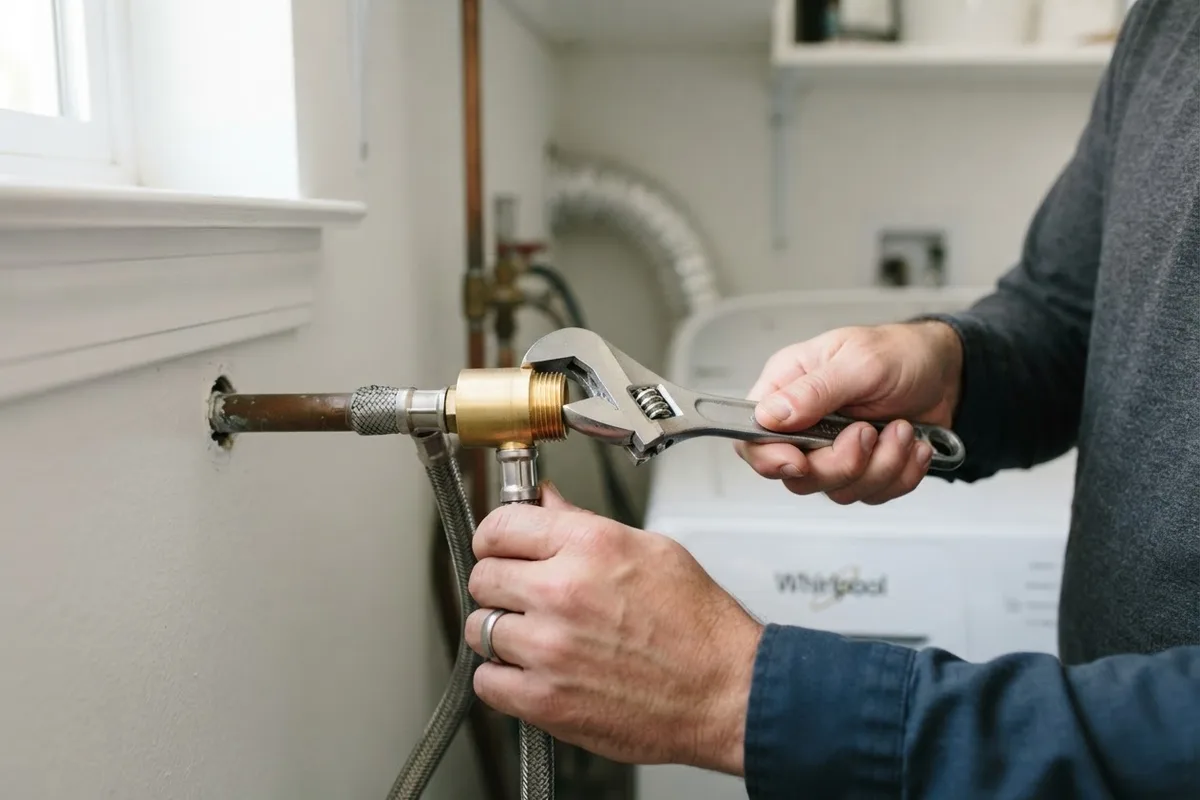
- Unscrew the braided supply hoses from the valve outlets and thread inline mechanical water hammer arrestors directly between the valve and hose.
- Check incoming household water pressure using a simple hose-bib gauge; if static pressure exceeds 75 PSI, install or adjust your home's main pressure-reducing valve (PRV).
Quick-Reference Appliance Noise Diagnosis
| Sound Type | Primary Suspect | Common Machines | Urgent Risk Level |
|---|---|---|---|
| Metallic Grinding | Trapped cutlery, worn tub bearings | Dishwasher, disposal, washer | High: Damaged pump or ruined drum shaft |
| Continuous Low Hum | Jammed impeller, stuck motor | Disposal, dishwasher, fridge | High: Motor winding burnout within minutes |
| High-Pitched Squeal | Slipping drive belt, seized pulley | Dryer, washing machine | Moderate: Broken drive belt and drum stoppage |
| Repeated Clicking | Blown start relay, wet spark switch | Refrigerator, gas stove | Moderate: Spoiled food or unlit gas pooling |
| Heavy Thumping | Unlevel legs, broken shock absorber | Washing machine, dryer | Moderate: Cabinet damage and cracked outer tub |
| Pipe Banging Thud | Hydraulic water hammer pressure shock | Washing machine, dishwasher | High: Pinhole plumbing leaks inside walls |
When to Call a Pro
While clearing a disposal jam, leveling cabinet feet, or replacing a dryer belt are straightforward weekend DIY projects, some noises demand technical hands. Never attempt DIY fixes on sealed refrigeration systems, internal gas control valves, or complex electrical circuit boards. A compressor grinding internally, an electrical control board buzzing with a faint burning smell, or a gas burner hissing without lighting presents serious safety concerns.
Standard diagnostic inspections and minor mechanical repairs across typical US markets range between $150 and $375, varying based on machine access, regional labor rates, and required parts. If you are uncomfortable tracing mechanical noises or working around high-voltage components, True Appliance Repair can match you with an independent local appliance pro to diagnose and quiet your machines safely.
FAQ
Can a humming appliance start a house fire?
A continuously humming motor that cannot turn will rapidly overheat because electrical energy converts entirely into heat rather than mechanical motion. While modern appliances incorporate thermal cutoff fuses to shut off power before flames start, repeated overheating can degrade wiring insulation and create an electrical hazard. Always disconnect power to a humming appliance immediately until you clear the jam.
Why does my refrigerator make a groaning or popping noise?
Occasional pops, groans, and clicks from a modern refrigerator are normal consequences of the automatic defrost cycle. As the heating element warms the evaporator coils to melt frost buildup, internal metal tubing and plastic liners expand and contract rapidly, producing cracking or popping sounds. However, continuous clicking from the rear compressor housing indicates a failing start capacitor or relay that needs repair.
Should I lubricate squeaking appliance bearings with household spray oil?
Never use standard spray lubricants like WD-40 or general household oils on appliance belts, pulleys, or sealed bearings. These thin lubricants break down rubber drive belts, collect motor lint, and wash away heavy factory grease, worsening friction within days. Squeaking idler pulleys, rollers, and bearings should always be replaced as complete assemblies rather than temporarily lubricated.
How do I know if an appliance sound is serious enough to shut it down?
Shut down the appliance immediately if the noise is accompanied by the smell of hot electrical wiring, burnt rubber, or gas, or if the sound is a harsh, metal-on-metal grinding. Rhythmic vibrations or gentle clicks can usually wait for a scheduled weekend inspection, but sudden grinding or strained humming demands prompt shutoff at the plug or circuit breaker to prevent motor burnout.