
A high-pitched squeak coming from your washing machine can turn laundry day into a headache. Whether the squeak starts as the drum begins to spin, persists through the entire wash cycle, or screams during the final high-speed extraction, the sound points directly to friction between moving components. Pinpointing the source helps you silence the noise before worn parts cause costly secondary damage.
Before performing any hands-on inspection or repair, always unplug your washing machine from the wall outlet and turn off both hot and cold water supply valves. Safety comes first on every DIY project.
Inspect and Replace a Slipping Drive Belt
On belt-driven top-load and front-load washers, a worn or loose drive belt is the leading cause of squeaking. The belt transfers rotational force from the drive motor to the transmission or wash tub pulley. Over years of heavy loads, rubber belts dry out, stretch, develop glazed shiny spots, or crack. When the motor starts under load, the glazed belt slips against the metal pulley, producing a sharp chirping or continuous squeal.
- Disconnect power and water lines, then remove the front service panel on top-loaders or the rear access panel on front-loaders.
- Locate the black rubber belt wrapped around the motor spindle and the large drive pulley.
- Examine the rubber for cracking, fraying, oil contamination, or slick, glassy surfaces along the inner grooves.
- Check the belt tension. If the belt deflects more than half an inch when pressed firmly in the middle, it is stretched.
- To replace it, roll the old belt off the large pulley while turning it by hand. Loop the new manufacturer-specified belt over the small motor spindle first, then ease it onto the large pulley groove as you rotate the wheel manually. Never lubricate a washer drive belt with oil, grease, or belt dressing, as lubricants ruin grip and degrade rubber quickly.
Check for a Dry or Deteriorating Tub Bearing
If the squeaking transforms into a high-speed whistle or roaring squeak as the spin cycle ramps up, the tub bearing is often drying out. Tub bearings allow the inner basket to spin smoothly at hundreds of rotations per minute. When the water seal protecting the bearing wears out, water seeps into the steel ball bearings, flushing out lubricating grease and triggering rust and metal-on-metal friction.
- Open the washer door or lid with the machine powered down.
- Place both hands inside the drum and spin the basket rapidly by hand. Listen closely. A smooth bearing makes almost no sound, while a failing bearing emits an audible scraping squeak or gritty rumble.
- Push up on the front lip of the inner drum. If you feel vertical play or looseness separating the inner basket from the outer tub, the bearing housing has deteriorated.
- Inspect beneath the tub or around the rear rotor. Rust streaks running down the back of the outer tub confirm water has penetrated the bearing assembly. If your machine also shows dark streaks on fabrics, check out our guide on why your washer leaves brown marks on clothes.
Clean or Replace Glazed Snubber Rings and Friction Pads
Many traditional top-load washing machines sit on a stamped steel base plate cushioned by a snubber ring or composite friction pads. As the wash tub rocks and oscillates during agitation and spin cycles, these friction dampers absorb lateral vibration. Over time, friction pads collect brake dust, spilled powdered detergent, and grime, causing the contact surface to glaze over and squeak rhythmically with every tub movement.
- Tip the machine back safely against a wall or lay it down gently on cardboard after unplugging and disconnecting hoses.
- Look under the tub assembly where the transmission base rests on the lower tripod support.
- Inspect the white or off-white plastic/composite snubber ring. If it is caked in grime or worn paper-thin, it must be serviced.
- Clean away built-up lint and debris using a damp rag. If the ring is intact but noisy, apply a thin dusting of pure cornstarch or talcum powder to reduce dry friction (avoid petroleum-based grease, which attracts lint and ruins damper grip).
- If the snubber pad is cracked or worn through to metal, detach the suspension springs holding the tub assembly, slide out the worn snubber, and install a fresh factory-replacement part.
Lubricate or Replace Squeaking Suspension Springs and Struts
Washers rely on suspension rods, counterbalance springs, or hydraulic shock absorbers to keep the wash basket centered. When these components lose their factory damping lubricant or when mounting bushings crack, metal-on-metal or plastic-on-metal rubbing produces an annoying squeak every time the tub shifts under load.
- On top-load models, lift the main top panel to expose the four corner suspension rods hanging down to the outer tub.
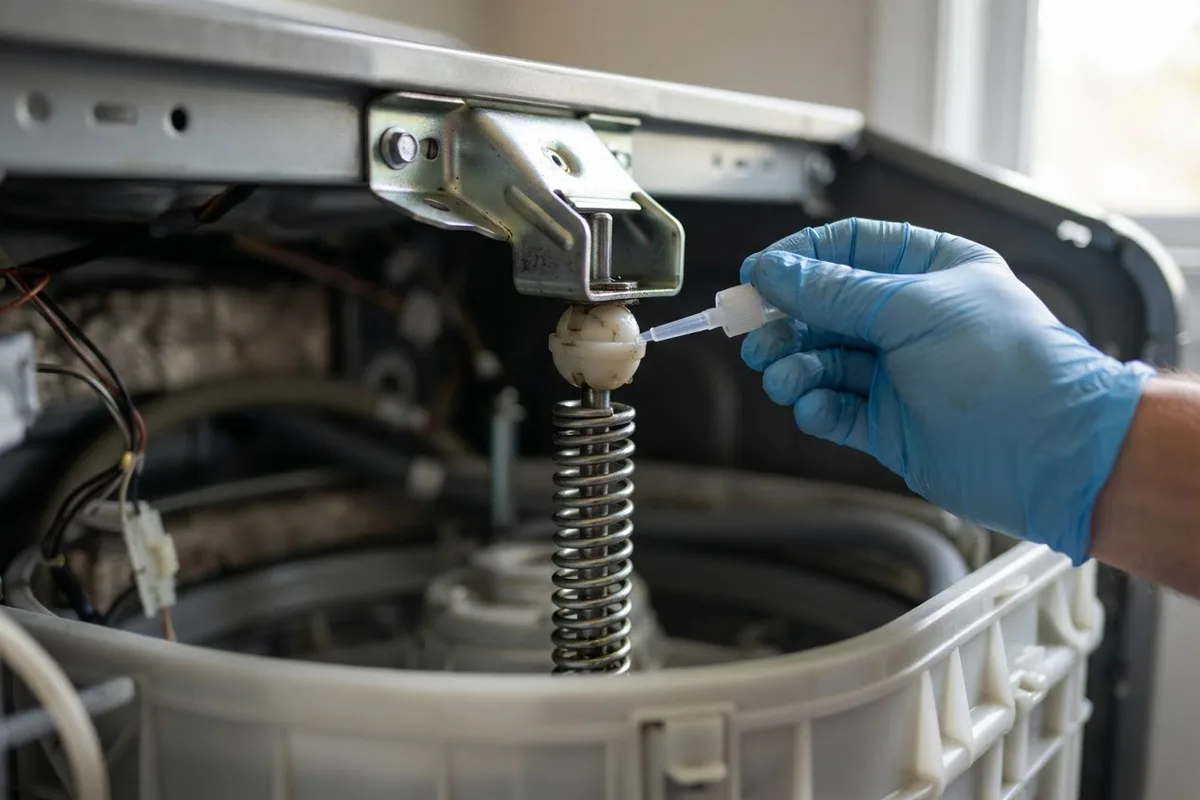
- Inspect the plastic ball cups seated in the washer frame at the top of each rod. Dry, unlubricated pivot cups squeak loudly whenever clothes tumble.
- Clean any debris from the ball socket and apply a small dab of high-viscosity silicone grease directly to the pivot joint.
- On front-load washers, remove the lower access panel to inspect the shock struts mounted between the base chassis and the bottom of the outer tub.
- Check the mounting pins for looseness and inspect the strut pistons for oily leaks or binding. Replace struts in pairs if they bind, click, or squeak when depressed.
Clear Foreign Objects Trapped in the Tub Baffle or Pump Pulley
Sometimes a squeaking sound is not a mechanical failure at all, but a foreign object rubbing tightly against a spinning surface. Small items like coins, hairpins, and bra underwires frequently slip past the wash basket holes or through the gap between the spin basket and the outer tub. Once trapped, these items grind and squeak against the moving drum wall.
- Inspect the rubber door boot seal on front-load washers. Pull back the folds of the gasket and check for trapped bobby pins, paper clips, or small stones.
- Use a bright flashlight to inspect the tiny perforations along the stainless steel basket wall to see if a wire or staple is wedged through the drum.
- On top-load machines, check the clearance between the agitator skirt and the tub floor. Pull up gently on the agitator to ensure no string or fabric has wrapped tightly around the shaft.
- Check the drain pump belt and impeller housing. If lint or thread wraps around the pump pulley shaft, it can cause high-friction squealing during drain cycles. If your machine experiences filling quirks alongside noise issues, review our tips on a washer filling with water when off.
Quick Diagnostic Table: Washer Squeak by Cycle Phase
| Squeak Timing | Common Culprit | DIY Difficulty | Urgency |
|---|---|---|---|
| Start of spin or agitate | Glazed drive belt slipping | Moderate (panel removal) | Low to Medium |
| Continuous high-speed spin | Dry or failing tub bearing | Advanced (tub tear-down) | High (prevents tub lockup) |
| Rhythmic rocking during agitation | Snubber ring or friction pads | Moderate (tilt machine) | Medium |
| During tub weight shifts | Dry suspension rod ball cups | Easy (lubricate pivot joints) | Low |
| During drain cycle only | Debris in drain pump / pulley | Moderate (pump access) | Medium |
When to Call a Pro
Straightforward tasks like replacing an accessible drive belt, applying grease to dry suspension ball cups, or clearing coins from a door gasket make great DIY weekend projects. However, structural repairs like replacing press-fit tub bearings, rebuilding a split transmission gearbox, or fixing a damaged spider arm on a front-load washer require specialty pullers, complete drum disassembly, and heavy lifting.
If your washer squeak is accompanied by persistent burning electrical odors, severe drum wobbling, or heavy water leaks around the motor assembly, stop hands-on work and unplug the unit. A typical washer repair for belts, pumps, or suspension parts ranges from $150 to $350 depending on local labor rates and machine brand, while full tub bearing jobs can reach $350 to $550. If you are dealing with a complex drivetrain issue, True Appliance Repair can match you with an independent local appliance specialist to evaluate your machine safely.
FAQ
Can I spray WD-40 on a squeaking washer belt or drum?
No, you should never spray standard petroleum lubricants or WD-40 on washer drive belts, pulleys, or clutch surfaces. Lubricants cause drive belts to slip permanently, soften rubber compounds, and attract dirt. For plastic suspension ball cups, use only thick silicone grease designed specifically for appliances.
Is it safe to keep running a washer that is squeaking?
If the squeak is caused by dry suspension bushings, continuing to run the washer rarely causes immediate harm. However, if the noise stems from a failing tub bearing or a badly slipping drive belt, continuing to run heavy loads can overheat the motor, snap the belt, or cause the spinning basket to lock up completely and damage the outer tub.
Why does my washer only squeak during the spin cycle?
During the spin cycle, the wash basket accelerates to between 600 and 1,400 RPM, placing immense rotational stress on the drive belt, motor pulley, and tub bearings. Slipping belts chirp as they struggle to bring heavy wet clothes up to speed, while worn bearings scream under the centrifugal force of the rotating load.
How do I know if the squeak is the belt or the motor?
Remove the drive belt from the motor pulley and spin the electric motor shaft by hand. If the motor turns smoothly and silently on its own, the motor is healthy and the squeak is coming from a glazed belt, idler pulley, or the tub transmission itself.