
Pulling a fresh load of laundry out of the drum only to discover mysterious rust-colored streaks or greasy brown spots is maddening. Instead of cleaning your garments, your washing machine is actively staining them. Fortunately, tracking down the culprit is straightforward once you know whether you are dealing with mineral deposits, detergent sludge, or mechanical oil.
Before inspecting internal parts, prioritize safety: always unplug your washing machine from the wall outlet and turn off both hot and cold water shutoff valves before removing panels or reaching behind the appliance.
Flush Out Detergent Sludge and Fabric Scrud
The most frequent cause of brown, wax-like flakes on freshly laundered garments is a build-up known as "scrud." This waxy residue forms when liquid fabric softeners combine with cold water and excess powdered or liquid detergent. Over time, it coats the outer wash tub and hidden surfaces of the agitator. During high-speed spins, chunks break loose and smear across fabrics.
- Pour two cups of distilled white vinegar or an oxygenated washing machine cleaner tablet directly into the empty wash drum.
- Set your machine to its hottest wash setting and select the longest cycle available (or run the dedicated "Clean Washer" tub-clean cycle).
- Pause the machine mid-cycle once the drum is full of hot water and let it soak for one hour to dissolve built-up deposits.
- Complete the cycle, then use a microfiber cloth dampened with warm water to wipe around the door gasket, agitator base, and inner drum baffles.
- Cut back on fabric softener use moving forward; consider switching to distilled white vinegar in the rinse dispenser to prevent recurring residue buildup. If your dispenser regularly retains thick liquid, review our guide on why washer fabric softener is not dispensing to clear line clogs.
Inspect the Tub Bearing and Oil Seal
If the brown marks resemble slick droplets of motor grease or dirty dark engine oil, the culprit is often a failing tub bearing seal. Washing machine transmissions and spin bearings are packed with heavy lubricating oil. A rubber lip seal separates this lubricant from the wash water inside the outer tub. When this seal dries out, tears, or cracks from age, wash water forces oil past the seal and splatters it directly onto your spinning garments.
- Disconnect the power cord and inspect the inside wash tub.
- Grab the inner drum basket and push it gently upward relative to the outer tub. If there is noticeable vertical play, clicking, or loose movement, the bearing assembly is worn out.
- Spin the empty tub by hand. If it sounds like a rumbling jet engine or a loud skateboard on rough pavement, the seal has failed and water has penetrated the bearings.
- Pull the washer away from the wall and check the bottom underside of the machine with a flashlight. A failing seal often flings a thin ring of brown oil or rusty sludge around the interior cabinet walls.
- Replacing a tub bearing and shaft seal requires extensive teardown; if grease is escaping into the drum, schedule a visit for washer and dryer repair before the inner basket seizes entirely.
Check for Chipped Enamel or Internal Drum Rust
Rust streaks happen when bare carbon steel makes contact with damp laundry during the wash or spin cycle. Porcelain-coated steel tubs and powder-coated tops can chip when metal zippers, belt buckles, or loose coins bang against them at high speeds. Once moisture reaches the raw metal underneath, red and brown oxidation develops rapidly.
- Grab an old pair of nylon pantyhose or a soft microfiber rag.
- Run the fabric slowly across every square inch of the inner drum, the agitator vanes, the rim under the top deck, and the door opening lip.
- Snags in the nylon will pinpoint sharp burrs, peeling finish, or chipped porcelain that visual inspection might miss.
- Inspect the top cover and the area directly beneath the bleach dispenser cup, where concentrated chlorine often eats through protective paint.
- Sand any small rusted spots down to bare metal using fine 400-grit sandpaper, clean the spot with rubbing alcohol, and touch it up with appliance epoxy touch-up paint. Allow it to cure completely for 48 to 72 hours before running your next load.
Clear Sediment from Water Inlet Screens
Municipal water main work, domestic plumbing repairs, or galvanized iron piping can dislodge rust particles and sediment that travel straight into your washer. When incoming water carries high concentrations of dissolved iron or suspended rust, it settles onto damp fabric, leaving scattered pinpoint freckles of orange and brown.
- Turn off the dual water supply valves behind the washing machine.
- Place a small bucket beneath the hose connections to catch residual drainage.
- Unscrew both the hot and cold water fill hoses from the brass or plastic inlet ports on the back of the appliance.
- Use needle-nose pliers to gently extract the small mesh filter screens seated inside the washer's water inlet valve connections.
- Rinse collected silt, rust flakes, and sand out of the screens under running tap water using a soft toothbrush, then reinsert them firmly.
- While hoses are disconnected, point each hose into your bucket and open the supply valves briefly to confirm the water runs clear and strong. If water continues trickling in unprompted after reassembly, see our troubleshooting tips for a washer filling with water when off.
Clean Trapped Debris in the Pump and Gasket
Front-load washers utilize a large rubber bellow (door boot seal) to prevent leaks, while top-load models have plastic lint baffles and a lower pump filter. Hairpins, paper clips, coins, and lint collect in the lower folds of the rubber boot or within the drain coin trap. When damp organic lint and metal sit submerged in stagnant water, they form dark brown, foul-smelling slime that wipes onto laundry during loading and unloading.
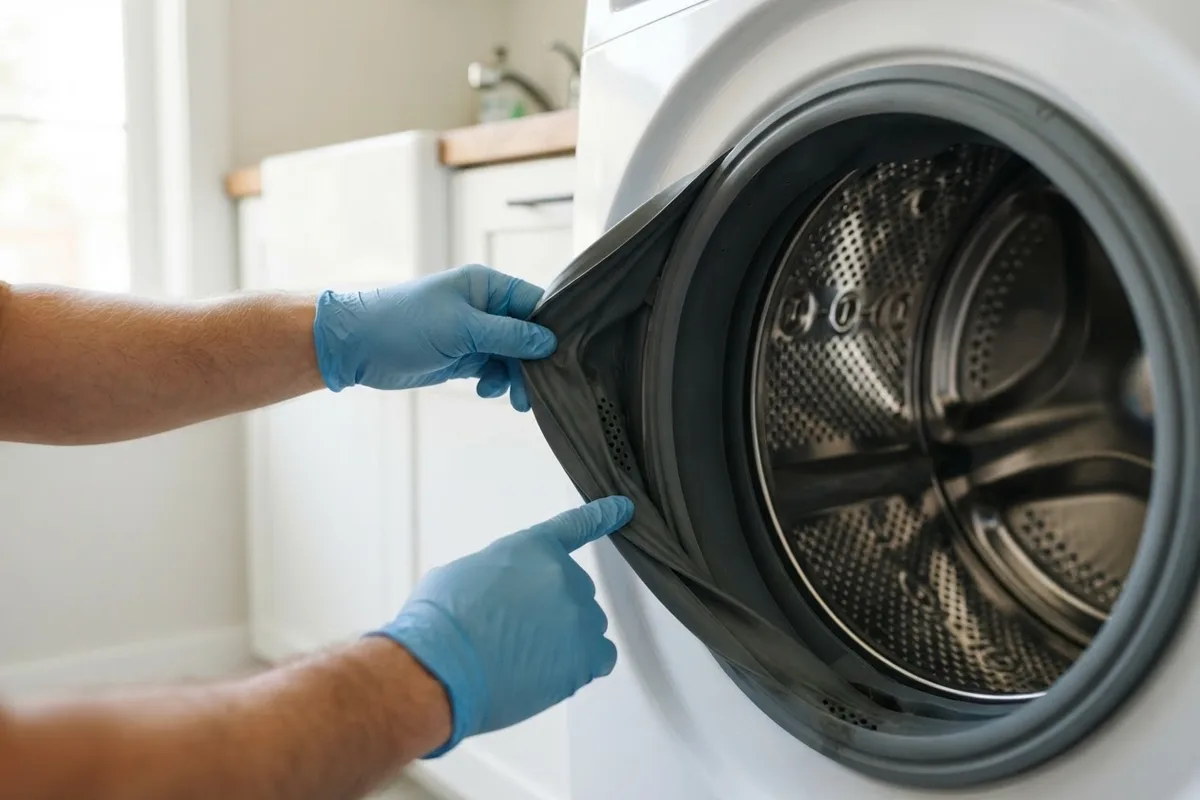
- Pull back the folds of the front-load rubber door gasket with gloved hands.
- Look for corroding bobby pins or screws stuck inside the drainage weep holes along the bottom fold.
- Mix a 50/50 solution of warm water and liquid chlorine bleach, saturate a rag, and wipe away all black and brown mildew deposits trapped within the rubber folds.
- Open the small access door at the bottom front corner of your front-load machine.
- Set a shallow baking pan and towels beneath the drain hose, unplug the miniature plug to drain standing water, and unscrew the coin trap filter.
- Rinse away accumulated hair, sediment, and lint under warm running water, reinsert the filter securely, and test run an empty rinse cycle to verify there are no leaks.
Quick Diagnosis: What Kind of Brown Mark Is It?
| Stain Appearance | Likely Source | Primary Fix |
|---|---|---|
| Waxy brown or grey smears | Detergent and softener scrud | Hot water vinegar tub flush and dosage reduction |
| Slick, dark oily spots | Failed tub seal / bearing grease | Replace tub seal and bearings |
| Red-orange flakes or pinpoint specks | Sediment in water inlet hoses | Clean inlet valve mesh screens |
| Linear rust streaks | Chipped enamel or rusted drum | Sand spot and apply appliance epoxy paint |
| Dark muddy streaks on cuffs | Debris in door gasket folds | Deep clean bellow and clear weep holes |
When to Call a Pro
Basic maintenance—such as clearing water inlet screens, deep-cleaning door bellows, scrubbing the dispenser drawer, or treating minor porcelain chips—is well within reach for most homeowners. However, certain underlying mechanical failures require professional diagnostic tools and specialized equipment.
If you hear a roaring or grinding sound during the spin cycle alongside oil stains, your inner drum bearings and main seal need replacement. Replacing a washer tub bearing requires completely disassembling the outer drum, pulling the drive pulley, and pressing out the pressed-fit bearings—a labor-intensive repair that typically ranges from $250 to $475 depending on your washer brand and local labor rates. If your washer uses a sealed outer tub assembly, the entire rear tub half may need replacement. When you prefer to hand off heavy structural tear-downs, True Appliance Repair can match you with an experienced local appliance pro to diagnose the issue quickly.
FAQ
How do I remove washer brown marks from my clothes?
Do not place the stained clothes into the dryer, as heat permanently bakes the mark into fabric fibers. For waxy or detergent scrud stains, rub liquid dish soap or an oxygen-based stain remover directly into the spot, allow it to penetrate for 20 minutes, and rewash the garment in warm water. For rust specks, treat with an oxalic-acid-based rust remover designed for fabrics, then rinse thoroughly.
Can hard water cause brown stains in the washing machine?
Yes. Hard water contains dissolved minerals like iron, calcium, and manganese. When iron-heavy water combines with oxygen, chlorine bleach, or alkaline detergents, the dissolved iron oxidizes and precipitates out of solution as rust particles. These microscopic particles cling to cotton fibers, resulting in overall yellowing or distinct brown stains across lighter fabrics.
Why does my washer only leave brown spots on hot cycles?
Hot water loosens built-up mineral scale and waxy detergent sludge that clings harmlessly to the outer wash drum during cold cycles. Additionally, home water heaters accumulate sediment and rust scale at the bottom of the tank over years of use; hot cycles draw directly from this sediment bed, carrying discolored water straight into your washer.