
Opening your washing machine at the end of a long laundry cycle only to find the fabric softener cup still full of thick, untouched liquid is frustrating. When softener fails to dispense, clothes come out stiff and static-prone, and stagnant liquid sitting in the drawer quickly attracts sour mildew.
In most cases, a dispenser that refuses to drain is caused by gummy residue buildup, siphon failures, or low water pressure directed to the dispenser housing. Before inspecting internal components or removing the dispenser assembly, always unplug your washing machine and turn off the hot and cold water shutoff valves behind the unit.
1. Clean the Siphon Tube and Removable Cap
The most common reason fabric softener stays in the dispenser cup is a clogged siphon mechanism. Modern front-load and top-load washers rely on a simple siphon principle: during the final rinse cycle, the machine flushes water into the softener cup until the fluid level rises above the internal siphon pipe. This action triggers a continuous suction that pulls all liquid down into the wash tub.
Over time, concentrated conditioners leave behind a sticky, wax-like coating that blocks the narrow siphon channel:
- Pull the dispenser drawer out until it hits the stop point, press the release tab (usually marked with a small push symbol), and slide the drawer completely out of the machine.
- Snap off the removable fabric softener cap or insert from the dispenser compartment.
- Soak the drawer and cap in a basin of hot tap water mixed with two tablespoons of distilled white vinegar for 15 minutes.
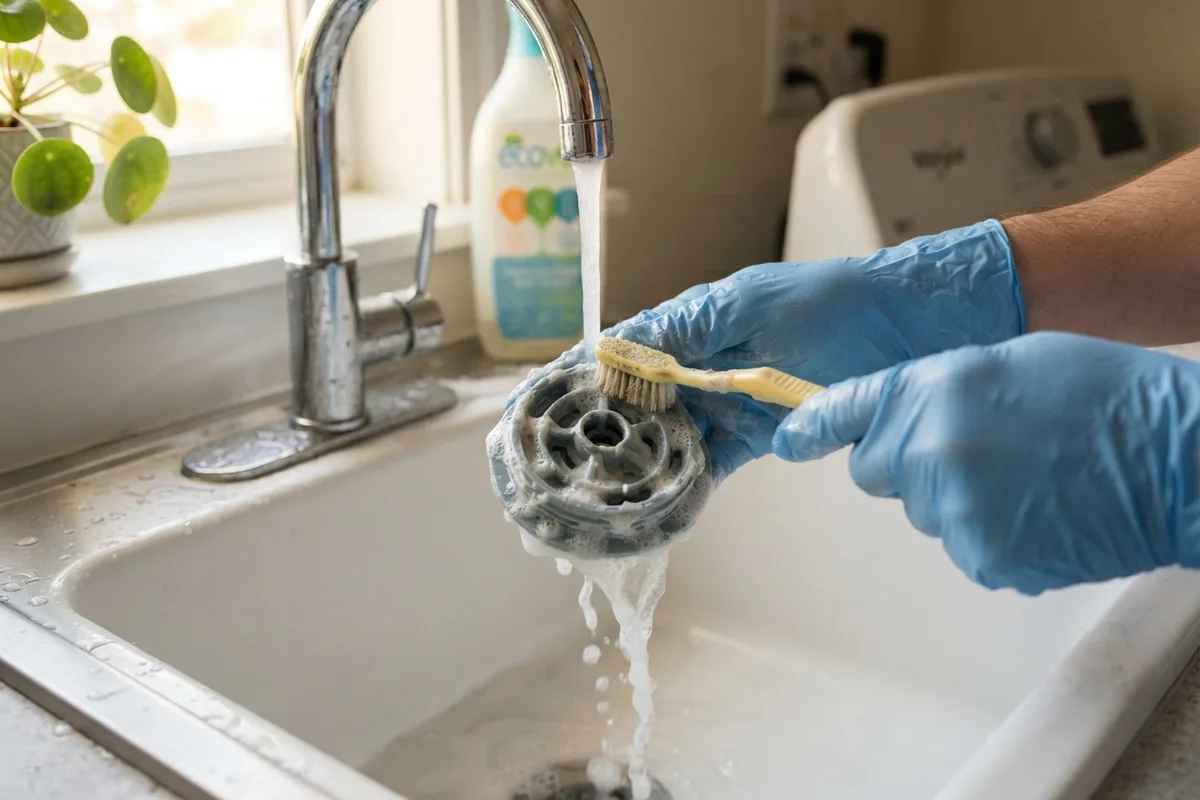
- Use an old toothbrush or small bottle brush to scrub away coagulated softener from the siphon tube, the underside of the cap, and the discharge port.
- Rinse thoroughly with hot water, snap the siphon cap firmly back into position, and reinstall the drawer.
2. Scrub the Overhead Dispenser Jet Nozzles
Water enters the dispenser drawer through tiny spray nozzles located in the ceiling of the dispenser housing. As water passes through these overhead jets during the rinse cycle, mineral scale from hard water, airborne lint, and splashing soap residue can accumulate across the spray holes.
When these jets clog, water cannot spray with enough volume or direct pressure to overflow the softener cup and trigger the siphon.
- Remove the dispenser drawer completely to expose the upper ceiling of the housing cavity.
- Shine a flashlight upward to inspect the grid of small spray holes.
- Dip a stiff-bristled brush into warm water and scrub across the roof of the dispenser housing to clear crusty mineral scale and detergent crust.
- Use an unbent paperclip or wooden toothpick to gently poke clear any stubborn individual nozzle holes.
- Wipe the cavity dry with a clean microfiber cloth before sliding the drawer back into place.
If standing water continues to collect across multiple compartments, see our guide on why is my washer detergent drawer full of water for additional drawer housing diagnostics.
3. Dilute Thick or Concentrated Fabric Softener
Modern ultra-concentrated fabric softeners are significantly thicker and denser than older liquid formulas. If you pour thick, cold softener directly up to the maximum fill line, the liquid may be too viscous for the siphon tube to establish natural suction, especially during cold-water rinse cycles.
To prevent viscosity clogs without losing fabric softening benefits:
- Pre-dilute before pouring: Mix equal parts warm water and concentrated fabric softener in a small cup before pouring the mixture into the dispenser.
- Never exceed the MAX line: Overfilling the cup causes premature siphoning during the initial wash cycle, which wastes conditioner and can cause laundry staining. Learn more about preventing detergent buildup in our guide on why is my washer leaving residue on clothes.
- Switch to liquid alternatives: Consider using distilled white vinegar in the softener compartment as a natural fabric softener that never coagulates or leaves waxy film inside internal appliance passages.
4. Inspect the Dispenser Water Inlet Solenoid
Most washing machines utilize a multi-port water inlet valve equipped with separate electromagnetic solenoids: one for the main wash, one for bleach, and one dedicated to routing water across the fabric softener channel. If the specific solenoid controlling the rinse-water channel fails electrically or mechanically, no water will enter the softener compartment even though the washer fills normally during the main wash cycle.
To troubleshoot the rinse inlet solenoid:
- Confirm that both the hot and cold water supply faucets on your laundry wall box are opened completely.
- Inspect the supply hose mesh screens. Turn off the wall spigots, unscrew the supply hoses from the back of the washer, and inspect the small sediment filter screens tucked inside the valve inlets. Clean away any trapped rust or silt with a soft brush, as restricted flow can prevent adequate spray volume. For slow filling issues, check our walkthrough on why is my washer filling slowly.
- Test the solenoid coil with a digital multimeter. Set the meter to ohms (resistance) and touch the probes to the softener valve terminals. A healthy solenoid typically registers between 500 and 1,500 ohms; a reading of zero (shorted) or infinity (open circuit) means the inlet valve assembly must be replaced.
| Cause of Dispenser Issue | Visual Clue | Difficulty | Typical DIY Remedy |
|---|---|---|---|
| Clogged Siphon Tube | Full cup of pure softener after cycle | Easy | Soak drawer in hot water & scrub tube |
| Blocked Roof Jets | Little to no water enters drawer cavity | Easy | Clear nozzle holes with brush & paperclip |
| Viscous Softener | Sludgy gel stuck to bottom of cup | Easy | Pre-dilute softener 1:1 with warm water |
| Failed Rinse Solenoid | Washer fills for wash, but not rinse | Moderate | Test coil with multimeter; replace valve |
| Misaligned Actuator Arm | Water sprays into wrong compartment | Moderate | Realign top-load mechanical diverter arm |
5. Check the Dispenser Diverter Mechanism (Top-Load Washers)
Many traditional and high-efficiency top-load washing machines use an agitator-mounted dispenser cup or a motorized diverter arm to direct incoming water to the correct cup at specific cycle points.
- Agitator Cup Dispensers: Top-load agitator cups use centrifugal force from the spin cycle to force liquid up the sides of the cup and down through internal agitator slots. If lint or dried soap plugs the base of the agitator column, the liquid cannot escape into the tub. Pull the removable cap off the top of the center agitator post, flush the center core with three cups of boiling water, and wipe away lint residue.
- Motorized Diverter Actuators: Some front-load and top-load models use a small cam motor or mechanical cable linkage to swivel a single water nozzle above the appropriate drawer tray. If the plastic linkage snaps or slips off its track, water may spray into the bleach or detergent compartment during the rinse cycle instead of the softener cup.
When to Call a Pro
While clearing clogged siphon caps and cleaning scale off spray nozzles takes just minutes, mechanical and electrical faults deeper inside the appliance may require professional attention:
- Multimeter electrical diagnostics: If testing valve solenoids, wiring harnesses, or main control board relays feels outside your comfort zone.
- Internal cabinet leaks: If water overflows the dispenser housing and leaks down inside the steel washer cabinet onto internal electrical motors.
- Control board driver failures: If the electronic control module fails to send 120V signals to the dispenser actuator during the rinse phase.
If troubleshooting does not restore proper water flow to your dispenser, True Appliance Repair can match you with an experienced local appliance pro to diagnose internal valves and electronics quickly.
Typical independent service calls for washer valve or dispenser repairs generally range from $120 to $260 depending on your appliance model and regional labor rates.
FAQ
Why is there clear water left in my fabric softener cup after a wash?
A small amount of clean water remaining in the bottom of the cup is normal after a siphon cycle finishes. However, if the cup is filled to the brim with standing water or cloudy softener mix, the siphon tube is partially clogged and needs cleaning.
Can I use vinegar instead of fabric softener in the dispenser?
Yes. Distilled white vinegar acts as an effective natural fabric softener that breaks down detergent residue and neutralizes odors without leaving waxy buildup on appliance surfaces or siphon components.
How often should I clean the washing machine dispenser drawer?
For best performance and to prevent sour odors, remove and scrub your washer dispenser drawer once every 4 to 6 weeks, or immediately whenever you notice residue starting to coat the siphon cap.
Does low water pressure affect the fabric softener dispenser?
Yes. If household water pressure drops below 20 PSI, the spray jets above the drawer cannot deliver enough water volume to create the siphon suction required to pull softener out of the cup.