
Pulling a load of freshly laundered dark clothes out of the washing machine only to find white streaks, powdery patches, or a dull film is frustrating. When your washer is leaving residue on clothes, the issue usually stems from detergent buildup, overloaded cycles, or water temperature issues rather than a permanently broken machine.
Diagnosing the cause of laundry spots requires checking your detergent usage, load sizes, and machine components. By following a few simple troubleshooting steps, you can eliminate detergent marks, protect your wardrobe, and keep your washing machine running efficiently.
Overdosing High-Efficiency Detergent
Modern high-efficiency (HE) washers require significantly less soap than older traditional top-loading models. When you add too much liquid detergent or laundry powder, the washer's low-water cycles cannot completely rinse away the excess suds. This leaves behind a sticky, soapy film that dries into pale streaks on dark fabrics.
- Always measure laundry detergent using the cap markings rather than pouring directly into the tub or dispenser drawer.
- For HE washing machines, use no more than 1 to 2 tablespoons of concentrated liquid detergent per regular load.
- Switch from laundry powder to liquid HE detergent if you frequently wash in cold water, as powders struggle to dissolve without heat.
- Run an empty hot water rinse cycle once a month to wash away soap scum lingering inside the tub drum.
Overloading the Washer Drum
Stuffing the washing machine past its recommended capacity prevents clothing from tumbling freely during the agitation and rinse cycles. When clothes are packed tightly together, laundry soap gets trapped in the folds of fabrics, and water cannot circulate effectively to wash it away.
- Fill the drum loosely, leaving at least 4 to 5 inches of space between the top of the laundry pile and the top of the wash tub.
- Avoid wrapping large items, like bed sheets or heavy towels, tightly around the center agitator or impeller.
- Separate heavy cotton fabrics from lightweight synthetics to ensure balanced water distribution during the rinse cycle.
- If laundry consistently comes out spotted or soapy, reduce your average load size by one-third to test water circulation.
Cold Water Failing to Dissolve Detergent
Washing clothes in cold water saves energy, but cold tap water—especially during cooler months when groundwater temperatures drop below 60°F—can prevent single-dose laundry pods, powders, and heavy liquid detergents from dissolving fully. Undissolved detergent clings to clothing fibers as gray or white spots.
- Dissolve single-dose detergent pods in a small cup of warm water before adding them to the drum if you must use a cold wash cycle.
- Place detergent pods at the bottom of the empty drum before loading clothes so they receive maximum exposure to incoming water.
- Select a warm water setting for heavily soiled loads or when using powdered detergents.
- Check your household water heater settings to ensure hot water reaches the laundry room at a suitable temperature.
Mineral and Limescale Accumulation
Hard water containing high concentrations of calcium and magnesium reacts with laundry detergents to form an insoluble precipitate known as soap scum. Over time, these mineral deposits coat the outer tub of your machine, eventually flaking off onto clothing during the wash cycle.
- Unplug the washing machine from the electrical outlet before performing deep cleaning procedures inside the drum.
- Pour 2 cups of distilled white vinegar into the detergent dispenser or tub.
- Run a dedicated tub-clean cycle or the hottest available wash cycle to break down limescale and soap residue built up inside internal components.
- Consider adding a laundry booster or water-softening additive to help neutralize hard water during regular wash cycles.
Clogged Water Inlet Filter Screens
If your washer isn't receiving enough water during its rinse cycle, detergent will remain trapped in your clothes. Sediment and rust from home plumbing pipes can clog the tiny mesh filter screens located inside the water inlet valves at the back of the washer.
- Unplug the washing machine from the wall power outlet to prevent electrical hazards.
- Turn off the hot and cold water supply valves behind the washing machine completely.
- Unscrew the fill hoses from the inlet valves on the back panel of the appliance, keeping a bucket nearby to catch excess water.
- Use needle-nose pliers to gently remove the small mesh filter screens from inside the valve ports.
- Clean the mesh screens under running tap water with a soft toothbrush, then reinstall them and reattach the supply hoses tightly.
Common Laundry Residue Types and Fixes
| Residue Type | Likely Cause | Primary DIY Fix |
|---|---|---|
| White chalky streaks | Excess detergent powder or cold water | Switch to liquid HE detergent & warm water |
| Sticky gray film | Soap scum & hard water deposits | Run a tub-clean cycle with distilled vinegar |
| Blue or clear slick spots | Concentrated fabric softener or pod casing | Dilute liquid softener; place pods in empty drum |
| Brownish or rusty flecks | Mineral scale or rusted tub components | Inspect internal tub; clean water inlet filters |
Preventative Laundry Maintenance Habits
Establishing simple care routines protects your garments and prevents laundry soap residue from recurring. Practicing proactive DIY appliance maintenance keeps internal pumps and valves clear, ensuring efficient wash performance year-round.
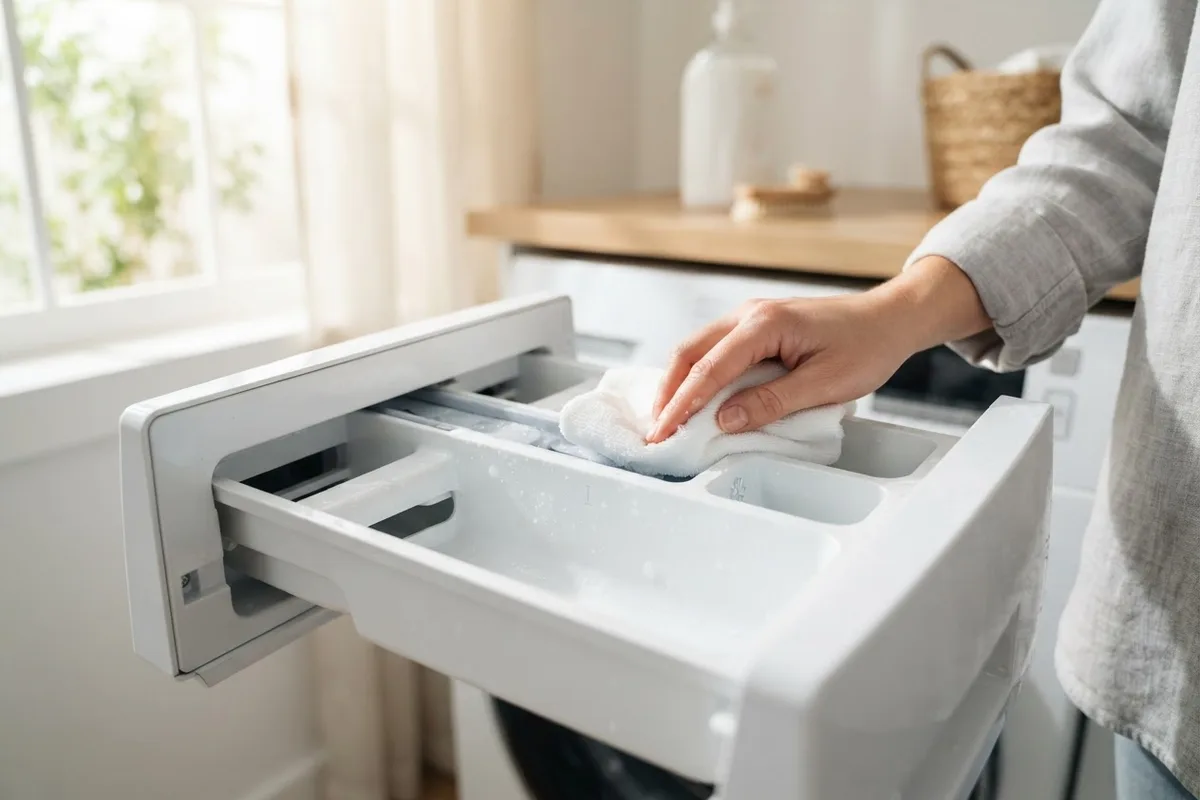
- Clean the detergent dispenser drawer every few weeks to remove hardened liquid detergent and fabric softener gel.
- Wipe down the rubber door boot gasket on front-load washers weekly to catch trapped debris, hair, and lint.
- Leave the washer door or lid cracked open between uses to allow moisture to evaporate and prevent mold growth.
- Include checking hose connections and cleaning drain pump filters in your regular appliance maintenance checklist.
When to Call a Pro
When basic cleaning steps, proper detergent dosage, and reduced load sizes do not eliminate residue, internal component failures may be obstructing your washer's water supply or drain performance. A failing drain pump, faulty water inlet valve, or damaged control board can prevent thorough rinsing.
Always unplug the appliance and shut off water connections before inspecting internal parts. If you suspect an electrical issue or an internal mechanical failure, stop troubleshooting and consult a professional. For complex diagnostic work, True Appliance Repair can match you with a local appliance pro to evaluate your washing machine safely. Standard washer diagnostic and repair services typically range from $120 to $350, depending on your region and the specific parts required.
FAQ
Why are my clothes coming out with white spots after washing?
White spots are usually caused by undissolved powdered detergent, excessive HE detergent usage, or hard water minerals reacting with soap scum. Try switching to a liquid detergent and reducing the amount used per load.
Can fabric softener leave residue on clothes?
Yes, undiluted fabric softener poured directly onto dry clothes or built up in the dispenser drawer can leave oily, dark, or waxy spots on fabrics. Always dilute fabric softener with warm water or use a dedicated dispenser ball.
How do I remove detergent stains from clothes after they dry?
To remove set-in soap residue, soak the affected garments in a basin of warm water mixed with 1 cup of white vinegar for 30 minutes. Rinse thoroughly and rewash without adding any extra detergent.
Will a vinegar wash clean detergent buildup in my washer?
Yes, running an empty cycle on the hot setting with 2 to 4 cups of white vinegar dissolves lingering soap scum, limescale, and detergent buildup from the inner drum and drainage lines.