
If you notice your dishwasher steaming up cabinets after every wash, warm moisture is escaping around the door or vent instead of staying sealed inside the tub. Over time—especially during busy holiday hosting weeks when you run extra loads—that trapped humidity can swell wood trim, peel laminate edges, and warp nearby drawers. Work through these six safe DIY checks to pinpoint the leak and protect your kitchen cabinets.
1. Inspect the Door Perimeter Gasket
A flattened, cracked, or dirty rubber gasket lets pressurized steam slip past the door frame during the heated dry cycle. Before touching anything inside the tub, turn off power to the dishwasher at your home circuit breaker and let the interior cool completely.
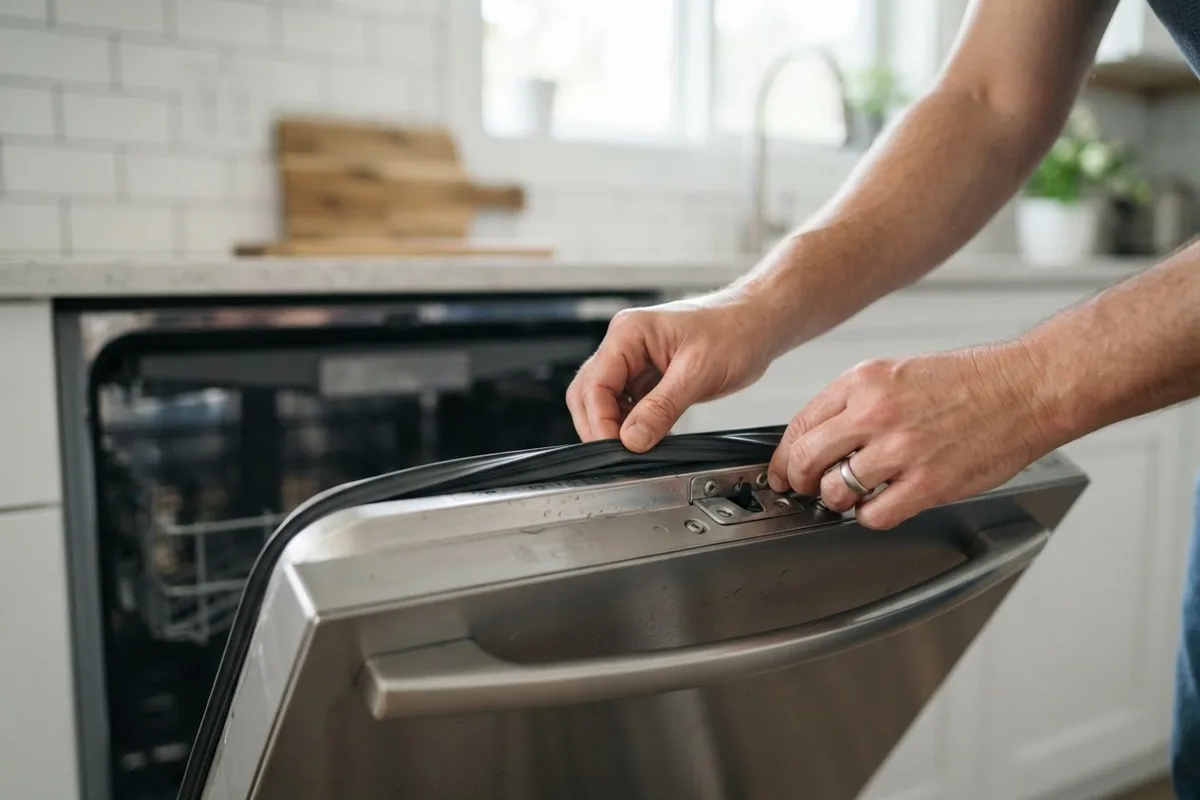
- Open the door fully and trace your fingers along the entire rubber seal framing the tub opening.
- Look for flattened spots, hairline splits, or sections pulled out of the mounting channel.
- Check for hardened buildup preventing a flush seal; you can clean appliance seals and gaskets safely using warm water and mild dish soap.
- Press any loose rubber firmly back into its groove, starting from the top center and working outward without stretching it.
- Replace the gasket if it feels brittle or stiff, since aftermarket seals typically cost $25 to $55 depending on your model.
2. Check the Steam Vent and Flapper
Most dishwashers use a top-edge or upper-door steam vent that opens briefly during drying and closes during the wash. If the internal baffle sticks or the vent gasket deteriorates, hot vapor blows straight into your cabinet overhang. With the breaker still switched off, inspect the vent assembly carefully.
- Locate the vent louver on the upper front panel, top edge of the door, or upper interior wall.
- Shine a flashlight inside the grille to check for grease buildup, broken plastic tabs, or a warped rubber flapper.
- Gently twist or unclip the interior vent cap—check your owner's manual first—to clear mineral crust from the moving flap.
- Confirm the thin foam or rubber seal behind the vent bezel sits flat against the inner door skin.
- Reassemble snugly without overtightening plastic threads, or order a replacement vent kit ($30 to $70, varies by model).
3. Tighten the Door Latch and Strike
Even a brand-new gasket cannot contain steam if the door sits a fraction of an inch loose at the top. Daily opening and closing gradually loosens the metal strike plate attached to the upper tub frame, creating a narrow gap that vents hot moisture upward.
- Close the door and gently push on the top panel; if it flexes inward, the latch tension is too loose.
- Switch off the breaker and open the door to inspect the metal strike plate at the top center of the tub.
- Tighten loose mounting screws with a Phillips or Torx driver, then nudge the strike plate slightly inward if slotted holes allow.
- Check the plastic door latch handle on the inner top lip for hairline cracks or sluggish spring return.
- Test the seal with a dollar bill tucked at the top edge; if it slides out easily with the door shut, replace the worn latch ($35 to $85, varies by model).
4. Level the Tub and Check Door Hinges
When a dishwasher leans forward or twists slightly inside its cabinet cutout, the top corner of the door pulls away from the frame. That small misalignment turns into a steam chimney aimed directly at the cabinet side panel.
- Turn off the breaker and shut off the hot water supply valve under the sink before shifting the unit.
- Open the door and place a short carpenter's level along the bottom tub track from front to back and side to side.
- Use pliers or a wrench to turn the front leveling legs until the tub sits level and snug against the underside mounting brackets.
- Inspect both lower door hinges while opening the door halfway; if one side drops faster or rubs, a hinge arm may be bent.
- Tighten the under-counter mounting screws into the side or top brackets so the tub cannot rock forward during heavy cycles.
5. Add an Under-Counter Steam Shield
Some modern dishwashers include an auto-open drying feature that pops the door ajar at the end of the cycle, releasing lingering vapor straight upward. Even normal venting near wood, particleboard, or thermofoil cabinets can cause swelling if the underside of the countertop lacks a barrier.
- Check underneath the front lip of your countertop directly above the dishwasher door for peeling laminate, raised grain, or dark water marks.
- Disable any auto-open dry setting in your control menu if your kitchen has moisture-sensitive wood or thermofoil cabinets nearby.
- Wait 15 to 20 minutes after a cycle ends before cracking the door open so steam condenses inside the tub first.
- Wipe the underside of the countertop dry, then apply a peel-and-stick stainless steel or aluminum vapor barrier shield ($15 to $35) along the front overhang.
- Inspect adjacent cabinet edge-banding twice a year and seal exposed particleboard with clear polyurethane if needed.
6. Test Dry Settings and Overheating
If heavy steam pours from multiple sides of the door, the tub itself may be overheating because of a stuck relay or faulty high-limit thermostat. Excessively high water and air temperatures push vapor past otherwise healthy seals and can scorch plastic racks.
- Switch from "Sanitize" or "Heated Dry" to a normal eco-dry cycle for one load to see if cabinet condensation drops noticeably.
- Listen for abnormal clicking from the control panel and review the signs your dishwasher control board is failing if cycles run unusually hot or long.
- Turn off the breaker before inspecting the heating element at the bottom of the tub for blistering, cracks, or white mineral crust.
- Leave internal thermostat and relay testing to a technician, since multimeter checks inside the door cavity expose live 120-volt wiring.
Quick-Reference: Steam Leak Causes and Typical Costs
| Symptom | Likely Cause | DIY Difficulty | Typical US Cost Range* |
|---|---|---|---|
| Steam along one side or corner | Flattened or dirty door gasket | Easy | $25–$55 (part) |
| Vapor puffing from upper grille | Stuck or cracked steam vent | Easy–Moderate | $30–$70 (part) |
| Door flexes when pushed shut | Loose strike plate or latch | Easy | $35–$85 (part) |
| Top corner gap on one side | Unlevel legs or bent hinges | Moderate | $0–$120 (adjustment or hinges) |
| Peeling countertop overhang | Missing vapor shield / early opening | Easy | $15–$35 (shield) |
| Heavy steam from all edges | Stuck relay or bad thermostat | Pro Recommended | $150–$320 (pro repair) |
Typical US ranges; exact parts and labor costs vary by area and model.
When to Call a Pro
Simple fixes like reseating a gasket, adjusting a strike plate, or sticking on a vapor barrier are safe weekend projects once the breaker is off. Stop and call a qualified technician if you suspect a failing high-limit thermostat, a shorted heating element, or a stuck control board relay—opening the inner door wiring harness or working near your electrical panel carries serious shock and fire risks. You should also bring in help if your unit is tightly hardwired without an accessible plug under the sink, or if repeated steam leaks have already warped surrounding cabinetry.
In the US, professional dishwasher diagnostics and component repairs typically run $150 to $350, though pricing varies by area and model. If DIY checks do not stop the moisture, True Appliance Repair can match you with an independent pro through our local dishwasher repair service to test electrical components safely and restore a tight seal.
FAQ
Is it normal for a dishwasher to release some steam?
A small puff of warm air from the top vent during the drying phase is normal on vented models. However, visible condensation dripping down adjacent cabinet doors or pooling under the countertop edge signals a worn seal, misalignment, or an overheating issue that needs attention.
Can escaping dishwasher steam ruin wood kitchen cabinets?
Yes, repeated exposure to hot moisture swells particleboard cores, loosens glue on thermofoil wraps, and clouds clear wood finishes. Adding an under-counter vapor barrier and fixing the gasket or latch early prevents expensive cabinet door replacements later.
Should I crack the dishwasher door open right after the cycle finishes?
Wait at least 15 to 20 minutes after the cycle ends before opening the door. Letting the dishes and tub cool slightly keeps a concentrated cloud of steam from blasting directly onto your upper cabinets and countertop lip.
How much does it cost to replace a dishwasher door gasket or vent?
A replacement perimeter gasket or vent assembly typically costs $25 to $70 for the part if you install it yourself. Hiring a technician for the repair generally ranges from $140 to $260 total, depending on your location and dishwasher model.