
A clothes dryer quitting right when heavy sweaters, blankets, and holiday laundry pile up can throw off your whole week—and your household budget. Understanding typical US dryer repair cost ranges helps you plan for common fixes, rule out simple blockages first, and decide whether a service call makes financial sense. Always unplug the dryer and shut off the gas supply valve before doing any hands-on inspection.
1. Heating Element or Gas Igniter Repair
When your drum tumbles normally but clothes stay cold and damp, a failed heating component is a prime suspect. In the US, replacing an electric heating element typically runs roughly $150 to $350 for parts and labor, while a gas igniter or gas valve coil replacement usually falls around $175 to $400, varying by area, brand, and model.
Before paying for a repair visit, run through these safe checks:
- Pull out the lint trap, wash off fabric softener film with warm soapy water, and follow our guide on cleaning household appliance filters so airflow stays strong.
- Walk outside and confirm the exterior exhaust flap opens freely while the dryer runs.
- Check your electrical breaker box, since electric dryers use a double-pole breaker that can trip on one leg and cut heat while the drum still spins.
- For gas models, verify the wall shutoff valve is open, then stop—never disassemble gas burners, manifolds, or supply lines yourself.
2. Thermal Fuse and Thermostat Replacement
A blown thermal fuse is a built-in safety cutoff that stops a dryer from overheating. Expect a typical US repair cost of roughly $120 to $250 for parts and labor combined, varying by area and model, especially if a technician replaces both the thermal fuse and the cycling thermostat during the same visit.
Thermal fuses rarely fail for no reason; restricted exhaust airflow is the most frequent trigger. Check the vent path first:
- Unplug the dryer from the wall outlet and close the gas valve if you own a gas unit.
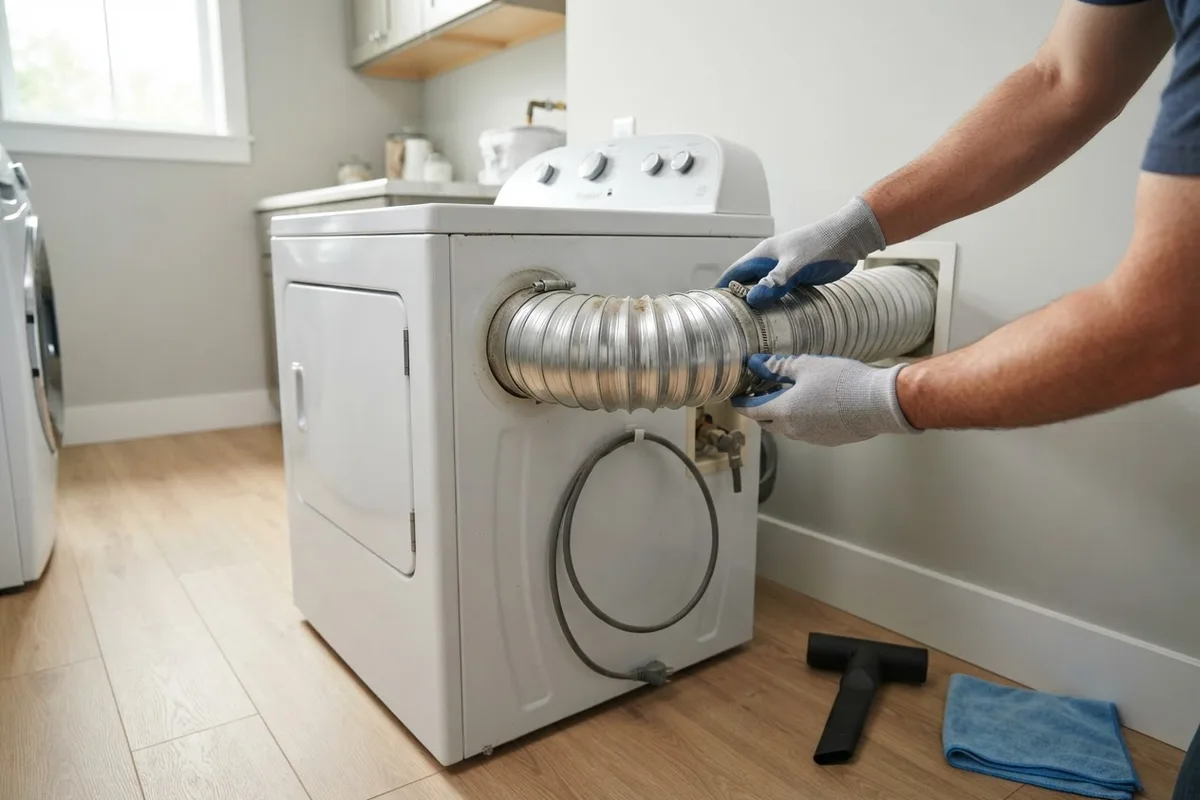
- Pull the appliance forward gently and inspect the transition duct behind the cabinet for kinks, crushed foil, or heavy lint clumps.
- Detach the flexible hose and vacuum both the duct and the wall vent opening thoroughly.
- Reconnect the duct securely with metal clamps; if the dryer still refuses to start or heat, budget for a pro to test and replace the fuse.
3. Drive Belt and Drum Roller Repair
Heavy winter bedding and overloaded wash loads accelerate wear on the rubber drive belt, idler pulley, and drum support rollers. A snapped belt leaves the motor humming while the drum refuses to turn, whereas flat-spotted rollers create rhythmic thumping or squealing. Typical US repair costs range from roughly $150 to $300, varying by area and dryer model.
Use these quick checks to narrow down the issue:
- Unplug the machine and shut off the gas valve before opening the door to inspect the drum.
- Rotate the empty drum slowly by hand; if it spins effortlessly with almost zero resistance, the drive belt has likely snapped.
- Run a gloved hand along the front drum seal and plastic baffles to catch loose coins, zippers, or underwires causing noise.
- If a pro opens the cabinet for a broken belt on an older unit, ask about installing a full roller-and-pulley maintenance kit at the same time to avoid paying a second labor charge later.
4. Drive Motor and Blower Wheel Service
If you hear harsh grinding, rattling, or a struggling hum from the bottom of the dryer, the problem may lie with the blower wheel or the main drive motor. Clearing or replacing a damaged blower wheel typically costs roughly $150 to $275 in the US, while a full drive motor replacement generally runs about $225 to $450, varying by area, brand, and model.
Take these careful steps before calling for service:
- Turn the dryer off immediately if you notice a hot electrical smell or loud scraping, then unplug the power cord and shut off the gas valve.
- Remove the lint filter and shine a bright flashlight down the lint chute to look for stray socks, dryer sheets, or small plastic items wedged near the blower fan.
- Attach a narrow crevice tool to a vacuum hose to lift loose lint from the chute without jamming rigid tools against the fan blades.
- Avoid disassembling the motor housing yourself, since motor wiring and sharp sheet-metal edges require experienced handling.
5. Door Switch and Start Latch Replacement
A dryer that has power and lights up yet does nothing when you press Start—or pops open mid-cycle—often has a worn door switch or broken door latch. This is usually one of the most budget-friendly repairs, with typical US costs landing around $110 to $225 depending on your area, model, and how much of the front panel must come off.
Inspect the latch mechanism safely in four quick steps:
- Unplug the dryer before touching the switch opening around the door frame.
- Wipe lint, pet hair, and dried detergent residue off the door strike and metal catch with a slightly damp microfiber cloth.
- Press the small door switch pin inside the frame with your finger and listen for a crisp, distinct click.
- Look closely at the plastic door strike for hairline cracks; if the pin feels stuck or the latch is broken, a technician can usually swap it quickly.
6. Control Board and Timer Replacement
Modern dryers rely on electronic main control boards, while simpler models use mechanical rotary timers. When cycles freeze, displays flash persistent error codes, or buttons stop responding—especially after a storm or voltage spike—replacement can be the priciest item on your budget. Typical US costs range from roughly $175 to $350 for a mechanical timer and $250 to $550 for an electronic control board, varying widely by area, brand, and model.
Rule out simple glitches before replacing a pricey board:
- Unplug the dryer for five full minutes to perform a hard reset, then plug it directly back into a dedicated wall outlet.
- Check the control panel for an active child lock, eco mode, or delay-start indicator.
- Confirm the home breaker is not tripping repeatedly; never open an electrical panel or probe live control boards on your own.
- Compare the quoted part-and-labor total against the value of your dryer before approving a major board replacement.
Quick-Reference Dryer Repair Cost Table
Use this broad US range chart to estimate your budget before scheduling service. Final pricing always varies by local labor rates, brand, fuel type, and part availability.
| Common Dryer Fix | Typical US Cost Range* | Common Warning Sign | Safe First Check |
|---|---|---|---|
| Heating element or gas igniter | $150–$400 | Drum spins with no heat | Clean lint trap, check breaker |
| Thermal fuse and thermostat | $120–$250 | Dead unit or no heat | Inspect and vacuum vent duct |
| Drive belt and drum rollers | $150–$300 | Humming, squeaking, no spin | Hand-spin empty drum for slack |
| Drive motor or blower wheel | $150–$450 | Grinding, stalling, hot smell | Check lint chute for debris |
| Door switch or latch | $110–$225 | Light works, won't start | Clean latch, test switch click |
| Control board or timer | $175–$550 | Error codes, dead touchpad | Five-minute unplug reset |
Typical US parts-and-labor estimates; actual totals vary by area and model.
When to Call a Pro
Homeowners can safely handle lint trap washing, vent duct vacuuming, door latch cleaning, and a five-minute unplug reset. Stop immediately and bring in an experienced technician whenever you smell gas, notice burning electrical odors, need gas valve or igniter work, or suspect a wiring, control board, or electrical panel issue. Never attempt DIY repairs on gas lines, high-voltage 240-volt outlets, or home breaker panels.
To keep your budget on track, compare the written estimate against the cost of a comparable new machine. Many homeowners use a simple half-price benchmark: if a dryer repair approaches half the price of replacing an older unit, putting that money toward a new model often makes better sense—just as it does when weighing washing machine repair costs. When you are ready for an accurate diagnosis, True Appliance Repair can connect you with a local pro through our washer and dryer repair service.
FAQ
How much is a typical dryer diagnostic fee?
Typical US diagnostic or trip fees usually run around $75 to $130, varying by area, travel distance, and dryer brand. Many local repair technicians apply part or all of that diagnostic charge toward your final repair bill if you move forward with the fix. Always ask how the service-call fee works before confirming your appointment.
Are gas dryers more expensive to repair than electric dryers?
Gas dryer heating repairs often cost slightly more than similar electric fixes because gas valves, igniters, and flame sensors require extra leak checks and specialized testing. Depending on your area and model, gas heating service can run roughly $25 to $100 more than an electric element replacement. Leave all gas-line, burner, and valve work to a skilled technician.
Should I fix a dryer that is more than 10 years old?
Lower-cost repairs such as a door switch, drive belt, or thermal fuse are often worth doing on a 10-year-old dryer if the drum and cabinet remain in solid shape. For higher-cost parts like a drive motor or main control board, compare the quote against the price of a comparable replacement machine. If multiple wear parts are failing at once, replacing the unit usually saves money over the next few years.
How can I prevent avoidable dryer repair bills?
Clear the lint screen before every single load and clean the exhaust vent duct at least once or twice a year, especially ahead of heavy winter laundry cycles. Avoid packing oversized wet comforters tightly into the drum, which strains the belt, rollers, and drive motor. Strong, unrestricted airflow prevents overheating and helps heating elements and thermal fuses last longer.