
Running a second or third cycle just to get one load of towels dry wastes time, electricity, and wear on your favorite clothes. When a dryer takes too long to dry, the culprit is almost always restricted airflow, sensor residue, or oversized laundry loads rather than a major breakdown. Before moving the machine or cleaning inside any opening, unplug an electric dryer from its wall outlet or turn off the gas supply valve and unplug a gas model.
1. Deep-Clean the Lint Screen and Housing
Even if you clear out the lint trap before every single load, dryer sheets and liquid fabric softeners slowly coat the fine mesh with an invisible waxy film. That residue blocks warm exhaust air from escaping the drum. To check for buildup, hold the screen under lukewarm running water—if water pools on top instead of passing right through, air is trapped too.
- Remove the lint screen and scrub both sides gently with warm water, a drop of dish soap, and a soft nylon brush.
- Rinse thoroughly and let the screen air-dry completely before sliding it back into place.
- With the dryer unplugged, insert a narrow vacuum crevice tool or flexible lint brush down into the slot to pull out packed lint hiding near the blower housing.
- Avoid tossing loose dryer sheets directly into wet piles where they can slip past the filter edge.
2. Check the Dryer Vent Duct and Outside Flap
A crushed hose behind the dryer or a stuck exterior vent hood traps humid air inside the drum, leaving heavy sweatshirts and bedding damp after a full hour. As winter weather brings thicker blankets and coats into regular laundry rotation, steady exhaust airflow matters more than ever.
- Unplug the dryer, shut off any gas valve, and slide the machine gently forward to inspect the rear vent connection.
- Look for sharp kinks, pinched foil tubing, or loose tape; replace flimsy accordion foil ducts with rigid or semi-rigid metal ducting.
- Detach the clamp and run a rotary dryer vent brush through the wall duct to clear compacted lint along the line.
- Step outside while the dryer runs an air-only cycle and confirm the exterior damper flap swings wide open with a strong, warm breeze—clear away lint, leaves, or debris blocking the hood.
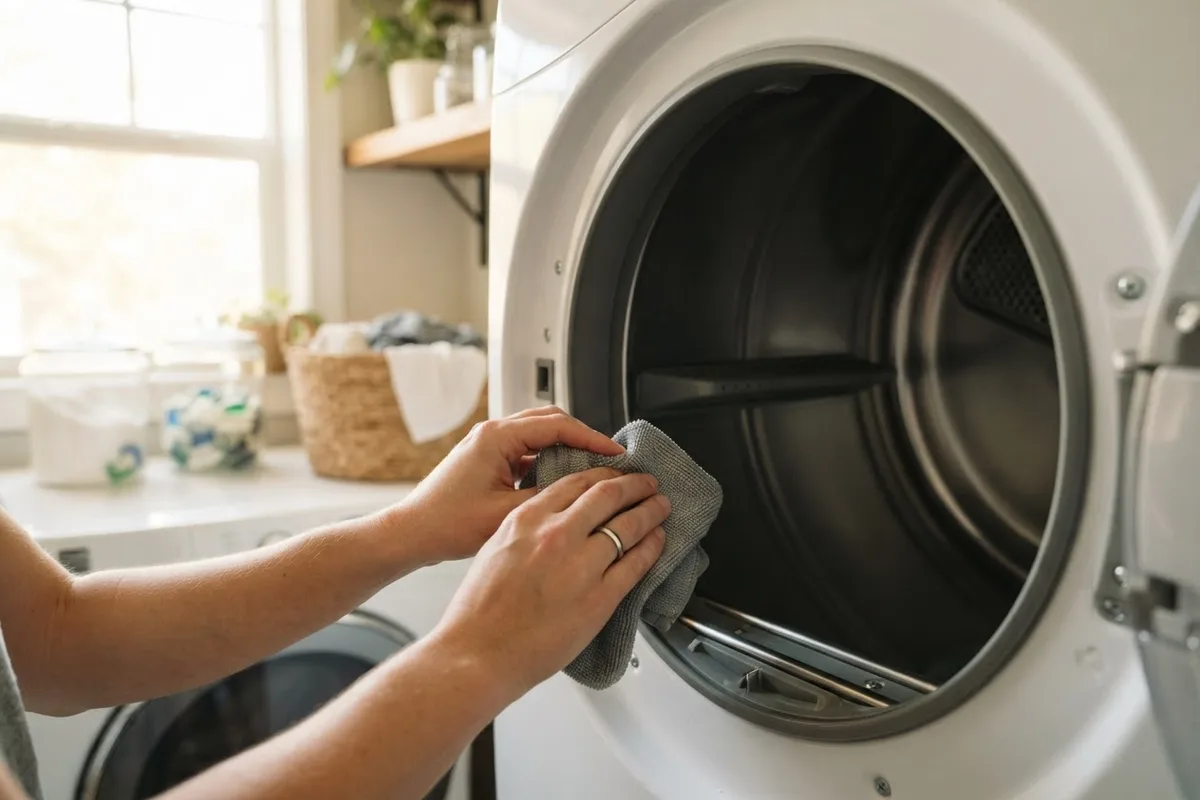
3. Wipe Down the Moisture Sensor Bars
Most modern dryers use two thin metal strips inside the drum to read how damp your laundry still feels. Fabric softener film coats those sensors over time, tricking the control board into shutting the heat off early while clothes are still wet.
- Make sure the drum is cool and the dryer stays unplugged before reaching inside.
- Feel just beneath the front door opening near the lint filter slot to locate the two parallel stainless-steel sensor bars.
- Dampen a clean microfiber cloth with plain rubbing alcohol and wipe both bars firmly from end to end to strip away invisible wax.
- Buff the bars dry with a clean cloth and run a test load without dryer sheets. You can follow our step-by-step guide to cleaning dryer moisture sensor bars for extra care tips.
4. Check Your Washer Spin Speed and Load Size
Sometimes the dryer is working properly, and the real slowdown begins one step earlier inside your washing machine. When a washer finishes on a gentle spin or drains sluggishly, towels enter the dryer holding far too much excess water.
- Select the highest safe spin speed on your washer for towels, denim, and bulky cotton sheets so more water spins out before heat ever turns on.
- Separate heavy fabrics from lightweight shirts; mixing thick hoodies with thin tees prevents warm air from circulating evenly around lighter garments.
- Load the dryer drum no more than two-thirds full so wet items can tumble freely instead of twisting tightly inside a fitted sheet.
- Check your washer drain hose for kinks if loads come out noticeably wetter than normal.
5. Clear the Laundry Room Air Intake
Every clothes dryer pulls fresh room air into its cabinet, warms it up, and pushes moisture outdoors. When a dryer sits inside a tight hallway closet with the door latched shut, it quickly runs out of fresh air and recirculates damp heat over your clothes.
- Vacuum dust buildup off louvered closet doors, or leave solid laundry closet doors propped open whenever a load is running.
- Wipe and vacuum dust bunnies away from the lower front grille or rear intake slots on the dryer cabinet so air enters freely.
- Keep laundry baskets, detergent jugs, and heavy winter coats off the floor directly beside or behind the dryer where they block ventilation space.
- Maintain four to six inches of clearance behind the machine unless your laundry wall uses a recessed vent box.
6. Inspect Cycle Settings and Heat Output
An accidental cycle change or a partial power trip can turn a 45-minute dry into an endless chore. Eco and Energy Saver modes deliberately lower drum temperatures, stretching drying times noticeably on cold days or heavy loads.
- Switch off Eco or low-heat defaults for bulky towels and test a medium-heat Timed Dry cycle for 40 minutes to confirm steady warmth.
- Check your home breaker panel if an electric dryer tumbles normally with cold air—electric models use a double-pole 240-volt breaker, and if one half trips, the drum spins on 120 volts while the heating coil stays completely cold.
- Reset a tripped breaker once only if you feel comfortable doing so safely; if it trips again, leave it off and call an electrician.
- Watch for overheating smells or scorching cabinet panels, which point to blocked heat covered in our guide on why a dryer gets too hot.
| Symptom You Notice | Most Likely Cause | Safe First DIY Check |
|---|---|---|
| Clothes hot yet still damp | Blocked vent duct or outside flap | Check exterior vent airflow |
| Cycle shuts off while wet | Coated moisture sensor bars | Wipe bars with rubbing alcohol |
| Drum tumbles with zero heat | Tripped half-breaker or failed part | Inspect double-pole breaker |
| Only heavy towels stay damp | Low washer spin or oversized load | Split load and use high spin |
When to Call a Pro
If you have washed the lint screen, cleared the vent line, wiped the sensors, and tested smaller loads—yet your dryer still takes multiple cycles or produces no heat—stop troubleshooting and bring in a qualified technician. Never open sealed rear panels to test live 240-volt heating elements, thermal fuses, or gas burner assemblies on your own. Gas supply leaks, faulty igniters, and electrical panel problems require professional diagnostic tools and safe handling.
Across the US, having a pro diagnose and replace a faulty dryer heating element, cycling thermostat, or gas valve coil typically falls between $150 and $400 for parts and labor, though exact pricing varies by area and model. If your dryer is over 12 years old and also squealing or thumping loudly, weighing repair cost against a new unit is smart. When you are ready for hands-on service, True Appliance Repair can connect you with an independent local technician through our washer and dryer repair service.
FAQ
How long should a normal dryer load take?
An average load of everyday mixed cotton clothes should dry completely in 35 to 45 minutes. Heavy bath towels, thick sweatshirts, or winter bedding typically need 55 to 75 minutes, so anything dragging past 90 minutes signals restricted airflow or weak heat.
Can a dirty lint trap really double drying time?
Yes. Even a thin, invisible coating of fabric softener residue across the mesh screen chokes off airflow and traps humid air inside the drum. Scrubbing the screen monthly with warm soapy water restores proper circulation fast.
Why does the outside of my dryer feel hot while clothes stay wet?
When the top or sides of the dryer cabinet feel unusually hot and laundry comes out steamy and damp, moist exhaust air cannot escape the machine. Inspect the rear hose for kinks and check that the exterior wall flap opens freely before running another cycle.
Should I use auto-dry or timed dry for thick winter loads?
Auto-dry works best once your moisture sensor bars are clean because it stops the cycle before fabrics over-dry. For mixed bulky blankets where thick seams hold moisture longer than edges, a 50-minute medium-heat timed cycle helps finish damp spots evenly.