
Coming home from a trip to a flooded kitchen floor, sour washer odor, or tripped breaker can quickly ruin a great getaway. Running through a simple home appliance vacation checklist before you lock the door protects your plumbing, trims standby power use, and keeps odors away until you return. Follow these seven practical, safety-first steps across your kitchen and laundry room before any weekend trip or extended stay away.
1. Shut Off Appliance Water Supply Valves
A pinhole drip in a supply line can release gallons of water per hour when nobody is home to notice. Before touching any valve or hose, power down or unplug the unit if you need to slide it out, and keep a towel and shallow pan nearby.
- Washing machine: Locate the hot and cold shutoff valves behind the washer and turn both levers perpendicular to the pipes, or clockwise until snug on older turn-style valves.
- Ice maker line: Lift or switch off the ice maker arm inside the freezer first, then close the quarter-turn shutoff valve under the sink or behind the fridge.
- Dishwasher: Open your kitchen sink cabinet and close the dedicated hot water supply valve feeding the dishwasher.
While inspecting hoses, check for damp spots, rust, or bulges. For more ways to catch early drips, see our guide on how to prevent appliance leaks.
2. Unplug Nonessential Laundry and Small Units
Many household appliances draw small amounts of standby electricity and stay exposed to lightning or utility power surges while plugged in. Disconnecting idle cords lowers electrical fire risk and cuts wasted power.
- Wait for cooldowns: Confirm the dryer, toaster oven, and coffee maker are completely cool before handling plugs.
- Unplug small kitchen gear: Disconnect coffee makers, air fryers, toasters, and blenders, then wipe away loose crumbs so they do not attract pests.
- Disconnect laundry units: Unplug your washer and electric dryer from their wall outlets. For a gas dryer, unplug the power cord and leave the gas valve alone unless you are comfortable operating a smooth quarter-turn valve for a multi-week absence; never force a stiff gas valve.
Leave your refrigerator plugged in unless you empty it for a long trip. For heavy ranges, flipping the dedicated breaker is safer than pulling the unit out.
3. Clear and Prop Washer and Dishwasher Doors
Trapped moisture inside sealed drums and tubs is the main reason homeowners return to musty, sour-smelling appliances. Taking ten minutes to dry interiors stops mildew before it starts.
- Power down first: Make sure the dishwasher breaker or switch is off and the washer is unplugged before reaching inside.
- Check for standing water: Inspect the dishwasher bottom filter and the washer rubber door boot for leftover puddles, food scraps, or stray socks.
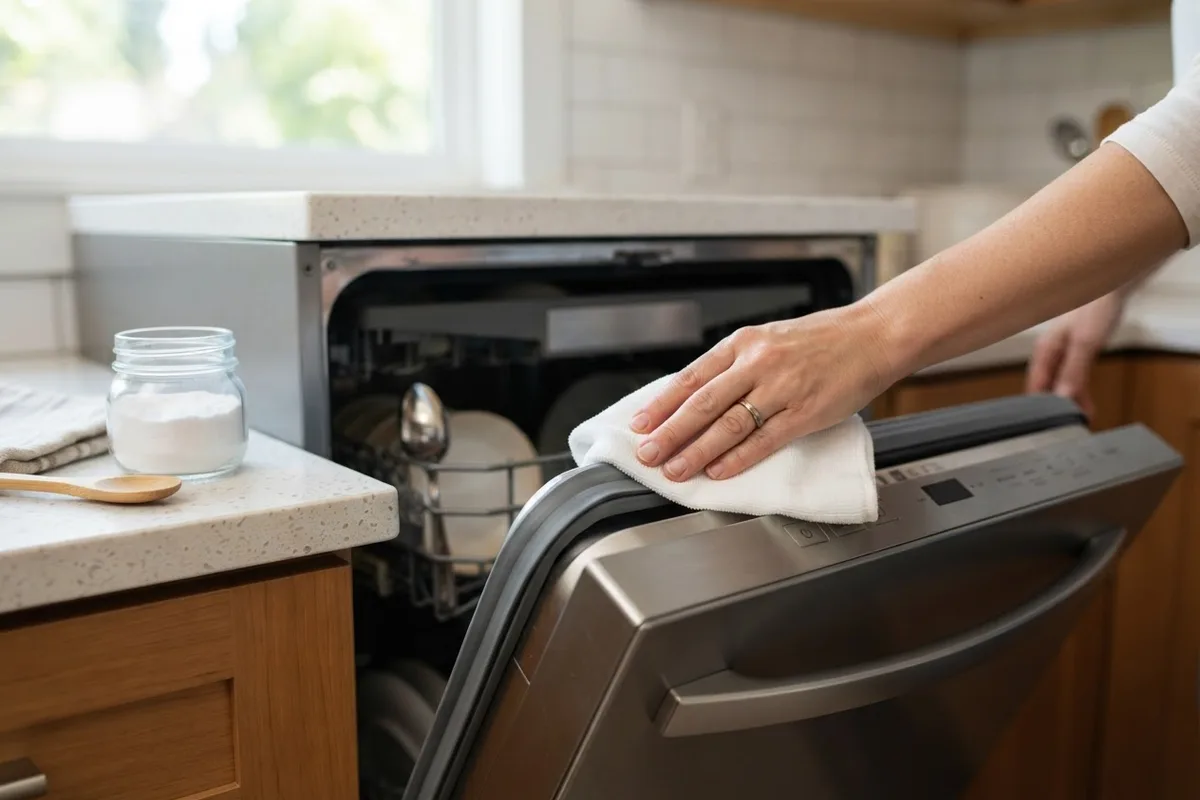
- Wipe gaskets dry: Use a clean microfiber cloth to dry rubber door seals, detergent drawers, and soap dispensers.
- Prop doors slightly ajar: Drape a dry folded towel over the top edge of each door so air circulates without letting the latch click shut.
If pets or young kids are staying with a sitter, skip propping low doors open and run a freshening cycle ahead of time using tips on how to deodorize home appliances.
4. Prep the Refrigerator and Ice Maker Safely
How you handle your refrigerator depends on how long you will be gone and whether groceries stay behind. A quick shelf check prevents spoiled food and stubborn freezer odors.
- Short trips (under two weeks): Toss dairy, fresh produce, and leftovers that will spoil before you return. Switch off the ice maker so it stops cycling while the water valve is closed, and keep the fridge at 37°F to 40°F and the freezer at 0°F.
- Extended trips (three weeks or more): Clear out all food, unplug the refrigerator, and wipe shelves with mild dish soap and warm water. Dry the interior completely and prop both doors open with rolled towels so trapped humidity cannot grow mold.
- Add odor control: Place an open box of baking soda on a middle shelf on shorter trips.
Never use sharp tools to chip freezer frost or tamper with sealed cooling lines.
5. Flush the Garbage Disposal and Sink Drains
Food particles trapped inside a garbage disposal or sink P-trap start decomposing within days, greeting you with rotten odors when you return. A simple cold-water flush clears residue without harming rubber seals.
- Cut power before looking: Flip the wall switch off and unplug the disposal under the sink before shining a flashlight inside. Never put your hand down the drain—use long tongs if you spot a stray peel or utensil.
- Run a cold-water scrub: Plug the unit back in, run cold tap water for 20 seconds, and drop in a small handful of ice cubes plus two thin lemon slices to scour the grind ring.
- Deodorize gently: Pour two tablespoons of baking soda down the drain with cold water instead of harsh chemical cleaners that corrode seals.
- Check beneath the sink: Wipe around the P-trap with a dry paper towel to confirm zero drips.
6. Empty Lint Traps and Verify Stove Controls
Heat-producing appliances deserve one final walkthrough right before you grab your keys. Lint, stray grease, and bumped knobs are easy to overlook while rushing out the door.
- Clear the dryer lint screen: Pull out the lint filter, peel off all lint, and confirm the drum is empty and cool. Never start a washer or dryer cycle right before leaving.
- Skip delayed-start timers: Avoid scheduling delayed dishwasher, laundry, or oven self-clean cycles in an empty house where leaks or smoke go unnoticed.
- Check every range knob: Visually confirm all stove burner knobs and oven dials rest squarely in the OFF position.
- Wipe stray crumbs: Give stovetop grates, drip pans, and the microwave plate a quick wipe to deter ants and mice.
If you ever smell rotten eggs near a gas appliance, do not touch switches—leave immediately and call your gas utility from outside.
7. Test Leak Sensors and Match Prep to Trip Length
Before walking out, test the batteries in any water leak alarms placed behind your washer, under the kitchen sink, and near the water heater. Confirm everyone in your household knows where the main water shutoff sits, then match your prep level to how long you will be away.
| Trip Length | Water Valves | Power & Unplugging | Fridge & Doors |
|---|---|---|---|
| Weekend (2–4 days) | Optional; inspect hoses for drips | Unplug small countertop units | Keep fridge on; prop washer open |
| 1–2 Weeks | Close washer, fridge, dishwasher valves | Unplug washer, dryer, small units | Turn off ice maker; toss perishables |
| 3+ Weeks | Close appliance or main water valves | Unplug idle units or trip breakers | Empty, unplug, and prop fridge open |
Save a quick note on your phone listing which valves and breakers you turned off so reversing them on arrival takes seconds.
When to Call a Pro
Most pre-trip appliance checks take under 30 minutes with a towel and a flashlight, yet certain warning signs mean an appliance should not be left unattended. Stop DIY work and bring in a technician if you spot scorched outlet marks, a breaker that repeatedly trips, a gas odor near your range or dryer, a stuck or weeping shutoff valve, or loud clicking and warm spots in your refrigerator.
Never attempt repairs on gas lines, sealed refrigerant systems, high-voltage wiring, or your electrical panel yourself. A typical US diagnostic and repair visit runs around $100 to $350 for common parts and labor, though pricing varies by area, appliance type, and model. If you catch a leaking valve or failing component before your trip, True Appliance Repair can match you with a local appliance pro to handle it safely before you leave.
FAQ
Should I unplug my refrigerator before going on vacation?
Only unplug your refrigerator if you will be away for three weeks or longer and plan to empty and clean it completely. For shorter trips, leave it plugged in at 37°F to 40°F, clear out perishables, and turn off the ice maker after closing its water supply valve.
Is it safe to leave the dishwasher or washing machine running when I leave?
No. Running water-using or heated appliances in an empty home means a split hose, clogged drain, or heating fault can cause major damage before anyone catches it. Always finish cycles and let units cool completely before locking up.
Should I turn off my main water valve or just individual appliance valves?
For one- to two-week trips, closing individual shutoff valves behind the washer, fridge, and under the sink protects common leak points while leaving irrigation or home systems undisturbed. For extended absences, closing the main water valve offers broader protection once you confirm your heating system does not need continuous makeup water.
What should I do when I return from vacation?
Open appliance water valves slowly and watch each hose fitting for 30 seconds to spot any weeping seals. Run cold water at your kitchen and laundry faucets for a minute to clear air pockets from the pipes before plugging machines back in and starting a load.