
Front-load washers are great at saving water and being gentle on clothes, but their airtight door seals and low water levels create a dark, damp environment where detergent residue, lint, and mildew thrive. If your freshly washed towels come out smelling sour or you spot black grime inside the rubber door boot, a quick wipe-down won't solve the problem. Follow these six step-by-step cleaning tasks using simple household ingredients to eliminate odors, clear hidden clogs, and keep your washer running smoothly all year.
1. Scrub the Rubber Door Gasket and Seal
The flexible rubber boot around the door opening is the number one source of front-load washer odors. Every wash cycle leaves behind a thin film of moisture, hair, pocket lint, and body oils inside the deep folds of this seal.
- Power down for safety: Unplug the washing machine from the wall outlet before putting your hands inside the door frame.
- Mix a mild cleaning solution: Combine equal parts warm water and white vinegar in a spray bottle, or mix two tablespoons of baking soda into a cup of warm water.
- Peel back the rubber folds: Gently pull back the outer lip of the rubber gasket to expose the hidden channel underneath. Remove any trapped socks, coins, hairpins, or lint balls.
- Spray and let sit: Generously spray the entire inner channel with your vinegar solution and let it sit for 10 minutes to loosen stubborn soap scum.
- Scrub and wipe dry: Use an old toothbrush to scrub stained spots in the creases, then wipe the entire rubber boot clean with a damp microfiber cloth followed by a dry towel.
Avoid using straight chlorine bleach on the rubber gasket more than once or twice a year, as harsh chemicals can dry out and crack the flexible rubber over time.
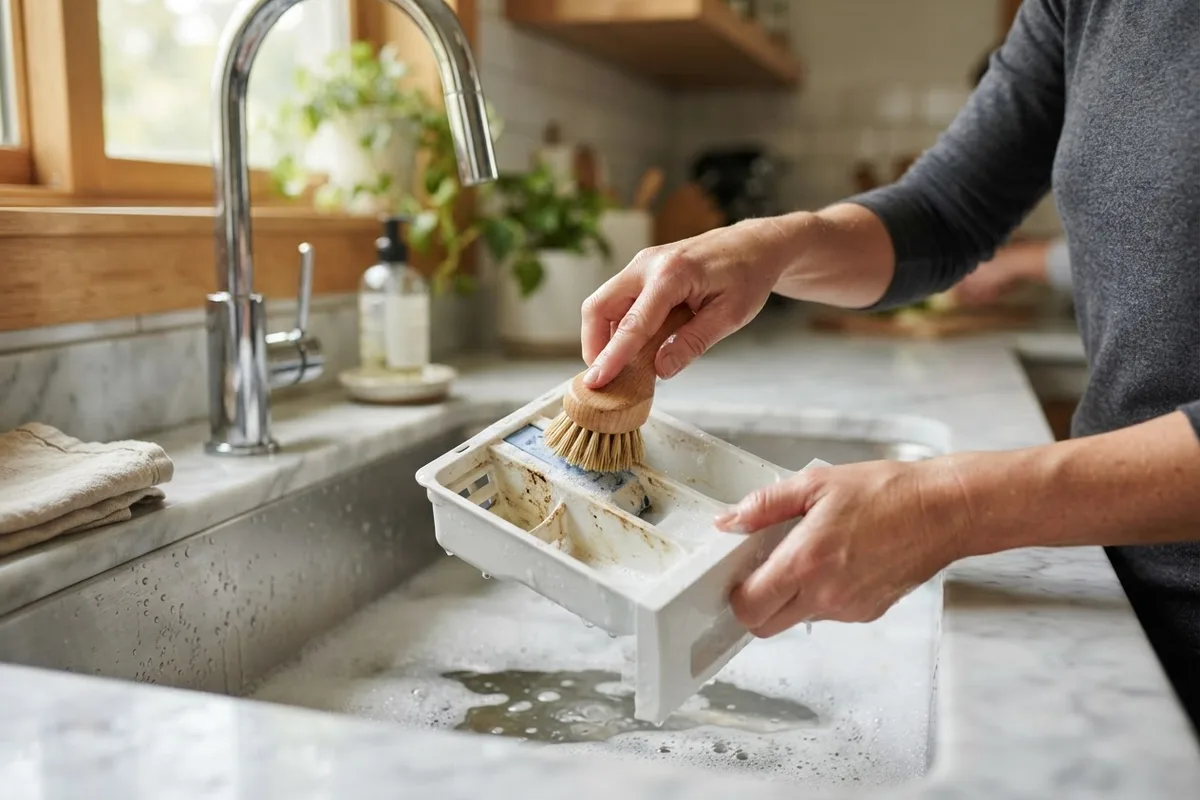
2. Soak and Scrub the Detergent Dispenser Drawer
Liquid detergent and fabric softener leave a sticky, gelatinous coating inside the dispenser drawer and the chute leading down to the drum. Over time, this buildup grows mold spores that get flushed directly onto your clean laundry.
- Slide out the drawer: Pull the detergent drawer open as far as it will go. Look for a small plastic release tab in the center or back (often labeled "Push"), press it down, and slide the entire tray out.
- Separate removable inserts: Lift out the colored plastic cups or siphon caps used for bleach and fabric softener.
- Soak in hot soapy water: Fill your kitchen sink with hot water, a squirt of dish soap, and half a cup of white vinegar. Submerge the drawer pieces for 20 minutes.
- Scrub every corner: Use a bottle brush or toothbrush to scrub away hardened detergent crust, paying close attention to the undersides of the siphon caps.
- Clean the open cavity: Before sliding the dry drawer back in, spray the inside roof and walls of the machine's dispenser slot with vinegar water and wipe away any gunk with a cloth.
3. Drain and Clean the Hidden Pump Filter
Most homeowners don't realize their front-load washer has a small trap at the bottom front corner that catches lint, buttons, and pet hair before they can jam the drain pump. If this filter gets packed with wet debris, standing water sits in the line and smells terrible.
- Turn off power and water: Unplug the washer and turn off both hot and cold water shutoff valves behind the machine.
- Open the access panel: Locate the small rectangular door near the bottom corner of the front panel. Pop it open with your fingers, a coin, or a flathead screwdriver.
- Drain the trapped water: Place a shallow baking pan and a thick bath towel underneath the panel. Pull out the small black rubber drain hose, uncap the plug over your pan, and let all standing water drain out before recapping it.
- Unscrew and wash the filter: Slowly turn the round plastic filter knob counterclockwise and pull it straight out. Peel off matted hair and lint, then rinse the plastic mesh under hot running water.
- Wipe the housing and reinstall: Shine a flashlight into the filter cavity, wipe out any slime or coins, and screw the filter back in tightly so it won't leak.
If you find broken plastic pieces inside the filter housing or hear loud noises during spin cycles, check out our guide on why your washer is making a bang noise to rule out a mechanical issue.
4. Run a Hot Vinegar Drum Cycle
Even when the stainless steel inner basket looks shiny, the outer plastic tub surrounding it holds a crusty layer of hard water minerals, skin cells, and excess detergent residue. Running an empty hot cycle with white vinegar dissolves this hidden film.
- Restore power and water: Plug the washing machine back in and turn the hot and cold water supply valves fully open.
- Add distilled white vinegar: Pour two cups of plain distilled white vinegar directly into the liquid detergent compartment of the dispenser drawer (or directly into the empty drum).
- Select the hottest, longest setting: Choose the "Tub Clean" or "Sanitize" cycle if your machine has one. Otherwise, select "Heavy Duty" or "Whites" with the hottest water temperature and an extra rinse.
- Let the cycle complete: Run the full cycle with no clothes inside. The combination of high heat and mild acid breaks down waxy fabric softener coatings and hard water scale on both the inner drum and outer tub.
5. Deodorize With a Baking Soda Rinse Cycle
While vinegar cuts through mineral scale and soap scum, baking soda neutralizes lingering sour odors and gently scours the stainless steel drum without scratching it. Keep these two ingredients in separate cycles—mixing them together cancels out their cleaning power.
- Sprinkle baking soda in the drum: Immediately after the vinegar cycle finishes, measure half a cup of plain baking soda and toss it directly into the empty washer drum.
- Run a quick hot wash: Select a normal or quick wash cycle using the hottest water setting available.
- Wipe down the drum and glass: Once the cycle ends, take a clean microfiber cloth and wipe down the inside of the glass door and the stainless steel drum to pick up any loosened residue.
- Clean the exterior cabinet: Wipe the control panel, top surface, and door handle with a damp cloth to finish the job.
Remember that laundry odors can also transfer to your dryer if damp clothes sit too long. While you are sprucing up the laundry room, it is a smart time to check on your dryer's health, especially if you have noticed your dryer making a squeaking noise during heavy fall and winter laundry loads.
6. Build Daily Habits to Stop Mold From Returning
Deep cleaning a front-load washing machine only takes an hour, but a few simple changes to your laundry routine will keep mildew and sour smells from coming back between monthly cleanings.
- Leave the door and drawer cracked open: Never shut the washer door tightly right after a load finishes. Leave both the door and the detergent drawer ajar by two inches so air can circulate and dry out the tub.
- Use only HE detergent—and use less of it: High-efficiency (HE) front loaders use very little water. Measure no more than two tablespoons of liquid HE detergent for a full load; extra soap simply stays behind as mold food.
- Skip liquid fabric softener: Liquid softeners are made with heavy oils and waxes that coat the outer drum and trap bacteria. Switch to wool dryer balls or a splash of white vinegar in the rinse compartment instead.
- Wipe the rubber boot after the last load: Keep an old hand towel on top of the machine and spend 10 seconds wiping the bottom fold of the rubber door seal dry when you finish doing laundry for the day.
Front-Load Washer Cleaning Schedule
| Washer Component | Cleaning Method | How Often | Estimated Time |
|---|---|---|---|
| Rubber Door Gasket | Quick dry wipe / Vinegar scrub | After every use / Monthly | 1 min / 10 mins |
| Detergent Dispenser | Hot soapy water soak & brush | Once a month | 15 mins |
| Drain Pump Filter | Drain hose & rinse mesh trap | Every 4–6 weeks | 15 mins |
| Inner & Outer Drum | Hot vinegar & baking soda cycles | Once a month | 5 mins hands-on |
| Water Inlet Screens | Unscrew hoses & brush sediment | Once a year | 20 mins |
When to Call a Pro
A thorough DIY deep clean solves almost all musty odors and minor drainage slowdowns, but some front-load washer issues require specialized tools and disassembly. You should stop DIY troubleshooting and call an experienced appliance technician if:
- The rubber door boot is torn, punctured, or permanently stained with deep black mold: Replacing a front-load door bellow requires removing heavy spring tension clamps and front cabinet panels. A replacement boot part and professional installation typically runs between $150 and $350 depending on the washer brand and your local area.
- The washer still won't drain after cleaning the pump filter: If the drain pump motor hums loudly, leaks water from underneath the cabinet, or displays a drain error code after the trap is clear, the internal drain pump or wiring harness likely needs replacement (typically $180 to $350, varies by model and region).
- You smell burning rubber or electrical odors: Never attempt DIY repairs involving the main control board, motor inverter, or house electrical panel.
If your machine is leaking from the door seal, refusing to drain, or leaving clothes soaking wet, True Appliance Repair can connect you with a local pro for reliable washer and dryer repair.
FAQ
Can I put vinegar and baking soda in the washing machine at the same time?
It is safe for the machine, but much less effective for cleaning. When vinegar (an acid) and baking soda (a base) mix together, they fizz up and neutralize each other into mostly salty water. Running a hot vinegar cycle first to dissolve mineral scale and soap scum, followed by a separate baking soda cycle to scrub and deodorize, gives you the full cleaning benefit of both ingredients.
How often should you deep clean a front-load washing machine?
Plan to deep clean your front-load washer once a month, or roughly every 30 wash cycles. If you wash heavily soiled athletic gear, pet bedding, or cloth diapers—or if you live in a very humid climate—cleaning the rubber gasket and drain filter every two to three weeks will keep sour smells away.
Are commercial washing machine cleaner tablets better than vinegar and baking soda?
Commercial washer cleaning tablets (which usually contain sodium percarbonate and sodium carbonate, similar to oxygen bleach) work very well at breaking down organic residue inside the drum and are convenient to drop in. However, no tablet can clean the hidden folds of the rubber door gasket, the upper detergent drawer chute, or the bottom drain pump filter—you still need to clean those three spots by hand.
Why does my front-load washer still smell bad after cleaning the drum and gasket?
If you have scrubbed the rubber boot, soaked the dispenser drawer, and run a hot drum cycle but the laundry room still smells like sewage or swamp water, the culprit is almost always the bottom drain pump filter or the standpipe drain hose behind the machine. Uncap the small drain hose behind the lower front access panel to empty stagnant water, and check that the rear drain hose isn't pushed more than 6 inches down into your wall standpipe, which can cause dirty drain water to siphon back into the washer.