
Even though your washer spends all day sloshing soapy water around, dark, damp surfaces inside the tub are magnets for detergent buildup, hard water minerals, and mildew. Learning how to clean a top-load washing machine with basic pantry staples takes less than an hour of hands-on time and keeps your laundry smelling fresh while preventing premature drain pump issues. Grab a jug of white vinegar, a box of baking soda, and a microfiber cloth to give your machine a complete deep clean.
1. Run a Hot Vinegar Soak Cycle
Distilled white vinegar is mild enough for stainless steel and porcelain tubs, yet acidic enough to dissolve stubborn hard water scale and sticky fabric softener film. Do not combine vinegar and bleach, as mixing the two creates hazardous fumes.
- Remove all clothing from the washer drum.
- Select the hottest water temperature setting and the largest load size (or the dedicated "Tub Clean" cycle if your machine has one).
- Start the washer and allow the tub to fill completely with hot water before adding your cleaner.
- Once the tub is full and starts agitating, open the lid and pour in 4 cups of distilled white vinegar.
- Close the lid to let the machine agitate for two minutes so the vinegar mixes thoroughly, then pause or turn off the cycle and let the hot solution soak for 60 minutes to loosen caked-on grime.
2. Scrub the Center Agitator and Top Rim
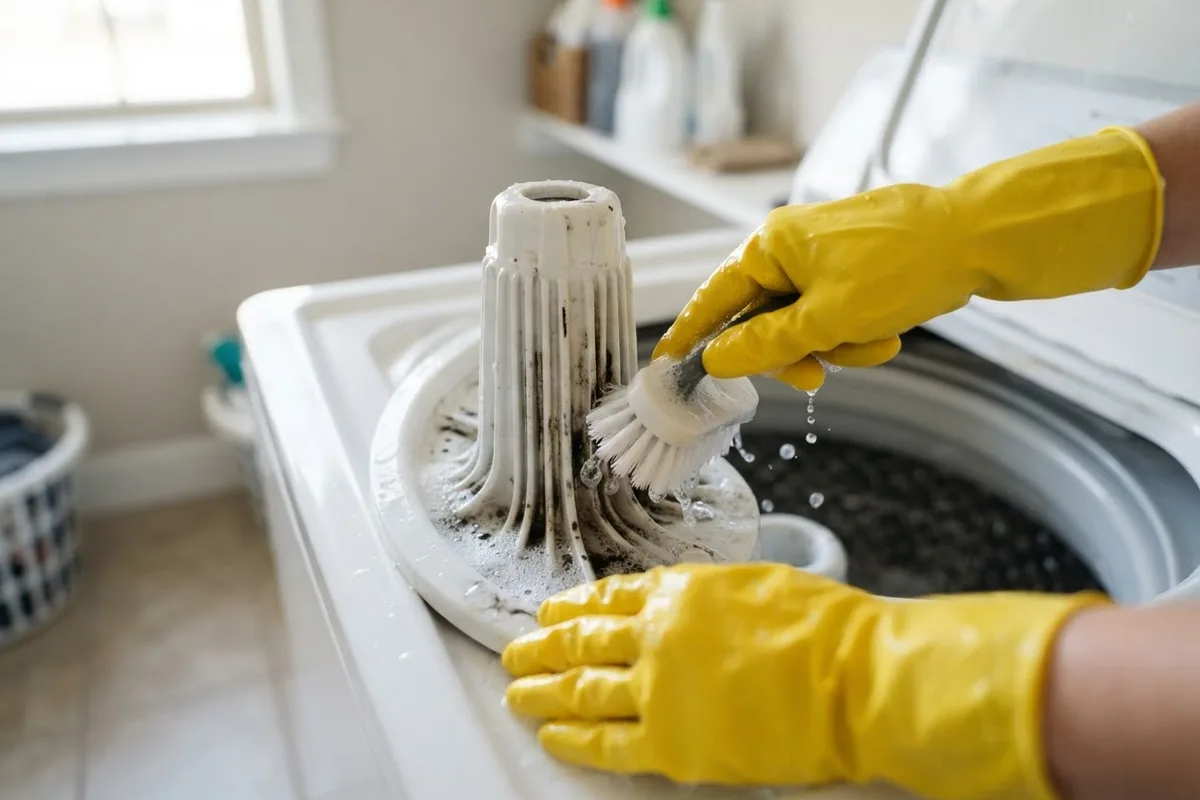
While the vinegar solution is soaking in the tub, use the warm, acidic water to tackle the areas where splashes and lint collect above the waterline. If your machine has a removable fabric softener cup on top of the center post, this is the number-one hiding spot for black mold and waxy residue.
- For safety, unplug the washing machine from the wall outlet before reaching inside or removing agitator components.
- Twist or pull the top cap off the center agitator and soak it in a sink of warm, soapy water for 10 minutes.
- Dip an old toothbrush into the vinegar water inside the drum and scrub underneath the top rim of the tub, around the bleach dispenser opening, and down the grooves of the agitator post.
- Wipe away loosened grime with a damp microfiber cloth, snap the clean agitator cap back into place, plug the washer back in, and unpause the cycle so the vinegar water drains and rinses.
3. Detail the Dispensers and Under the Lid
Modern high-efficiency top-loaders often feature slide-out detergent and softener drawers rather than a center post dispenser. Over time, liquid detergent forms a gummy layer in these trays that restricts water flow and triggers sour smells.
- Press the release tab inside the slide-out dispenser drawer and pull the entire tray out of the console.
- Rinse the drawer under hot tap water and scrub each compartment with dish soap and a bottle brush until all blue or pink residue disappears.
- Dip a microfiber cloth in warm vinegar water and wipe out the cavity where the drawer sits, checking the upper water nozzles for crusted detergent.
- Wipe down the underside of the washer lid, the glass viewing window, and the back hinges where dust, hair, and lint combine with humidity.
- Slide the clean dispenser drawer back into its tracks until it clicks.
4. Run a Baking Soda Refresh Cycle
Once the vinegar cycle has finished draining and spinning, follow up with a baking soda wash. Baking soda acts as a gentle deodorizer and mild abrasive that neutralizes lingering sour odors and lifts away any softened film left behind on the inner and outer tubs.
- Leave the washer drum empty and set the controls back to the hottest water setting and largest load size.
- Sprinkle 1 cup of baking soda directly into the bottom of the wash basket.
- Let the washer run through the complete wash, rinse, and spin cycle from start to finish without pausing.
- When the cycle ends, open the lid and use a dry microfiber towel to wipe the bottom and sides of the tub, picking up any gritty mineral flakes that were flushed loose from the outer tub.
5. Clear the Hidden Lint Trap and Drain Filter
While many newest top-load washers flush lint directly down the drainpipe, several models still feature a mesh lint trap along the top rim, inside the center agitator, or behind a small lower access panel. Keeping these screens clear prevents slow draining and protects the pump motor from overworking—problems that can otherwise lead to a noisy machine, similar to when you have to troubleshoot why a dryer is making a humming noise.
- Unplug the washing machine from the electrical outlet and turn off both the hot and cold water supply valves behind the unit.
- Check inside the top rim of the wash basket or pull up the center agitator screen to see if your model uses an upper mesh lint trap; slide it out and peel away wet lint.
- If your model has a lower front access door, place a shallow baking sheet and a thick towel on the floor, unclip the small drain hose to drain trapped water, and twist out the pump filter counterclockwise.
- Rinse the mesh screen under warm tap water, clear out coins or hairpins, reinstall the filter securely, and restore water and power.
6. Wipe the Hoses, Console, and Exterior Cabinet
Finishing your deep clean on the outside of the machine keeps the laundry room sanitary and gives you a chance to spot early wear on your water supply lines before a leak starts.
- Unplug the power cord before wiping around the control console or behind the cabinet.
- Dampen a cloth with a mix of warm water and a few drops of mild dish soap, wringing it out well so moisture never seeps behind buttons or digital touchpads.
- Wipe the control panel, lid top, and exterior side panels—and if you are on a cleaning roll, use the same gentle degreasing approach when learning how to clean electric stove drip pans in the kitchen.
- Reach behind the washer to dust off the hot and cold water inlet hoses, checking for any rust, bulges, or drips around the metal couplings before plugging the machine back in.
Top-Load Washer Cleaning Schedule & Supply Guide
| Task | Frequency | Cleaner Used | Estimated Time |
|---|---|---|---|
| Wipe under lid & top rim | Weekly | Warm water & microfiber cloth | 3 minutes |
| Clean detergent dispenser | Every 2–4 weeks | Dish soap & warm tap water | 10 minutes |
| Deep tub clean (vinegar & baking soda) | Every 30–45 days | 4 cups white vinegar + 1 cup baking soda | 90 minutes (mostly passive) |
| Inspect inlet hoses & lint/pump filter | Every 3–6 months | Brush, towel & warm water | 15 minutes |
When to Call a Pro
A thorough vinegar and baking soda cleaning cures most sour laundry odors and flaky residue, especially if you leave the washer lid open between loads so moisture can evaporate. However, if foul sewage smells return immediately, if black or brown greasy spots keep staining your clothes, or if water pools in the bottom of the drum after a cycle, the issue likely lies deeper than surface buildup.
Years of heavy fabric softener use can coat the hidden space between the inner spin basket and the outer tub in thick sludge that requires pulling the metal drum out to scrape clean. Likewise, grease spots or loud roaring during the spin cycle point to failing tub bearings or a worn transmission seal. Professional tub disassembly or bearing replacement typically ranges from $150 to $400 depending on your model and local labor rates (varies by area and model). Rather than wrestling with heavy specialty spanner wrenches or electrical testing on your own, True Appliance Repair can match you with a local washer and dryer pro to inspect the machine safely. You can also reach out through our contact page to get connected with an independent technician in your neighborhood.
FAQ
Can I use bleach instead of vinegar to clean my top-load washer?
Yes, liquid chlorine bleach is effective at killing mold spores, while white vinegar excels at dissolving hard water minerals and soap scum. If you want to use both, run a complete cycle with bleach first, let the washer drain and rinse fully, and only then run a separate cycle with vinegar—never mix bleach and vinegar in the same wash load.
Why is my top-load washer leaving brown or black flakes on clean clothes?
Those dark, papery flakes are usually layers of dried liquid fabric softener, body oils, and detergent scum peeling off the hidden outer tub wall. Running two back-to-back hot vinegar soak cycles and switching from liquid fabric softener to wool dryer balls will usually stop the flaking within a few washes.
How often should you deep clean a top-load washing machine?
For an average household running four to six loads of laundry per week, deep clean your top-load washer once a month. If you live in a hard-water area, wash heavily soiled work clothes, or regularly use cold water cycles, cleaning every three weeks will prevent buildup from hardening.
Should I leave the lid of my top-load washer open or closed between loads?
Always leave the lid open for at least a few hours after finishing your last load of the day. Trapping humid air inside a dark, warm drum creates an ideal environment for mildew and bacteria to grow overnight.