
A smooth glass cooktop brings a sleek, modern look to any kitchen, but boiled-over sauce and baked-on grease can quickly turn that polished surface into an unsightly eyesore. Standard wiping rarely removes heavy, carbonized rings, and using abrasive pads or harsh scouring powders risks permanently scratching the delicate glass-ceramic material. Fortunately, you do not need expensive commercial solvents to restore your cooking surface to a mirror-like shine. By using gentle household items and proper physical techniques, you can safely lift even the toughest carbon deposits.
Taking time to maintain your smooth top cooktop improves heat distribution across your cookware and protects the integrated heating elements below the surface. Before performing any hands-on maintenance, safety must come first. Always ensure all burners are turned off completely, allow the cooktop to cool to room temperature, and flip off the circuit breaker or unplug the appliance before applying liquids near control knobs or digital touch panels. Following these 5 step-by-step DIY cleaning methods will remove stubborn buildup without damaging your stove.
Let the Glass Surface Cool Completely
Attempting to clean a smooth cooktop while it remains hot or warm is one of the most common mistakes homeowners make. Applying cleaning liquids, damp cloths, or vinegar solutions to hot glass-ceramic can cause thermal shock, which risks cracking the cooktop glass. Additionally, sugary spills or plastic residue will melt deeper into the surface, while liquid cleaners can bake onto the hot cooktop instantly, creating an even tougher layer of discoloration.
- Turn off all burner switches and double-check that indicator lights show the surface is cool.
- For extra precaution, flip the dedicated breaker switch in your home electrical panel or unplug the range cord from the wall outlet.
- Allow the range top to sit undisturbed for at least 30 to 45 minutes after cooking.
- Gently touch the air above the surface with the back of your hand to verify no radiant heat remains.
Once the cooktop reaches room temperature, you can safely assess the burnt-on areas without risking burns or structural glass damage.
Apply a Non-Abrasive Baking Soda Paste
Baking soda (sodium bicarbonate) serves as a mild alkali that breaks down acidic grease and baked-on food residue without scratching glass-ceramic. Because its physical structure is softer than glass, it provides effective scrubbing power while remaining completely surface-safe.
- Sprinkle a generous layer of pure baking soda directly over the burnt spots and grease rings.
- Mix warm water with a few drops of mild dish soap in a spray bottle or bowl.
- Mist the baking soda lightly with the warm soapy water until a thick, paste-like consistency forms over the burnt areas.
- Soak a soft dish towel in warm water, wring out the excess so it is damp but not dripping, and lay it flat over the baking soda paste.
- Leave the wet towel over the paste for 15 to 20 minutes to allow the moisture and heat to soften hard carbon deposits.
If your meals frequently suffer from uneven heating or scorch marks during cooking, review our guide on Why Is My Oven Burning Food? 5 Causes & Easy Fixes to resolve heat distribution problems before your next baking session.
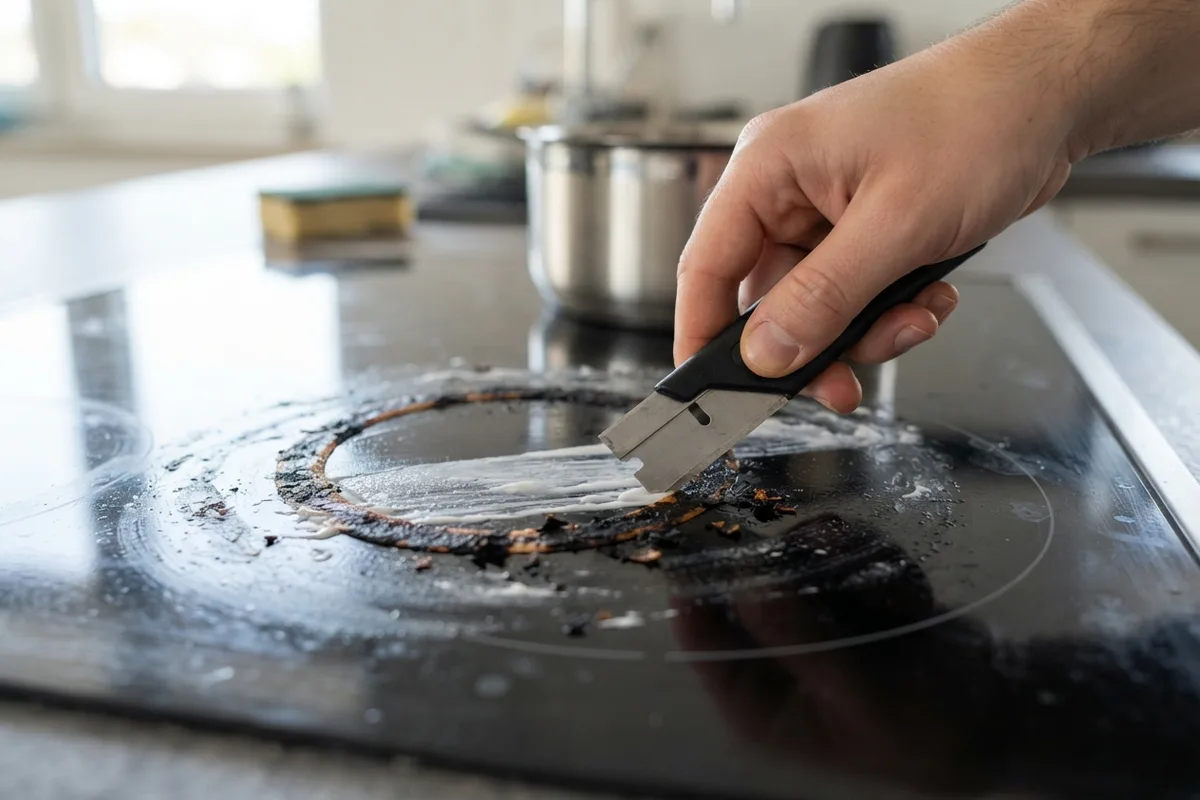
Lift Crusty Residue With a Razor Scraper
For thick, elevated carbon rings that remain after softening, a single-edge razor blade tool designed specifically for glass cooktops is the most effective instrument. When held at the correct angle, the blade glides under the burnt material, peeling it away cleanly without digging into the glass.
- Inspect your razor scraper to ensure the blade is fresh, straight, and entirely free of nicks or rust.
- Dampen the target spot with warm water or a light spray of white vinegar to provide lubrication.
- Hold the razor blade firmly at a 30 to 45-degree angle relative to the glass top.
- Apply smooth, even forward pressure to scrape under the crusty buildup, keeping the blade flat against the surface. Never use the corners of the blade or hold it vertically, as this can gouge the glass.
- Wipe away lifted food flakes with a damp microfiber cloth as you work.
Polish Away Streaks With White Vinegar
After scraping away heavy solid residue, a thin haze or cloudy film often remains. Distilled white vinegar contains mild acetic acid, which cuts through leftover grease oils, neutralizes remaining alkaline baking soda, and eliminates hard water spots.
- Fill a clean spray bottle with undiluted distilled white vinegar.
- Lightly mist the entire glass cooktop surface, paying special attention to areas where baking soda paste was applied.
- Allow the vinegar to fizz slightly as it reacts with leftover baking soda residue for 1 to 2 minutes.
- Wipe the surface using a clean, lint-free microfiber cloth in broad circular motions.
Regular vinegar rinsing prevents mineral scale from building up around radiant burner zones, ensuring maximum clarity and clean heat reflection.
Buff With a Microfiber Towel for Shine
The final step converts a clean cooktop into a streak-free feature piece in your kitchen. Dry buffing removes residual moisture and fills micro-grooves, restoring the glass surface gloss.
- Take a clean, dry microfiber towel or a dry cooktop polishing pad.
- Beginning in one corner, buff the glass using firm, circular overlapping patterns.
- Turn the towel frequently to use dry sections as you move across the cooktop.
- Inspect the surface from a side angle under bright overhead light to verify all streaks, water spots, and haze are fully gone.
| Cleaning Method | Best For | Recommended Tools | Scratch Risk |
|---|---|---|---|
| Baking Soda Paste | Grease films & general carbon | Baking soda, damp towel | Very Low |
| Razor Scraper | Thick, burnt-on crusty rings | Cooktop razor tool (30° angle) | Low (if angled correctly) |
| White Vinegar Spray | Water spots & mineral haze | Distilled vinegar, microfiber | Zero |
| Commercial Cream | Polishing & protective coating | Specialized cooktop polish | Very Low |
When to Call a Pro
While surface stains and carbonized grease are straightforward DIY tasks, physical damage or internal electrical issues require professional attention. If you discover deep scratches, deep cracks across the glass panel, or notice that a burner fails to heat evenly after cleaning, stop using the appliance immediately. Operating a range with cracked glass exposes internal wiring to liquid spills, creating a severe electrical safety hazard. Performing routine checks listed in our guide on 7 Home Appliance Safety Checks Every Homeowner Should Do can help you identify warning signs early.
For major cooktop structural repairs, sealed system gas burner repairs, or internal wiring replacements, always rely on trained specialists. Repair costs for glass cooktop replacement usually range between $250 and $600 depending on the brand and model, whereas replacing internal heating elements typically runs from $150 to $350. If your range requires expert evaluation, True Appliance Repair can match you with a local appliance pro to diagnose and repair your unit safely.
FAQ
Can I use steel wool or abrasive sponges on a glass stove top?
No, you should never use steel wool, abrasive scouring pads, or harsh powder cleansers on a smooth glass cooktop. These aggressive materials leave permanent scratches that dull the surface finish and trap grease, making future cleaning much harder.
Why does my glass cooktop have white cloudy spots after cleaning?
White cloudy spots are usually caused by hard water mineral deposits or burnt-on sugar residues that have etched into the surface layer. Spraying distilled white vinegar and gently rubbing with a soft microfiber cloth or specialized cooktop polishing cream will usually dissolve these mineral films.
How often should I deep clean my smooth cooktop surface?
Perform a basic wipe-down with warm soapy water or vinegar after every cooking session once the surface cools down. Deep cleaning with baking soda paste or a razor scraper should be done every two to four weeks, or whenever boiled-over spills bake onto the burners.
What should I do if plastic or foil melts onto my glass stove top?
If plastic packaging or aluminum foil melts onto the glass, turn off the burner immediately. While the surface is still slightly warm (wear protective heat-resistant gloves), carefully lift the softened material using a wooden spatula or cooktop razor blade held at a low angle. Never let melted plastic cool completely onto the glass, as it can pull off shards of glass ceramic when removed. If internal wiring or power controls are affected during a cooking mishap, True Appliance Repair can connect you with an experienced local technician in your area.