
Heavy cast iron grates are built to handle stockpots and high heat, but they also trap splattered oil, boiled-over pasta water, and carbonized food faster than any other part of your gas range. Left unchecked, that sticky buildup smokes when you cook, harbors burnt odors, and makes your whole kitchen look dingy right before holiday hosting season. By following a safe soaking, scrubbing, and seasoning routine, you can strip away stubborn grease and restore a smooth, rust-free finish using pantry staples.
Safety First: Always turn all burner knobs to the OFF position and wait until the grates are completely cool to the touch before lifting them. If you plan to wipe around the igniters or gas ports while the grates are off, unplug the range or shut off the gas supply valve first. Never run cast iron grates through the dishwasher, as harsh detergents and prolonged wet cycles strip the protective finish and cause rapid rusting.
1. Cool and Dry-Brush Loose Food Debris
Before introducing water or cleaner, knock off any flaky carbon, charred crumbs, or dry spills. Starting with a dry brush keeps your soaking water cleaner and lets your degreaser penetrate the sticky oil layer directly.
- Verify every burner is off and the cast iron has cooled to room temperature—running hot cast iron under cool tap water can warp or crack the metal.
- Lift the grates straight up off the cooktop alignment pins so you do not scratch the surrounding porcelain or stainless steel surface.
- Hold each grate over a trash can or a newspaper-lined counter and scrub all four sides with a stiff nylon bristle brush or dry scrub pad.
- Pay special attention to the underside and the inner corners where the grate fingers meet, as boiled-over sauces often collect underneath out of sight.
- While the grates are off, take a moment to check your burner caps and ports; if flames have been looking uneven, you can follow our guide on how to clean gas stove burners in 6 easy DIY steps while the cooktop is already bare.
2. Soak Grates in Warm Dish Soap and Vinegar
A warm degreasing bath softens polymerized cooking oil so you do not have to spend an hour scraping with elbow grease. Because many three-piece or continuous grates are too large for a standard kitchen sink, a plastic storage tub or laundry sink works best.
- Line the bottom of your sink or a large plastic tub with an old bath towel to prevent the heavy cast iron from chipping your sink basin.
- Fill the basin with very warm water—enough to submerge the grates completely—and add two tablespoons of grease-cutting liquid dish soap plus half a cup of white vinegar.
- Place the grates on the towel and let them soak for 20 to 30 minutes. Do not soak bare or unenameled cast iron longer than 30 minutes, or surface rust can begin forming.
- After soaking, lift one grate at a time and wipe away the softened grease with a non-scratch sponge.
- If your household also has an electric coil unit in a secondary kitchen or rental, the soaking routine is similar to cleaning electric stove drip pans using baking soda and dish soap.
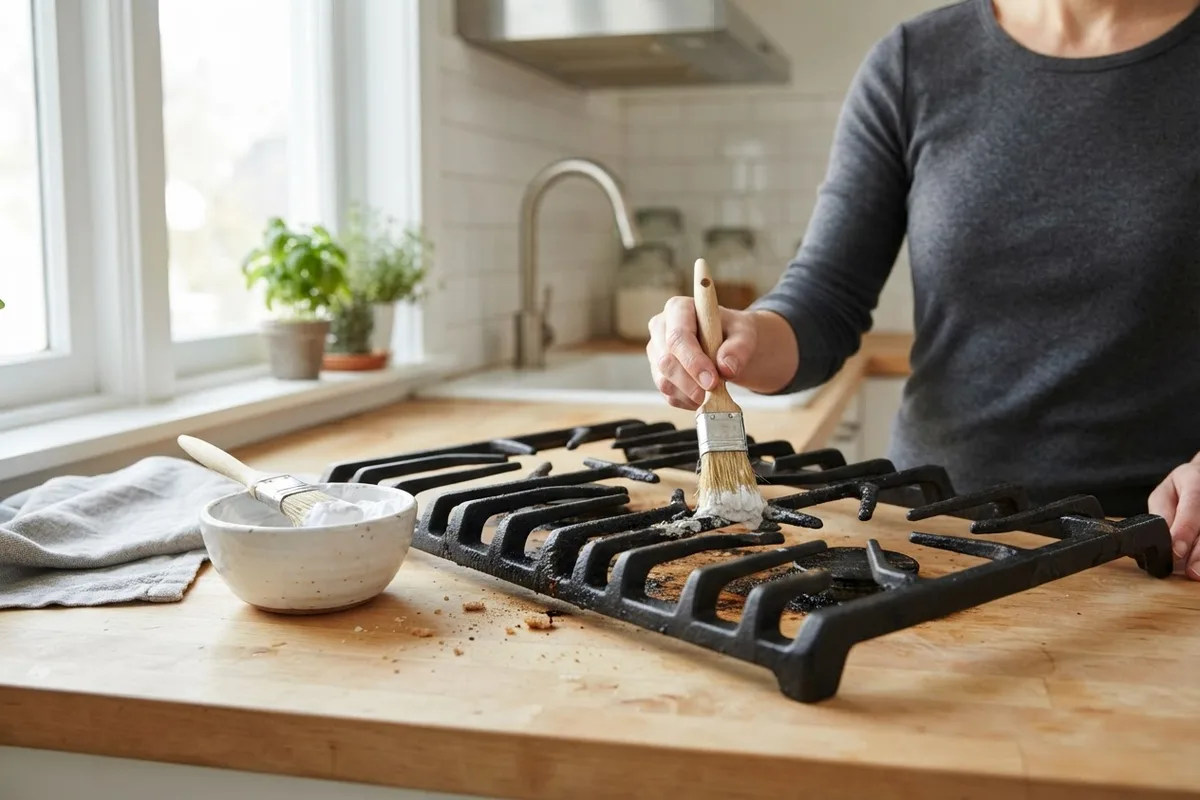
3. Scrub Baked-On Grease with Baking Soda Paste
After the initial soak, you will likely still see dark, tacky patches or shiny black carbon rings near the tips of the grates where the burner flames hit directly. Baking soda acts as a mild abrasive that cuts through polymerized grease without gouging matte porcelain or bare iron.
- Mix three parts baking soda with one part warm water (plus a few drops of dish soap) in a small bowl until it forms a thick, spreadable paste the consistency of frosting.
- Coat the stubborn grease spots generously with the paste using your fingers or an old toothbrush, working it into textured cast iron crevices.
- Let the paste sit on the grates for 15 to 20 minutes so the alkaline baking soda can break down the acidic, burnt-on food residue.
- Scrub the coated areas firmly in small circular motions using a stiff nylon brush or a blue non-scratch scouring pad.
- For rock-hard carbon blobs that refuse to budge, hold a plastic pan scraper or a wooden spatula at a 45-degree angle and push the buildup off. Avoid metal putty knives or steel wool on porcelain-coated cast iron, as they leave permanent micro-scratches.
4. Steam Clean Tough Carbon in a Sealed Bag
If years of baked-on grease laugh at baking soda and dish soap, you have two ways to escalate without damaging the metal: an overnight vinegar-and-baking-soda steam bag for indoor comfort, or a sealed household ammonia bag in a well-ventilated garage for extreme carbon buildup.
- For the low-odor kitchen method: Spray the grates thoroughly with white vinegar, coat them with a layer of dry baking soda so it fizzes, and slide each grate into a heavy-duty contractor trash bag. Tie the bag shut and let it sit for 4 to 8 hours.
- For extreme buildup (outdoor/garage only): Place dry grates inside a heavy-duty trash bag outdoors, pour in 1/4 cup of household ammonia (it does not need to touch the grates; the fumes do the work), and seal the bag tightly overnight. Never mix ammonia with bleach or any other cleaner.
- Put on rubber gloves before opening the bag, keeping your face turned away from any escaping vapors.
- Remove the grates and immediately scrub them with warm soapy water and a nylon brush—the carbonized grease will slide off like soft mud.
- Rinse every surface thoroughly under warm running water until no slick cleaner residue remains.
Cast Iron Grate Cleaning Methods Compared
| Cleaning Method | Best For | Soak / Dwell Time | Safe for Matte Porcelain? | Effort Level |
|---|---|---|---|---|
| Warm Dish Soap & Vinegar Soak | Weekly splatters and light oil film | 20–30 minutes | Yes | Low |
| Baking Soda Paste & Nylon Brush | Tacky grease and moderate burnt spots | 15–20 minutes | Yes | Medium |
| Sealed Bag with Vinegar & Baking Soda | Heavy, multi-month carbon buildup | 4–8 hours | Yes | Low |
| Sealed Bag with Ammonia Fumes (Outdoors) | Years of rock-hard polymerized grease | 8–12 hours | Yes (rinse immediately) | Minimal scrubbing |
| Dishwasher or Self-Clean Oven Cycle | Not recommended (causes rust/cracking) | N/A | No | High risk of damage |
5. Dry Thoroughly Over Low Burner Heat
Air-drying is the enemy of cast iron. Even grates coated in matte porcelain enamel develop tiny pinholes and chipped edges over years of sliding heavy skillets across them, allowing trapped moisture to bloom into orange rust spots within hours.
- Immediately after the final warm-water rinse, wipe each grate down with a clean microfiber towel or lint-free kitchen cloth to remove standing water.
- Inspect the recessed pockets on the underside of the grate feet and blot them dry with a paper towel.
- Replace the burner caps on your clean, dry stove and set the grates back in their proper alignment slots.
- Turn the stove burners to low for 3 to 5 minutes (or place the grates inside a 200°F oven for 10 minutes) to evaporate every trace of hidden moisture from the porous metal.
- Turn off the heat and let the grates remain slightly warm if you have unenameled cast iron that needs oil seasoning in the next step.
6. Season Unenameled Cast Iron to Prevent Rust
Before reaching for cooking oil, figure out which type of cast iron you own. Most modern gas ranges use matte porcelain-enameled cast iron, which looks like raw iron but has a dull, baked-on glass coating that does not require seasoning. However, if you have raw/unenameled cast iron grates—or older enameled grates with chipped corners exposing bare gray metal—a microscopically thin layer of high-heat oil prevents rust and keeps future spills from sticking.
- Wait until the dried grates are warm (not hot), or preheat your oven to 350°F.
- Pour half a teaspoon of high-smoke-point oil—such as refined avocado oil, canola oil, or grapeseed oil—onto a folded lint-free cloth or paper towel. Avoid olive oil, butter, or bacon fat, which smoke at low temperatures and turn sticky.
- Rub a whisper-thin coat of oil over bare cast iron surfaces or chipped spots, then immediately buff the grate with a second dry cloth until it looks completely dry and matte. Leaving thick puddles of oil will create the exact gummy residue you just scrubbed off.
- If seasoning bare cast iron grates from scratch, bake them in your oven at 350°F for 45 minutes with the kitchen exhaust fan running, then turn off the oven and let them cool inside.
- Wipe your grates down once a week with a warm, damp microfiber cloth after cooking so grease never gets the chance to bake on in layers.
When to Call a Pro
Cleaning cast iron grates is a straightforward afternoon DIY job, and even severely rusted or cracked grates can simply be replaced by ordering the manufacturer part number stamped on the underside (replacement grate sets typically range from $80 to $250 depending on the range brand and configuration). However, while you have the grates lifted off the stove, you might spot deeper issues underneath that go beyond surface cleaning—such as cracked ceramic igniters, corroded gas burner heads that crumble when brushed, continuous clicking after a burner lights, or a persistent gas odor.
Never attempt to disassemble gas valves, internal manifold lines, or high-voltage ignition modules yourself. If your burners refuse to light evenly after cleaning or you suspect a gas or electrical fault, shut off the appliance and schedule professional oven and stove repair. True Appliance Repair can connect you with an experienced local appliance pro to diagnose and fix your range safely—just reach out through our contact page to get matched in your area.
FAQ
Can I put cast iron stove grates in the dishwasher?
No, never wash cast iron stove grates in the dishwasher. Dishwasher detergents contain harsh abrasives and enzymes that dull matte porcelain finishes and strip the protective oil layer from bare cast iron, while the long, humid drying cycle causes immediate surface rust that can flake onto your cooktop.
Can I put my stove grates in the oven during the self-clean cycle?
You should never place cast iron grates inside a self-cleaning oven. Self-clean cycles reach temperatures between 800°F and 900°F, which can warp heavy cast iron, crack matte porcelain enamel coatings, and permanently discolor the metal.
How do I tell if my cast iron grates are enameled or bare cast iron?
Check your range owner's manual first, or inspect the underside of the grate feet. Matte porcelain-enameled grates have a uniform, slightly smooth satin finish and will not rust when a drop of water sits on an unchipped area for an hour; bare cast iron has a rougher, porous texture and develops orange flash rust quickly if left wet.
How do I remove rust from neglected cast iron stove grates?
Scrub the rusted areas with equal parts white vinegar and water using a fine steel wool pad (on bare iron only) or a stiff nylon brush until the orange oxidation disappears. Rinse with warm water, dry immediately over low burner heat for 5 minutes, and rub a thin coat of canola or avocado oil onto the exposed metal to seal out moisture.