
Oven racks endure high temperatures, dripped cheese, and splattering marinades every time you bake. Over time, these spills turn into thick layers of carbonized grease that refuse to budge with standard dish soap. Many homeowners put off cleaning them because scrubbing steel grates inside a cramped kitchen sink is awkward and messy.
Fortunately, you do not need harsh chemical fumes to get your oven racks looking brand new again. By using simple household items like baking soda, dish soap, or dishwasher tablets, you can dissolve burnt residue with minimal effort. Below are five proven DIY methods to clean oven racks safely and efficiently.
Cool the Oven and Prep Your Workspace
Before starting any cleaning process, ensure your appliance is safe to handle. Never attempt to remove or scrub racks while the oven is warm or operating.
- Let the oven cool completely: Allow several hours after cooking before opening the door to touch the racks.
- Disconnect power for safety: If you plan to clean near igniters, elements, or control switches inside the cavity, unplug the oven or turn off its dedicated breaker at the main electrical panel.
- Protect your surfaces: Lay down old bath towels on your countertop, sink, or bathtub to prevent the heavy metal edges of the racks from scratching porcelain, acrylic, or stone surfaces.
- Inspect for existing damage: Check if your racks are standard chrome, stainless steel, or porcelain-coated. Most DIY methods work on standard metal racks, but specialized coatings require gentle treatment.
Taking five minutes to set up your work area prevents accidental scratches on your fixtures and keeps messy water off your kitchen floor.
Soak Racks in the Bathtub with Dish Soap
One of the most effortless ways to clean oven racks is giving them a long bath. The combination of hot water and grease-cutting liquid dish soap softens baked-on sludge overnight so it wipes away easily.
- Line your tub: Place two or three old bath towels along the bottom of your bathtub to shield the enamel or acrylic finish from metal scratches.
- Arrange the racks: Lay the oven racks flat on top of the towels inside the tub.
- Fill with hot water: Run hot tap water until the racks are fully submerged by at least an inch or two.
- Add dish soap or laundry detergent: Pour in 1/2 cup of grease-cutting liquid dish soap or powdered laundry detergent. Swish the water to distribute the soap evenly.
- Soak overnight: Allow the racks to soak for 8 to 12 hours. The detergent breaks the chemical bonds of the burnt carbon.
- Wipe and rinse: In the morning, use a soft microfiber cloth or non-scratch sponge to wipe away the loosened debris. Rinse thoroughly with clean water and dry with a microfiber towel before returning them to the appliance.
Use the Baking Soda and Vinegar Trash Bag Method
If you prefer not to use your bathtub, the heavy-duty trash bag method creates a self-contained cleaning chamber right on your patio or utility room floor.
- Place racks in a bag: Slip your oven racks into a large, heavy-duty contractor trash bag.
- Apply baking soda: Sprinkle 1 cup of baking soda liberally over both sides of the metal grates.
- Add white vinegar: Carefully pour 1 cup of distilled white vinegar into the bag. The mixture will foam actively, generating carbon dioxide bubbles that lift stuck-on food particles.
- Seal tightly: Tie off the trash bag securely to trap the moisture and expanding gases inside.
- Let it sit: Lay the bag flat in a warm spot indoors or outdoors for 4 to 6 hours.
- Rinse thoroughly: Remove the racks from the bag over a laundry tub or garden hose. Wipe down the bars with a scrubbing sponge and rinse away all residue.
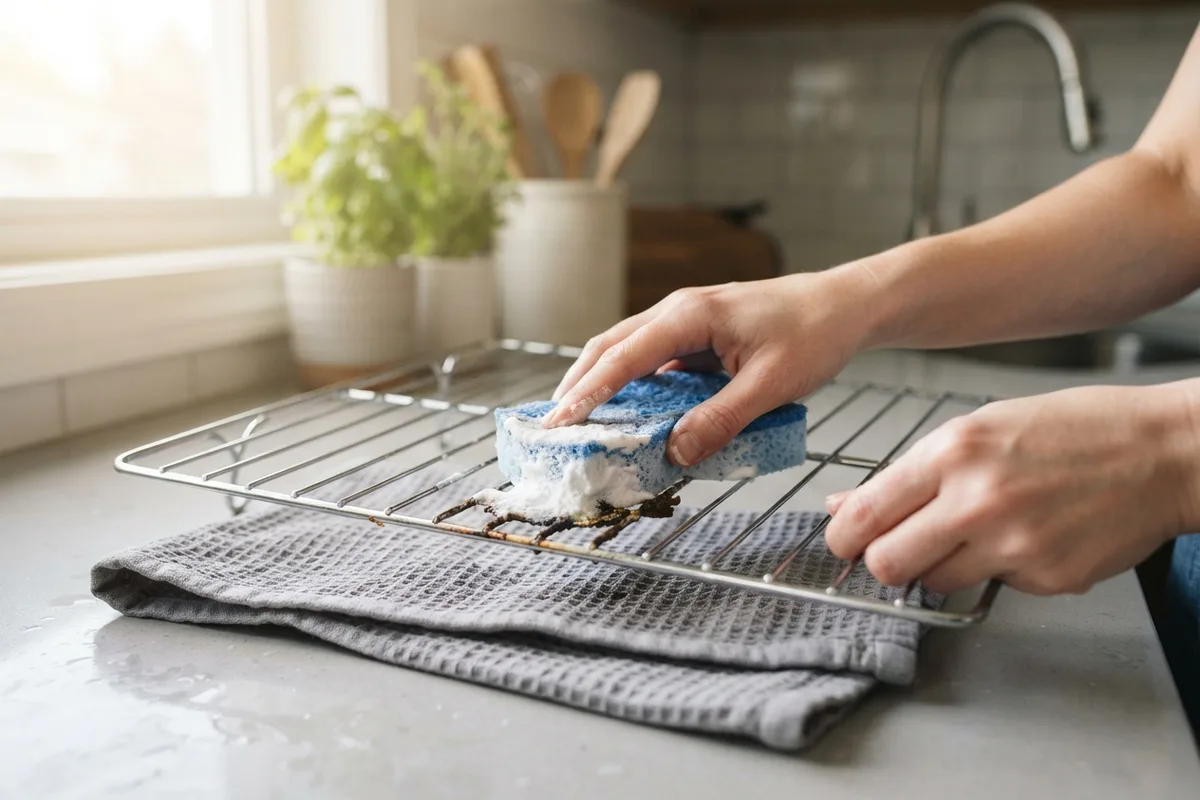
Scrub Baked-On Grease with a Dishwasher Tablet
Pressed dishwasher detergent tablets are concentrated cleaning powerhouses designed to dissolve dried food and grease without scratching metal surfaces.
- Select the right tablet: Use a basic hard-pressed powder dishwasher tablet rather than a liquid gel pod.
- Dampen the tablet: Dip one end of the dishwasher tablet in warm water until it becomes slightly soft.
- Scrub directly on burnt spots: Use the flat side of the wet tablet like a scrubbing block directly over burnt-on grease lines along the rack bars.
- Re-wet as needed: Dip the tablet back into warm water as it dissolves while scrubbing across individual rungs.
- Rinse and wipe: Once the grime is lifted, rinse the rack under warm running water and dry completely.
This localized spot-cleaning method is ideal if your racks only have isolated burn marks rather than total carbon buildup.
Polish Stubborn Stains with Bar Keepers Friend
For localized, stubborn brown streaks that survived soaking, oxalic-acid based cleaners like Bar Keepers Friend provide targeted polishing power without etching metal.
- Create a paste: Mix 3 tablespoons of powdered cleanser with a few drops of water in a small bowl until it forms a thick paste.
- Apply to metal bars: Spread the paste over scorched sections of the oven rack using an old toothbrush or a non-scratch scrub pad.
- Wait two minutes: Let the oxalic acid break down the oxidized grease deposits.
- Gently scrub along the grain: Work the brush or pad back and forth along the length of each wire rung.
- Rinse and dry thoroughly: Flush away all chemical residue with fresh water and dry the rack completely to prevent water spotting.
Adopt Preventive Habits to Keep Racks Clean
Keeping your oven grates clean requires far less energy when you prevent grease from baking onto the metal in the first place. Incorporating small habits into your cooking routine keeps your appliance running efficiently and reduces the need for deep cleanings.
- Use baking sheets under casserole dishes: Place a larger rimmed baking sheet on the lower rack beneath bubbling dishes or pies to catch drips before they reach the heat source.
- Avoid foil on the oven bottom: Never line the bottom floor of your oven with aluminum foil, as it reflects heat improperly and can damage heating elements.
- Wipe spills after cooling: Once your oven cools after a spill, wipe up fresh grease drops immediately with a damp cloth before your next baking session.
- Include racks in routine care: Adding rack inspections to your 6 monthly appliance maintenance tasks to prevent repairs ensures grime never accumulates into thick carbon crusts.
| Cleaning Method | Best For | Total Time Required | Supplies Needed |
|---|---|---|---|
| Bathtub Soak | Heavy, full-rack grease buildup | 8–12 hours (Mostly overnight) | Bath towels, liquid dish soap, warm water |
| Trash Bag & Vinegar | Eco-friendly deep cleaning without tub access | 4–6 hours | Heavy-duty trash bag, baking soda, white vinegar |
| Dishwasher Tablet | Medium buildup & spot treatment | 15–30 minutes | Hard-pressed dishwasher tablet, warm water |
| Bar Keepers Friend | Scorched lines & persistent brown spots | 10–20 minutes | Cleanser powder, water, non-scratch scrub pad |
When to Call a Pro
While cleaning racks is a simple DIY project, working around your range can sometimes reveal underlying appliance issues. If you notice structural corrosion, bent frame supports that catch on oven walls, or damaged rack glides, replacement parts may be necessary.
Additionally, if you encounter electrical sparking, non-functioning heating elements, or gas ignition failures while servicing your cooking range, stop immediately. Shut off the power breaker or gas supply valve to the unit. For safety concerns involving gas lines or internal wiring, True Appliance Repair can match you with a local appliance pro to inspect and fix the underlying issue safely. If your unit is displaying broader operational failures, review 7 household appliance warning signs you should never ignore to determine your best next step.
When basic routine maintenance reveals complex electrical or mechanical faults, True Appliance Repair is always ready to connect you with experienced technicians in your area.
FAQ
Can I leave oven racks in during a self-cleaning cycle?
It is generally recommended to remove metal racks before running your oven's high-heat self-cleaning cycle. The extreme temperatures (often reaching 900°F) can warp the grates, strip off protective chrome finishes, and destroy the smooth glide coatings, making them hard to slide in and out.
How often should oven racks be cleaned?
For average home cooks, deep cleaning oven racks twice a year is sufficient. However, if you bake frequently or experience a major food spill, addressing the racks immediately prevents carbonized grease from building up and causing smoke during future meals.
Why are my oven racks sticking after being cleaned?
Stripping away baked-on grease also removes light oils that help metal grates slide smoothly along the interior tracks. To fix sticking racks, apply a few drops of food-grade mineral oil or vegetable oil to a paper towel and wipe down the side rails of each rack.