
An overstuffed fridge traps warm pockets around your groceries, forces the compressor to run nonstop, and causes milk and produce to spoil days early. Knowing how to organize a refrigerator for better cooling keeps every shelf at a steady temperature without cranking the thermostat down. Follow these six simple layout rules to boost cold airflow, reduce food waste, and protect your appliance.
1. Keep Cold Air Vents Completely Clear
Most refrigerators chill the fresh food compartment by pushing cold air from the freezer through small damper vents along the back wall. When tall cartons, wide platters, or leftover pots sit flush against those vents, chilled air gets trapped in the back while the front shelves warm up. Blocked vents can even freeze nearby lettuce or beverages solid.
- Locate the louvered air vents along the upper rear wall and behind the top shelf.
- Leave at least two inches of open breathing room in front of every vent opening.
- Place tall items like juice pitchers toward the front or side edges rather than dead center against the back panel.
- Check the freezer vents at the same time so air circulates freely before entering the fridge section.
If frost clogs a vent, unplug the refrigerator before wiping the grille dry, and never chip ice with a knife near sealed cooling lines.
2. Store Milk and Meat on the Bottom Shelf
Cold air sinks naturally, making the lower rear shelf the coldest zone in your refrigerator. Storing delicate items like raw meat, poultry, fish, and milk on upper shelves or in door bins exposes them to warmer air every time someone opens the door. Keeping raw proteins on the bottom also prevents accidental drips from contaminating ready-to-eat foods below.
- Dedicate the lowest glass shelf toward the back to raw meat, seafood, and dairy cartons.
- Set raw packages inside a shallow, washable tray or lipped bin to catch condensation or package leaks.
- Reserve upper shelves for cooked leftovers, yogurt, eggs in their original carton, and grab-and-go snacks.
- Place an appliance thermometer in a glass of water on the bottom shelf to verify it holds between 35°F and 38°F.
Keeping this cold zone organized also cuts down on how long you hold the door open searching for ingredients.
3. Keep Door Bins for Condiments Only
Refrigerator door shelves experience the biggest temperature swings in the kitchen because they swing into warm room air dozens of times a day. Even models with dedicated door-cooling vents stay several degrees warmer at the door than on interior shelves. Putting milk or eggs in the door speeds up spoilage and forces your cooling system to work harder after every open-and-close cycle.
- Move milk, creamer, and eggs out of the door bins and onto a middle or lower interior shelf.
- Fill door shelves with high-vinegar or high-salt condiments like ketchup, mustard, hot sauce, pickles, and salad dressings.
- Balance heavy glass jars evenly across the bins so door hinges stay aligned and the rubber gasket seals tightly.
- Wipe food crumbs off the door seal weekly so warm kitchen air cannot sneak past the edges.
4. Set Crisper Humidity Drawers Correctly
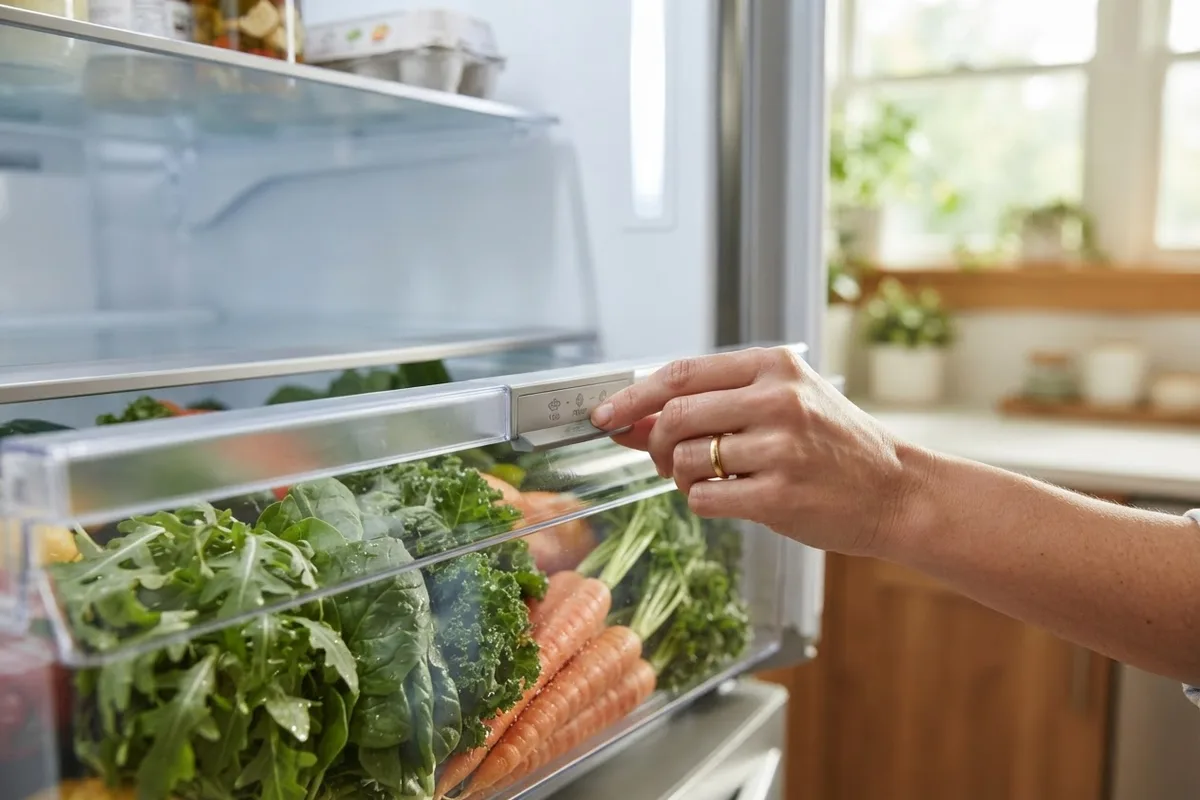
Crisper drawers regulate moisture loss rather than simply holding extra bags of groceries. Packing drawers past capacity crushes delicate greens and stops cool air from flowing around the drawer frames. Setting the humidity sliders properly extends produce life and keeps strong food odors from drifting onto nearby shelves.
- Set one drawer slider to high humidity (closed vent) for leafy greens, herbs, broccoli, carrots, and cucumbers that wilt quickly.
- Set the second drawer slider to low humidity (open vent) for ethylene-producing fruits like apples, pears, avocados, and melons.
- Keep drawers roughly two-thirds full so chilled air can circulate between items without bruising produce.
- Line drawer bottoms with a dry paper towel to absorb extra moisture and catch loose dirt.
If standing water pools beneath your drawers, check these home leak prevention checks to clear a clogged defrost drain.
5. Leave Space Around Dishes and Leftovers
Overfilling shelves during big grocery runs or holiday meal prep turns your refrigerator into an insulated box where warm pockets linger for hours. Cold air needs open vertical and horizontal pathways between containers to pull heat out of freshly stored groceries. Putting steaming cookware straight from the stove into the fridge also spikes internal temperatures and stresses the compressor.
- Cool hot soups, roasts, and casseroles in shallow containers on the counter for up to an hour before refrigerating, never leaving perishables out past two hours.
- Leave a finger's width of space between storage containers instead of pressing bowls edge to edge.
- Use clear, stackable rectangular containers instead of round bowls to keep neat airflow channels on crowded shelves.
- Skip solid foil or plastic shelf liners, which block interior light and stop cold air from circulating.
6. Clean Shelves and Check Temps Monthly
Sticky spills, forgotten leftovers, and dusty shelves hide airflow blockages and force you to stand with the door propped open while searching for items. A quick monthly reset keeps every zone performing smoothly and prevents lingering smells from spreading into butter or baked goods.
- Unplug the refrigerator or switch off its dedicated breaker before removing shelves near interior light housings, control panels, or fan grilles.
- Wash removable bins and glass shelves with warm water and mild dish soap, letting cold glass reach room temperature first so warm water will not crack it.
- Follow this step-by-step guide to deep cleaning a refrigerator if sticky drain troughs or stubborn odors remain.
- Restore power and confirm with a thermometer that the fridge reads 37°F and the freezer reads 0°F.
Refrigerator Cooling Zone Quick-Reference
Use this quick-reference chart to match everyday groceries with the temperature zone that keeps them fresh longest without blocking internal vents.
| Fridge Zone | Typical Temp | Best Foods to Store | Foods to Avoid |
|---|---|---|---|
| Top & Upper Shelves | 38°F – 40°F | Leftovers, drinks, deli meats, yogurt | Raw poultry, fresh milk |
| Lower & Back Shelves | 35°F – 37°F | Milk, cream, eggs, raw meat on trays | Delicate herbs, berries |
| High-Humidity Crisper | 36°F – 38°F | Lettuce, spinach, celery, broccoli | Apples, pears, melons |
| Low-Humidity Crisper | 36°F – 38°F | Apples, pears, stone fruit, avocados | Leafy greens, fresh herbs |
| Door Bins | 40°F – 45°F | Condiments, juice, mustard, pickles | Milk, eggs, raw meat |
| Freezer Compartment | 0°F | Frozen meats, ice, batch meals | Unsealed liquids near vents |
Checking this layout before unloading groceries prevents warm spots and keeps air paths open across every shelf.
When to Call a Pro
Smart organization fixes uneven cooling caused by blocked vents or overloaded shelves, but it cannot compensate for a failing mechanical part. If your refrigerator still runs nonstop, stays warmer than 40°F after clearing every vent, or builds thick frost across the back freezer wall, stop troubleshooting and schedule a hands-on inspection.
Never attempt DIY repairs involving sealed refrigerant lines, compressor wiring, or your home's electrical panel—those components require specialized recovery tools and safety training. Typical US refrigerator repair visits range from $150 to $450 depending on the failed part, though exact costs vary by area and model.
When rearranging shelves and basic cleaning do not restore steady cooling, True Appliance Repair can connect you with an independent local refrigerator repair service. A trained technician can safely test evaporator fans, defrost heaters, and thermistors.
FAQ
What temperature should my refrigerator be set to?
Keep your fresh food compartment at 37°F (always at or below 40°F) and your freezer at 0°F. Turning the dial much colder can freeze delicate produce on upper shelves while wasting electricity. Wait 24 hours after any dial change before checking your thermometer again.
Should a refrigerator be kept full or mostly empty?
Aim for roughly two-thirds to three-quarters full for the steadiest cooling performance. Chilled items hold thermal mass when the door opens, so a nearly empty fridge actually warms up faster—just avoid packing food flush against rear vents or side walls.
Why is the back of my refrigerator freezing food?
Food freezing near the rear wall usually happens when items block the cold air damper vent or sit too close to the air return opening. Moving milk, lettuce, and eggs forward by two inches and confirming the thermostat reads near 37°F resolves most accidental freezing.
How can I cool down a crowded fridge faster after shopping?
Spread room-temperature drinks and fresh groceries across multiple shelves instead of stacking them in one warm cluster. If your refrigerator has a quick-cool setting, switch it on for a few hours so the fan clears incoming heat evenly.