
White chalky crust, cloudy glassware, stiff laundry, and sluggish water dispensers all point to one common household culprit: hard water. When calcium and magnesium minerals dissolve in your water supply, they bake onto heating elements, clog delicate valves, and restrict water flow across every water-using machine in your home.
Left untreated, mineral scale forces motors to overwork, causes heating elements to fail prematurely, and leads to stubborn clogs that mimic major mechanical breakdowns. Fortunately, you can safely dissolve mineral deposits using common, food-safe pantry staples without damaging your equipment.
Always unplug appliances and turn off their dedicated water supply valves before disconnecting water lines or inspecting internal components.
1. Descale the Dishwasher Interior and Spray Jets
Dishwashers suffer quickly from mineral scale because high wash temperatures cause dissolved minerals to precipitate onto interior surfaces and heating elements.
- Inspect and clean the spray arms: Unclip or unscrew the upper and lower spray arms. Use a wooden toothpick to dislodge mineral crust clogging the tiny spray nozzles. Rinse them under warm running water.
- Run a high-heat vinegar cycle: Empty the dishwasher completely. Place a dishwasher-safe glass bowl containing two cups of plain distilled white vinegar upright on the top rack. Run a standard cycle on the hottest wash setting. The acid gently dissolves limescale across the tub walls and heating element.
- Perform a baking soda rinse: Once the vinegar cycle finishes, sprinkle one cup of baking soda across the tub floor and run a short, hot rinse cycle to neutralize leftover acids and lift surface grime.
If you notice cloudy etching that refuses to wipe away after descaling, review our guide on why your dishwasher rack is rusting to ensure mineral damage has not compromised the vinyl protective coating.
2. Flush the Washing Machine Tub and Inlet Screens
Hard water prevents laundry detergent from dissolving properly, creating a gummy curd that coats the outer wash tub and traps lint. Additionally, scale clogs the mesh inlet screens where water hoses enter the machine.
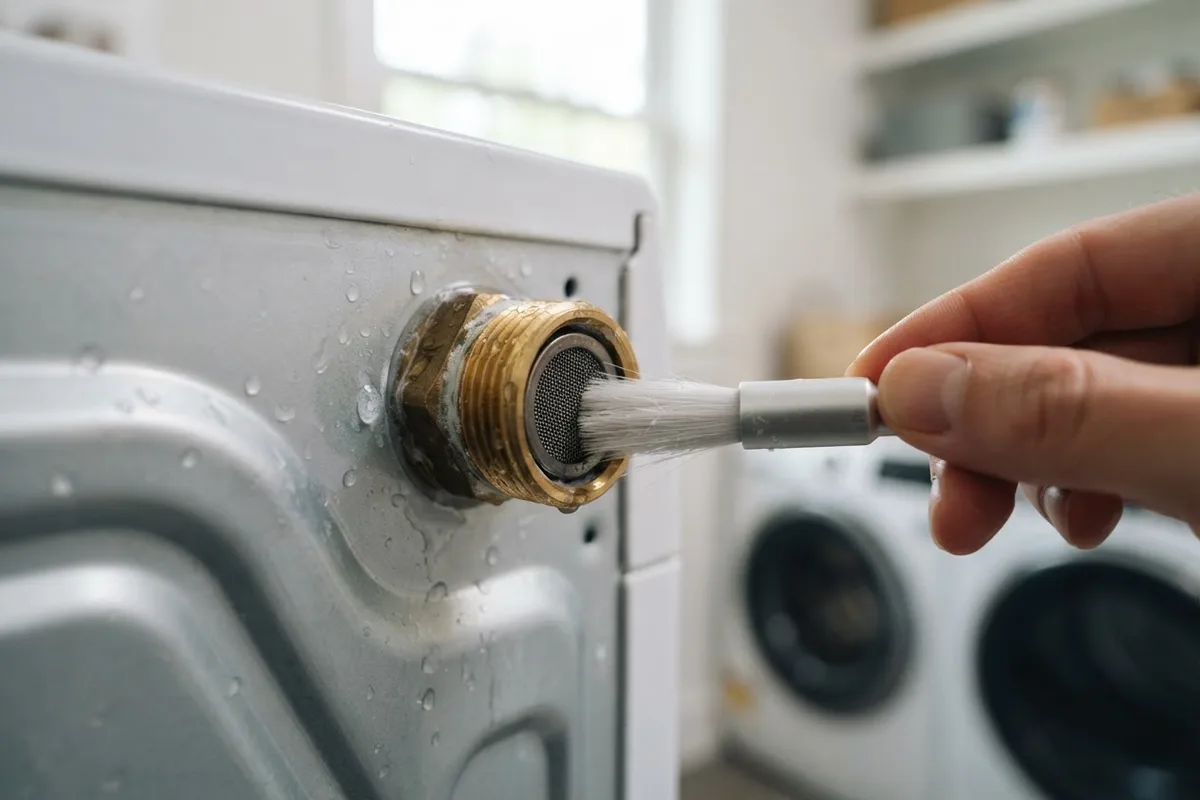
- Clean the inlet screens: Turn off the hot and cold water supply valves behind the washer. Disconnect the fill hoses from the back of the washer. Use needle-nose pliers to remove the tiny plastic mesh filter screens inside the inlet ports. Soak them in warm vinegar for 30 minutes, rinse away softened scale, and reinstall them. These are among the most critical hidden appliance filters you should clean to maintain steady water pressure.
- Run an empty tub-clean cycle: Pour four cups of distilled white vinegar directly into the empty wash drum. Select the hottest water setting, large load size, and heavy-duty or dedicated "Tub Clean" cycle.
- Wipe down gaskets: Use a microfiber cloth dampened with diluted vinegar to wipe the rubber door bellows (on front loaders) and lid rim (on top loaders) to clear trapped mineral film.
3. Clear Mineral Scale from Refrigerator Water Lines
Refrigerator dispensers and ice makers feature narrow plastic tubing and sensitive solenoid valves that struggle against calcification. When scale builds up, water pressure drops to a trickle and ice cubes shrink.
- Replace the water filter: A saturated refrigerator filter cannot trap mineral bypass. Swap the internal water filter every six months according to the manufacturer guidelines.
- Clean the dispenser nozzle: Dip an old, soft toothbrush into white vinegar and gently scrub the exterior dispenser spout to remove visible crust.
- Flush the system: If you notice mineral flakes in your ice or water, disconnect the main supply line behind the fridge (after shutting off the water valve). Flush the internal reservoir and supply line by running two gallons of fresh water through the front dispenser after installing a fresh filter.
4. Clear Disposal Scale and Deodorize the Grind Chamber
Garbage disposals constantly process tap water, grease, and food particles. Hard water minerals bind with food starches, creating a hardened, foul-smelling layer on the shredder ring and impellers that slows grinding speed.
- Break up mineral scale with ice and citrus: Fill the disposal hopper with two cups of ice cubes and one cup of coarse rock salt or halved lemons. The solid ice knocks hardened mineral deposits off the rotating impellers while the citric acid dissolves surface scale.
- Scrub with vinegar ice cubes: Freeze white vinegar in an ice cube tray. Drop four to six vinegar cubes into the disposal, turn on cold water at a gentle stream, and run the disposal until the ice clears.
- Clean the rubber splash guard: Pull out the removable rubber baffle. Scrub both sides in a sink filled with warm soapy water and a splash of vinegar to remove crusted mineral residue.
5. Soak and Scrub Aerators and Removable Valve Screens
Small flow restrictors and aerators on sink faucets and appliance fill valves bear the brunt of incoming mineral scale. When these screens block, machines display low-flow error codes.
- Disassemble small components: Unscrew faucet aerators, supply hose fittings, and spray wands connected to utility sinks or appliance supply lines.
- Submerge in heated vinegar: Place the disassembled plastic and brass pieces into a small glass jar filled with warm distilled white vinegar. Let them soak for 60 to 90 minutes.
- Brush away loosened sediment: Scrub the tiny perforated screens with a stiff nylon brush. Rinse thoroughly with clear water before reassembling. Always verify that rubber sealing washers sit flat inside the fittings to prevent water leaks upon reconnection.
6. Install Inline Filters or Scale Inhibitors
Routine cleaning removes existing scale, but preventing ongoing buildup protects internal valves, solenoid coils, and heating elements over the long haul.
- Attach inline polyphosphate filters: For washing machines and refrigerators, inexpensive inline scale-inhibitor cartridges can be threaded directly onto the incoming water supply line. These cartridges release microscopic food-grade polyphosphates that keep calcium ions in suspension so they cannot bond to metal surfaces.
- Use water-softening additives: In dishwashers, utilize the built-in water softener reservoir (found on many modern models) by refilling it with coarse dishwasher salt. In laundry, add half a cup of baking soda or washing soda to the drum to condition wash water naturally.
- Lower water heater temperature: Setting your home water heater to 120°F (49°C) instead of 140°F significantly reduces the rate at which calcium separates from water and bakes onto appliance heating elements.
Hard Water Appliance Maintenance Quick Reference
| Appliance | Common Scale Symptom | Recommended DIY Solution | Maintenance Frequency |
|---|---|---|---|
| Dishwasher | Cloudy glasses, white tub film, clogged jets | Vinegar cycle + manual jet descaling | Monthly |
| Washing Machine | Stiff clothes, low fill pressure, drum odor | Vinegar tub wash + inlet screen rinse | Every 2–3 months |
| Refrigerator Dispenser | Slow water stream, small or hollow ice | Filter replacement + spout vinegar scrub | Every 6 months |
| Garbage Disposal | Sluggish grinding, persistent sulfur odor | Vinegar ice cubes + rock salt scrub | Monthly |
| Inlet Hose Screens | Error codes for slow fill, humming valve | 60-minute warm vinegar soak | Every 6 months |
When to Call a Pro
While surface limescale and aerator clogs are straightforward DIY tasks, severe mineral buildup inside sealed valves, recirculating pumps, or water heaters requires professional tools. If an appliance hums loudly without filling, leaks water around the base of an internal inlet valve, or shows electrical error codes despite clean filter screens, the internal solenoid or pump mechanism may be mechanically seized.
Never attempt to dismantle sealed refrigerant systems, internal gas valves, or home electrical panels on your own. If routine descaling does not restore proper water flow or heating performance, evaluate our repair-vs-replace rules for homeowners to determine if a repair makes financial sense. When you need hands-on help, True Appliance Repair can match you with an independent local appliance repair pro to diagnose valve failures, replace seized pumps, and get your home running smoothly again. Typical domestic appliance valve or pump replacements generally range from $150 to $375, though exact pricing varies by area and appliance model.
FAQ
Does vinegar damage rubber appliance gaskets?
Occasional use of mild 5% distilled white vinegar is safe for modern appliance rubber when diluted during standard wash cycles. However, you should never soak rubber seals, gaskets, or O-rings in undiluted vinegar for extended periods, as prolonged acid exposure can cause natural rubber to dry out, swell, or crack.
How often should you descale appliances in hard water areas?
In homes with moderate to severe hard water (above 7 grains per gallon), perform light descaling on dishwashers, washing machines, and aerators every 30 to 60 days. In areas with soft water, a seasonal flush every 4 to 6 months is usually sufficient to keep internal lines clear.
Can hard water cause home appliances to leak?
Yes. Hard water scale creates coarse, abrasive crystals along rotating pump seals, drain valves, and rubber hose connections. Over time, these mineral deposits prevent valves from seating completely or wear down rubber gaskets, resulting in slow, persistent water leaks behind and beneath machines.
Is commercial descaling powder better than white vinegar?
Commercial descaling powders formulated with citric or sulfamic acid are highly effective at breaking down thick mineral crusts and are generally odorless compared to vinegar. Both options work well; citric acid cleaners are especially ideal for dishwashers and washing machines because they leave no lingering sour scent.