
Most homeowners wipe down countertops and scrub appliance exteriors weekly, but hidden filters silently collect grease, hair, detergent sludge, and food debris out of sight. When these filters clog, your appliances work twice as hard, drive up utility bills, and start releasing unpleasant odors into your living spaces.
Taking an hour every few months to service these internal screens keeps your machines running efficiently and prevents expensive mechanical strain. Before inspecting or servicing any appliance, always turn off the unit and unplug the power cord or shut off the dedicated circuit breaker to ensure safe handling.
1. Dishwasher Base Filter and Fine Mesh Screen
Your dishwasher filter sits at the bottom of the tub under the lower spray arm, catching food solids to prevent them from redepositing onto clean dishes or clogging the drain pump.
To clean it thoroughly:
- Open the door, remove the bottom dish rack, and locate the cylindrical filter assembly.
- Twist the upper cylinder counterclockwise a quarter turn and lift it out gently.
- Remove the flat metal or plastic mesh screen resting beneath the cylinder.
- Rinse both pieces under hot tap water using a soft-bristled dish brush and mild liquid dish soap to dissolve hardened grease.
- Avoid wire brushes or harsh scouring pads, which can tear the fine mesh.
- Wipe out the sump basin beneath the filter with a damp microfiber cloth, checking for trapped seeds or broken glass.
- Lock the filter back into place until the alignment arrows click.
Neglecting this filter often leads to standing water and poor drainage. If you notice persistent drainage issues even after cleaning, review our guide on why is my dishwasher water pressure low for deeper troubleshooting steps.
2. Washing Machine Drain Pump Filter
Front-loading washing machines and many modern top-loaders feature a dedicated debris filter near the drain pump designed to catch coins, hairpins, pet hair, and lint before they jam the impeller.
Follow these steps to service the pump filter:
- Locate the small access door at the bottom front corner of the machine.
- Place a shallow baking sheet and an old towel directly beneath the door to catch residual water.
- Pull out the small emergency drain hose, remove the stopper, and let the trapped water drain completely into a bowl.
- Unscrew the large filter cap counterclockwise and pull the filter out slowly.
- Remove trapped debris like coins, keys, or tangled lint.
- Wash the cylindrical screen in warm water and clear any slimy residue with an old toothbrush.
- Shine a flashlight into the pump housing to ensure the small impeller spins freely.
- Reinsert the filter firmly, tighten it securely to prevent water leaks during the next cycle, and snap the hose cap and access door shut.
If you find water backing up into other parts of the washer, our guide on why is my washer detergent drawer full of water covers additional water pathway clogs.
3. Dryer Lint Trap Housing and Duct Screen
Cleaning the slide-in lint screen after every single load is standard practice, but heavy lint also bypasses the screen and accumulates inside the deep slot housing below the drum.
Here is how to deep clean the dryer filter cavity:
- Unplug the dryer and turn off the gas valve if working with a gas model.
- Pull the removable mesh lint screen out and wash it in warm water with gentle soap to remove invisible waxy buildup from fabric softeners, then let it air-dry completely.
- Attach a flexible, narrow lint brush or a specialized vacuum hose adapter to your vacuum cleaner.
- Insert the attachment deep down into the lint trap opening to suction out packed lint clumps.
- Check the exterior dryer vent hood on the outside wall of your home to confirm the flapper moves freely and has no trapped lint obstructions.
Trapped dryer lint reduces airflow, increases drying times, and creates a serious household fire hazard. Cleaning this housing every six months restores airflow and shortens cycle lengths.
4. Range Hood and Over-the-Range Microwave Grease Filters
The metal mesh or baffle filters mounted under your range hood or microwave absorb airborne grease, steam, and smoke during cooking. When saturated, they drip sticky grease back onto your cooktop and strain the exhaust blower motor.
To clean metal grease filters:
- Slide or unlatch the metal filters from the underside of the hood.
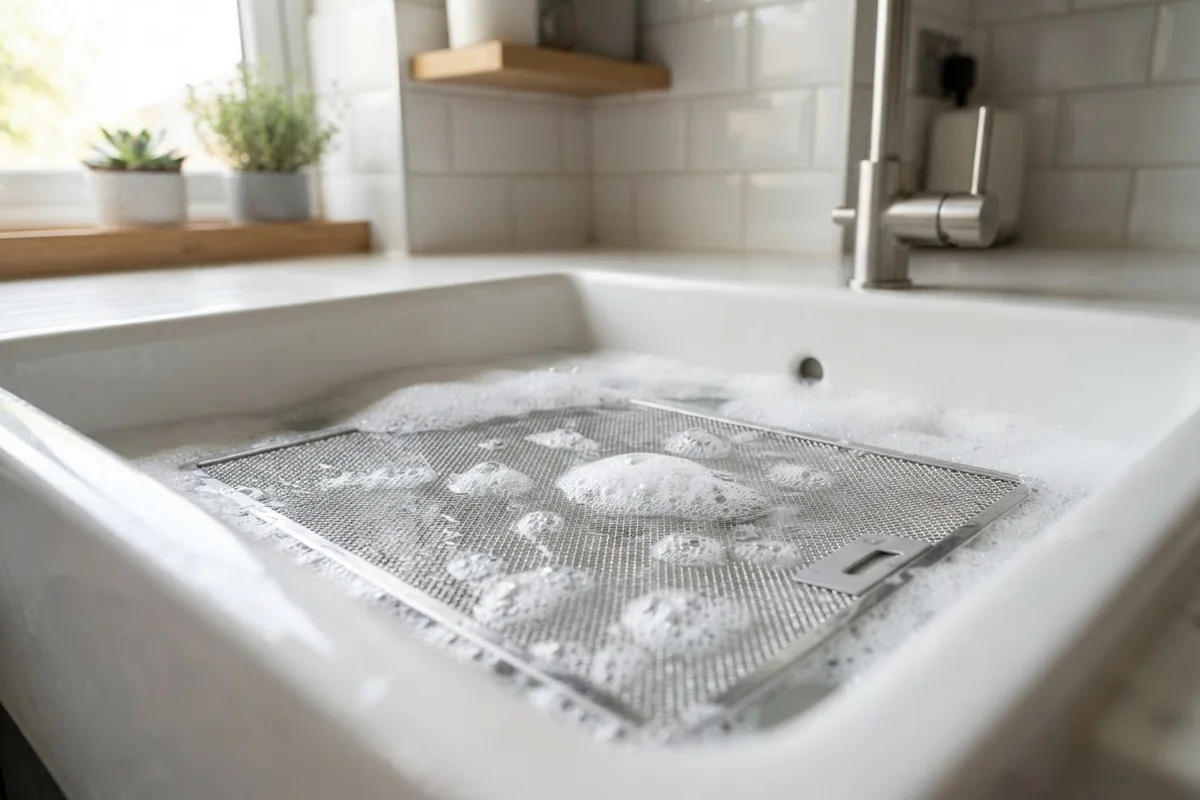
- Fill your kitchen sink with boiling hot water, 1/2 cup of baking soda, and a generous squirt of degreasing dish soap.
- Submerge the metal mesh filters completely and let them soak for 15 to 20 minutes to loosen sticky grease.
- Scrub gently with a non-abrasive dish brush until the mesh openings are completely clear.
- Rinse with hot clean water and allow the filters to air dry fully before snapping them back into place.
- If your microwave vents internally, replace the separate charcoal odor filter behind the top exhaust grille every 6 to 12 months, as charcoal filters cannot be washed.
5. Refrigerator Internal Water and Air Filters
Modern refrigerators use two critical internal filters: a carbon water filter for ice and water dispensers, and a deodorizing air filter inside the fresh food compartment.
To service and maintain refrigerator filtration:
- Replace the inline or push-in water filter every 6 months, or whenever your dispenser flow slows noticeably.
- Locate the filter housing (typically in the upper right ceiling or inside the lower base grille).
- Turn the filter counterclockwise a quarter turn or press the quick-release button to pull out the spent cartridge.
- Push the new cartridge firmly into the slot until it locks.
- Dispense 2 to 3 gallons of water through the door dispenser to purge air pockets and loose carbon fines from the fresh cartridge.
- Locate the internal air filter cartridge along the back wall, pop out the old carbon disc, and snap in a fresh replacement to prevent cross-contamination of food aromas.
Routine filter swaps protect your internal ice maker valving from mineral grit and scale. Protecting your home from electrical disruptions also keeps sensitive electronic filter sensors working accurately; see our tips on how to protect home appliances from power surges.
6. Dehumidifier and Portable AC Intake Air Filters
Dehumidifiers and portable air conditioners pull high volumes of room air across chilled coils. The nylon intake screen stops dust, pollen, and pet dander from coating the delicate aluminum evaporator fins.
To clean the intake filter:
- Unplug the appliance from the wall outlet.
- Slide the plastic-framed mesh filter out from the rear or side intake panel.
- Vacuum loose dust from the mesh using a soft dusting brush attachment.
- Rinse the filter in a sink under lukewarm water, washing away fine dust particles.
- Shake off excess moisture and let it air-dry completely in a well-ventilated area.
- Check the metal coil fins behind the filter; if dusty, brush them lightly with a soft brush before sliding the clean, dry filter back into place.
| Appliance Filter | Recommended Cleaning Frequency | Replacement Schedule | Primary Warning Sign of Clogging |
|---|---|---|---|
| Dishwasher Base Mesh | Monthly | Replace if torn/cracked | Gritty residue on glassware, standing water |
| Washer Drain Pump | Every 2–3 Months | Lifetime component | Slow draining, error codes, soggy clothes |
| Dryer Lint Housing | Every 3–6 Months | Replace screen if warped | Long dry times, hot laundry room, burning smell |
| Range Hood Mesh | Monthly | Replace if bent/damaged | Grease dripping, weak ventilation suction |
| Refrigerator Water/Air | Inspect Monthly | Replace every 6 Months | Slow dispenser flow, odd ice taste, odor |
| Dehumidifier Air Screen | Every 2–4 Weeks | Lifetime component | Weak airflow, ice buildup on coils |
When to Call a Pro
Routine filter cleaning is a simple DIY task, but persistent issues often signal deeper mechanical faults inside the appliance. If your dishwasher refuses to drain after cleaning the filter, your washing machine pump motor buzzes without spinning, or your refrigerator water pressure remains low after installing a fresh filter, internal valves or pumps may have failed.
Never attempt to open sealed refrigeration loops, disassemble internal gas burners, or service high-voltage wiring inside control consoles yourself. Typical appliance diagnostic and minor component repairs range between $120 and $350, depending on your region and appliance model. When hands-on troubleshooting reaches its limit, True Appliance Repair can match you with an experienced local specialist through our appliance repair network to diagnose the issue quickly and safely.
FAQ
Can I run my dishwasher or washer without a filter?
No, you should never run your dishwasher or washing machine without its filter properly installed. Running cycles without a filter allows food chunks, glass shards, or coins to travel directly into the drain pump impeller, which can crack the housing or burn out the motor.
Why does my dishwasher filter still smell after cleaning?
If your dishwasher filter smells bad after cleaning, grease and bacteria may have accumulated in the drain hose or underneath the spray arm assemblies. Run an empty hot water cycle with a cup of distilled white vinegar placed on the upper rack, followed by a sprinkle of baking soda across the bottom tub on a second quick cycle.
How do I know if my range hood grease filter needs replacement?
Metal mesh filters only need replacement if the aluminum frame is bent, the mesh layers have unraveled, or the screen has corroded from harsh chemical cleaners. As long as the metal mesh is intact and holds its shape after degreasing, you can continue washing and reusing it.