
Lightning storms, utility grid switching, and sudden power outages can send high-voltage spikes through your home’s electrical wiring in a fraction of a second. These voltage spikes can instantly fry delicate electronic control boards, damage compressor motors, and leave major equipment completely non-functional. Implementing a few proactive protection steps safeguards your investment and prevents sudden, expensive failures during peak storm season.
Always safety-check your environment before touching electrical components. If you suspect standing water near an outlet or smell burning plastic, shut off power at your main circuit breaker panel immediately before approaching any appliance.
Install Point-of-Use Surge Protectors
Not all electrical outlets offer defense against voltage spikes. Standard power strips merely expand the number of available receptacles without offering any voltage regulation. To protect sensitive electronics like modern refrigerators, dishwashers, and smart washers, you need dedicated surge protection devices.
- Check the joule rating on any protection device you buy. Look for a rating of at least 1,000 to 2,000 joules for major kitchen and laundry equipment.
- Plugin heavy-duty, point-of-use surge suppressors directly into grounded wall outlets. Avoid daisy-chaining multiple surge strips together, which creates a fire hazard.
- Verify the status indicator light on your surge protector regularly. Once a surge protector absorbs a major high-voltage event, its internal components degrade and can no longer block future spikes even if power still flows through the outlets.
- For hardwired or high-draw units like electric ranges and clothes dryers, consult an electrician to discuss a whole-house surge protective device (SPD) installed at your main breaker panel.
Unplug Sensitive Units Before Heavy Storms
When severe thunderstorms, severe windstorms, or rolling blackouts are forecasted in your area, physical disconnection remains the absolute safest way to protect home appliances from extreme voltage spikes. High-voltage lightning strikes nearby can bypass standard point-of-use surge suppressors entirely.
- Monitor local weather reports so you have ample warning before severe weather arrives.
- Turn off the operational cycle on your appliance first using its control panel or power button.
- Safely pull the plug directly from the wall receptacle for units equipped with electronic microprocessors, such as modern laundry machines, microwave ovens, and dishwashers.
- Avoid unplugging your primary refrigerator or freezer unless extended power loss is expected, as maintaining food preservation temperatures is critical. If you must leave food units plugged in, ensure they are connected to a high-joule surge protector.
- Leave appliances unplugged until the storm has completely passed and utility power has stabilized across your neighborhood.
Clear Dust from Motor and Condenser Vents
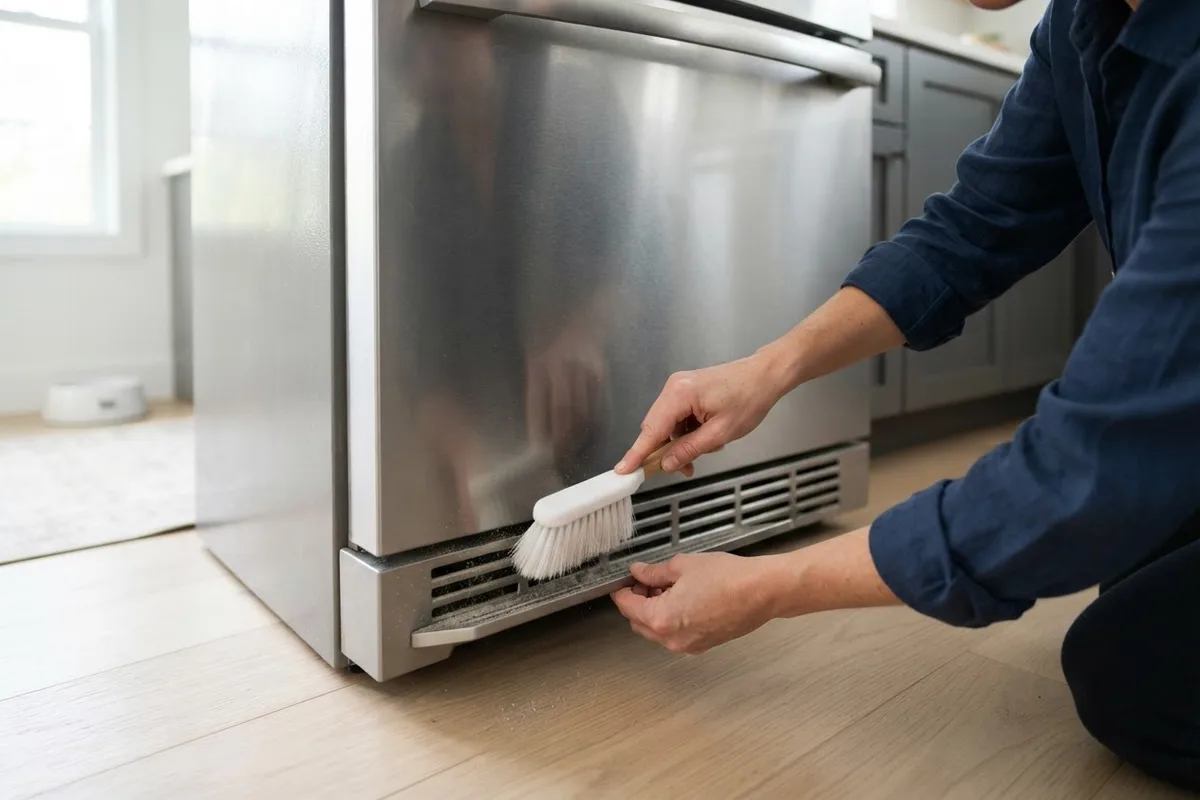
When power surges occur, electrical current generates rapid heat buildup inside motors, relays, and circuit boards. If your appliance is already choked with dust, lint, and pet hair, that heat cannot dissipate, drastically increasing the chance of component failure during a grid spike.
- Always unplug the appliance from the wall outlet or switch off its dedicated circuit breaker before performing any cleaning.
- Pull your refrigerator out from the wall and use a coil brush and vacuum attachment to clear buildup off the lower condenser coils and cooling fan vents. For detailed cleaning steps, refer to our guide on how to deep clean a refrigerator.
- Clean around your washing machine and clothes dryer motor housings, ensuring airflow pathways remain open and unblocked.
- Vacuum the lower kickplate vents on your dishwasher to allow proper cooling around the main circulation pump motor.
- Reconnect power only after all dust and debris have been thoroughly removed and all protective covers are securely replaced.
Avoid Overloading Single Electrical Circuits
Placing too many high-draw appliances on a single electrical circuit increases line resistance and causes voltage dips (brownouts) followed by micro-surges when heavy motors kick off. This constant voltage fluctuation wears down internal relays, capacitors, and electronic control boards prematurely.
- Identify which wall outlets share circuit breakers in your kitchen, laundry room, and garage.
- Keep high-wattage units like countertop microwave ovens, toaster ovens, air fryers, and portable heaters on separate dedicated circuits whenever possible.
- Never run your washing machine, portable air conditioner, and heavy kitchen equipment simultaneously on the same electrical line.
- If you frequently notice flickering lights or hear clicking relays when a refrigerator compressor turns on, your circuit may be overloaded or experiencing voltage drops. Learn more about general maintenance in our guide on winter appliance maintenance checks.
Inspect Appliance Power Cords for Damaged Insulation
A damaged, pinched, or frayed power cord drastically lowers an appliance's resistance to voltage spikes and increases the risk of short circuits, electrical fires, or breaker trips.
- Disconnect the appliance power plug safely from the wall outlet before inspecting the cord.
- Run your fingers along the full length of the power cord, checking for cracks, melted insulation, exposed copper wire, or severe kinks caused by heavy equipment pushing against the wall.
- Examine the plug prongs for signs of discoloration, pitting, bending, or scorch marks, which indicate previous arcing or overheating.
- Replace damaged power cords immediately with manufacturer-approved replacement assemblies designed for your specific model's amperage demands. Do not simply wrap damaged power cords in electrical tape as a permanent fix.
Reset Tripped Appliances Safely After Outages
When utility power returns following a blackout or storm outage, the initial restoration often comes with an immediate, high-voltage electrical spike as local transformers re-energize. Knowing how to safely restore power prevents electronic board damage during grid restoration.
- Turn off or unplug major home equipment immediately after a power outage occurs so they are not subjected to the initial power restoration surge.
- Wait approximately 10 to 15 minutes after utility power returns before reconnecting or turning on major kitchen and laundry appliances.
- If an appliance fails to respond after power returns, check your home’s main breaker box for a tripped circuit breaker. Flip the breaker fully to the "OFF" position first, then back to "ON".
- For appliances stuck in an error code state or unresponsive display mode following a surge, follow safe diagnostic steps outlined in our guide on how to reset home appliances.
| Appliance Category | Surge Risk Level | Primary Vulnerable Component | Recommended Protection Method |
|---|---|---|---|
| Refrigerators & Freezers | High | Inverter Board & Compressor Relay | Heavy-Duty Plug-In Surge Protector |
| Washers & Dryers | Moderate to High | Main Control Board & Motor Inverter | Disconnect Plug During Severe Storms |
| Dishwashers | Moderate | Electronic Control Module & Pump | Dedicated Surge Receptacle |
| Ranges & Ovens | High | Clock Display & Spark Ignition Module | Whole-House Panel Surge Protector |
When to Call a Pro
While proactive maintenance and plug-in surge suppressors protect your equipment from most everyday voltage fluctuations, severe power spikes can still cause internal damage that simple DIY troubleshooting cannot resolve. If you notice persistent burning smells, charred wall outlets, repeatedly tripped circuit breakers, or completely unlit control panels after a storm, stop using the unit immediately.
Never attempt DIY repairs inside an electrical service panel, and do not open sealed electrical control boxes or high-voltage capacitor assemblies yourself. If an appliance refuses to power on or displays recurring fault codes after grid restoration, True Appliance Repair can match you with a local appliance pro to evaluate internal electrical components safely.
FAQ
Can a power surge damage an appliance even if it is turned off?
Yes, if an appliance remains plugged into a live wall outlet, a high-voltage power surge can travel through the power cord and damage the primary control board or standby power transformer, even if the unit is turned off.
Do standard power strips protect home appliances from electrical surges?
No, standard power strips only provide additional plug outlets and offer zero protection against voltage spikes. You must use a true surge protective device with a verified joule rating to protect delicate electronics.
How do I know if my appliance was damaged by a power surge?
Common signs of surge damage include a dead control display, a strong smell of burned plastic or copper wire, blown internal fuses, or a unit that immediately trips your home's circuit breaker when plugged in.
How much does it typically cost to repair surge-damaged electronics?
Repairing or replacing a surge-damaged electronic control board or motor inverter typically ranges from $200 to $450, depending on the appliance type, brand, and local service labor rates, though costs vary by area and model.