
As winter approaches, cold temperatures, holiday cooking, and heavy laundry loads place extra stress on your household appliances. Taking time for simple maintenance now helps avoid sudden breakdowns during the busiest weeks of the year.
Performing basic preventative care extends unit lifespan and keeps utility bills manageable. Use this step-by-step checklist to prepare your kitchen and laundry appliances for the winter season.
Clear and Inspect Your Exterior Dryer Vent Hood
Lint accumulation in your dryer vent hose and exterior hood restricts airflow, causing drying cycles to take twice as long and posing a severe fire risk. In winter, trapped moisture can freeze inside a blocked vent line, completely shutting down exhaust airflow.
- Disconnect the dryer from the wall electrical outlet. If you have a gas dryer, turn off the gas shut-off valve before moving the appliance.
- Pull the dryer away from the wall to access the flexible transition duct.
- Disconnect the vent pipe from the back of the dryer and vacuum out loose lint using a narrow hose attachment or dryer vent brush.
- Go outside and inspect the exterior vent hood. Clear away dried leaves, bird nests, or accumulated snow.
- Check the flapper door on the outdoor hood to ensure it opens smoothly when the dryer runs and closes tightly when idle to keep cold air out.
Addressing airflow issues early keeps your dryer running efficiently. For deeper troubleshooting steps, reviewing common costly appliance care mistakes can help you avoid unnecessary repairs.
Clean Refrigerator Condenser Coils for Efficiency
Refrigerator condenser coils release heat absorbed from inside the cabinet. When covered in dust, pet hair, and kitchen grease, the compressor must work twice as hard to maintain cold temperatures, increasing energy consumption and accelerating mechanical wear.
- Unplug the refrigerator or switch off its circuit breaker in your main electrical panel.
- Locate the coils, which are typically behind the front bottom toe kick grill or along the back panel.
- Remove the toe kick plate by snapping it off or removing retaining screws.
- Use a long, narrow condenser coil brush to loosen trapped dust between the coil loops.
- Vacuum up debris thoroughly with a crevice tool attachment.
- Replace the toe grill and restore power to the unit.
Flush and Sanitize Your Garbage Disposal
Garbage disposals handle heavier grease and food remnants during autumn and winter gatherings. Stagnant residue leads to unpleasant kitchen odors and stubborn mechanical jams.
- Shut off electrical power to the disposal at the wall switch or main breaker panel.
- Look down into the drain with a flashlight to check for solid obstructions. Remove items using tongs—never insert your hands into the hopper.
- Reconnect power and run cold water down the drain.
- Turn on the unit and drop in two cups of ice cubes followed by one cup of coarse rock salt. The ice knocks buildup off the impellers while the salt acts as an abrasive scrub.
- Grind fresh lemon or orange peels through the unit for 30 seconds to neutralize residual odors.
If your unit stops turning or makes a high-pitched buzzing noise during operation, review our guide on why your garbage disposal is humming to clear jams safely.
Inspect Dishwasher Water Fill Lines for Wear
Dishwasher supply lines operate under constant pressure. Aging rubber or braided steel hoses can develop micro-cracks that split during sudden winter pressure spikes or temperature drops.
- Unplug the dishwasher or disconnect its breaker.
- Shut off the under-sink hot water supply valve supplying the dishwasher.
- Open the cabinet under your kitchen sink and inspect the flexible supply hose leading to the dishwasher.
- Run a dry paper towel along the length of the hose, feeling for wetness, bulges, or cracks near the connection fittings.
- Tighten loose brass compression fittings with an adjustable wrench if slight moisture is detected.
- Replace aging rubber hoses with braided stainless steel lines every five years to lower the risk of catastrophic kitchen flooding.
Drain and Clean the Washing Machine Pump Filter
Front-load washing machines and many modern top-loaders feature a drain pump filter designed to catch coins, lint, and small debris. A clogged filter causes slow draining, foul odors, and left-over standing water that can freeze if located in an unheated utility space or garage.
- Turn off the washer and unplug it from the wall outlet. Turn off the hot and cold water supply valves behind the machine.
- Locate the drain pump access door on the bottom front panel of front-load models.
- Lay a bath towel and shallow baking tray beneath the access door to catch residual water.
- Unclip the small emergency drain hose (if equipped), pull the plug, and let water drain into the tray.
- Unscrew the pump filter cap counterclockwise, pull the filter basket straight out, and clear away trapped debris under warm running water.
- Reinsert the filter, tighten securely, and close the access door.
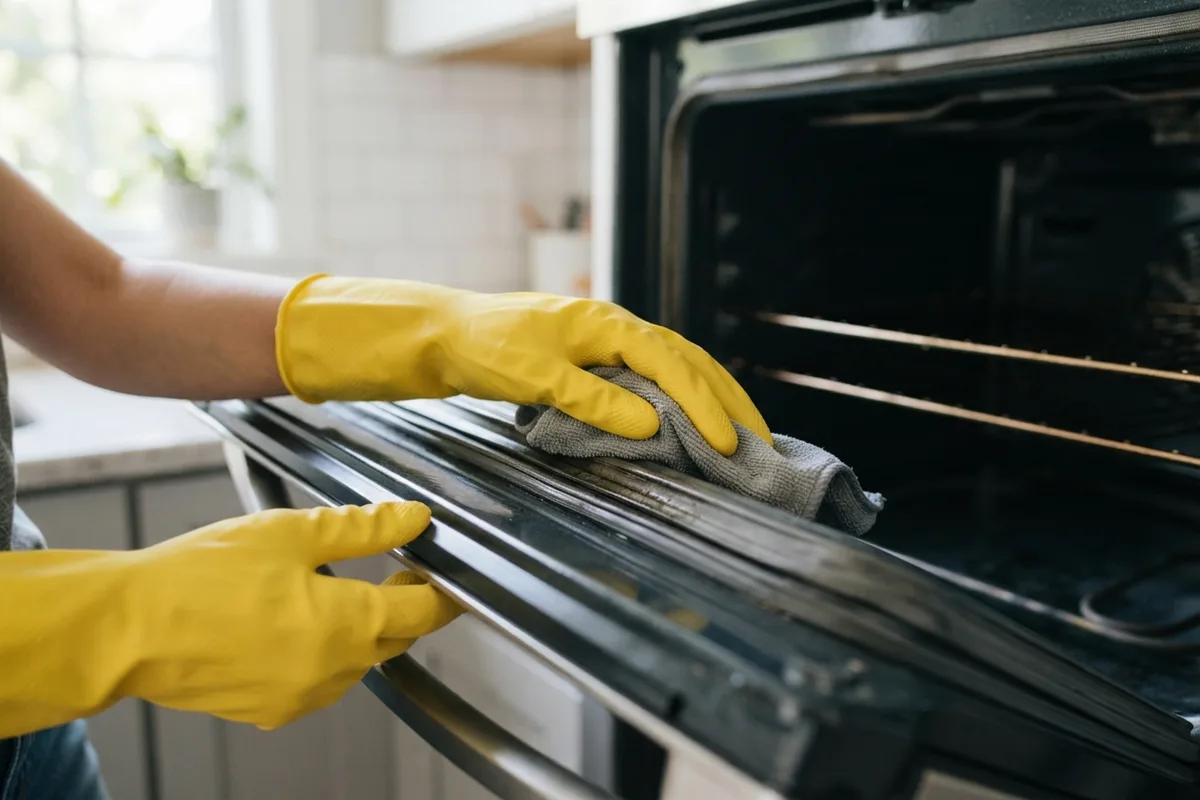
Clean and Inspect the Oven Door Gasket
Holiday baking requires consistent oven temperatures. A worn or dirty door gasket lets heat escape, causing unevenly cooked food and forcing your oven heating elements to run continuously.
- Ensure the oven is completely cool to the touch and turned off.
- Open the door and inspect the braided fiberglass or rubber seal running around the oven cavity frame.
- Check for tears, frayed sections, or areas where the seal has pulled away from retaining clips.
- Mix warm water and mild dish soap. Wipe down the gasket using a soft sponge to remove baked-on grease and food residue.
- Avoid aggressive scrubbing or harsh chemicals, which can ruin the heat-resistant fibers.
- Close the oven door on a strip of paper. If you can pull the paper out easily with no resistance, the seal is loose and needs replacement.
Exercise Appliance Water Shut-Off Valves
Water shut-off valves under kitchen sinks and behind washing machines can seize from mineral buildup over time. In an emergency, a frozen valve prevents you from stopping a water leak quickly.
- Locate shut-off valves for your washing machine, ice maker line, dishwasher, and kitchen sink.
- Turn each handle clockwise slowly to close the valve completely. Never force a stubborn valve with excessive pressure, which can snap the stem.
- Turn the handle counterclockwise to reopen the valve fully, then back it off a quarter-turn to prevent stem binding.
- Check around the valve packing nut for tiny drips. If a slow drip appears, tighten the packing nut slightly with a wrench.
Check Refrigerator Door Seals for Air Leaks
Flexible magnetic door gaskets keep warm ambient air from entering your refrigerator and freezer compartments. Cold winter indoor air can dry out rubber seals, causing gaps that force the cooling system to short-cycle.
- Inspect the gasket border for cracks, mold, or hardened rubber.
- Clean dirty seals with warm soapy water and dry thoroughly with a microfiber cloth.
- Apply a very thin layer of petroleum jelly along the hinge side of the gasket to keep the rubber pliable and prevent binding.
- Perform the dollar bill test: place a bill half-in and half-out of the door, close the door, and pull. If the bill slides out effortlessly without drag, the magnetic strip inside the gasket has weakened or the door hinges need adjustment.
Pre-Winter Maintenance Quick Reference Guide
| Appliance | Key Maintenance Task | Recommended Frequency | Estimated DIY Time |
|---|---|---|---|
| Clothes Dryer | Clean exhaust duct and exterior hood flapper | Every 6 months | 30 Minutes |
| Refrigerator | Vacuum condenser coils & clean door gaskets | Every 6 months | 20 Minutes |
| Garbage Disposal | Flush with ice, rock salt, and citrus peels | Monthly | 10 Minutes |
| Dishwasher | Inspect supply line fittings & clean filter | Every 3 months | 15 Minutes |
| Washing Machine | Drain and clean lower pump filter basket | Every 3–6 months | 20 Minutes |
| Wall Oven / Range | Clean door gasket and test seal tension | Bi-annually | 15 Minutes |
When to Call a Pro
While routine surface cleaning and filter maintenance are safe DIY projects, certain appliance issues require professional expertise. Always stop and contact a technician if you encounter:
- Persistent gas odors near ranges, ovens, or gas dryers.
- Complex electrical issues, such as tripped breakers, sparking outlets, or damaged wiring harness harnesses.
- Sealed-system refrigerant leaks in your refrigerator or freezer.
- Internal motor, transmission, or tub bearing failures in your washing machine.
When a repair exceeds basic maintenance, True Appliance Repair can match you with an independent local pro to diagnose and fix the problem safely. General service visits typically cost between $75 and $150, while major component repairs range from $150 to $450 depending on your area and appliance model.
FAQ
How often should I perform pre-winter appliance maintenance?
Performing a comprehensive home appliance check once every autumn—ideally in October or November—ensures your appliances are prepared for heavy holiday usage and cold indoor conditions.
Can cold weather inside an unheated garage ruin my appliances?
Washing machines, refrigerators, and dishwashers stored in unconditioned garages can suffer internal damage if temperatures drop below freezing. Standing water inside pumps, valves, and drain lines can freeze and expand, cracking plastic housings and rubber hoses.
Do maintenance steps lower monthly utility bills?
Clean refrigerator coils, clear dryer vents, and tight oven seals significantly reduce energy waste. Keeping internal components free of dust and obstruction allows motors and heating elements to run shorter, more efficient cycles.