
Opening your washing machine at the end of a laundry cycle only to find the detergent drawer full of water is a frustrating problem. Instead of flushing smoothly into the tub, clean rinse water and undiluted laundry soap pool in the dispenser cups, leaving behind slimy residue and moldy odors.
Standing water in a washing machine dispenser is rarely a sign of a ruined appliance. In most cases, simple maintenance steps like clearing clogged siphon caps, rinsing out hardened soap buildup, or leveling your machine will resolve the issue in under 30 minutes.
Clean Clogged Siphon Tubes and Dispenser Inserts
Most modern front-load and top-load washer detergent drawers rely on a siphon mechanism to release fabric softener and liquid detergent. When water fills the compartment during a cycle, it reaches the top of a small siphon pipe, creating a vacuum that pulls the liquid out into the tub. Over time, thick fabric softeners and concentrated HE detergents leave behind a sticky coating that seals the siphon tube shut, leaving water trapped in the tray.
To clean clogged siphon inserts, follow these steps:
- Turn off the washer power before handling internal drawer parts.
- Open the detergent drawer completely and press the center release tab (usually located in the fabric softener compartment) to slide the drawer out.
- Pull off the plastic siphon caps or insert pieces attached to the bottom of each compartment.
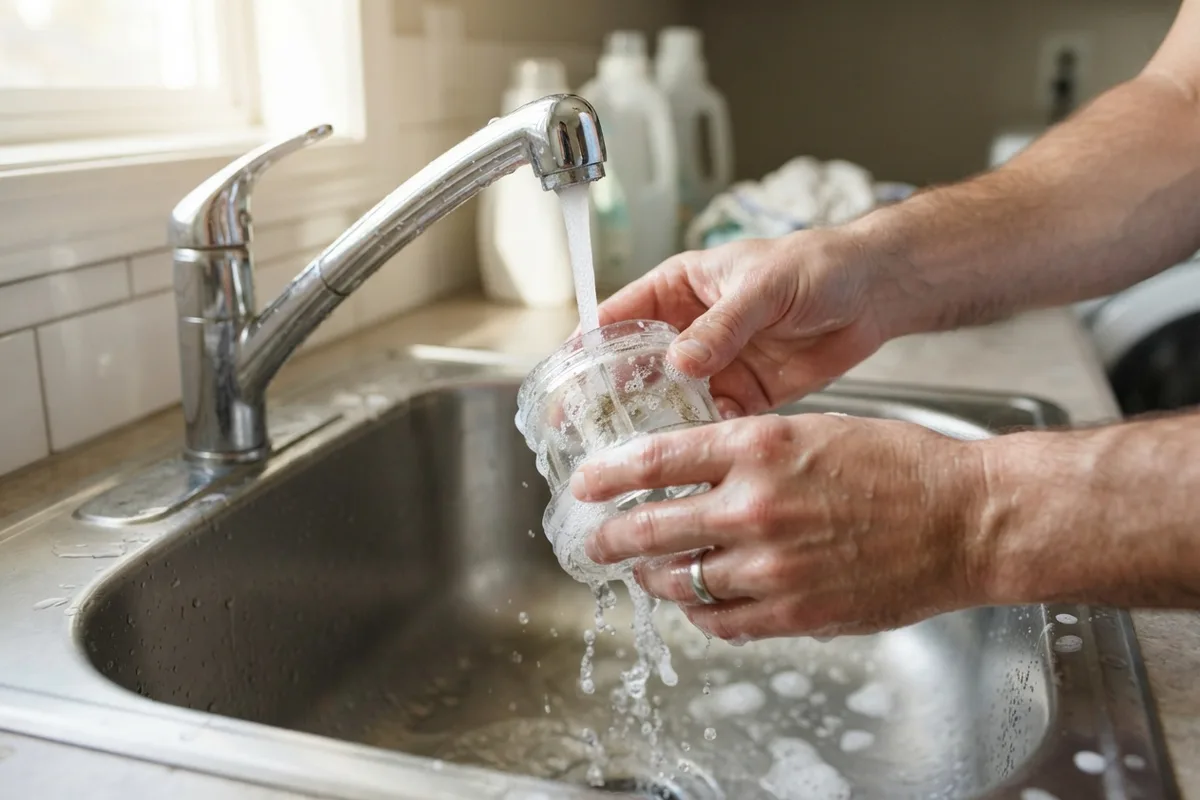
- Soak the drawer and siphon caps in warm water, scrubbing away built-up soap scum with an old toothbrush or nylon brush.
- Rinse all components thoroughly, snap the siphon caps securely back onto their posts, and slide the drawer back into the machine.
Flush Hard Water Scale from the Dispenser Housing
Directly above the removable detergent drawer is a housing ceiling lined with small water spray nozzles. During different parts of the washing cycle, the machine routes water through these tiny holes to wash detergent, bleach, or fabric softener out of the drawer compartments. If you live in an area with hard water, mineral scale and calcium deposits slowly choke these spray ports, resulting in weak or misdirected streams that fail to activate the siphoning action.
To clear mineral scale from the dispenser housing:
- Remove the detergent drawer from the machine cabinet.
- Look upward into the empty housing cavity to locate the upper showerhead spray ports.
- Spray a 50/50 mixture of warm water and distilled white vinegar directly onto the spray nozzle ceiling to dissolve mineral crust.
- Scrub the spray openings gently with a stiff nylon brush to dislodge calcium buildup.
- Wipe the housing interior with a microfiber towel and reinsert the clean detergent tray.
Level the Washer to Prevent Water Trapping
Siphon compartments depend heavily on gravity to drain properly. If your washing machine tilts forward or sags to one side, water inside the dispenser drawer shifts away from the siphon tube inlet, preventing the liquid from siphoning out completely at the end of the rinse cycle.
 To check and correct your machine's alignment:
- Place a bubble level across the top front-to-back and side-to-side edges of the washing machine frame.
- If the bubble rests off-center, use an adjustable wrench to loosen the locknuts on the machine's front and rear leveling feet.
- Rotate the threaded rubber feet clockwise to lower a corner or counterclockwise to raise it until the bubble centers in both directions.
- Retighten the locknuts against the washer chassis to prevent vibration from shifting the legs out of level during high-speed spin cycles.
Lower Water Pressure or Unclog Water Inlet Filters
If the incoming water supply pressure is too low, the water streams entering the dispenser drawer won't have enough velocity to trigger the siphon tube. Low water pressure in the dispenser is frequently caused by clogged filter screens located where the home fill hoses connect to the washing machine.
To clean restricted water inlet screens:
- Unplug the washing machine from the wall electrical outlet.
- Shut off both the hot and cold water supply valves behind the washer.
- Unscrew the fill hoses from the brass or plastic inlet valve connections on the back of the washer using slip-joint pliers.
- Locate the small mesh filter screens sitting inside the water inlet ports.
- Gently pull out the screens using needle-nose pliers, rinse away sediment or rust particles under running water, reinsert the mesh screens, and reconnect the supply lines tightly.
Replace a Failing Dispenser Water Solenoid Valve
If you find standing water in your detergent drawer while the machine is turned off, or if specific compartments fail to receive water during the cycle, a faulty water inlet solenoid valve is usually the cause. Washing machines use a multi-solenoid valve assembly that directs water to individual dispenser compartments. If a internal valve seal fails or a solenoid coil burns out, water may trickle continuously into the tray or fail to flow altogether.
To replace a malfunctioning water inlet valve:
- Unplug the power cord and turn off both water supply valves behind the washer.
- Disconnect the hot and cold inlet hoses from the back of the unit.
- Remove the top panel screws on the rear of the cabinet and slide the top cover back to lift it off.
- Locate the inlet valve assembly where the supply hoses attach, note the wire connector positions, and label the rubber dispenser tubes.
- Disconnect the wiring harness and hose clamps, unbolt the old valve assembly, install the replacement OEM valve, secure the hose clamps, and reassemble the cabinet.
| Dispenser Problem | Likely Root Cause | Typical DIY Fix Time |
|---|---|---|
| Water standing only in softener cup | Clogged siphon cap or thick liquid softener | 10–15 minutes |
| Standing water in all drawer sections | Blocked showerhead spray nozzles in housing | 15–20 minutes |
| Water filling drawer when washer is off | Leaking internal solenoid valve seal | 30–45 minutes |
| Water pooled at the back of the tray | Washer cabinet tilted forward or out of level | 15 minutes |
| Slow drawer filling with minimal water | Sediment clogged in inlet valve mesh screens | 20 minutes |
When to Call a Pro
If you have thoroughly cleaned the siphon caps, scrubbed the housing spray nozzles, cleared the inlet mesh filters, and verified the cabinet is level, but your detergent drawer still fills with water, the issue may stem from an internal component failure. Broken dispenser actuator arms, damaged wire harnesses, or failing main control board relays require specialized diagnostic tools to pinpoint.
Whenever you encounter complex electrical troubleshooting or internal plumbing issues, safety comes first. Always stop and call a professional technician for electrical panel work, main wiring diagnostics, or gas appliance lines. When DIY steps do not solve the problem, True Appliance Repair can connect you with a local appliance repair technician to diagnose the washer quickly. Typical water inlet valve or dispenser housing repairs range from $150 to $300 depending on your washer brand and local service rates. If your laundry routine is disrupted by other symptoms, such as a washer stopping mid-cycle or leaving residue on clothes, a professional evaluation can help prevent more costly damage.
FAQ
Why is there standing water in my fabric softener compartment?
Fabric softener contains dense emulsifiers that leave behind a slippery coating. Over time, this buildup coats the small siphon tube cap in the dispenser cup. Without clear airflow through the siphon tube, atmospheric pressure cannot push liquid out into the tub, leaving standing water in the cup at the end of the cycle.
Is it normal for a washer detergent drawer to have some water left?
A few small drops of water or light moisture after a cycle is normal due to steam condensation. However, if water fills a compartment halfway or spills into surrounding drawer sections, a blocked siphon tube, clogged spray nozzle, or unlevel washer cabinet needs attention.
How often should I clean my washing machine detergent drawer?
You should clean your washing machine detergent drawer and siphon inserts once every four to six weeks. Monthly cleaning prevents fabric softener residue, detergent buildup, and hard water minerals from clogging the drawer's spray jets and siphon ports.
Can using concentrated liquid detergent cause water to pool in the drawer?
Yes, using thick or overly concentrated liquid detergent without diluting it can clog the siphon tube. Non-HE (High-Efficiency) detergents also produce excessive foam that backs up into the dispenser housing, blocking the siphon action and trapping rinse water in the tray.