
When your washing machine suddenly stalls midway through a cycle, you are left with a tub full of soapy water and dripping wet clothes. This frustrating household issue usually stems from a triggered safety sensor, a clogged drain line, or an unbalanced laundry load rather than total mechanical failure. Following a systematic troubleshooting process helps you identify the root cause quickly and get your laundry routine back on track.
Rebalance Heavy or Uneven Laundry Loads
Modern washing machines rely on sensitive tub-suspension sensors to prevent severe vibration damage during high-speed agitation and spin phases. When heavy items like bath towels, denim jeans, or bulky bedding clump on one side of the drum, the machine detects an unsafe imbalance and immediately pauses operation.
- Press the pause button or cancel button on the control panel, then unplug the washing machine from the wall outlet for safety.
- Open the door or lid and check how clothes are distributed inside the drum.
- Manually separate tangled garments and evenly distribute heavy items around the perimeter of the basket.
- Avoid washing a single heavy item, such as a large dog bed or thick rug, on its own. Adding two or three smaller towels balances the centrifugal force.
- Plug the machine back in, close the lid firmly, and select a manual spin or drain-and-spin program to clear excess water.
If the machine completes the spin cycle without stalling, your issue was simply load distribution rather than an internal mechanical fault.
Clear Clogged Drain Filters and Hoses
If your washing machine cannot evacuate water within a designated timeframe built into the control board timer, the system shuts down to prevent overflowing. Lint, small coins, stray socks, and hair frequently collect inside the drain pump filter or line, restricting water flow.
- Shut off the water supply valves behind the washer and disconnect the power cord.
- Locate the drain pump filter access panel, typically situated at the bottom front corner of front-loading units. On top-loading machines, access the drain hose connected at the back.
- Lay a thick towel and a low-profile tray beneath the filter door to catch trapped water.
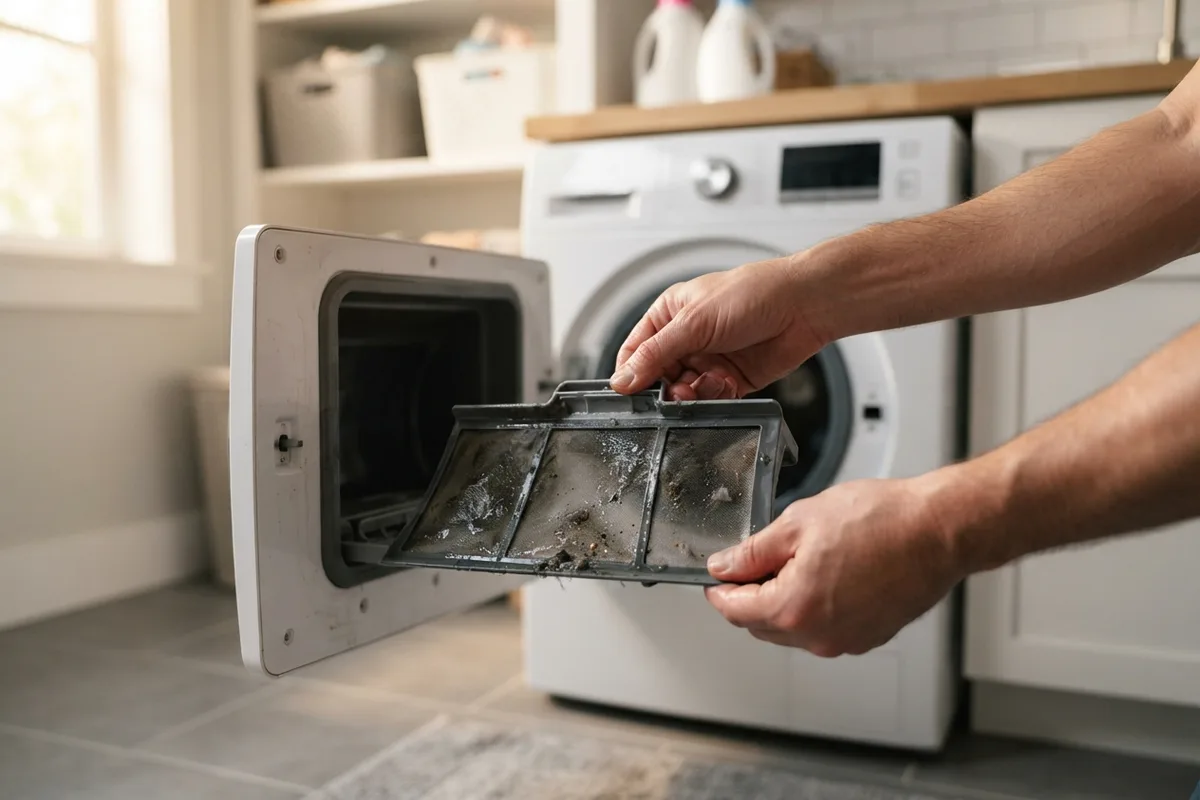
- Unscrew the filter cap counterclockwise, pull out debris, and rinse the mesh screen under warm tap water using a soft brush.
- Inspect the corrugated drain hose attached to the standpipe. Straighten any tight kinks or crushed sections, and clear visible obstructions using a flexible drain snake.
Reassemble all components, restore power, and test the washer. Keeping your drainage system clear also prevents broader issues outlined in our guide on why washer overflowing with suds.
Inspect and Reset the Lid or Door Switch
A faulty lid switch or door latch assembly is one of the most frequent reasons a washer stops between the wash and spin cycles. The machine must confirm that the door is securely locked before engaging the high-speed motor.
- Unplug the appliance from the electrical outlet before examining electrical door mechanisms.
- Open the door and inspect the strike plastic tab and latch opening for physical damage, lint buildup, or cracked plastic.
- Clean around the latch mechanism using a cotton swab dipped in isopropyl alcohol to remove detergent residue.
- Close the door firmly and listen for a distinct mechanical click. On digital front-load units, check if the door lock icon illuminates on the display panel.
- If the latch feels loose, does not click, or fails to engage the internal electrical contact, the door lock assembly may require replacement.
Check for Water Supply Valve Obstructions
Your washing machine pauses automatically if it fails to fill with water within a specific window during the rinse transition. Restricted water flow causes the internal timer to stop mid-cycle, leaving the tub partially empty or full of soapy detergent.
- Shut off the hot and cold water shutoff valves behind the machine.
- Unplug the power cord from the wall outlet.
- Unscrew the inlet hoses from the back of the washer using slip-joint pliers.
- Use needle-nose pliers to carefully pull out the fine wire mesh filter screens inside the intake valves.
- Rinse sediment, rust particles, and mineral deposits from the screens under cold running water, then reinsert them.
- Verify that domestic water supply valves are turned fully counterclockwise to ensure maximum water pressure before reconnecting hoses.
Reduce Excess Detergent and Suds Buildup
Using non-HE (High-Efficiency) detergent or over-measuring standard laundry soap creates massive foam cushions inside the tub. High suds density creates resistance against the spinning drum and confuses internal air pressure sensors, triggering an automatic safety shutoff.
- Check the water level and bubble volume inside the drum when the cycle halts.
- If heavy foam is present, cancel the cycle and allow suds to settle for 20 to 30 minutes.
- Add one cup of white distilled vinegar directly into the drum to break down persistent soap foam.
- Set the machine to a dedicated rinse and spin cycle using cold water to flush out detergent residue.
- Prevent recurring suds locks by measuring detergent strictly according to fabric volume and water hardness, as detailed in our analysis of costly appliance care mistakes.
Quick Diagnostic Reference Guide
| Symptom | Primary Cause | First DIY Action |
|---|---|---|
| Washer stops during high spin | Unbalanced heavy clothes load | Pause, redistribute towels/jeans evenly |
| Cycle halts with water in tub | Clogged pump filter or kinked hose | Clean drain filter, check rear drain hose |
| Machine stops before rinse phase | Water inlet screens clogged | Clean mesh screens at water valve connection |
| Display panel goes dark mid-cycle | Tripped circuit breaker or thermal fuse | Reset home electrical panel breaker |
| Washer pauses with excessive foam | Detergent overload (suds lock) | Add 1 cup white vinegar and run rinse cycle |
When to Call a Pro
While simple sensor pauses, load adjustments, and filter cleanings are easy DIY projects, certain complex underlying faults require expert technical diagnosis. Always disconnect the power supply and turn off main water valves before performing any hands-on appliance inspection. Stop immediately and seek professional help if you suspect severe motor failure, damaged internal wiring harnesses, or control board errors.
For major electrical or mechanical failures involving the drive motor, transmission, or electronic control board, call a qualified service specialist. Typical professional washing machine repair costs generally range between $150 and $350, though actual expenses vary by area, appliance age, and machine brand. If basic maintenance steps do not resolve the cycle stalling, True Appliance Repair can match you with a local appliance pro to diagnose complex faults safely.
FAQ
Why does my washing machine stop right before the spin cycle?
This transition phase requires both complete water evacuation and a verified door latch signal. A clogged drain filter, failing drain pump, or damaged lid switch usually prevents the machine from entering high-speed spin.
Can a tripped circuit breaker cause a washer to stop mid-cycle?
Yes. Washing machine motors draw significant electrical current during spin transitions. If the home circuit breaker trips or an internal thermal fuse blows from motor overheating, power to the unit cuts off instantly.
How do I manually drain a washer that stopped full of water?
Unplug the machine and place a low basin beneath the front drain pump filter access door. Slowly unscrew the cap to catch water. Alternatively, lower the rear drain hose into a shallow bucket at floor level to allow gravity drainage.
How do I reset my washing machine control board after it stalls?
Unplug the washer from the electrical outlet for a full 10 minutes to clear the control board memory circuits. Reconnect the power cord, open and close the lid 6 times within 12 seconds to signal a reset, and start a fresh test cycle.