
Walking into your laundry room to find thick soap suds spilling out of your washing machine is every homeowner's nightmare. Excess suds do more than create a slippery mess on the floor; detergent foam cushions the tumbling action necessary to clean clothes, triggers software error codes, and can lock up the drain pump.
Whether your front-load door is leaking foam or suds are rising out of your top-load tub or standpipe, the root cause is almost always connected to detergent type, water hardness, or restricted drainage.
Safety Warning: Always unplug your washing machine from the wall power outlet and turn off both hot and cold water shutoff valves before reaching near internal components, clearing filters, or cleaning electrical sensors. If water or foam has entered electrical access panels, stop work immediately and consult a professional technician.
1. Kill Existing Suds with Vinegar and Fabric Softener
When your washing machine tub is filled with rising detergent foam, running a standard rinse cycle will only agitate the mixture further and generate even more suds. You need a chemical agent that breaks the surface tension of the soap bubbles immediately.
Liquid fabric softener and household white vinegar act as quick foam suppressants:
- Pause or abort the current wash cycle to stop the agitator or drum from whipping up more suds.
- Mix one capful of liquid fabric softener with one quart of warm water in a pitcher.
- Pour the mixture directly into the wash drum over the sudsy clothes.
- If you do not have fabric softener, pour two cups of plain distilled white vinegar directly into the drum instead.
- Close the door or lid and run a manual Drain & Spin cycle to push the dissolved soapy water out of the drum without adding high-speed agitation.
- Follow up with a short Rinse & Spin cycle using cold water to flush out remaining soap traces.
Taking fast action prevents foam from seeping into door gaskets or electronic control housings, which can cause subtle long-term water damage similar to costly appliance care mistakes seen in poorly maintained laundry rooms.
2. Switch to High-Efficiency (HE) Laundry Detergent
Using regular non-HE detergent in a modern high-efficiency washing machine is the leading cause of suds overflows. Modern front-loading and top-loading washers use significantly less water per load than older traditional agitator models.
Standard laundry detergents are formulated to produce abundant foam in high-water environments. When subjected to the low-water, high-speed tumbling action of modern washers, standard detergent creates extreme sudsing:
- Check your detergent container label for the circular HE (High-Efficiency) symbol.
- If you are using regular detergent in an HE machine, stop immediately, even if you cut the dosage in half.
- Switch to a low-foaming HE liquid or powder detergent specifically engineered for low-water washing cycles.
- Avoid using single-dose detergent pods for quick or delicate cycles with low water volume, as the pod may release more concentrated detergent than the short wash phase can adequately dilute.
3. Reduce Your Detergent Dosage for Soft Water
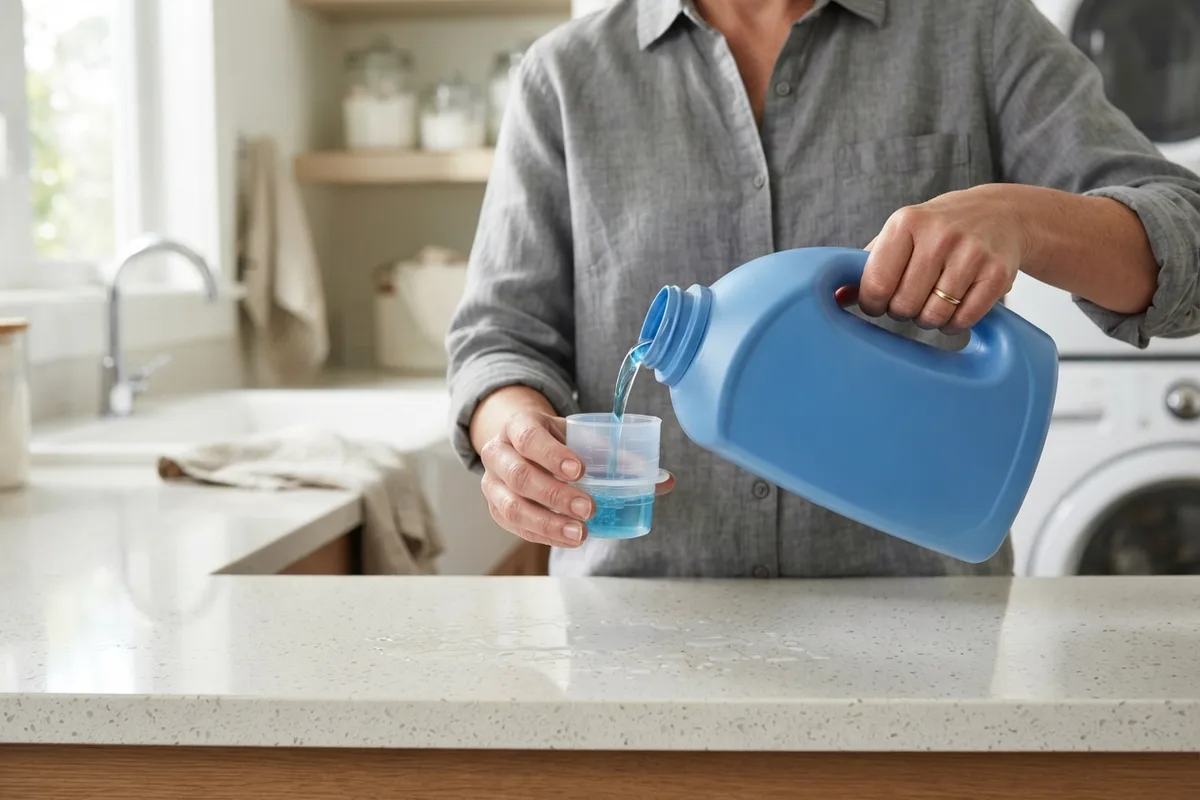
Even when using genuine HE detergent, pouring in too much soap creates excess foam that the machine cannot rinse away. Recommended dosage lines on detergent measuring caps are designed for average water conditions and heavy dirt levels.
If your home utilizes a water softener or has naturally soft water, detergent suds up far more aggressively:
- Cut your liquid detergent dosage in half if you have a whole-house water softener.
- For normal, everyday laundry loads in soft water, 1 to 2 tablespoons of concentrated HE liquid detergent is usually sufficient.
- Measure detergent with a dedicated measuring spoon or calibrated cap rather than free-pouring directly from the bottle.
- Increase dosage slightly only when washing heavily soiled work clothes or oversized loads in hard water.
To learn more about how water volume affects detergent performance, review our guide on how many gallons of water a washing machine uses.
Detergent & Water Condition Reference Guide
| Water Type | Load Size | Recommended HE Liquid Detergent Amount | Common Overflow Risk |
|---|---|---|---|
| Hard Water | Medium / Normal | 2 Tablespoons (Approx. Half Cap) | Low risk of excess sudsing |
| Hard Water | Large / Heavy Dirt | 3 to 4 Tablespoons | Moderate risk if over-dosed |
| Soft Water | Medium / Normal | 1 Tablespoon | High risk if standard cap amounts used |
| Soft Water | Large / Heavy Dirt | 1.5 to 2 Tablespoons | High risk with non-HE detergents |
4. Flush Away Accumulated Soap Scum and Residue
Over months of regular laundry, undissolved detergent, fabric softener, and body oils build up on the outer wash tub and inside internal recirculation hoses. This sticky layer of soap scum re-activates during fresh cycles, creating mysterious suds even when you add very little new detergent.
To eliminate hidden soap scum deposits:
- Ensure the wash tub is completely empty of clothing.
- Pour two cups of distilled white vinegar or a commercial washing machine cleaner tablet directly into the empty drum.
- Select the washer's dedicated Tub Clean cycle, or set the machine to its hottest water temperature and longest heavy-duty cycle.
- Allow the hot water and acid to dissolve built-up detergent film along the outer drum walls.
- Wipe down the rubber door boot gasket on front-load models with a microfiber cloth dipped in vinegar to remove trapped foam residue.
If your washer is also leaving white streaks or slimy films on dark garments after washing, check out our guide on why your washer is leaving residue on clothes.
5. Clear Partial Drain Hose and Pump Filter Clogs
If detergent suds overflow out of the wall standpipe behind the machine rather than the wash tub, the issue lies in slow drainage. A partial clog in the drain hose or pump filter forces soapy water to back up and overflow when the pump empties the tub at high speed.
- Pull the washer away from the wall to inspect the flexible drain hose.
- Ensure the drain hose is not pushed too deep into the wall standpipe; it should extend no more than 6 to 8 inches into the pipe to allow proper air venting.
- Check the drain hose for kinks, pinches, or heavy lint accumulation near the outlet.
- On front-load washers, open the lower access panel and clean out the drain pump coin trap filter to ensure full drain flow rate.
- If the standpipe itself overflows, use a drain snake or call a plumber to clear lint clogs inside your home's drain plumbing.
When to Call a Pro
While most detergent sudsing problems stem from dosage and detergent choices, persistent foam or water leaks can point to failing hardware components.
You should reach out for professional repair assistance if you experience:
- Suds or water leaking into internal electrical compartments or tripping circuit breakers.
- A drain pump motor that hums continuously without pumping water.
- Damaged or torn door boot gaskets on front-load machines that allow foam to escape.
- Software errors (such as Suds or SD error codes) that persist after thorough cleaning.
When laundry problems go beyond basic cleaning, True Appliance Repair can connect you with an experienced local appliance pro to diagnose pump, pressure switch, or gasket issues. Typical washing machine drain pump or pressure switch repairs range from $150 to $300 (varies by area and model).
If you are dealing with other appliance issues throughout your home, browse our complete list of home services at True Appliance Repair for expert guidance.
FAQ
Why does my washer say SUDS or SD on the display?
Modern digital washers display a SUDS or SD error code when internal pressure sensors detect excessive air foam in the tub during draining. The machine will automatically pause, add extra cold water, and attempt to dissolve the foam. If the suds do not dissipate within a set timeframe, the cycle aborts to protect the pump from air-locking.
Can excess suds damage my washing machine?
Yes. Thick soap suds can push past internal shaft seals, corrode tub bearings, and leak into motor windings or electronic control panels. Suds also create backpressure on the drain pump motor, causing it to overheat and fail prematurely.
How do I clear suds from a front-load washer door leak?
Immediately cancel the cycle and select a Drain/Spin program to clear standing liquid. Place towels along the floor underneath the door. Once the door unlocks, wipe down the inside glass and rubber gasket ring with plain warm water to clean away slick detergent residue before running a tub clean cycle.