
When temperatures drop below freezing in an unheated home, cabin, or vacation property, leftover water trapped inside your dishwasher can expand and crack the inlet valve, pump housing, or supply hoses. Learning how to winterize a dishwasher takes less than an hour and spares you from flooding and costly spring repairs. Follow these six safe steps before turning down your thermostat for the season.
1. Shut Off Power and Water Supply
Before touching any hoses or internal parts, cut electricity and water to the appliance completely. Never work on a live dishwasher, especially when water is involved.
- Locate your home's main electrical panel and flip the dedicated dishwasher circuit breaker to the "Off" position. If your unit plugs into an under-sink outlet instead of being hardwired, unplug the power cord.
- Open the cabinet beneath your kitchen sink and find the hot-water shutoff valve feeding the dishwasher's supply line.
- Turn the valve clockwise until it stops completely, without forcing a stiff handle.
- Re-verify that power stays off before reaching underneath the sink or behind the toe kick.
If you are preparing your whole kitchen for cold weather, review our home appliance vacation checklist too.
2. Disconnect and Drain the Water Line
Even after you shut off the valve, pressurized water stays trapped inside the braided supply line running from the sink cabinet to the dishwasher's inlet valve. Draining this line prevents a split hose or cracked brass fitting during a hard freeze.
- Place a shallow baking pan and a thick towel directly beneath the under-sink shutoff valve.
- Use an adjustable wrench to slowly loosen the compression nut connecting the dishwasher supply line to the valve.
- Hold the loose end of the line over a bucket so gravity pulls trapped water out.
- Leave the line disconnected, or wrap the open end loosely with a clean rag to keep dust out while letting air circulate.
If your shutoff valve drips steadily even when turned all the way closed, stop and have a plumber replace the worn valve before continuing.
3. Clear Water From the Drain Hose
The corrugated drain hose loops under your sink to connect the dishwasher pump to your sink tailpiece or garbage disposal. Water naturally settles in the low dips of that hose and can freeze solid overnight.
- Keep your bucket and towels positioned underneath the sink drain trap or garbage disposal inlet.
- Loosen the screw clamp securing the dishwasher drain hose to the disposal or sink tailpiece with a flathead screwdriver or nut driver.
- Pull the hose free and lower the open end below the level of the dishwasher floor into your bucket.
- Gently tilt and press along any low spots in the hose so trapped pockets of water flow out completely.
- Leave the hose pointed into a dry catch basin if your cabinet stays empty all winter.
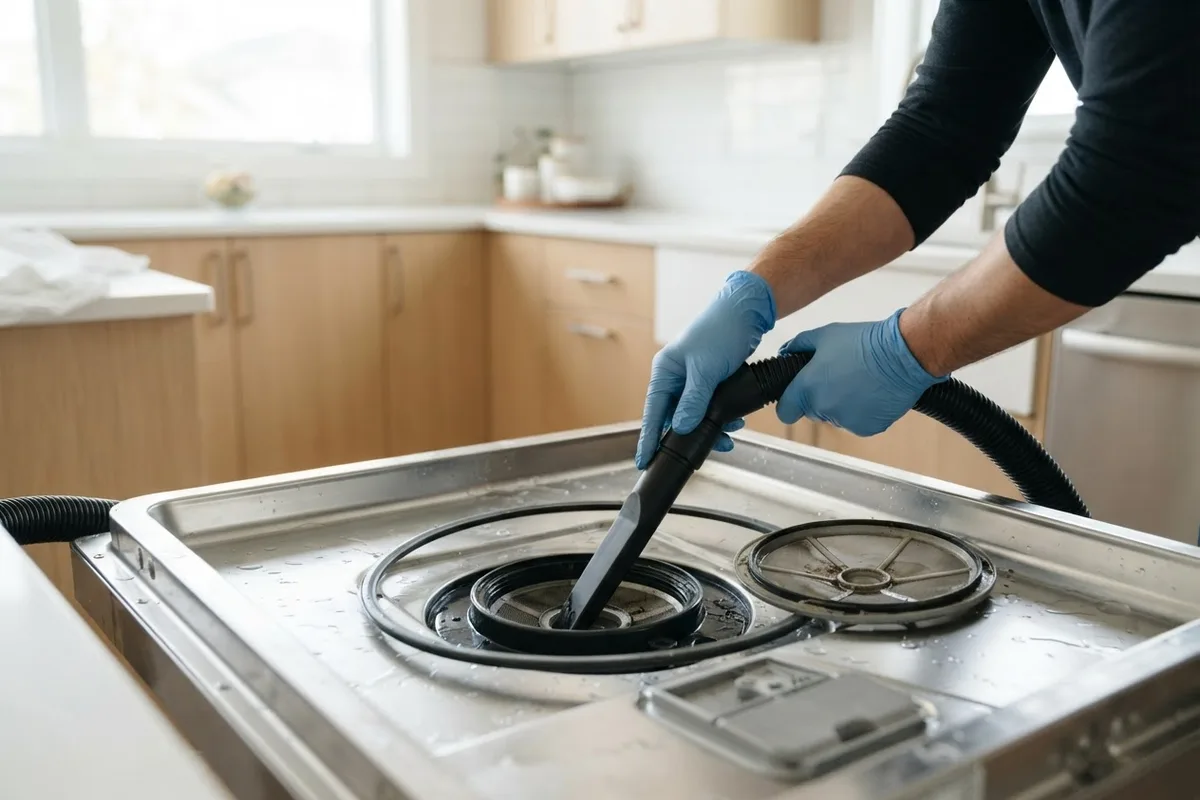
4. Empty the Sump and Pump Housing
Opening the dishwasher door reveals a dry-looking tub, yet up to a quart of water normally sits hidden inside the sump basin beneath the lower rack. That pocket surrounds your circulation pump seals and drain impeller.
- Slide out the bottom dish rack and set it aside on a towel.
- Twist and lift out the cylindrical mesh filter and flat filter screen at the bottom of the tub.
- Use a turkey baster or large sponge to pull out the standing water pooled inside the sump well.
- Attach a crevice tool to a wet-dry shop vacuum and suction the remaining moisture from the pump housing and sump corners.
- Wipe the tub walls, door gasket, and filter screens completely dry with a microfiber cloth, then set the dry filters back in place.
5. Protect Seals With RV Antifreeze
Even with a shop vacuum, tiny droplets can cling inside the internal water inlet valve and pump chamber. In unheated properties that face prolonged sub-zero cold, food-safe RV antifreeze provides reliable backup protection for internal rubber seals and plastic chambers.
- Purchase non-toxic, propylene-glycol RV or marine antifreeze rated for potable water lines—never use automotive ethylene-glycol antifreeze, which is poisonous.
- Pour about one cup of pink RV antifreeze directly into the dry sump basin at the bottom of the tub.
- Using a small funnel, pour a splash into the disconnected water supply line if you want extra inlet valve protection.
- Leave the pink liquid sitting in the sump until spring, when a hot rinse cycle flushes it safely down the drain.
6. Prop the Door and Label the Controls
Finishing your winterization routine with proper airflow and clear reminders keeps odors away and stops a house sitter or early-spring guest from accidentally starting a dry, disconnected machine.
- Wipe the rubber perimeter door gasket dry so moisture does not freeze the seal shut against the tub liner.
- Wedge a clean folded dish towel or wooden spacer at the top edge of the door so it stays cracked open by one to two inches.
- Place a strip of bright painter's tape over the control panel and across the under-sink water valve with a handwritten note reading "Winterized: Water Off."
- Double-check that the dishwasher breaker stays flipped off; if electrical trouble pops up when restarting in spring, check our guide on why a dishwasher trips the breaker.
Choose the Right Freeze-Protection Method
Not every home needs full antifreeze treatment. Use this quick reference to match your winterizing steps to how cold your kitchen gets while you are away.
| Winter Condition | Recommended Method | Key Precaution |
|---|---|---|
| Heated home (55°F+ indoors) | Drain sump & shut off valve | Leave cabinet doors open during cold snaps |
| Unheated home (32°F–45°F) | Drain lines + shop vac sump | Disconnect supply line to relieve pressure |
| Cabin or deep freeze (<32°F) | Full drain + RV antifreeze | Use propylene-glycol potable RV formula only |
| Short 1–2 week winter trip | Shut off valve + dry tub | Keep indoor heat set to at least 55°F |
Whichever method fits your home, jot down the steps you took so reversing them in spring takes only five minutes. Always reconnect both water and drain hoses tightly before restoring breaker power.
When to Call a Pro
Most homeowners can handle basic winterizing with an adjustable wrench, towels, and a wet-dry vacuum. However, stop and call a pro right away if your dishwasher is hardwired with frayed wiring, if your circuit breaker trips repeatedly when switched off or on, or if a corroded under-sink shutoff valve refuses to close completely. Never disassemble your home's electrical panel, internal heating element wiring, or sealed motor assemblies yourself.
If you suspect freeze damage already happened—such as water pooling under the toe kick when you turn the valve back on—reach out for help before running a wash cycle. Typical US repairs for a cracked water inlet valve or circulation pump generally range from $150 to $400, though final pricing varies by area and model. True Appliance Repair can match you with a local dishwasher technician to inspect hidden leaks safely.
FAQ
Can I just pour regular antifreeze into my dishwasher?
No. Standard automotive antifreeze contains toxic chemicals that can contaminate your dishes and household plumbing. Always choose non-toxic, pink propylene-glycol RV or marine antifreeze labeled safe for potable drinking water systems, and run two hot empty rinse cycles in spring before washing dishes.
Do I need to winterize a dishwasher if my heat stays on?
If your thermostat stays at 55°F or higher all winter, full winterizing is usually unnecessary. However, if your dishwasher sits against an uninsulated exterior wall, shutting off the water supply valve and propping the under-sink cabinet doors open during severe cold snaps adds smart protection.
How do I de-winterize my dishwasher in the spring?
Remove the painter's tape reminder, reconnect the supply line and drain hose securely, and slowly open the hot-water shutoff valve while checking for drips. Restore power at the breaker, then run one or two short hot cycles with an empty tub to flush out any RV antifreeze.
What happens if a dishwasher freezes by accident?
Expanding ice commonly cracks the plastic water inlet valve, splits the drain hose, or damages the circulation pump housing. Do not run the machine if it froze; thaw the kitchen gradually, inspect underneath for leaks, and schedule a pro check before starting a cycle.