
Sudden blackouts and utility restoration surges can silently fry appliance control boards, strain refrigerator compressors, and leave stagnant water sitting inside mid-cycle washers and dishwashers. This power outage appliance checklist gives you six safe, practical steps to protect every major machine before, during, and after a storm so you avoid preventable repair bills.
1. Unplug Major Appliances During an Outage
The biggest threat to home appliances during a blackout usually arrives the moment utility power snaps back on. Incoming voltage often spikes unevenly for several seconds, sending a damaging jolt through sensitive electronics and motors.
- Keep your hands completely dry and turn off dials or control switches on ovens, ranges, washers, dryers, and garbage disposals.
- Unplug accessible machines by gripping the plug head—never yank the power cord—starting with your microwave, washing machine, electric dryer, and under-sink garbage disposal.
- For hardwired units like dishwashers, wall ovens, and electric cooktops, switch off their individual breakers at the electrical panel only if the area is dry and clearly labeled. Never remove the panel cover itself.
- Leave a single table lamp switched on so you can tell immediately when utility power returns.
2. Keep Fridge and Freezer Doors Shut
Opening a refrigerator or freezer during an outage lets cold air spill out fast and forces the compressor to work overtime once electricity returns. Keeping doors sealed protects both your groceries and the sealed cooling system.
- Keep refrigerator and freezer doors closed as soon as the lights go out, and alert everyone in the household not to peek inside.
- Transfer everyday drinks and snacks into an insulated cooler with ice packs early in a storm so nobody needs to open the main fridge.
- Wait 5 to 10 minutes after power stabilizes before plugging your refrigerator back in, allowing utility voltage to level out before the compressor starts.
- Check food safety temperatures with an appliance thermometer two hours after restarting, and follow our refrigerator maintenance checklist to keep airflow and seals working efficiently year-round.
3. Clear Mid-Cycle Water and Wet Laundry
When an outage interrupts a washing machine or dishwasher mid-cycle, dirty water can sit inside the tub for hours. That standing water creates musty odors, stresses door gaskets, and can even seep onto flooring if a valve failed to close completely.
- Confirm the appliance is unplugged or its dedicated breaker is turned off before reaching near any standing water.
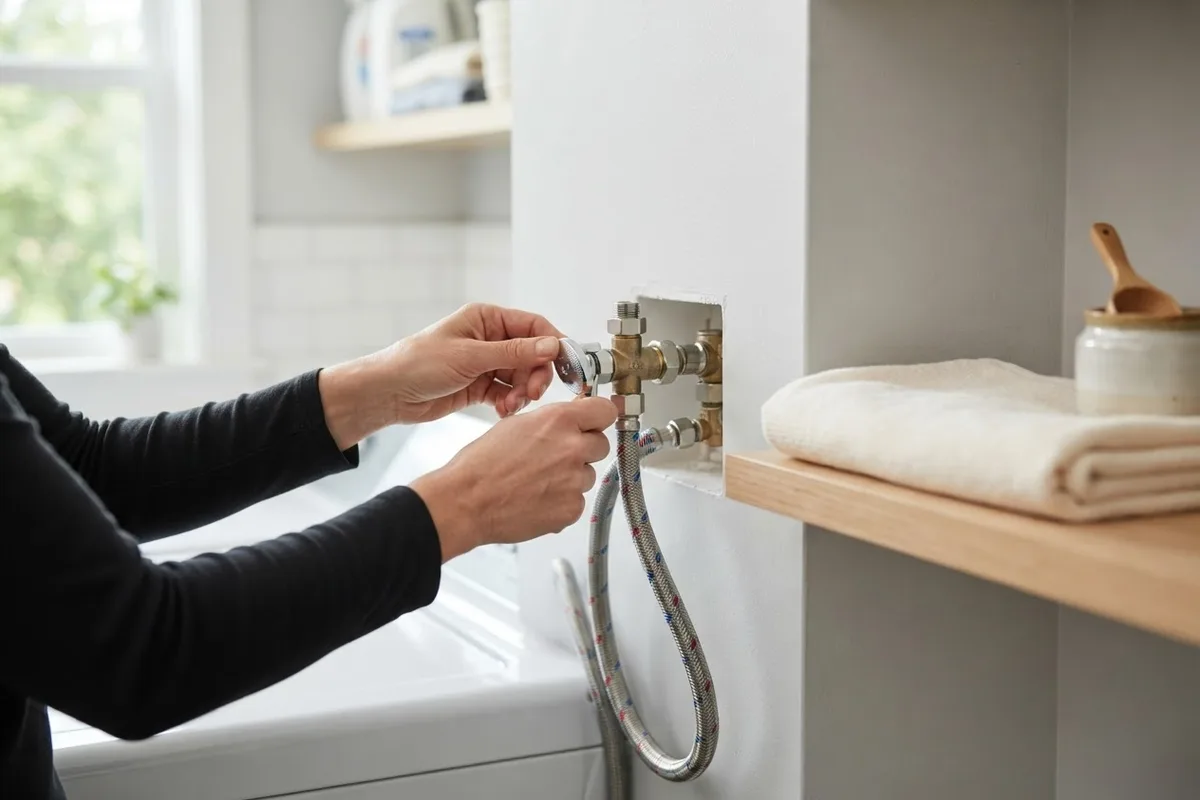
- Turn the hot and cold supply valves clockwise to shut off water flow behind the washer or under the kitchen sink if you notice any drips.
- Lay thick towels along the floor before opening a dishwasher door slightly, and scoop out pooled water using a plastic cup and bucket.
- Never force open a locked front-load washer door while water sits above the bottom of the glass; wait for power to return to run a drain-and-spin cycle, or remove damp clothes from a top-load tub and hang them to dry.
4. Stagger Power-On Steps After Restoration
Flipping every major appliance back on simultaneously can cause an immediate voltage drop or trip household breakers, especially in older homes. Bringing machines online one by one protects motors and gives you time to spot abnormal sounds.
- Wait 10 to 15 minutes after your indicator lamp stays steadily lit, since utility crews often experience brief secondary flickers during grid restoration.
- Plug in your refrigerator first and listen for a smooth hum rather than repeated clicking from the back panel.
- Wait about five minutes, then restore power to one major appliance at a time—moving through your dishwasher, washer, dryer, and microwave individually.
- Flip hardwired appliance breakers back on one switch at a time with dry hands, then reset digital clocks and test a single button on each touchpad to confirm responsive controls.
5. Run Quick Post-Outage Appliance Checks
Even when lights and clocks turn back on normally, a surge can trip internal safety switches or weaken heating components. Running a brief inspection right after a storm catches small issues before they turn into leaks or breakdowns.
- Switch off your garbage disposal at the wall, then press the red reset button underneath the unit if it fails to start.
- Run a short rinse or drain cycle on your washer and dishwasher while keeping an eye on floor edges and supply hoses for slow leaks.
- Preheat your oven for 10 minutes to verify steady heat; if an electric model stays lukewarm or fails to warm up, walk through our electric oven heating troubleshooting guide.
- Inspect gas stove burners for clean blue flames, and if you smell gas at any point, turn all knobs off immediately, leave the house, and contact your gas utility from outside.
6. Add Surge Protection Before the Next Storm
Taking a few preventive steps on a calm weekend saves a lot of scrambling during the next winter ice storm or summer thunderstorm. Protecting electronics ahead of time is usually far cheaper than replacing fried circuit boards.
- Never plug high-draw appliances like refrigerators, washers, or microwaves into standard multi-outlet power strips, which can overheat and create a fire hazard.
- Use single-outlet appliance surge protectors rated specifically for motor loads on compatible plug-in units where outlet clearance allows.
- Consider hiring an electrician to install a whole-home surge protector at your main panel; typical US installation costs range from $250 to $700, varying by area, panel setup, and equipment model.
- Store a working flashlight, waterproof marker for labeling breakers, and a printed copy of this checklist near your utility closet so everything is ready before bad weather arrives.
Quick Post-Outage Appliance Reference
Use this quick-reference chart to check each major appliance safely after a blackout.
| Appliance | During Outage | Safe Post-Outage Check | Stop & Call a Pro If |
|---|---|---|---|
| Refrigerator & Freezer | Keep doors shut; unplug if accessible | Wait 5–10 min, plug in, verify steady cooling | Compressor clicks repeatedly or stays warm |
| Washing Machine | Unplug; close water valves if dripping | Run short drain/spin; check hoses for leaks | Breaker trips immediately or control panel is dead |
| Clothes Dryer | Unplug electric unit; turn gas dial off | Run 5-minute air-fluff then low-heat test | Burning odor, no heat, or gas smell |
| Dishwasher | Turn off dedicated breaker; towel floor | Run quick rinse cycle; inspect under sink | Standing water won't drain or error codes flash |
| Oven & Range | Turn knobs off; flip electric breaker off | Test 10-minute preheat; check blue gas flames | Sparking, gas odor, or unresponsive touchpad |
| Garbage Disposal | Switch wall toggle off; unplug under sink | Press red bottom reset button; run cold water | Loud humming after reset or burning smell |
When to Call a Pro
Most appliances bounce back cleanly after a blackout once they are reset in the right order, yet some post-storm problems are never safe for DIY troubleshooting. Stop immediately and leave the appliance unplugged or its breaker switched off if you smell burnt plastic, spot dark scorch marks on a wall outlet, hear repeated clicking from a refrigerator compressor, or notice a breaker that trips the instant you reset it.
Never open an electrical panel cover, attempt repairs on sealed refrigeration tubing, or work on gas lines and gas valves yourself. Surge-related repairs such as replacing a damaged main control board or relay typically cost $200 to $550 in the US, while a standard diagnostic visit generally runs $80 to $150—both vary by area, brand, and model. If a major machine refuses to power on or behaves erratically after a storm, True Appliance Repair can connect you with an independent local technician through our home appliance repair service so you get an accurate diagnosis before deciding what to do next.
FAQ
How long should I wait to plug appliances back in after a power outage?
Wait 10 to 15 minutes after utility lights stay steadily illuminated before plugging major appliances back in. Power often flickers or fluctuates right after crews restore a neighborhood line, and waiting helps protect compressors and control boards from secondary surges.
Can a power outage ruin a refrigerator or washer control board?
Yes. The blackout itself rarely causes damage, but the voltage spike that occurs when utility electricity snaps back on can burn out circuit boards, relays, and display panels. Unplugging accessible appliances during the outage is the simplest way to prevent that jolt.
Should I turn off my main breaker during a winter power outage?
You usually do not need to shut off the entire main breaker unless you expect flooding near outlets or cannot safely unplug individual appliances. Turning off individual labeled breakers for hardwired appliances and unplugging cord-connected units protects your equipment while leaving one light circuit active so you know when power returns.
Why won't my dishwasher or oven turn on after the power comes back?
Start by checking whether the dedicated breaker tripped halfway to the middle position—flip it fully off, then firmly back on with dry hands. Also check nearby GFCI outlets for a tripped reset button, and stop to call a pro if the breaker trips again right away or the display remains completely blank.