
Finding your refrigerator door not closing all the way is frustrating, especially after a big grocery run or when shelves are packed with holiday leftovers. Even a quarter-inch gap lets warm kitchen air rush inside, spoiling fresh food faster, building up freezer frost, and triggering door alarms—one of the most common reasons why your refrigerator is beeping. Most door-closing problems take less than 20 minutes to fix with basic household tools.
Before pulling the refrigerator away from the wall or working near hinge wiring, unplug the power cord and shut off the water supply valve behind the cabinet so the line cannot kink or tear.
Clear Blocked Shelves and Misaligned Drawers
Overloaded shelves and crooked crisper bins are the number-one reason a fridge door springs back open. Heavy platters, tall condiment bottles, and off-track drawers quietly push against the inner door liner right before the magnetic seal can grab.
- Open the door fully and inspect the front edge of every glass shelf for containers, baking dishes, or beverage cartons sticking out past the rim.
- Pull each crisper and deli drawer out slightly, then slide it straight back until it sits flush on both plastic tracks.
- Check the door bins for heavy milk jugs or glass jars that may be dragging the door downward or snagging against an interior shelf.
- Close the door gently from about six inches away to see whether it pulls itself shut smoothly without bouncing back.
If the door still resists closing once everything inside sits flush, move on to the rubber seal.
Clean Sticky Buildup Off the Door Gasket
Spilled juice, cooking grease, and crumbs settle into the folds of the rubber door gasket over time. Sticky residue prevents the flexible seal from lying flat against the metal cabinet frame, leaving small air gaps that raise interior temperatures and can even leave you dealing with a refrigerator leaking water inside from excess condensation.
- Mix a few drops of mild dish soap into a bowl of warm water—skip bleach or harsh solvents, which dry out and crack rubber seals.
- Dip a soft microfiber cloth into the soapy water and wipe the entire perimeter of the gasket, gently opening the accordion folds to remove trapped grime.
- Use a soft-bristled toothbrush dipped in the soapy mix to scrub stubborn sticky spots along the bottom rail, where spills pool most often.
- Wipe the metal cabinet surface where the magnet meets the frame, then dry both the gasket and the cabinet thoroughly with a clean towel.
Adjust the Leveling Feet for a Slight Backward Tilt
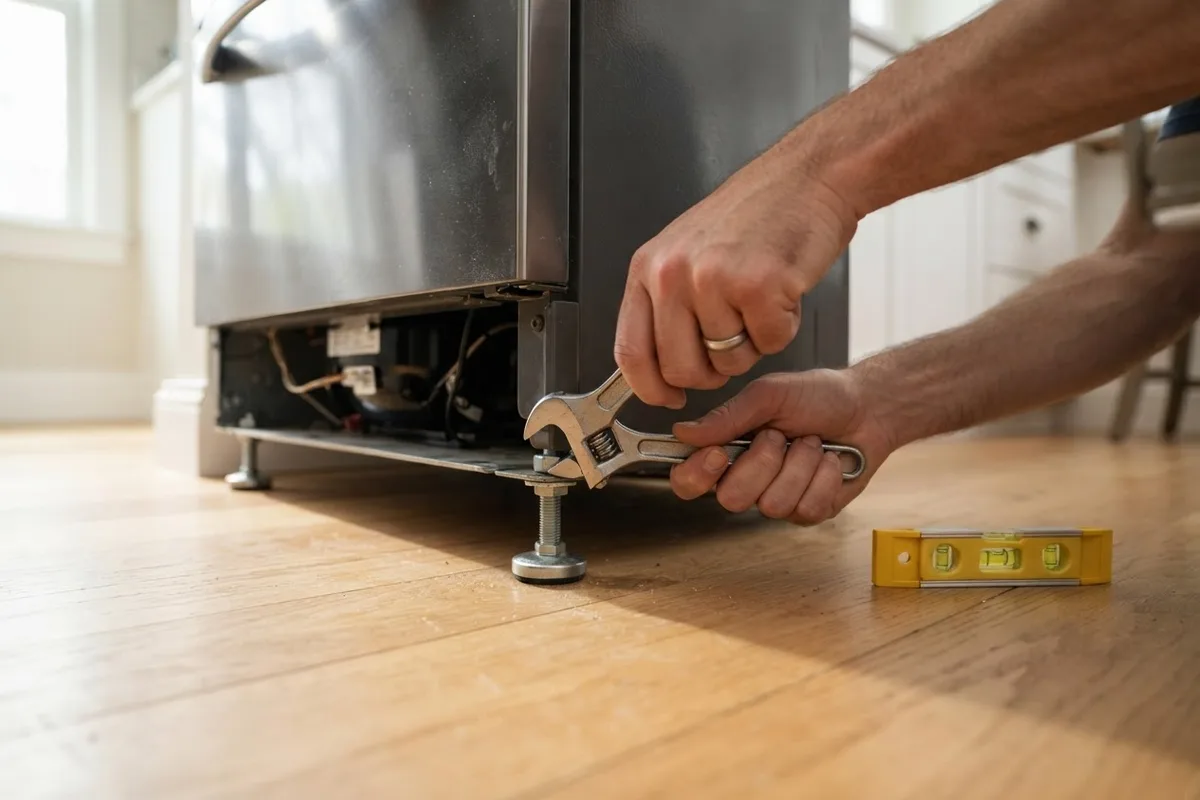
Refrigerators are built to lean slightly backward—roughly a quarter inch higher in front than in back—so gravity naturally swings the door shut instead of letting it drift open. Settling floors, recent kitchen remodeling, or shifting the fridge to sweep behind it can throw that tilt off.
- Unplug the refrigerator and shut off its water supply valve if you need to roll the unit out for access.
- Pop off the bottom front kickplate grille by pulling it straight forward or releasing its side clips to expose the two front leveling legs.
- Place a small bubble level across the top of the refrigerator cabinet from front to back to check the current slope.
- Turn both front leveling feet clockwise with an adjustable wrench or screwdriver to raise the front edge until the door closes on its own from a 45-degree angle.
- Reattach the kickplate, restore water and power, and confirm the cabinet sits steady with no rocking.
Reshape a Flattened Seal With Gentle Warmth
A spotless gasket can still fail to seal if one section has been crushed, kinked, or warped out of shape. You can test the magnetic grip in seconds before deciding whether the seal needs reshaping or replacement.
- Close the refrigerator door on a crisp sheet of plain paper, then tug it out slowly; repeat this test every six inches around the entire perimeter.
- Mark any spot where the paper slides out with almost no resistance—that is where warm kitchen air is slipping inside.
- Set a handheld hair dryer to low heat and warm the flattened section of rubber from about four inches away for 15 to 20 seconds, keeping the dryer moving so the plastic liner never overheats.
- Gently massage the softened rubber outward with your fingers, then close the door and hold it shut for a minute so the magnet pulls the gasket back into shape.
- Dab a razor-thin coat of food-grade silicone grease along dry hinge-side folds if the gasket pinches when closing.
Check the French Door Mullion and Hinge Alignment
French door refrigerators rely on a vertical hinged strip—called a mullion or flipper—attached to the left door to bridge the gap between both doors. If that flap snaps shut early or sits crooked, the right door slams straight into it and bounces open.
- Unplug the refrigerator before touching the mullion or upper hinge covers, because many French door mullions contain low-voltage anti-sweat heater wires.
- Swing the mullion gently by hand to confirm it pivots smoothly and folds flat against the inside of the door when open.
- Inspect the small guide tab at the top of the mullion and the plastic slot on the cabinet ceiling; wipe away any dried spills or ice buildup blocking the track.
- Check whether one door hangs lower than the other—if the top edges look uneven, remove the top hinge cover and tighten loose mounting bolts, or turn the lower hinge adjustment screw to level both doors.
Inspect Worn Door Closing Cams and Latches
Hidden beneath the bottom door hinge on most refrigerators sits a small nylon piece called a door closing cam. As the door swings open, the cam rides up a slight ramp; as you let go, gravity slides it back down to pull the door tightly shut. Over years of daily use, that nylon ramp wears flat or cracks.
- Listen closely as you open and close the door for a faint clicking, popping, or grinding sound coming from the bottom hinge.
- Shine a flashlight under the lower hinge bracket to look for white plastic shavings, a cracked nylon collar, or a door that drops noticeably when opened past halfway.
- If your model uses a top mechanical latch or spring-assisted closer, check that the strike plate screws are snug and the spring arm is not bent.
- Match the replacement cam to your refrigerator model number—parts typically cost $15 to $40, though pricing varies by area and model—or schedule a technician to lift the heavy door safely during replacement.
Quick-Reference Symptom and Fix Guide
| What You Notice | Most Likely Cause | Best First Step |
|---|---|---|
| Door bounces back right before sealing | Overstuffed shelf or off-track drawer | Push bins flush and reposition sticking items |
| Door sticks or leaves tiny edge gaps | Grime or flattened rubber gasket | Wash with soapy water and run the paper test |
| Door slowly drifts open on its own | Fridge tilted forward or uneven floor | Raise front leveling feet for a slight tilt back |
| French doors collide in the middle | Jammed mullion flapper or sagging hinge | Unplug unit, clear guide slot, and level hinges |
| Clicking sound at the bottom hinge | Cracked or worn nylon door closing cam | Inspect lower hinge for plastic wear or cracks |
When to Call a Pro
Cleaning the gasket, reorganizing shelves, and adjusting front leveling feet are straightforward DIY tasks for most homeowners. Stop and call a repair technician if you spot frayed wires inside a French door hinge, need to replace a torn gasket on a built-in unit, or notice the metal door frame itself is bent out of square. You should also bring in a pro if the fridge trips the circuit breaker, needs electrical panel attention, or stays warm inside hours after the door seals tightly—lingering warm temperatures can point to a sealed-system refrigerant or compressor issue that requires specialized equipment.
Typical US repair costs vary by area and model, but expect roughly $150 to $300 for a technician to replace a worn door gasket, hinge, or closing cam, and $200 to $400 for a French door mullion assembly with heater wiring. If you would rather skip the guesswork and heavy lifting, True Appliance Repair can match you with a local refrigerator repair pro in your area.
FAQ
How long can a refrigerator door stay slightly open before food spoils?
Perishable items like milk, raw meat, and cooked leftovers become unsafe once the interior climbs above 40°F for more than two hours. If the door was cracked open briefly and items still feel cold, close it promptly and check the cabinet temperature with an appliance thermometer after an hour. Discard meat, dairy, or poultry that sat warm overnight.
Should I put petroleum jelly on a refrigerator door gasket?
Avoid petroleum jelly, as petroleum-based products gradually break down rubber and vinyl seals, causing them to swell or crack sooner. If the hinge-side gasket drags or folds over while closing, clean it thoroughly and apply a razor-thin coat of food-grade silicone grease instead.
How much should a refrigerator tilt backward to close properly?
Aim for the front edge of the refrigerator to sit about one-quarter to one-half inch higher than the back. That subtle slope is barely visible, yet gives the door enough gentle momentum to swing shut and engage the magnetic seal every time.
Can I replace a torn refrigerator door gasket myself?
On most freestanding refrigerators, a replacement gasket either presses into a channel or sits behind a perimeter retainer strip held by hex screws. Soak the new gasket in warm water for 10 minutes before installing it so shipping creases relax, then verify the seal all the way around with a sheet of paper.