
A steady chime from the kitchen is frustrating, especially when you are juggling holiday groceries or winding down for the night. Fortunately, a refrigerator beeping alarm is usually a helpful early warning rather than a major breakdown. Most chimes trace back to a slightly open door, warm interior air, a brief power outage, or an overdue filter—all issues you can safely check in minutes.
1. Check Door Seals and Overstuffed Shelves
The most common trigger for a refrigerator beeping sound is a door that never fully shut. Heavy casserole dishes, tall bottles in door bins, or packed holiday leftovers often press against the interior liner just enough to leave a narrow gap.
- Scan both the refrigerator and freezer compartments for containers, drawers, or baskets sticking past the shelf edge.
- Push crisper and deli drawers all the way back onto their tracks.
- Close each door and run your fingertips along the rubber gasket to feel for cold air escaping or sticky residue breaking the seal.
- Slide a dollar bill between the gasket and the cabinet frame, shut the door, and tug gently—if it slips right out, clean the rubber seal with warm soapy water.
If buildup keeps the seal from gripping flat, follow our guide on how to clean appliance seals and gaskets before blaming a mechanical part.
2. Inspect the Door Switch and Hinge Alignment
Even when a door looks shut, your fridge relies on a small plunger switch or magnetic sensor to confirm closure. If the switch sticks or the door sags slightly on its hinges, the control board assumes the door is still open and keeps sounding the alarm.
- Locate the spring-loaded door switch along the inner frame or near the top hinge.
- Press the switch in and release it several times—if the interior light stays on or the plunger feels sticky, food spills may be jamming it.
- Unplug the refrigerator from the wall outlet before wiping around the switch housing with a lightly dampened microfiber cloth, then dry it completely.
- Step back and check whether both doors sit level at the top. A slight backward tilt helps doors swing shut naturally, while loose hinge screws let them droop.
Never pry open electrical housings behind the switch while power is connected.
3. Clear Blocked Air Vents in Fridge and Freezer
When cold air cannot circulate from the freezer evaporator into the fresh-food compartment, interior temperatures climb and trigger a high-temperature beep. This happens often right after a big grocery trip when cartons get pushed flush against the back wall.
- Locate the slotted air vents along the back wall of the freezer and the top-rear wall of the refrigerator.
- Leave at least two inches of open breathing room in front of every vent so chilled air moves evenly across your shelves.
- Check the back freezer panel for heavy white frost buildup. Thick ice across the vents can starve the refrigerator compartment of cold air.
- If you notice light condensation or surface frost near the frame from frequent opening, wipe it dry with a clean towel and keep the doors closed for several hours.
Heavy frost coating the entire rear freezer wall usually points to a defrost issue rather than crowded shelves.
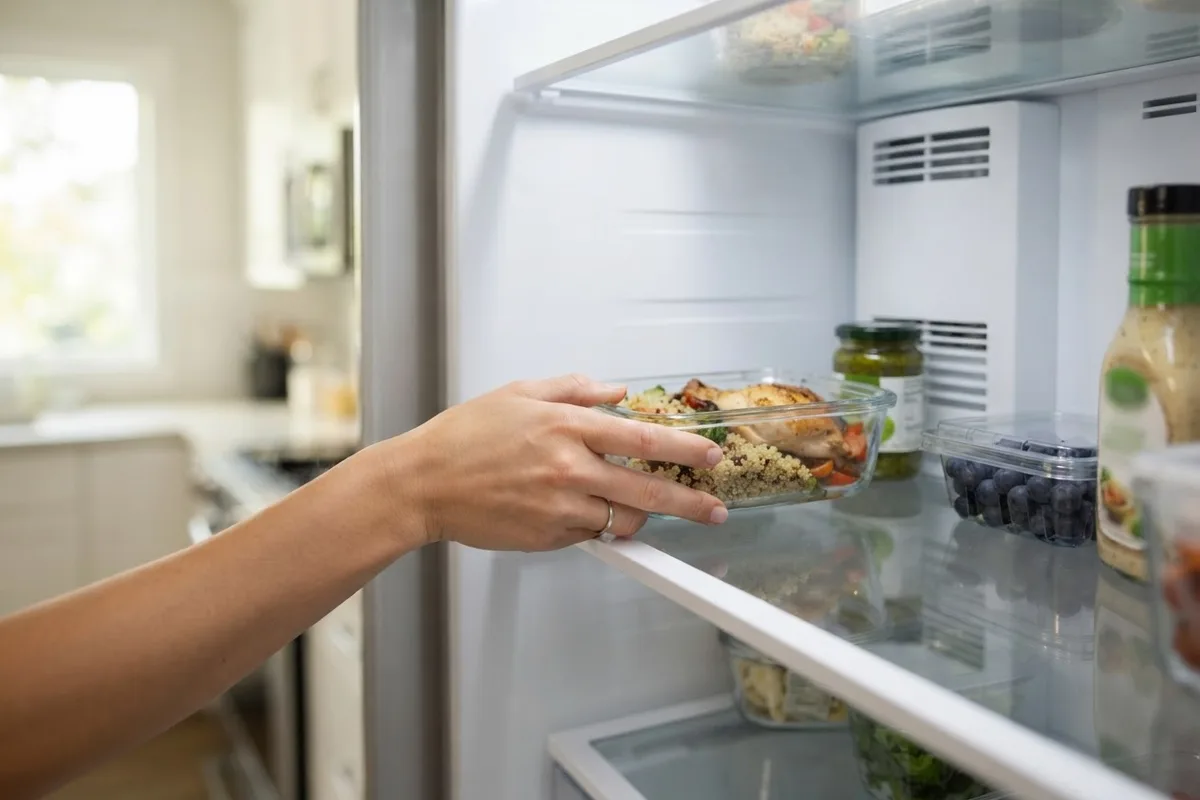
4. Check Internal Fridge and Freezer Temperatures
A temperature alarm chimes whenever either compartment stays too warm for too long—often after loading warm leftovers, holding doors open while unpacking, or accidentally bumping the control panel.
- Check the digital display to confirm the refrigerator is set between 37°F and 40°F and the freezer is set to 0°F.
- Place an independent appliance thermometer in a glass of water on the middle fridge shelf and another between packages in the freezer, then wait at least 8 hours for a reliable reading.
- Avoid placing steaming pots directly onto glass shelves; let hot dishes cool briefly in shallow containers so the cooling system does not fall behind.
- Give a newly stocked fridge 12 to 24 hours with minimal door openings to stabilize before assuming a part has failed.
If the thermometer stays well above 40°F in the fridge or above 10°F in the freezer after a full day, a cooling component needs inspection.
5. Reset the Control Panel After a Power Blink
Cold-weather storms, utility flickers, and brief outages regularly leave modern refrigerators chirping with a power-loss alert until you acknowledge it. Even a quick two-second power blink can glitch the control board and keep the tone repeating.
- Look at the dispenser or interior panel for a lit "Power Outage," "Alarm," or "Door Alarm" light, and press the matching reset button for three to five seconds.
- If the beeping continues or buttons will not respond, unplug the refrigerator from the wall outlet—or turn off its dedicated breaker if the plug is unreachable.
- Wait five full minutes so the control board fully resets, then restore power.
- Confirm your temperature settings once the display turns back on.
Seasonal weather shifts put extra demand on household appliances, so pairing this step with a quick winter appliance maintenance checklist helps catch small problems before they disrupt your kitchen.
6. Replace an Overdue Water or Air Filter
Many modern refrigerators sound a periodic reminder chime—usually paired with a blinking amber or red indicator—when the water filter or interior air filter reaches its six-month change interval. While less urgent than a high-temperature alert, the beep keeps returning until you swap the cartridge and reset the timer.
- Check your control panel for a "Replace Filter" or "Air Filter" icon.
- Before working on a tight water filter housing, shut off the cold water supply valve behind the fridge or under the nearby sink to prevent leaks.
- Twist or unlatch the old cartridge, seat the new filter firmly until it clicks, and turn the cold water valve back on.
- Press and hold the "Filter Reset" button for three to five seconds until the light clears, then flush a few pitchers of water through the dispenser to purge trapped air.
Quick Guide to Common Refrigerator Beep Alerts
Because alarm patterns differ by brand, pairing the sound with any lit dashboard icons helps narrow down the cause fast. Typical repair ranges below reflect broad US averages and vary by area, brand, and model.
| Beep Symptom | Most Likely Cause | First Safe DIY Check | Typical Pro Repair Range |
|---|---|---|---|
| Rapid beeps after 2–3 minutes | Door ajar or sticking switch | Clear shelves, clean gasket, test switch | $120–$250 (varies by area/model) |
| Continuous tone + warm food | High-temp alarm or blocked vents | Clear vents, verify 37°F / 0°F settings | $180–$450 (varies by area/model) |
| Chime + flashing power light | Brief outage or control glitch | Press Alarm Reset or unplug 5 minutes | $200–$500 for board work (varies by area/model) |
| Occasional beep + filter light | Expired water or air filter | Replace filter and hold Reset button | $20–$60 DIY filter (varies by model) |
| Clicking sound + temp warning | Failing start relay or compressor | Unplug and keep doors shut to protect food | $175–$650+ (varies by area/model) |
When to Call a Pro
Checking seals, clearing air vents, and resetting the panel resolve most refrigerator beeping issues, but some underlying causes are not safe or practical for DIY work. Stop troubleshooting and keep both doors shut to preserve cold air if you notice any of these signs:
- The freezer stays above 10°F or the refrigerator stays above 42°F for more than 24 hours even with clear vents and clean seals.
- Thick frost returns across the rear freezer wall, pointing to a failed defrost heater, thermostat, or evaporator fan.
- Repeated metallic clicking comes from the lower back compartment, which often signals a failing start relay or compressor.
- The unit trips the circuit breaker, smells like hot plastic, or flashes error codes that return immediately after a reset.
Never attempt hands-on work on sealed refrigerant lines, compressor assemblies, internal high-voltage wiring, or your home's electrical panel. If basic checks do not silence the alarm and restore steady cooling, True Appliance Repair can match you with a local appliance pro for refrigerator repair before spoiled groceries add to the cost.
FAQ
How do I temporarily silence a beeping refrigerator?
Press the "Alarm," "Door Alarm," or "Alarm Off" button on the control panel once to mute the chime while you inspect the doors and air vents. If the internal temperature sensor still detects warm air, the beep typically resumes after 10 to 30 minutes until the cooling issue is resolved.
Why is my refrigerator beeping when the doors are completely closed?
A closed door can still set off an alarm if the rubber gasket has a small gap, the hinges are slightly misaligned, or the door switch is stuck open. A beep with closed doors can also point to a high-temperature warning, a power-outage alert, or an expired filter reminder rather than a door problem.
Can overpacking a refrigerator cause it to beep?
Yes. Stuffing shelves too tightly blocks rear air vents and keeps interior drawers from closing completely, which can push a door slightly ajar or raise internal temperatures enough to trigger the alarm.
How long will food stay safe if my fridge is beeping from a cooling failure?
Standard US food-safety guidance notes that an unopened refrigerator generally keeps perishable food cold for around four hours, while a full, unopened freezer holds safe temperatures for about two days. Keep both doors closed as much as possible while you wait for cooling to recover or a technician to arrive.