
Freezing outdoor air, holiday hosting leftovers, and fluctuating power grids put extra strain on every major appliance in your home during winter. A single burst supply line or clogged exterior vent can turn a cold snap into an expensive emergency. Work through these seven simple DIY checks to protect your appliances, cut wasted energy, and keep everything running smoothly until spring.
1. Insulate Cold-Wall Water Supply Lines
Any appliance plumbed against an exterior wall—such as a kitchen ice maker, under-counter dishwasher, or laundry hookup—faces freeze risk when temperatures plunge. Before touching hoses or valves, unplug the appliance or switch off its circuit breaker, and turn the local water shutoff valve clockwise until closed.
- Slide the unit out slowly or open the sink cabinet to inspect the supply lines.
- Check rubber hoses for bulges, cracks, or damp fittings, and upgrade worn rubber lines to braided stainless steel.
- Wrap exposed copper or PEX supply pipes inside unheated cabinets or exterior wall cavities with snug foam pipe sleeves.
- During sub-freezing nights, leave sink cabinet doors slightly ajar so warm indoor air circulates around the plumbing.
- Turn the water valve back on slowly and blot each connection with a dry paper towel to confirm zero drips before restoring power.
2. Check Garage and Basement Appliances
Auxiliary refrigerators and deep freezers kept in unheated garages, mudrooms, or damp basements struggle when ambient temperatures drop below 50°F or sit too close to space heaters. When a garage grows too cold, standard thermostats stop cycling the compressor, allowing frozen food to thaw unnoticed.
- Unplug the unit before inspecting the power cord, plug prongs, and rear wall clearance.
- Check your owner's manual for the unit's minimum operating room temperature; many standard units require heated indoor conditions unless built specifically for cold spaces.
- Move stored boxes, sleds, and winter gear at least three inches away from the sides and back so air circulates freely.
- Keep appliances well away from portable space heaters, which can warp plastic liners and confuse temperature sensors.
- Place a simple standalone appliance thermometer inside both the fresh-food and freezer sections to catch temperature drift early.
3. Clear Dust From Cooling Coils and Vents
Winter indoor heating dries out household air and circulates extra lint, pet hair, and holiday dust straight onto condenser coils and intake louvers. When coils are blanketed in debris, compressors and cooling fans run longer to shed heat, driving up winter utility bills.
- Unplug the appliance from the wall outlet—or turn off its dedicated breaker if the plug sits behind a heavy built-in cabinet.
- Locate the lower front kickplate grille or rear access panel and gently unclip or unscrew it.
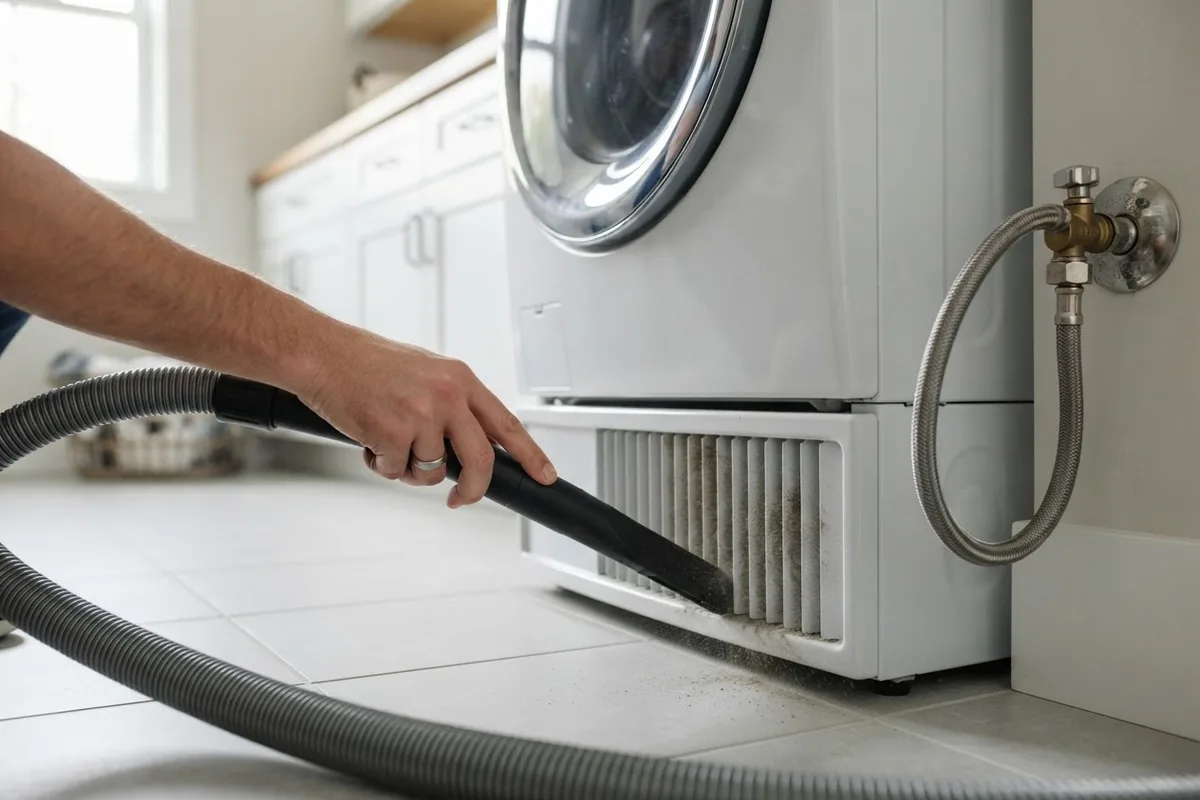
- Use a vacuum crevice attachment or long-handled coil brush to lift dust mats from the coils, fan blades, and surrounding floor space without bending delicate metal fins.
- Wipe louvered side vents on built-in ovens, cooktops, and laundry units with a slightly damp microfiber cloth.
- Reattach the grille, plug the unit back in, and verify the fan spins quietly without rattling.
4. Clean Door Seals Across All Appliances
Heavy winter cooking, roasting, and frequent door openings leave sticky grease, food crumbs, and detergent residue along rubber door gaskets. Dirty or stiff seals let warm air leak into cold cabinets and allow oven heat or wash water to escape.
- Always unplug the appliance—and let heated cavities cool completely—before cleaning any gasket.
- Mix warm water with a few drops of mild dish soap in a bowl, and dip a soft microfiber cloth or cotton swab into the solution.
- Gently wipe inside every fold of the rubber seal on your refrigerator, freezer, dishwasher, and front-load washer, avoiding harsh bleach or abrasive pads that dry out rubber.
- Check for cracks, flattened spots, or peeling corners, and follow our guide to cleaning appliance seals and gaskets for stubborn grime.
- Dry every gasket thoroughly with a clean towel so cold moisture does not freeze or mildew.
5. Clear Exterior Vents and Range Filters
Winter storms, wind-blown snow, and heavy comfort-food cooking create a double hazard for household exhaust systems. Blocked exterior vents trap humid air, lint, and combustion byproducts indoors while forcing motors to overheat.
- Turn off your range hood, cooktop, and dryer, and unplug electric units—or shut off the local gas supply valve before moving a gas appliance.
- Walk outside to check your dryer exhaust hood and kitchen wall cap; clear away snowdrifts, ice buildup, leaves, or stuck damper flaps.
- Detach aluminum mesh grease filters from your range hood, soak them in hot water with dish soap and baking soda for 15 minutes, then rinse and air-dry completely.
- Vacuum lint out of the dryer's lint housing slot with a narrow crevice tool.
- For deeper laundry-room prep, check our winter washer and dryer checklist before deep cold sets in.
6. Inspect Drain Hoses and Sink Traps
Fats, oils, and thick holiday gravy poured down drains solidify fast in cold winter plumbing, backing up dishwashers, garbage disposals, and laundry standpipes. Checking drain paths now prevents foul odors and messy mid-winter overflows.
- Switch off power at the wall switch or circuit breaker before reaching near a garbage disposal or adjusting dishwasher hoses.
- Never put your hand inside a disposal; use a flashlight and long tongs to remove any trapped debris, then flush the chamber with cold water for 20 seconds after grinding.
- Inspect the dishwasher's high-loop drain hose under the kitchen sink to confirm it arches securely above the disposal inlet.
- Check the washer's rear drain hose where it enters the wall standpipe to make sure it sits firmly without kinks.
- Pour a pot of hot tap water—not boiling water, which can soften PVC—through kitchen sink drains once a month to keep lines moving freely.
7. Protect Electronics From Winter Surges
Ice storms, heavy winds, and sudden winter grid demand spikes frequently cause brownouts and voltage surges that damage sensitive appliance control boards. Taking a few preventive electrical steps protects digital displays and motors all season.
- Never plug major heat-producing or motor-driven appliances like refrigerators, space heaters, or microwaves into flimsy extension cords or basic power strips.
- Confirm that countertop small appliances and disposals sit on properly functioning GFCI outlets by pressing the "Test" and "Reset" buttons monthly.
- If your home experiences flickering lights during a winter storm, unplug non-essential countertop appliances until utility power stabilizes.
- After a brief power outage, wait five minutes before restoring power to compressors so internal pressures equalize safely.
- Label each appliance breaker clearly on your main electrical panel door so anyone in the household can shut off a circuit quickly during an emergency.
When to Call a Pro
Routine cleaning and visual checks are great DIY habits, while gas, electrical, and sealed-system issues require trained hands. Typical US service visits for winter appliance repairs often run roughly $125 to $350 or more, though final pricing varies by area/model and required parts.
| Maintenance Task | Safe DIY Step | Stop and Call a Pro |
|---|---|---|
| Water lines | Wrap exposed pipes, inspect hoses | Leaking shutoff valves or burst wall pipes |
| Heating & cooling | Vacuum exterior coils and vents | Gas odors, burner issues, or sealed-system leaks |
| Power & controls | Test GFCI outlets, label breakers | Tripping main breakers, burning smells, or wiring faults |
Stop immediately and shut off the gas valve or breaker if you smell gas, notice scorched wiring, or hear loud compressor knocking. Never open an electrical panel to work on wiring, splice damaged cords, or cut into sealed refrigerant tubing yourself. When a deeper issue surfaces, True Appliance Repair can match you with an independent local technician through our home appliance repair service.
FAQ
How often should I do winter appliance maintenance?
Perform a full cold-weather walkthrough once in late autumn before deep freezes arrive, then do quick monthly checks on lint traps, grease filters, and water-line fittings through March. A mid-winter spot check after major storms also catches blocked exterior vents early.
Should I unplug appliances before a winter power outage?
Unplugging small countertop appliances and non-essential electronics when lights begin flickering protects circuit boards from sudden restoration surges. For large built-in units that are hard to reach, keep cabinet doors closed during an outage and wait five minutes after power returns before opening or restarting them.
Is it safe to keep a refrigerator or freezer in an unheated garage?
Many standard refrigerators struggle when garage air falls below 50°F because the thermostat stops signaling the compressor to cool the freezer compartment. Check your model's manual for approved ambient temperature ranges, or use a garage-ready model built for cold spaces.
What winter appliance problems cost the most to ignore?
Frozen water supply lines and clogged exterior dryer vents cause the costliest winter headaches because they lead to hidden water damage or overheating risks. Catching a slow drip or blocked exhaust damper early takes ten minutes and prevents major home repairs.