
Opening your fridge to find warm milk one morning and semi-frozen produce the next is a frustrating sign that your appliance is struggling. Refrigerator temperature fluctuating between extremes spoils grocery budgets and creates food safety risks. Fortunately, unstable cooling is usually tied to airflow disruptions or maintenance issues that you can resolve yourself.
Clean Heavy Dust from the Condenser Coils
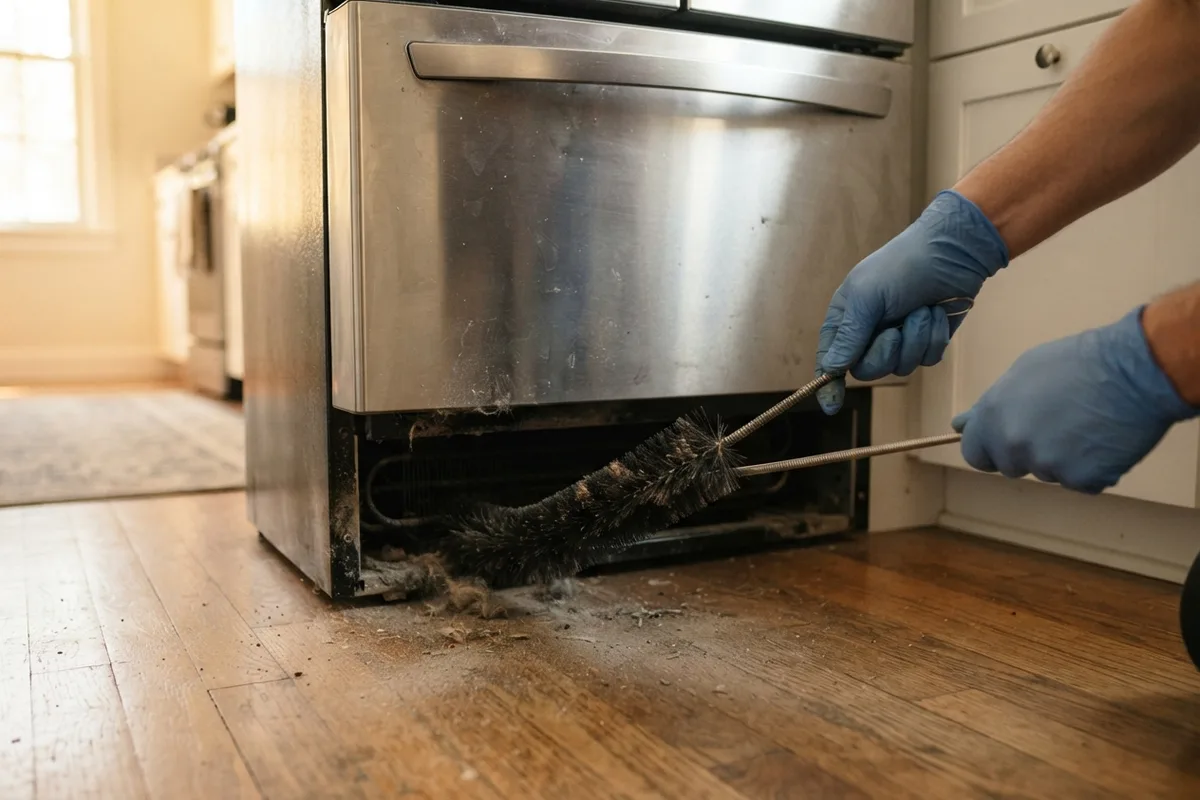
When condenser coils collect a thick layer of dust, pet hair, and lint, they lose the ability to dissipate heat efficiently. This forces the compressor to run longer and harder, causing wild swings in internal temperature as the system overheats and shuts down repeatedly to cool off.
- Safety first: Always unplug the refrigerator or switch off its circuit breaker before servicing internal components.
- Locate the coils behind the bottom kick plate or behind the rear access panel.
- Vacuum away loose debris using a narrow hose attachment.
- Gently scrub sticky buildup between the coil loops using a long wire condenser coil brush.
- Vacuum up any lingering dust from the floor and replace the cover panel before restoring power.
Giving your coils a thorough cleaning restores proper heat transfer and keeps cooling cycles steady. Adding this step to your regular monthly appliance maintenance checklist prevents future temperature spikes and protects the compressor from unnecessary wear.
Adjust and Reset the Thermostat Controls
Modern refrigerators rely on electronic sensors or mechanical thermostats to signal when cooling cycles should start and stop. If someone accidentally bumped the control dial while sliding a heavy pitcher inside, or if a digital control board glitched after a temporary power flicker, your target temperature will drift.
- Verify the set temperature using an independent appliance thermometer placed in a glass of water on the center shelf.
- Ensure the fresh food compartment stays set between 37°F and 40°F, while the freezer remains at 0°F.
- Adjust the control setting by one notch or degree, then wait 24 full hours for internal temperatures to stabilize.
- If using digital controls, perform a hard reset by unplugging the unit for ten full minutes before plugging it back in.
If the thermometer readings continuously jump by more than five degrees despite manual adjustments, the temperature control thermostat or thermistor may be failing and require replacement.
Check and Clean the Door Seals
Warm room air leaking past a torn or dirty door gasket causes constant temperature swings. Moisture from incoming humid air condenses on internal walls, creating frost accumulation that interferes with steady airflow and forces the cooling system to overwork.
- Inspect the rubber gasket around the entire perimeter of both refrigerator and freezer doors for cracks, gaps, or stiff sections.
- Perform the dollar bill test: place a bill against the frame, close the door, and pull. If it slides out with zero resistance, the seal is weak.
- Scrub sticky food residues off the rubber folds using warm water and mild dish soap.
- Soften stiff rubber sections by carefully heating them with a hairdryer on low heat while massaging the seal outward.
- Coat a light layer of petroleum jelly along the hinge side of the gasket to keep it pliable and tight.
Clear Obstructions Around Air Vents
Cold air originates in the freezer compartment and travels into the fresh food section through dedicated air vents controlled by a small damper door. Blocking these vents with large cereal boxes, bulky leftovers, or overstocked grocery bags creates severe cold spots in some areas while leaving other shelves warm.
- Open both cabinet doors and locate the plastic supply and return vents along the top and back walls.
- Move large or tall items at least five inches away from all vent openings to promote free air circulation.
- Check if frost or ice has blocked the return air vent passage.
- If you notice localized icing near the vents, learn how unclogging a refrigerator defrost drain helps prevent standing water from freezing over airflow channels.
- Reorganize food items so air circulates evenly around all shelves and door bins.
Maintaining clear air pathways allows the internal damper door to meter chilled air smoothly without causing rapid thermal swings.
Inspect and Test the Evaporator Fan Motor
If your freezer stays cold while the refrigerator compartment warms up and cools down randomly, the evaporator fan motor may be stalling. This fan pushes chilled air across the evaporator coils into the fresh food cabinet. A failing motor bearing or ice-bound fan blade prevents consistent air delivery.
- Safety first: Ensure the appliance is completely unplugged before opening internal fan housing panels.
- Locate the evaporator fan inside the back wall of the freezer compartment.
- Remove the access cover screws and inspect the fan blades for physical ice blockages or obstructions.
- Spin the fan blade manually with your finger. If it feels stiff or squeaks, the motor bearings are worn out.
- Use a multimeter set to ohms to test the motor terminals for electrical continuity.
Replacing a squealing or failing fan motor restores reliable air circulation across all compartments.
| Temperature Symptom | Probable Cause | Recommended DIY Action |
|---|---|---|
| Wide temp swings (+/- 10°F) | Clogged Condenser Coils | Vacuum dust and pet hair from coils |
| Warm fridge, frozen items in freezer | Blocked Air Vents / Damper | Rearrange items 5 inches from vents |
| Continuous running with temp spikes | Damaged Door Gasket | Clean seal or perform dollar bill test |
| Squealing noise before temp drops | Failing Evaporator Fan | Inspect fan blades and test continuity |
When to Call a Pro
While simple airflow issues and dirty coils are easy DIY fixes, complex cooling instabilities require professional diagnosis. If you have cleaned the coils, cleared air vents, and checked door gaskets without seeing stable temperatures after 24 hours, the issue may involve a failing electronic control board, a faulty defrost timer, or a sealed system refrigerant leak.
Work involving electrical panel wiring, sealed system refrigerant lines, or gas components should always be left to trained technicians for safety reasons. Standard diagnostic visits and component repairs typically range from $120 to $350, though actual costs vary by area and model. When DIY steps do not solve the problem, True Appliance Repair can match you with a local refrigerator repair specialist to get your appliance working reliably again.
FAQ
Why does my refrigerator temperature fluctuate after restocking groceries?
Loading a large quantity of room-temperature food into the fridge naturally raises the cabinet temperature temporarily. The compressor must run extended cooling cycles to drop the warm food down to safe storage levels, which can take up to 12 hours. Space out large grocery shipments when possible.
How often should refrigerator condenser coils be cleaned?
Condenser coils should be cleaned at least twice a year. Homes with shedding pets or high dusty environments benefit from cleaning every three to four months to ensure consistent cooling and efficient energy usage.
Can a bad defrost sensor cause temperature fluctuations?
Yes. If the defrost heater or sensor fails, frost builds up heavily on the evaporator coils. This frost blocks air circulation, causing internal cabinet temperatures to rise until the system melts off ice during a normal cycle, creating high temperature swings.
What is the normal temperature variance inside a home refrigerator?
A normal, healthy refrigerator maintains a cabinet temperature that fluctuates by no more than two to three degrees Fahrenheit around its set point during regular cooling cycles. Spikes larger than five degrees indicate a mechanical or airflow problem.