
When your oven stops heating evenly or shuts down mid-roast, the repair estimate can feel just as stressful as ruined dinner plans. Deciding whether to repair or replace your oven comes down to clear numbers, age benchmarks, and safety checks rather than guesswork. Follow these seven practical rules to compare real costs, spot quick DIY fixes, and choose the smartest option for your kitchen budget.
1. Check Your Oven Age Against Average Lifespan
Most standard gas ranges last roughly 13 to 15 years, while electric ovens and slide-in cooktops often run 12 to 15 years with routine upkeep. Heavy daily baking, uncleaned spills, and frequent high-heat self-cleaning cycles can shorten that lifespan by several years. Before paying for parts, find out exactly how old your appliance is:
- Open the oven door or pull out the bottom storage drawer to locate the model and serial plate along the frame.
- Look up the serial number format using the manufacturer's public date chart to confirm the production year.
- Compare that age against the typical 12-to-15-year range.
If your stove is under 7 years old, repairing a failed part almost always makes financial sense. Once an oven passes year 10, every major repair deserves closer scrutiny.
2. Apply the 50-Percent Repair Cost Rule
Appliance technicians and budget-minded homeowners rely on a straightforward benchmark called the 50-percent rule. If a quoted repair exceeds half the price of a comparable new range or wall oven, putting that money toward a replacement usually wins out. Here is how to calculate it accurately:
- Price a new unit with the same fuel type, cutout width, and core features rather than a luxury upgrade.
- Add delivery, basic hookup, and old-unit haul-away fees to get the true replacement total.
- Compare your repair quote against 50 percent of that installed total.
For example, if a comparable 30-inch electric range costs $900 installed, any repair over $450 on an older unit signals time to shop. Once an oven crosses 10 years old, spending even 35 to 40 percent on one fix can be risky if another aging component fails next season.
3. Run Safe DIY Checks Before Pricing Repairs
Never assume an oven needs an expensive service call until you rule out simple homeowner fixes. Before touching any internal part or moving the range, unplug the power cord or switch off the dedicated breaker at your main electrical panel, and turn the gas shutoff valve behind the range perpendicular to the pipe. Once power and gas are safely off where needed, run these quick checks:
- Check your home breaker panel for a tripped double-pole oven breaker, which can leave control lights on while killing bake heat.
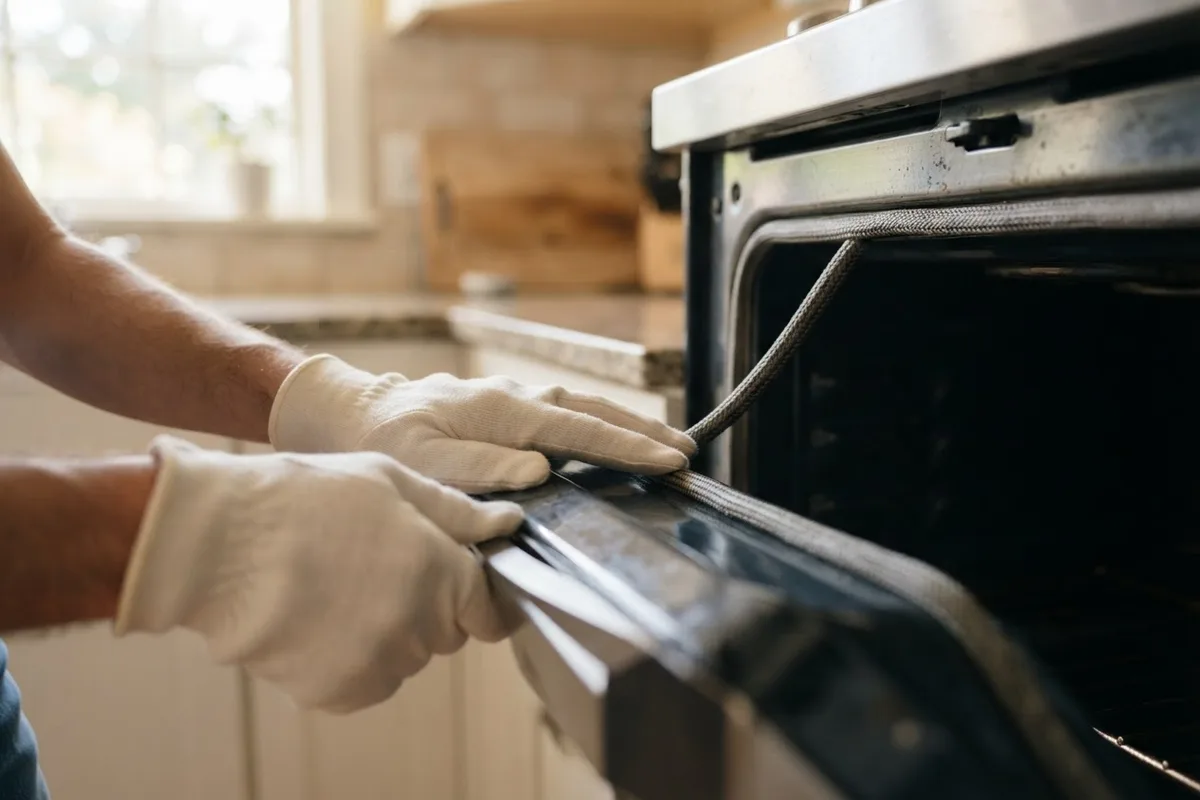
- Inspect the woven fiberglass or rubber door gasket for tears or flattened spots that let heat escape.
- Hang an analog oven thermometer on the center rack to verify whether the cavity simply needs a calibration offset.
- Review oven broiler troubleshooting or stove burner control issues if only one heating mode or surface burner is acting up.
4. Compare Common Oven Repair vs New Range Costs
Repair prices in the US vary widely by area, fuel type, and oven model, especially between standard freestanding ranges and built-in double wall ovens. Minor heating parts are often worth replacing, while electronic control boards can push costs near replacement territory. Use this typical US cost reference to weigh common fixes:
| Common Oven Problem | Typical US Repair Range (Varies by Area/Model) | Best Move Under 8 Years | Best Move Over 10 Years |
|---|---|---|---|
| Burned-out bake or broil element | $150 – $325 | Repair | Repair if frame is solid |
| Weak gas oven igniter | $175 – $350 | Repair | Repair once; watch other parts |
| Faulty temperature sensor | $140 – $280 | Repair | Repair |
| Failed control board or touchpad | $350 – $750+ | Repair if under 50% rule | Usually replace |
| Broken door hinges or latch lock | $180 – $400 | Repair | Compare against new cost |
Always ask upfront whether a diagnostic fee applies toward the final repair bill before scheduling a visit.
5. Watch for Gas Leaks and Electrical Hazards
Some oven symptoms point to safety concerns where delaying action or attempting risky DIY fixes can endanger your home. Stop using your appliance right away if you notice a persistent sulfur or rotten-egg odor, soot buildup around burner ports, visible sparking inside the cavity, or scorched wiring behind the control panel. Follow these critical safety steps immediately:
- If you smell gas, do not flip light switches or strike matches; leave the house and contact your gas utility from outside.
- For electrical burning smells or repeated breaker trips, switch off the range breaker at the electrical panel and leave it off.
- Never open sealed gas valves, bypass thermal safety fuses, or splice high-voltage 240-volt wiring yourself.
When an older range develops recurring electrical shorts or multiple gas valve issues, replacing the appliance is often safer and more cost-effective than chasing overlapping hazards.
6. Factor In Energy Efficiency and Parts Supply
An aging oven rarely fails overnight; instead, worn insulation, fatigued door hinges, and drifting thermostats quietly force longer preheat times and uneven baking. Over a full year of roasting and broiling, poor heat retention wastes electricity or gas and cooks food inconsistently. Before committing to a pricey repair, check two practical details:
- Search your exact model number at an appliance parts distributor to confirm key parts are still in stock.
- Check whether discontinued control boards or specialty glass cooktops require long backorders or risky aftermarket substitutions.
If a crucial electronic board is discontinued or backordered for months, hunting for salvaged parts is rarely worthwhile on a range past its prime. On the flip side, if replacement elements, igniters, and seals are widely stocked for under $100 in parts, keeping a reliable older stove running reduces waste and saves hundreds.
7. Weigh Kitchen Fit and Upcoming Heavy Use
Timing and cabinet fit play a bigger role than most homeowners expect when deciding whether to repair or replace your oven. Freestanding 30-inch ranges slide in easily, whereas older 27-inch wall ovens or drop-in models often require costly cabinetry trim work or electrical updates to fit modern dimensions. Ask yourself these three practical questions before ordering a new unit:
- Does your cutout match current standard widths without carpenter modifications or new 240-volt outlet wiring?
- Are you heading into heavy fall and winter baking, when a sudden mid-holiday breakdown creates extra stress?
- Have you already repaired two different systems on this same stove in the past two years?
If a quick, reliable part swap saves a custom-fit wall oven before peak cooking season, repairing buys valuable peace of mind. If repairs keep stacking up, replacing on your own schedule beats scrambling during a breakdown.
When to Call a Pro
Simple steps like swapping an oven light bulb, testing cavity temperatures with a rack thermometer, or tightening a loose rack guide are safe for most homeowners once power is off at the breaker. However, stop and call an appliance repair pro for any job involving gas supply lines, gas oven safety valves, 240-volt terminal blocks, main electrical panels, or cracked ceramic cooktop glass. A technician can measure amperage draw on gas igniters and test control relays accurately so you do not buy parts you do not need. If you want an honest diagnostic quote before deciding whether to fix or upgrade, True Appliance Repair can match you with a local pro through our oven and stove repair service. Having exact numbers in hand makes the final decision straightforward.
FAQ
Is it worth fixing a 12-year-old oven?
It depends on the failed part and the overall condition of the stove. Spending $175 to $300 on a bake element, temperature sensor, or igniter can keep a clean, well-maintained 12-year-old oven running for several more years. If the main control board fails or multiple parts are worn out, putting that money toward a new range usually makes more sense.
What is the most expensive part to repair on an oven?
Electronic control boards, glass-ceramic cooktops, and dual-fuel gas valve assemblies are typically the costliest repairs, often running $350 to $750 or more depending on your area and model. Because those repairs frequently cross the 50-percent cost threshold on older appliances, they are the most common reason homeowners choose replacement.
How long does an oven igniter or heating element last?
Standard electric bake elements and gas glow-bar igniters commonly last 5 to 10 years, though heavy daily baking or frequent self-cleaning cycles can wear them out faster. Because both are wear items priced well below the cost of a new stove, replacing them once or twice over a range's life is normal.
Should I check anything before replacing a broken oven?
Run safe basic checks first—like verifying the home breaker, inspecting the door gasket, and testing temperature accuracy—so you do not replace an appliance over a simple fix. If the problem requires internal gas or high-voltage diagnosis, a quick inspection quote helps you compare real repair costs against replacement prices confidently.