
Walking into the kitchen to find lukewarm milk or a puddle on the floor is every homeowner's worst nightmare, especially with holiday grocery shopping right around the corner. Fortunately, most refrigerators give off clear distress signals weeks before a total breakdown occurs. By knowing the warning signs your refrigerator is dying—and testing a few safe DIY fixes first—you can save hundreds of dollars in spoiled food and make a smart call between a simple repair and a brand-new unit.
1. Food Spoils Before the Expiration Date
When sour milk, wilted greens, or soft butter show up days before the printed date, your fridge is struggling to hold a safe 35°F to 38°F internal temperature. Even a four-degree rise doubles the rate at which bacteria multiply, quietly ruining your groceries long before the interior feels noticeably warm to your hand.
Before assuming the cooling system is failing, run this quick temperature check:
- Place an inexpensive appliance thermometer in a glass of water on the middle shelf for eight hours.
- Check your digital or dial settings to confirm someone did not accidentally bump the temperature control while loading groceries.
- Inspect the air vents along the back interior wall and move tall pitchers, egg cartons, or leftovers at least two inches away so cold air can circulate freely.
- Wipe down the rubber door perimeter with warm, soapy water to ensure a tight seal.
If the thermometer still reads above 40°F after 24 hours with clear vents and proper settings, the cooling system or temperature sensors need closer attention.
2. The Motor Runs Loudly and Never Cycles Off
A healthy refrigerator hums quietly for 20 to 30 minutes at a time and then rests once the cabinet reaches its target temperature. If your motor runs nonstop at high speed, or you hear loud buzzing, rattling, or clicking from the bottom back panel, the compressor is working overtime to keep up.
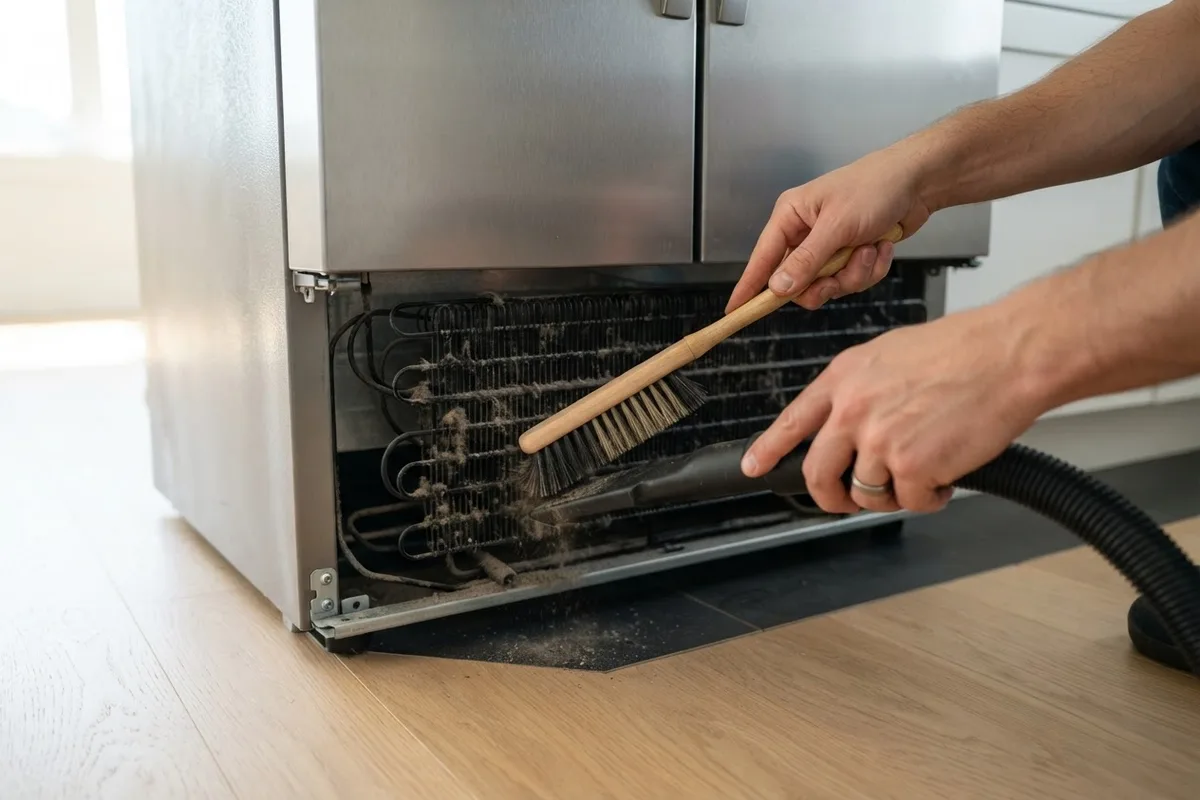
The most common culprit behind a nonstop motor is a blanket of pet hair and kitchen grease suffocating the condenser coils. Follow these safe steps to clean them:
- Unplug the refrigerator from the wall outlet and shut off the ice maker water supply valve if you need to pull the unit away from the wall.
- Pop off the plastic kickplate Grille at the bottom front, or roll the fridge out to access the lower back panel.
- Use a long, flexible condenser coil brush to gently loosen packed dust from between the metal coils, working carefully around the fan blades.
- Vacuum up all debris with a crevice attachment, plug the fridge back in, and listen for the motor to quiet down over the next few hours.
3. Thick Frost Builds Up in the Freezer
Modern frost-free freezers automatically melt away ice buildup once or twice a day using a built-in heating element. When you see snow-like frost coating the back wall of the freezer, ice crystals covering every package, or the door struggling to shut properly, that automatic defrost cycle or the door seal has failed. In some cases, frost buildup even causes the door to bounce back when you shut it; our guide on why your freezer door is popping open walks through additional alignment checks.
To figure out why frost is taking over, try these steps:
- Close the freezer door on a dollar bill at several points around the perimeter. If the bill slides out with zero resistance, the rubber gasket is warped or worn out.
- Unplug the refrigerator and move frozen food into coolers if thick ice is blocking the rear freezer vents.
- Leave the freezer door open with towels on the floor for four to six hours to let the ice melt completely—never use a sharp knife or hair dryer near plastic liners.
- Dry the interior and plug the unit back in. If heavy frost returns within two weeks, the defrost heater, thermostat, or control board likely needs professional replacement.
4. Water Pools Inside or Under the Fridge
Discovering a mysterious puddle by your toes or soggy produce drawers is a classic symptom of an aging fridge, though it rarely means the machine is ready for the scrap heap. Most leaks come from a clogged defrost drain tube or a cracked water line rather than a fatal mechanical failure. If the puddle is coming specifically from the freezer compartment, see our dedicated troubleshooting steps for why your freezer is leaking water.
Here is how to track down and clear a standard refrigerator leak:
- Unplug the refrigerator and shut off the saddle valve or wall valve feeding the water dispenser and ice maker.
- Pull out the bottom crisper drawers and look for standing water in the recessed drainage trough along the back wall.
- Flush the small drain hole at the bottom of that trough using a turkey baster filled with warm water and a teaspoon of baking soda until it drains freely into the bottom evaporation pan.
- Pull the fridge forward and inspect the braided or plastic water supply line on the back for pinhole leaks or loose compression nuts.
5. The Exterior Cabinet Feels Unusually Hot
While the sides of a refrigerator naturally feel slightly warm as heat is pulled out of the cabinet, exterior walls or the metal strip between the doors should never feel hot to the touch. Excessive exterior heat indicates that heat is trapped inside the cabinet walls because the condenser fan has stopped spinning or the compressor is overheating.
Check the airflow and cooling fan with these quick steps:
- Measure the clearance around your refrigerator; most models need at least one inch of breathing room on the sides and two inches at the top and back.
- Unplug the refrigerator and pull it out from the wall to remove the lower rear access cover.
- Check the condenser fan blades near the compressor for jammed dust bunnies, plastic bags, or pet toys, and spin the blade gently by hand to see if the motor bearings feel seized.
- Plug the fridge back in briefly (keeping hands clear of moving parts) to verify the fan spins whenever the compressor is running. If the fan sits still while the compressor hums, the fan motor needs to be replaced right away.
6. Condensation or Sweat Forms Inside the Fridge
If your refrigerator interior looks like a rainforest—with water droplets hanging from the ceiling, foggy glass shelves, and wet condiment bottles—warm room air is sneaking inside and colliding with cold cabinet air. Beyond making a mess, constant moisture encourages mold growth inside the rubber door folds and forces the cooling system to run twice as hard.
Stop interior sweating with this simple gasket restoration routine:
- Mix a bowl of warm water with a few drops of mild dish soap and wipe down every fold of the flexible rubber door gasket to remove sticky food spills.
- Inspect the hinge side of the door as you close it to make sure the gasket isn't pinching or rolling inward.
- Gently warm any flattened sections of the rubber seal for 10 to 15 seconds on low heat with a hair dryer (keep it moving so you don't melt the vinyl) to help the rubber spring back to meet the metal frame.
- Spread a thin film of food-grade petroleum jelly along the hinge-side edge of the gasket so it glides smoothly without catching.
7. Your Monthly Electric Bill Spikes Unexpectedly
Because your refrigerator is one of the few appliances plugged in 24 hours a day, 365 days a year, a failing unit quickly reveals itself on your utility statement. As internal compressor valves wear down, refrigerant pressures drop, or foam cabinet insulation degrades over a decade of use, the appliance draws significantly more wattage to maintain the same cooling output.
Before blaming an old compressor, rule out energy-wasting habits:
- Check that the door switches click firmly and turn off the interior lightbulb every time the door shuts; a stuck light switch acts like a mini space heater inside the fridge.
- Keep the refrigerator about two-thirds full. Pitchers of water help hold the cold mass so the compressor doesn't kick on every time someone grabs a snack.
- Let hot soups and casseroles cool on the counter before storing them inside.
Refrigerator Repair vs. Replace Quick Guide
Use these typical US cost ranges and age benchmarks to decide whether to fix your current fridge or shop for a new one (actual repair costs vary by area, brand, and model):
| Issue / Component | Typical Repair Cost Range | Fridge Under 8 Years Old | Fridge 8–12 Years Old | Fridge Over 12 Years Old |
|---|---|---|---|---|
| Door Gasket or Light Switch | $80 – $200 | DIY or Repair | DIY or Repair | DIY or Repair |
| Condenser or Evaporator Fan | $150 – $350 | Repair | Repair | Repair if otherwise healthy |
| Defrost Heater or Thermostat | $180 – $380 | Repair | Repair | Weigh against unit condition |
| Main Electronic Control Board | $250 – $550 | Repair | Borderline—compare quotes | Replace |
| Sealed System / Compressor | $600 – $1,200+ | Check manufacturer coverage | Replace | Replace |
When to Call a Pro
Cleaning coils, flushing defrost drains, and conditioning door gaskets are safe, rewarding weekend projects. However, you should stop and call a professional technician if you suspect a refrigerant leak, hear the compressor clicking on and off every two minutes, smell burning wiring, or need to test high-voltage control boards. Sealed-system repairs require specialized recovery equipment and should never be attempted as a DIY project.
If you have tried the basic checks above and your fridge is still struggling to keep food cold, True Appliance Repair can connect you with a local refrigerator repair pro who can inspect the system and give you an honest repair estimate.
FAQ
How long does a typical household refrigerator last?
Most standard top-freezer and bottom-freezer refrigerators last between 10 and 15 years with routine coil cleaning and gasket care. Feature-heavy French-door models with through-the-door ice and water dispensers often need minor part replacements between years 7 and 10 because they have more fans, valves, and circuit boards.
Is it worth fixing a 10-year-old refrigerator?
A good rule of thumb is the 50% rule: if the fridge is around 10 years old and the repair quote is less than half the price of a comparable new refrigerator, fixing a single part like a fan motor or defrost sensor makes financial sense. If it needs a new compressor or sealed-system overhaul, putting that money toward a new refrigerator is almost always the smarter investment.
How long will food stay cold if my refrigerator suddenly dies?
An unopened, full refrigerator will keep food safely cold for about 4 hours after losing cooling power. A full freezer will hold safe temperatures for up to 48 hours (or 24 hours if half-full) as long as you keep the door shut tight while you arrange a repair or transfer items to coolers with ice.
Why is my freezer still cold when the refrigerator section is warm?
In most refrigerators, all the cold air is generated in the freezer and blown into the fresh-food compartment by a small evaporator fan. When the freezer stays frozen solid while the fridge warms up, the culprit is usually a frosted-over evaporator coil, a stuck air damper door, or a failed evaporator fan motor—all of which are much cheaper to fix than a bad compressor.